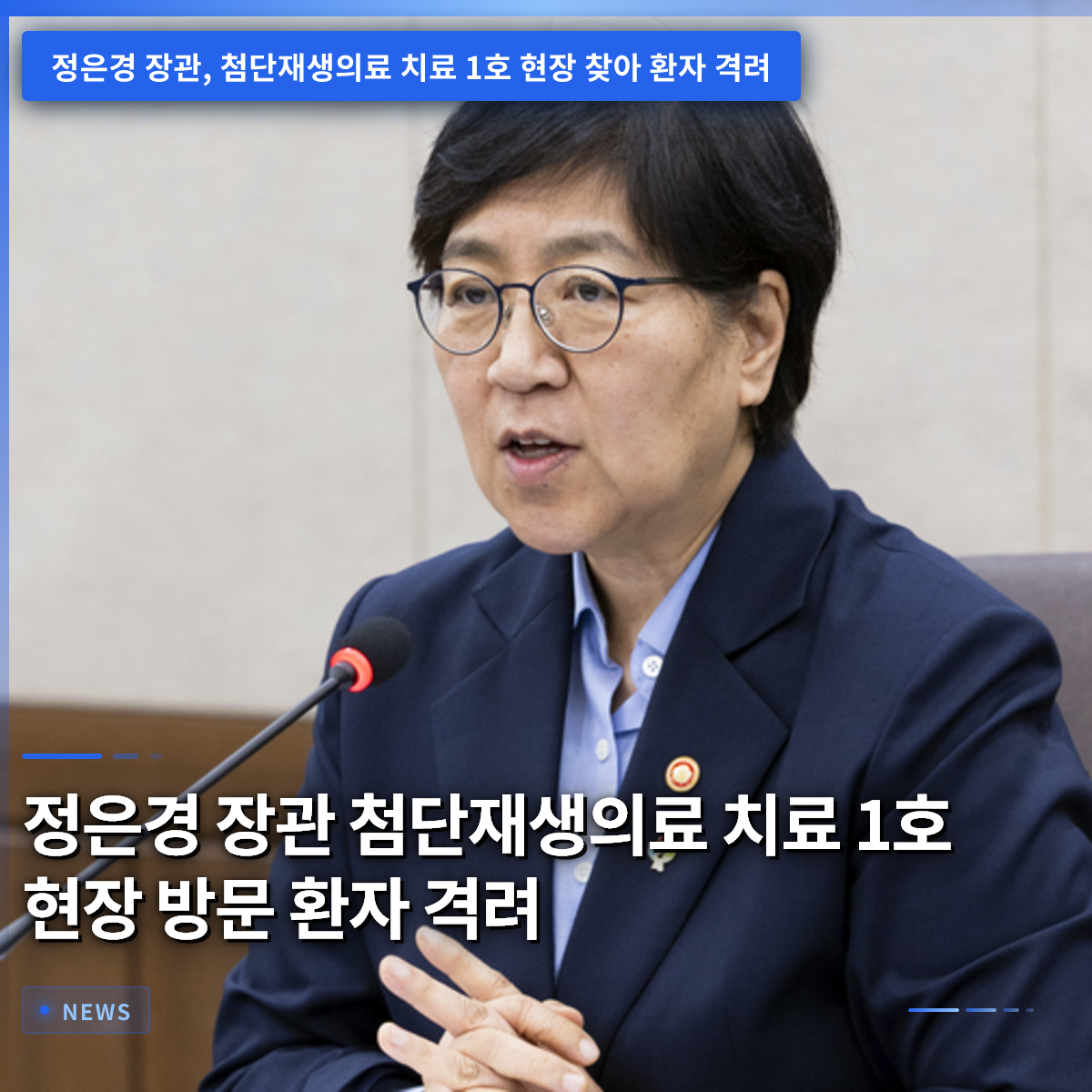
Minister Jeong Eun-kyeong recently visited Yeouido St. Mary’s Hospital, where the country’s first advanced regenerative medicine treatment plan was approved, to warmly encourage the patient receiving treatment and commend the efforts of the on-site medical staff. This site visit was arranged to directly verify how the government’s innovative regenerative medicine treatment system is being applied to patients suffering in actual hospital settings, ensuring it does not remain merely a policy on paper. For patients with major, rare, and intractable diseases who had previously lost hope due to a lack of appropriate treatment methods, this first treatment approval represents a significant turning point that goes beyond the mere introduction of medical technology, illuminating a new light of life. According to reports from the press and officials who accompanied the Minister, she engaged in deep conversations with hospital officials, empathized with the pain the patient was enduring, and promised practical improvements to the system. In the following sections, we will explore in detail the profound significance of this first approval for advanced regenerative medicine treatment, the vibrant atmosphere at the hospital site, and the future direction of healthcare in South Korea. We hope this article provides readers with a valuable opportunity to reflect on how advanced technology can transform the lives of our neighbors.
=
Minister Jeong Eun-kyeong Visits Site of First Advanced Regenerative Medicine Treatment to Encourage Patient
1. The Significance of the First Domestic Site Visit for Advanced Regenerative Medicine Treatment
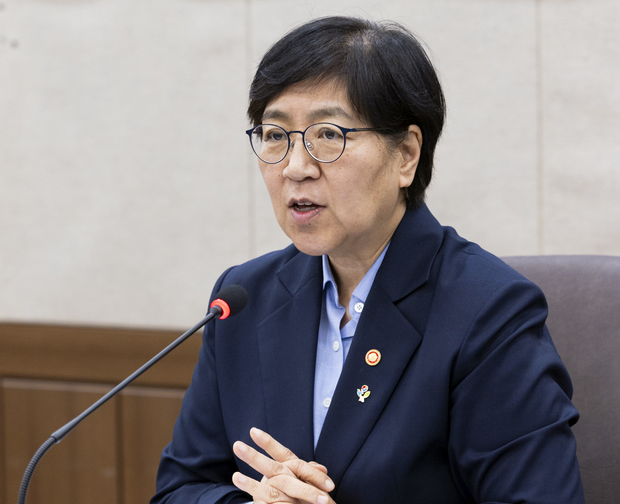
Minister Jeong Eun-kyeong’s visit to Yeouido St. Mary’s Hospital is a symbolic event marking the entry of advanced regenerative medicine into a phase of full-scale practice in South Korea’s medical history. In the past, it was not uncommon for excellent technologies to remain unapplied to patients due to stringent regulations and institutional barriers. However, the first treatment approval achieved through the joint efforts of the government and the medical community has been highly praised for breaking these regulatory frameworks and establishing a patient-centered medical environment. In fact, Minister Jeong received a detailed report from Jeon Yeong-woo, Director of the Lymphoma Center, on the progress made so far and expressed deep gratitude for the dedicated efforts of the medical staff. For medical personnel who had grown weary from battling unfamiliar diseases, this direct encouragement from a government official serves as a tremendous driving force that could save more patients with intractable diseases in the future. Many medical professionals in the area are openly expressing their expectation that this visit will lead to the voices from the field being more actively reflected in policy. Minister Jeong did not simply receive a report and leave; she demonstrated meticulous attention by personally walking through and inspecting various key facilities within the hospital. She toured the Lymphoma Center and the Apheresis Room in sequence, which play crucial roles in the patient’s treatment process, and asked sharp questions about infection prevention and safety management systems. This can be seen as a demonstration of the government’s strong will to improve the environment and quality of care in the spaces where patients actually reside, rather than just a ceremonial event. Patients and their guardians who witnessed the scene were deeply moved by the Minister’s warm gestures and words of comfort, stating in unison that they now feel a sense of trust that the nation is watching over them. This communication and empathy are a model example of administration that breathes warmth into cold technology.
Minister Jeong’s visit to Yeouido St. Mary’s Hospital was a historic first step that awakened advanced regenerative medicine from its slumber within the system, bringing it closer to actual patients.
2. A New Treatment Opportunity for Patients with Rare Blood Cancer
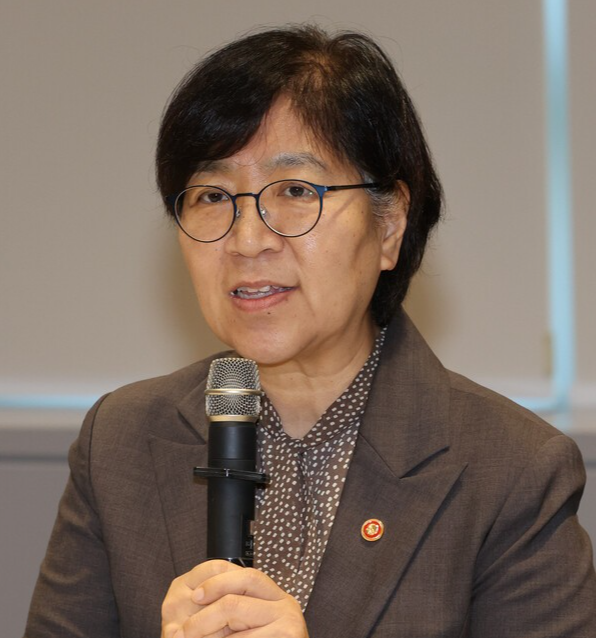
The beneficiary of this first advanced regenerative medicine treatment is a patient who has endured a difficult time suffering from rare blood cancer for a long period. Major diseases, including lymphoma, carry a high risk of recurrence and make a cure difficult with standard chemotherapy alone, causing immense psychological and physical suffering for both patients and their families. Minister Jeong Eun-kyeong met directly with the first patient, warmly holding their hand, consoling them for their past suffering, and promising that the government would do its utmost to help them fully recover their health. The patient, with tears in their eyes, expressed their gratitude for the Minister’s visit and hoped that this precious treatment opportunity would become a spark of hope for other patients with intractable diseases in the future. The fact that the state has directly stepped in to verify the safety of the treatment and paved the way for patients to benefit from new medical technologies is a highly encouraging achievement in South Korea’s welfare history. Medical experts unanimously state that this first treatment will not be just a single success story but will serve as a guide for the development of treatments for numerous rare and intractable diseases in the future. In particular, by integrating advanced regenerative medicine technologies for blood cancer patients with a high risk of recurrence, a possibility has opened up to overcome the limitations of existing treatments and significantly improve survival rates. During the interview, Minister Jeong expressed strong expectations that this treatment would become a reliable means to fundamentally prevent recurrence in patients with rare blood cancer. As personalized treatments tailored to individual patient characteristics become possible, the success rate of treatment is expected to increase, and a virtuous cycle of minimizing side effects will be established. Citizens watching from the sidelines feel a deep sense of relief and pride that our society has taken another step forward for the socially vulnerable and patients with intractable diseases.
This first treatment has gifted patients with rare blood cancer, who had no proper alternatives, a realistic hope to prevent recurrence and move toward a cure.
3. The Fruit of Close Cooperation Between the Government and the Medical Community
This achievement is evaluated as possible only due to the government’s flexible policy support and the relentless research efforts of medical staff at frontline hospitals. The advanced regenerative medicine system is a highly specialized field that requires thorough verification of safety and efficacy, and has been known for its high entry barriers and complex procedures. However, relevant ministries, including the Ministry of Health and Welfare, demonstrated wisdom by not ignoring the desperate situations of patients, rationally improving regulations while strengthening safety nets. The medical staff at Yeouido St. Mary’s Hospital also aligned with this government policy direction, undergoing thorough preparation and repeated clinical research to finally achieve the feat of receiving the country’s first approval. Officials unanimously agree that the constant exchange of opinions and transparent communication between the government and the medical field was the biggest factor in this success. If this public-private cooperation system is maintained and strengthened in the future, South Korea will be able to establish itself as an advanced nation leading the global regenerative medicine market. At the on-site discussion, Minister Jeong Eun-kyeong repeatedly emphasized her intention to prioritize listening to the voices from the field and to quickly supplement any deficiencies in the system. True medical reform that citizens can feel can only be completed when administrative departments quickly understand the difficulties felt in the medical field and provide solutions. This visit served as a living classroom that directly demonstrated a model of such cooperation and played the role of a compass for the future direction of South Korea’s healthcare policy. Citizens are deeply feeling that the medical safety net in our society has become thicker as they witness the government’s active and swift actions.
The combination of the government’s will to improve regulations and the dedicated research efforts of medical staff has finally opened a new chapter in South Korea’s regenerative medicine.
4. Future Ripple Effects of the Advanced Regenerative Medicine Treatment System
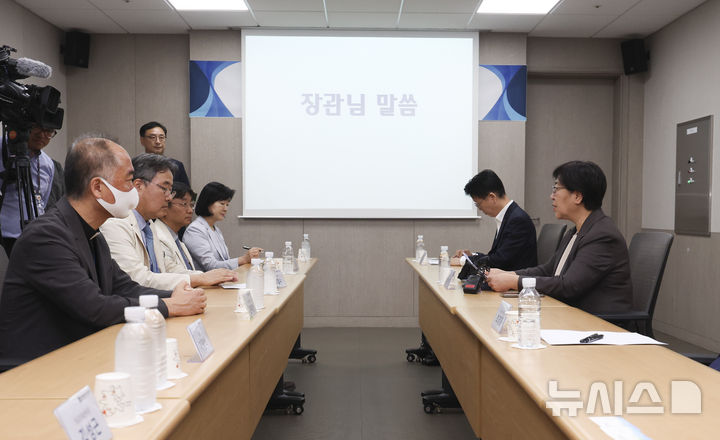
As the advanced regenerative medicine treatment system begins to operate in full, a massive wave is expected to sweep across the entire domestic medical market. A path has opened for patients who previously had to go abroad and incur high costs for treatment to now receive safe treatment within South Korea’s excellent infrastructure. This not only significantly reduces the financial burden on patient families but also brings positive economic ripple effects by preventing the outflow of valuable foreign capital. Minister Jeong stated that, taking this first treatment as a starting point, she will gradually expand the target diseases so that more patients with major illnesses and intractable diseases can benefit. This reveals the government’s strong will to achieve both lowering the threshold of the system and thoroughly protecting patient safety. Additionally, domestic pharmaceutical and biotech companies entering the advanced regenerative medicine field are expected to engage in more active research and development based on this success story. As excellent treatment outcomes are accumulated as data, South Korea’s standing in the global biomedical market will rise, and the entire related industry will experience rapid growth. On-site medical staff have also gained confidence to provide personalized regenerative treatments to more patients, using this first approval as a milestone, and are accelerating their clinical research. The government is also preparing meticulous management guidelines to ensure that this industrial growth does not remain merely an economic benefit but is translated into the public interest value of enhancing the health of the entire population. Ultimately, this incident can be called a model example of a health and welfare policy where patients, the medical community, and the national economy can all win.
The establishment of the advanced regenerative medicine system will reduce patients’ medical cost burdens and dramatically boost the global competitiveness of South Korea’s biomedical industry.
5. The Positive Wave of Change Brought by On-Site Communication
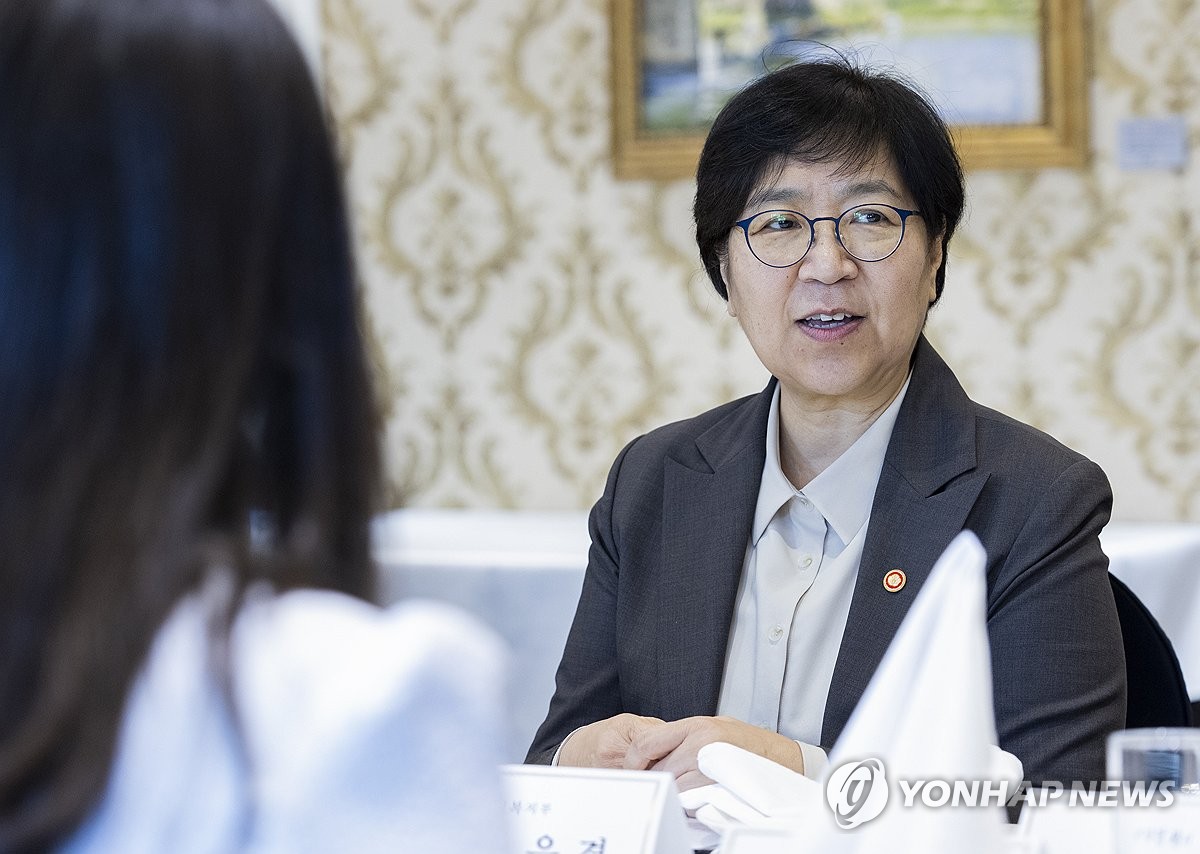
Minister Jeong Eun-kyeong’s visit to the site to communicate with patients and encourage medical staff has greatly contributed to breaking down the invisible wall between the government and the field. It is a time when leadership that listens to and empathizes with the breath of patients standing at the crossroads of life and death, rather than the practice of approving policies solely through documents at a desk, is essential. Minister Jeong’s sincere actions instilled great pride in the medical staff who work silently and diligently on the front lines and gave patients a deep trust that the nation is watching over them. In fact, many citizens who visited the hospital praised the fact that they felt warm humanity rather than cold administration in the Minister’s gesture of directly comforting the patient’s pain. This communication-centered administration will serve as a solid foundation for various policies promoted by the Ministry of Health and Welfare to gain public consensus and settle smoothly in the future. On-site communication is not just a place for exchanging praise but also a precious opportunity to sharply diagnose system flaws and find effective alternatives. Medical staff, including Jeon Yeong-woo, Director of the Lymphoma Center, conveyed the practical difficulties and improvements experienced in the field without reservation, and Minister Jeong took notes and promised active acceptance. Only when policy makers and field practitioners meet on the same level can effective measures that truly change the lives of the people be born. This visit to Yeouido St. Mary’s Hospital will remain a model case that once again reminded us of the importance of such collaboration and will have a positive ripple effect on other hospital sites in the future. Citizens sincerely hope that the government will continue to show this kind of communication administration that listens to the voices of the field and works hard on the ground.
Minister Jeong’s actions of visiting the site directly and communicating with patients have increased the credibility of the policy and infused medical staff with passion and pride.
6. Expectations and Resolutions Toward a Successful Second Treatment
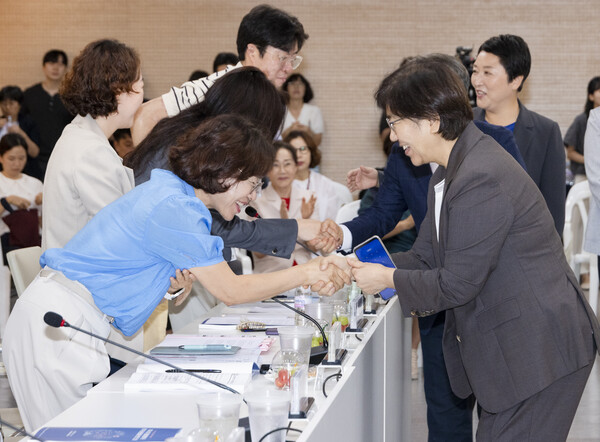
The successful establishment of the country’s first advanced regenerative medicine treatment is merely the first step, and important challenges remain to produce more results in the future. With the successful completion of the first treatment at Yeouido St. Mary’s Hospital, other large hospitals are accelerating their efforts to receive approval for advanced regenerative medicine treatment plans. The Ministry of Health and Welfare plans to align with this trend by conducting the review process more transparently and swiftly while ensuring that safety verification is conducted with no room for error. Minister Jeong Eun-kyeong, concluding her visit, repeatedly pledged to do her best so that not a single patient suffering from intractable diseases would give up hope. We ask readers to watch with warm eyes how South Korea’s advanced medical technology is developing and saving the lives of our neighbors. Please continue to cheer as we follow the news of the second and third treatments, witnessing South Korea rise as a true medical advanced nation. Advanced regenerative medicine is no longer a story from a distant future science fiction movie but a miraculous reality happening in our hospitals today. When the state’s bold support, institutional backing, and the dedicated efforts of medical staff come together, South Korea’s healthcare level will reach a stage that the whole world will envy. As we conclude this article, we sincerely pray that patients with intractable diseases around us do not lose courage and can eventually enjoy the joy of a cure. We are reminded once again of the precious lesson that when the government, the medical community, and the people unite in one mind, they can overcome the pain of any disease. We promise to continue delivering news of valuable medical policies that protect the health and happiness of the people as quickly and accurately as possible.
Using the success of the first treatment as a stepping stone, the government and the medical community are expected to make every effort so that more patients with intractable diseases can find hope.
Frequently Asked Questions
=