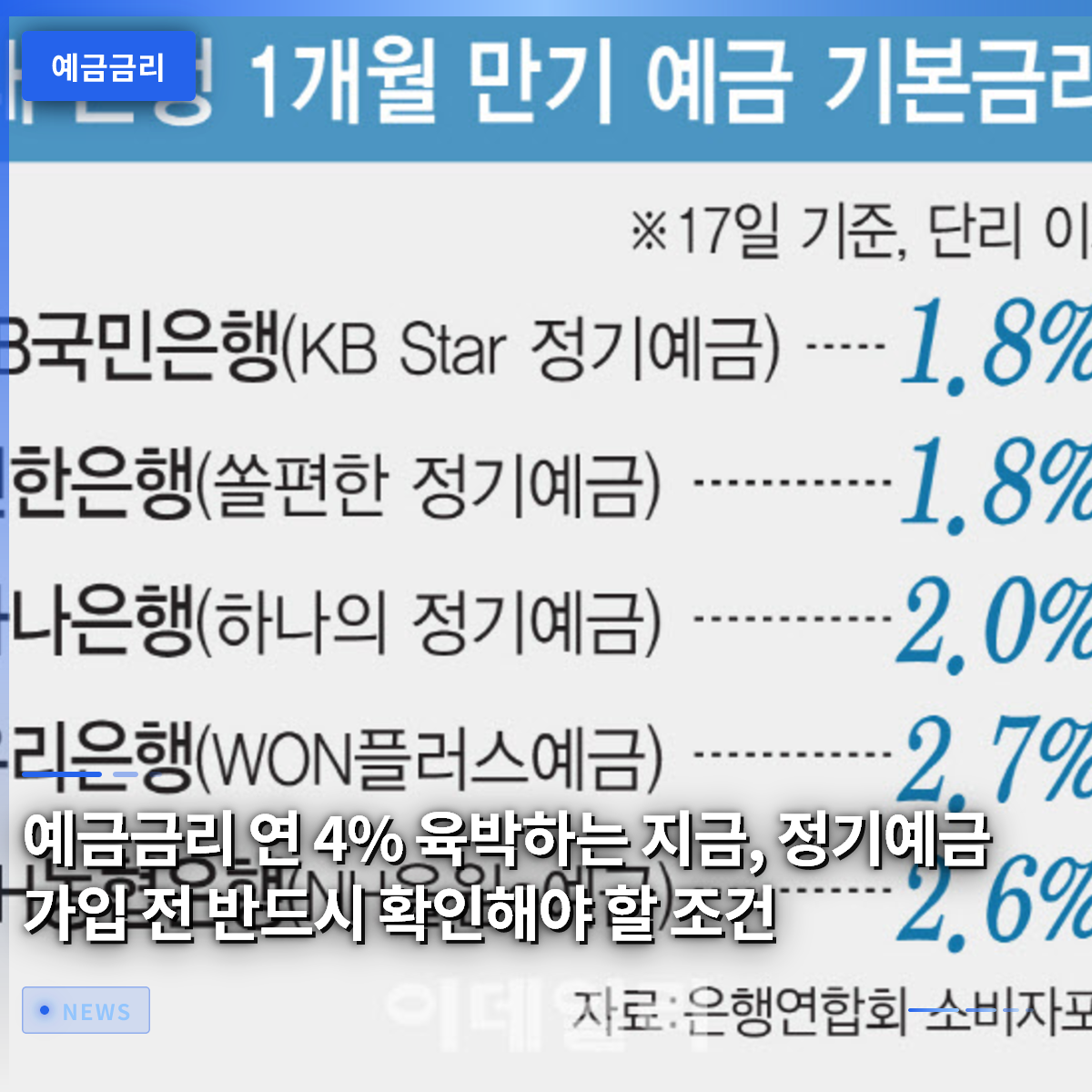
As deposit rates in the banking sector rise sharply, a period has arrived where investors can expect interest yields approaching 4% annually, depending on the product. Recently, major commercial banks have successively raised interest rates on both lump-sum and installment deposits, leading to a clear “reverse money move” phenomenon where funds that had flowed into the stock market since the second half of last year are now returning to the safety of banks. For those who did not find success in stock investing or who wish to secure a guaranteed interest income while keeping their principal safe, now may be the perfect opportunity. However, to fully benefit from the highest advertised interest rates, it is crucial to carefully review new account opening conditions and various preferential terms to avoid disappointment. In this article, we will examine current deposit rate trends in the banking sector in detail, along with essential tips to know before opening an account. We will compare interest rate differences between commercial banks and savings banks, and outline methods to grow your assets safely and efficiently.
=
As Deposit Rates Approach 4% Annually: Essential Conditions to Check Before Opening a Fixed-Term Deposit
1. Base Rate Hikes and Competition for Deposits in the Banking Sector

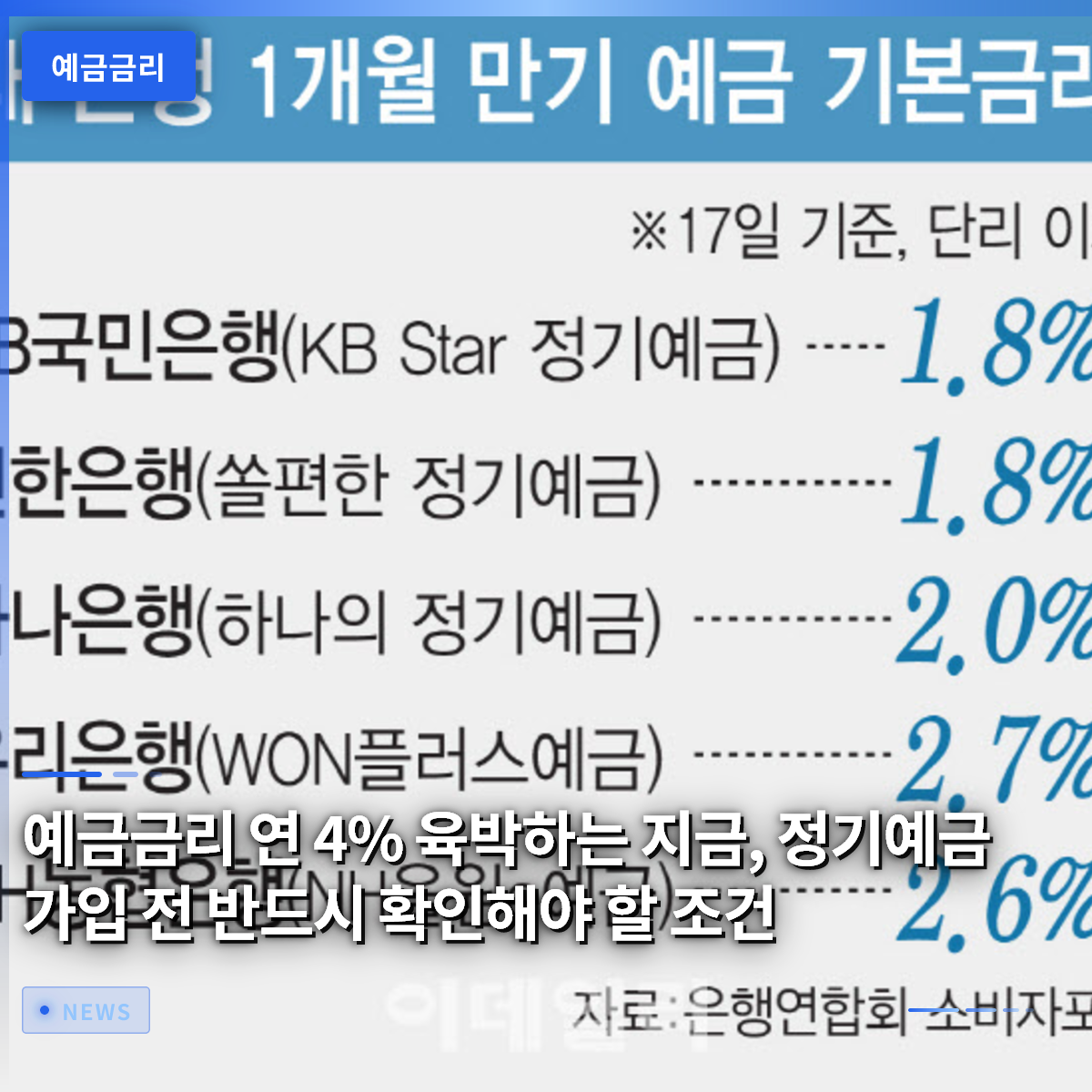
Recently, as banks have raised deposit rates, significant changes have occurred in the flow of household funds, with deposit rates approaching 4% annually. Major commercial banks, including Nonghyup Bank, have simultaneously increased interest rates on both lump-sum and installment deposits, igniting a competition to attract customers. These moves are highly likely to continue for the time being, aligning with the Bank of Korea’s trend of raising the base interest rate. From the banks’ perspective, the need to attract funds from the market has increased, leading them to introduce various high-interest products. For ordinary households, bank products that offer stable, fixed interest have once again emerged as attractive alternatives to risky assets like stocks and cryptocurrencies. In the era of low interest rates, it was difficult to keep up with inflation by simply depositing money in banks, but the situation has changed completely. As news spreads of people earning decent interest through savings or deposits, even those who were previously uninterested in financial management are now visiting banks. However, since this trend of rising rates may increase the interest burden for borrowers, it is necessary to view the overall economic situation with a balanced perspective.
Due to the impact of base rate hikes, banks have raised deposit rates, bringing deposit interest rates close to 4% annually.
2. Capital Flow from the Stock Market to Banks
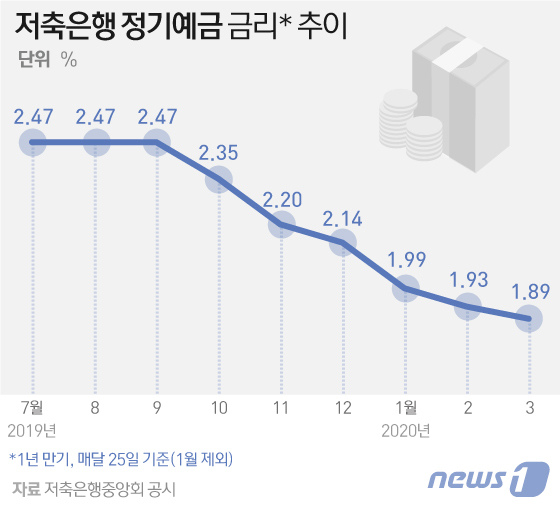
Since the second half of last year, household funds that were being used to increase stock investments, even through borrowing, have recently shifted rapidly back to fixed-term deposits. This is because the preference for safe assets, which guarantee certain interest income without the risk of losing principal, has become distinct as stock market volatility has increased. In fact, it is easy to find office workers who are closing their stock accounts and locking their savings in high-interest fixed-term deposits at banks. This capital movement phenomenon shows a return to the basics of asset management, where stability is prioritized, rather than just a passing trend. While the stock market’s enthusiasm has cooled, foot traffic to bank counters for large deposits remains constant. In particular, current deposit rates are an attractive investment option for middle-aged individuals nearing retirement or investors seeking stable fund management. More people are finding joy in receiving interest on a set date, free from the stress of investment failures. Experts predict that this preference for safe assets will continue for the time being, leading to a steady increase in bank deposit balances.
Due to stock market instability, the phenomenon of funds moving from the stock market to safe bank fixed-term deposits is accelerating.
3. How to Utilize the 4% Maximum Fixed-Term Deposit Rate
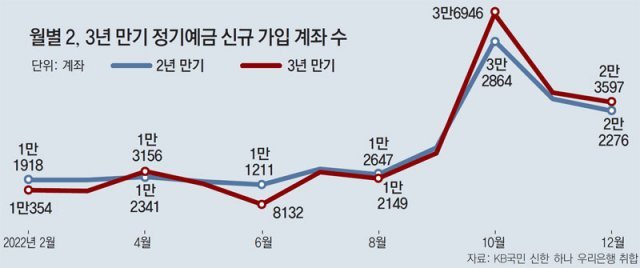
It is common for people to open accounts believing the advertised deposit rates of nearly 4% annually at face value, only to be disappointed by receiving significantly less interest. Usually, such high rates are the maximum rates that apply only if difficult preferential conditions, such as being a new customer, salary transfer, automatic payments, or marketing consent, are all met. Therefore, it is wise to carefully consider whether you can realistically meet all these preferential conditions before opening an account. If you do not have a primary bank relationship or find the complex conditions troublesome, it is much wiser to choose a product that offers a high base interest rate without conditions. For example, Mr. Kim, an office worker in Seoul, tried to open a deposit after seeing an ad for 4% annually, but because he could not meet conditions such as card usage records and open banking registration, he ended up receiving only 3.5% interest. As seen here, it is easy to be disappointed by lower-than-expected interest if you fail to check the detailed conditions hidden behind the flashy numbers. Since the applicable interest rate may vary depending on the deposit period and amount, you should develop the habit of reading the terms and conditions thoroughly. Utilizing internet comparison websites allows you to compare actual interest rates from each bank at a glance, saving considerable time.
To receive the advertised maximum interest rate, you must meet strict preferential conditions, so you should carefully review the terms and conditions before opening an account.
4. Comparing and Choosing Between Savings Banks and Commercial Banks
Although commercial bank deposit rates have risen, many people are turning their attention to savings bank products, which offer relatively higher interest rates. Savings banks are engaged in fierce competition to attract customers by offering interest rates more than 0.5 percentage points higher than commercial banks. For example, some financial institutions like Dream Savings Bank and Kwangju Bank are introducing attractive products that approach or exceed 4%. However, when using savings banks, it is important to look at not only the interest rate but also the institution’s soundness and stability. Under the Deposit Insurance Act, the state safely protects up to 50 million won per person (principal plus a small amount of interest), so it is safe to diversify deposits within this limit. If you have a large sum of 100 million won, it is a wise asset management strategy to split it into two deposits of 50 million won each at two different financial institutions rather than putting it all in one place. Instead of blindly following recommendations from acquaintances, it is also helpful to briefly check management disclosure indicators or equity ratios. Finding your own optimal savings place that satisfies both safety and profitability is the core of financial management.
Savings banks offer higher interest rates than commercial banks, but you should diversify your deposits considering the 50 million won deposit insurance limit.
5. The Invisible Link Between Loan Rates and Deposit Rates
Ironically, during periods when deposit rates rise, the interest burden for borrowers also increases, resulting in mixed economic outcomes for households. For banks to offer high interest to attract deposits, their funding costs increase in the process of managing loan funds, which naturally leads to higher interest rates on mortgage loans and credit loans. Tenants using jeonse loans or borrowers who bought homes with maximum leverage are sighing deeply as their monthly fixed costs increase due to rising interest. While the wealthy smile at the rising deposit interest, households with more debt than assets feel the pinch of living expenses and experience the shock of high interest rates firsthand. Comparing the interest rate applied when converting jeonse deposits to monthly rent with fixed-term deposit rates clearly shows how much the housing burden increases. Comparing the additional housing costs incurred by converting part of the deposit to monthly rent with the interest earned from bank deposits allows one to feel the impact of rising loan interest rates on the economy of common people. Small and medium-sized enterprises are also facing management pressure as their funding costs increase, and rapid changes continue across the macroeconomy. Therefore, during periods of rising interest rates, it is essential to simultaneously check the benefits from deposits and the losses from loans to manage household debt wisely.
Rising deposit rates increase banks’ funding costs, leading to higher loan interest rates, which increases the interest burden for households with high debt.
6. Housing Savings Account Conversion and Asset Management Outlook for the Second Half
Along with news of rising deposit rates, another important change to watch in the recent financial market is the extension of the deadline for converting housing savings accounts. Holders of old-style housing savings deposits, supplementary deposits, or savings accounts have had the deadline to convert to the Comprehensive Housing Savings Account, which allows applications for all housing types, extended by one year until the end of September next year. Since you can have your original account tenure fully recognized while also enjoying interest rate benefits, it is a good idea to take out the accounts sleeping in your drawer and check them. By making good use of government policy changes and the banking sector’s competition for deposits, you can grow your assets favorably in various ways beyond ordinary deposits. To protect your assets while predicting future economic conditions, you should make specific plans that fit your financial situation rather than being swayed by rumors. If you have a large sum of money, it is beneficial for your mental health to lock a portion in a stable fixed-term deposit with an annual rate of around 4% rather than recklessly jumping into risky investments. By structuring your portfolio to stagger maturity dates so that interest comes in regularly, you can flexibly respond to unexpected funding needs. Starting today, I hope you will begin a wise financial life by carefully reviewing your account balances and comparing interest rates at nearby banks.
Actively utilizing the extended deadline for housing savings account conversion and high-interest deposit products will greatly help with asset management in the second half.
Frequently Asked Questions
=