
The amount of the civil servant pension received can often be lower than expected or differ from what was anticipated, even for those who have faithfully completed over 30 years of public service, making thorough advance preparation essential. While the monthly deduction of a substantial 9% contribution from one’s salary can feel like a heavy burden, the actual amount received after retirement may fall short of expectations due to inflation and revised legislation. Although one might hear stories from colleagues about civil servant or private school pension recipients receiving over 3 million won per month, actual benefits vary significantly depending on rank and the time of appointment. In particular, the age at which pension payments begin has been gradually increasing based on the initial appointment date and the year of retirement, so it is crucial to calculate one’s specific timeline. In this article, we will carefully examine the specific eligibility conditions for the civil servant pension, methods for calculating estimated amounts, and often-overlooked tips for preparing for retirement.
=
Civil Servant Pension: Eligibility Conditions, Calculation Methods, and the Unexpected Reality of Retirement

1. Basic Structure of Civil Servant Pensions and Contribution Deductions

One of the main reasons for sighing every time you receive your monthly pay stub is the civil servant pension contribution line item. This amount, which is deducted before the money even hits your bank account, accounts for a significant 9% of your total monthly compensation, causing a substantial impact on immediate living expenses. In one’s younger years, this money may feel like a waste, but as mandatory retirement approaches, one desperately hopes it will serve as a sturdy pillar for a secure retirement guaranteed by the state. The structure is such that the total of one’s own contributions and the state’s matching funds form the basic resource for the monthly pension received after retirement. However, since the system has shifted in a direction where contribution rates have gradually increased and benefit amounts have decreased compared to the past, one should not blindly rely on old methods. It is necessary to have the wisdom to accurately check one’s payment history to see how much has been paid so far and to calculate how much more needs to be paid during the remaining period.
Civil servant pension contributions are largely mandatory deductions from monthly salaries, resulting in a significant immediate burden. While they serve a role similar to long-term savings for retirement security, they are also a primary cause of reduced current disposable income.
The civil servant pension contributions deducted monthly are the most fundamental resource for determining future benefit amounts.
2. Pension Payment Start Age Based on Appointment Date and Retirement Year

The age at which a civil servant can actually receive their pension after retirement varies significantly depending on the initial appointment date and amendments to relevant laws. In the past, it was assumed that pensions would start immediately after reaching mandatory retirement age or upon resignation, but now the start of pension payments is being gradually delayed by generation. In particular, for those appointed after 1996, the age at which pension payments can be received has been progressively increased, creating a significant risk of an income gap after retirement. For example, if one reaches the mandatory retirement age but faces a period of several years without income until reaching the pension eligibility age, it could lead to a severe crisis for household finances. Therefore, one must identify the pension start age based on their exact appointment year and prepare a thorough contingency plan for how to bridge that gap. It is all too easy to find cases where people, relying solely on the stories of colleagues, end up suffering from depleted living expenses immediately after retirement.
The age at which one starts receiving the pension can differ by several years depending on the appointment date, so it must be examined carefully. Planning for funds to sustain the income gap between the time of retirement and the start of pension payments is the core of retirement preparation.
The age at which pension payments begin varies based on the initial appointment date and retirement year, so one must definitely prepare for the income gap.
3. Checking Specific Estimated Benefits and the Reality for 30-Year Employees
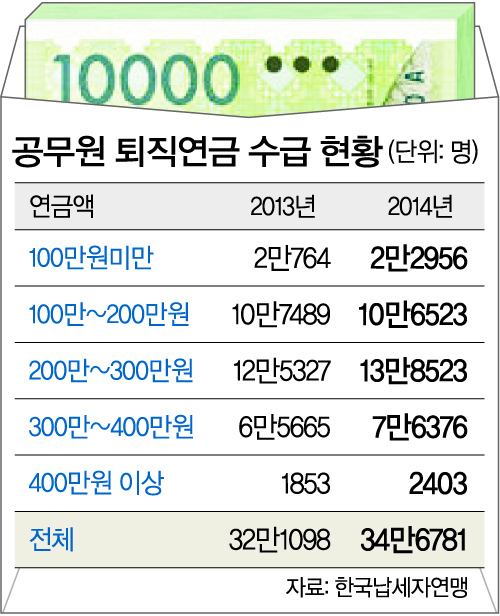
For those who have served in public office for a long time, the result of checking their estimated pension amount is often the part they are most curious about and simultaneously receive the biggest shock from. Having dedicated 30 long years to the nation, one naturally believes a comfortable retirement is guaranteed, but when actually calculated, the amount is often surprisingly lower than expected. In reality, it is common to find that a retiree who faithfully worked for 30 years as a Grade 9 civil servant receives a monthly pension amount ranging between 1.3 million and 1.9 million won. Of course, this may seem relatively high compared to the average National Pension benefit of around 700,000 won, but voices expressing disappointment are loud when considering inflation and the cost of maintaining one’s status during active service. While there are high-income recipients receiving over 3 million won per month from private school or civil servant pensions due to high contributions and long durations, this is largely limited to senior positions or those with long tenure. To face the accurate reality, one must directly check their estimated pension amount on official platforms based on their rank and contribution history.
Even after spending 30 long years in public service, facing a pension amount lower than expected can bring a great sense of disillusionment. Although the conditions are better than those for National Pension subscribers, it may be insufficient to cover fixed expenses.
Estimated benefits after 30 years of service may fall short of expectations depending on rank, so accurate prior verification is necessary.
4. Key Changes in the System for Duty-Related Deaths in Hazardous Duties and Survivor Pensions
The compensation system for active civil servants who risk their lives to perform dangerous duties for the state and the people, as well as the survivor pension system, is being continuously refined. In the past, there were many criticisms that even when civil servants tragically died in the line of duty while performing hazardous tasks, the pensions received by their survivors were insufficient to maintain a practical standard of living. With recent system improvements, the survivor pension payment rate for civil servants who died in hazardous duties has been significantly increased to around 47% of the standard monthly income. Additionally, the minimum payment amount for the death condolence fund for civil servants who died in the line of duty has also been raised by nearly double, helping to alleviate the financial burden on survivors to some extent. These changes serve as a minimal safety net that allows civil servants working with a sense of mission in the field and their families to focus on their duties with peace of mind. Going forward, the system must be supplemented more thoroughly to ensure that those who dedicate themselves to the state receive proper respect and compensation.
The survivor pension payment rate for civil servants who risk their lives in hazardous fields is being gradually increased. Practical support for survivors, such as raising the minimum payment amount for the death condolence fund, is being strengthened to boost morale in the field.
Survivor protection has been strengthened by increasing the survivor pension payment rate and the minimum death condolence fund amount for civil servants who died in hazardous duties.
5. Civil Servant Pension Fund Welfare Mall and Various Lifestyle Convenience Benefits
Not many people are aware that there are various welfare benefits and convenience facilities available to a wide range of people, including not only active civil servants but also retired pension recipients. The official welfare mall platform operated by the Civil Servant Pension Fund provides substantial discount benefits ranging from purchasing daily necessities to travel, leisure, and health checkups. This space, designed to allow active employees and pension recipient families to enjoy practical cost savings in their daily lives, is like a hidden treasure trove. Additionally, traveling family musical performances and cultural events hosted by the Fund are held at local community welfare centers, enriching the leisure lives of retirees. By actively utilizing the various discount benefits and partnership services of the welfare mall, in addition to the monthly pension, one can save a considerable amount on living expenses. While life after retirement can easily become bland, participating in the various programs provided by the Fund alone can lead to a vibrant daily life.
The welfare mall operated by the Civil Servant Pension Fund provides various lifestyle conveniences and discount benefits to both active employees and retired recipients. It also plays a significant role in improving the quality of life for retirees by providing opportunities to watch cultural and artistic performances and supporting leisure programs.
Utilizing the Civil Servant Pension Fund welfare mall and cultural programs allows for post-retirement living expense savings and leisure enjoyment.
6. Mindset and Outlook for Successful Retirement Planning
Even with the sturdy fence of the civil servant pension, it is becoming increasingly difficult to feel completely secure about retirement in a rapidly changing economic environment. With soaring prices and the pension start date being gradually delayed, multi-faceted asset management is essential to sustain life after retirement. Rather than simply trusting the pension and being complacent, one must consider personal savings, ways to utilize the lump-sum retirement payment, and even part-time jobs to fill the income gap in advance. Although the account may look light right now due to contribution deductions, the stability of life after retirement ultimately depends on how meticulously one has prepared for the future today. Since related systems are highly likely to continue changing to ensure fiscal soundness, one must pay attention to the latest information. If one accurately checks their estimated benefit amount and fills in the gaps starting from this moment, they can welcome a peaceful retirement without fear.
There are too many variables in the upcoming retirement to blindly trust the pension system alone, so multi-faceted retirement planning must begin. Prepare for the income gap and inflation by gradually setting up personal asset management and post-retirement plans starting now.
One must prepare for the upcoming retirement gap through thorough prior verification of estimated benefits and multi-faceted retirement planning.
Frequently Asked Questions
=