
To cut to the chase, the most stable strategy right now is not to lock in fixed rates but to diversify into short-term deposit products to withstand interest rate volatility. As of late September 2026, market interest rates are still on an upward trend, and the spread between loan and deposit rates at banks has widened for the first time in five months, increasing the burden of funding costs. While corporate deposit rates have surpassed 4%, triggering a ripple effect on individual deposit rates, this dynamic may vary depending on banks’ profitability management. Rather than rushing into long-term deposits based solely on the numbers, it is essential to carefully evaluate products according to your specific use of funds and time horizon. In this article, we will calculate actual interest yields based on the latest rate trends and practically outline deposit strategies optimized for cash flow management.
=
Comparing Deposit Interest Rates in September 2026: When to Move in the 4% Era

1. The Relationship Between Rising Market Rates and the Widening Loan-Deposit Spread
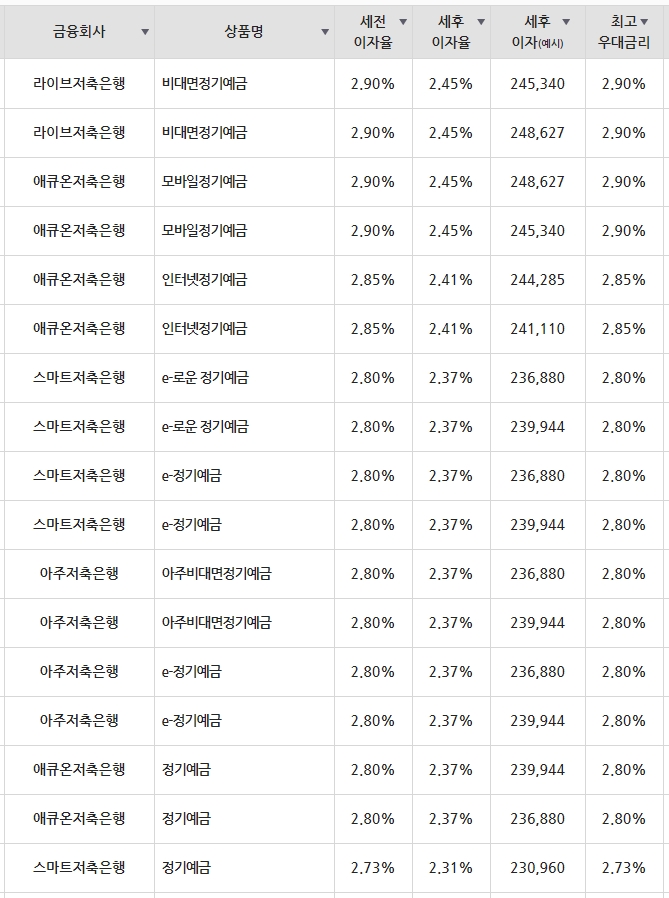
The biggest issue in the financial sector right now is the widening gap between loan and deposit interest rates, known as the loan-deposit spread. In a situation where market rates continue to rise, loan rates adjust immediately, but deposit rates are determined cautiously based on banks’ funding needs and operational strategies. This year, the burden on banks’ funding costs has increased significantly due to two overlapping negatives: weakened demand for bank bonds and rising market rates. Bank executives are eager to secure loan-deposit margins to cover fixed costs such as deposit insurance premiums and reserve requirements. Consequently, the increase in deposit rates for individual customers remains slightly lower than the increase in loan rates. While this serves as a defense of profitability for banks, it results in a delay in improving the real yield for savers. To bridge this gap, one must target highly competitive internet banks or special promotional products.
There is a structural limitation where the rise in deposit rates lags behind loan rates due to rising market rates and banks’ funding cost burdens.
2. Institutional Fund Flows and the Stability of Individual Deposits
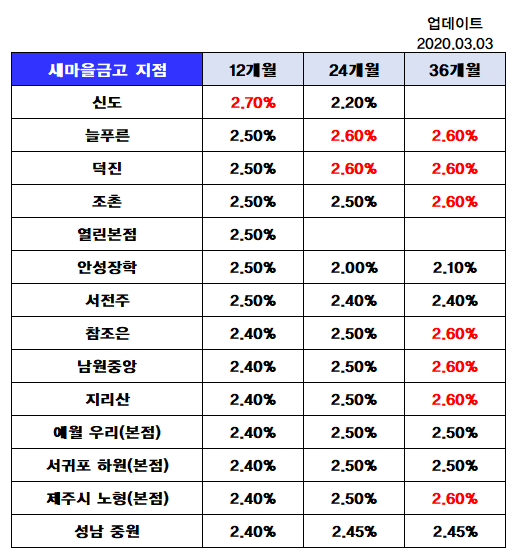
As seen in cases involving major corporations like Samsung and Hynix, large-scale inflows and outflows of institutional investor funds significantly impact a bank’s Liquidity Coverage Ratio (LCR). Individual deposits tend to remain relatively stable because they are typically smaller in scale and withdrawn gradually, whereas institutional funds can be withdrawn in large amounts at once, posing a risk. Banks, keeping this uncertainty in mind, tend to rely on gradual rate increases rather than sharply raising individual deposit rates. If market anxiety rises and institutional funds flee en masse, banks may competitively raise individual deposit rates to act as a buffer. Conversely, if the market stabilizes, individual deposit rates could fall rapidly. Therefore, rather than being swayed by short-term rate fluctuations, it is crucial to secure a safety margin that matches the nature of your funds. Since individual time deposits cannot be easily withdrawn, it is wise to always keep a portion of your funds separate as a reserve.
Banks’ liquidity risks caused by the volatility of institutional funds indirectly influence the determination of individual deposit rates.
3. The Impact of Corporate Deposit Rates Breaking 4% on Individuals

It is a notable signal that major commercial banks, including Woori Bank, have raised the fixed deposit rates for corporate and household customers to 4.09% annually. This represents a jump of 0.44 percentage points compared to the end of August and an increase of over 1.12 percentage points since the beginning of the year. Although this rate applies to corporate customers and may not be directly applicable to general individuals, it suggests that banks’ internal funding prices have risen significantly. From an individual customer’s perspective, if corporate rates exceed 4%, there is a high probability that individual deposit rates will soon break through the 4% barrier or at least hold steady in the high 3.9% range. However, since corporate deposits involve large sums of locked-in capital, the margin banks can tolerate differs from that of individual deposits. Considering this, individuals should not be lured by internet banks’ advertisements of rates in the 5% range; instead, they should compare the total yield, which includes the base rate of commercial banks plus any bonus rates.
The 4% breakthrough in corporate deposit rates reflects rising internal funding prices for banks, which serves as a psychological support line for individual deposit rates.
4. Calculating Simple Interest, Compound Interest, and Real Yields
Even with the same nominal interest rate, the difference in calculation methods can result in a gap of several million won after 10 years. Therefore, it is essential to distinguish between simple and compound interest when comparing rates. Simple interest involves adding interest to the principal only at the end, while compound interest reinvests the interest into the principal to generate interest from the following year. For example, depositing 10 million won at a 5% rate for 10 years yields approximately 5 million won in interest with simple interest, but about 6.28 million won with compound interest. This difference of roughly 1.29 million won grows exponentially over time, making compound interest always advantageous for long-term deposit products. However, for short-term deposits of less than one year, tax deduction benefits or withdrawal flexibility may be more important than the compounding effect. Considering inflation, if the real yield (nominal rate minus inflation rate) is close to zero or negative, managing funds flexibly rather than holding them in deposits may be better for your mental well-being.
Long-term funds should utilize compound interest, while short-term funds should have their yields recalculated by considering liquidity and tax benefits comprehensively.
5. How to Use AI-Powered Deposit Comparison Tools
With the advent of AI agents that perform price comparisons on behalf of consumers, the process of choosing deposit interest rates has become automated and convenient. In the past, one had to visit bank websites one by one, take screenshots, and organize them in Excel. Now, AI collects real-time rates and suggests the optimal combination. Just as you might switch to a cheaper plan if your communication bill is high, AI can help you move your funds to a bank offering a higher rate if your current deposit rate is low. However, since AI recommendations may only be optimized for specific rates, final verification still requires human judgment. In particular, conditions that AI might overlook, such as “early withdrawal penalties” or “early termination rates,” must be checked manually. Use these tools, but do not blindly trust the AI’s calculations; develop the habit of finally checking whether the result aligns with your long-term financial plan.
AI-based rate comparison tools maximize efficiency, but users must verify details such as early withdrawal conditions themselves.
6. The Optimal Deposit Diversification Strategy for September 2026
When interest rate inflection points overlap as they do now, diversification is the answer rather than going all-in. It is advisable to divide your total funds into three equal parts and place them in deposits with different terms. Allocate the first one-third to a 6-month short-term deposit to secure a “launch pad” that allows for immediate response to unexpected rate spikes in the October market. Lock the second one-third in a 1-year fixed deposit to secure the currently offered rates around 4%. Keep the final one-third in an MMD (Money Market Deposit) or demand deposit that allows for instant transfers, enabling you to flexibly handle emergency withdrawals or opportunity costs. Note that the advertised lowest or representative rates at commercial banks are for reference only and may differ from the rate applied after review; always read the terms and conditions carefully. If you visit a bank branch directly and use a consultation-based deposit, you may receive an additional rate of 0.1 to 0.2%p higher than standard products. As you approach the year-end household budget review, developing the habit of transferring funds in small, frequent increments is key to surviving the rising interest rate environment.
Diversifying funds into short-term, medium-term, and liquid assets by splitting them into three equal parts minimizes interest rate volatility risk while maximizing profitability.
Frequently Asked Questions
=