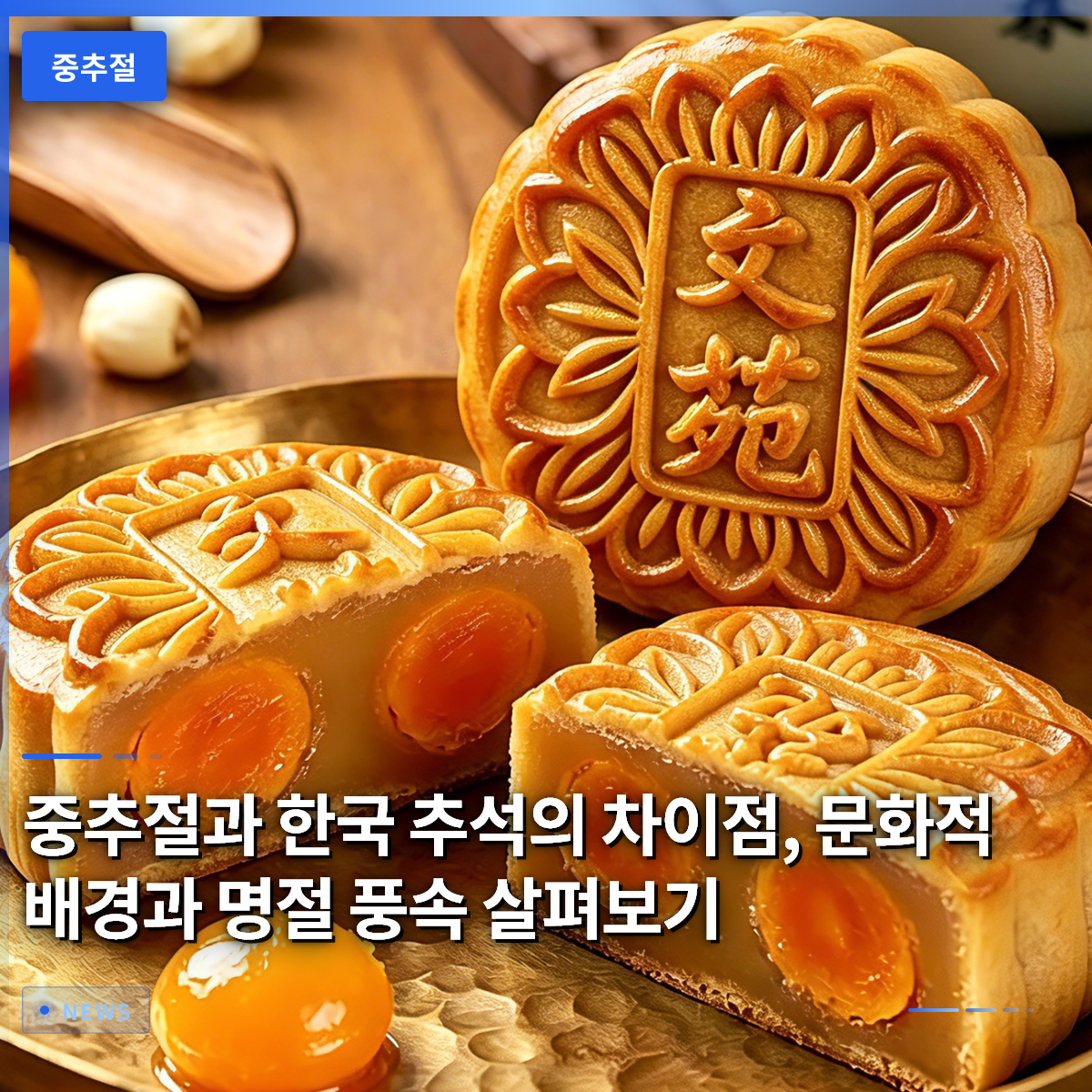
Although the Mid-Autumn Festival and Korea’s Chuseok fall on similar dates, they differ significantly in their core objectives and seasonal customs. While both involve sharing gratitude while gazing at the full moon on the 15th day of the eighth lunar month, the continental approach, which emphasizes family unity, is fundamentally different from our tradition of sharing the joy of the harvest. Recently, some online spaces have seen unproductive debates regarding cultural origins, but examining historical documents and traditions reveals that each holiday has undergone its own unique development process. In this article, we will broadly explore the specific meaning of the Mid-Autumn Festival and the holiday landscapes of neighboring countries. It will be a beneficial time to understand the cultural diversity of our neighbors during the holiday season. We will unravel the deep historical background of Asian seasonal customs, which are often overlooked, through engaging stories.
=
Differences Between the Mid-Autumn Festival and Korea’s Chuseok: Exploring Cultural Backgrounds and Holiday Customs
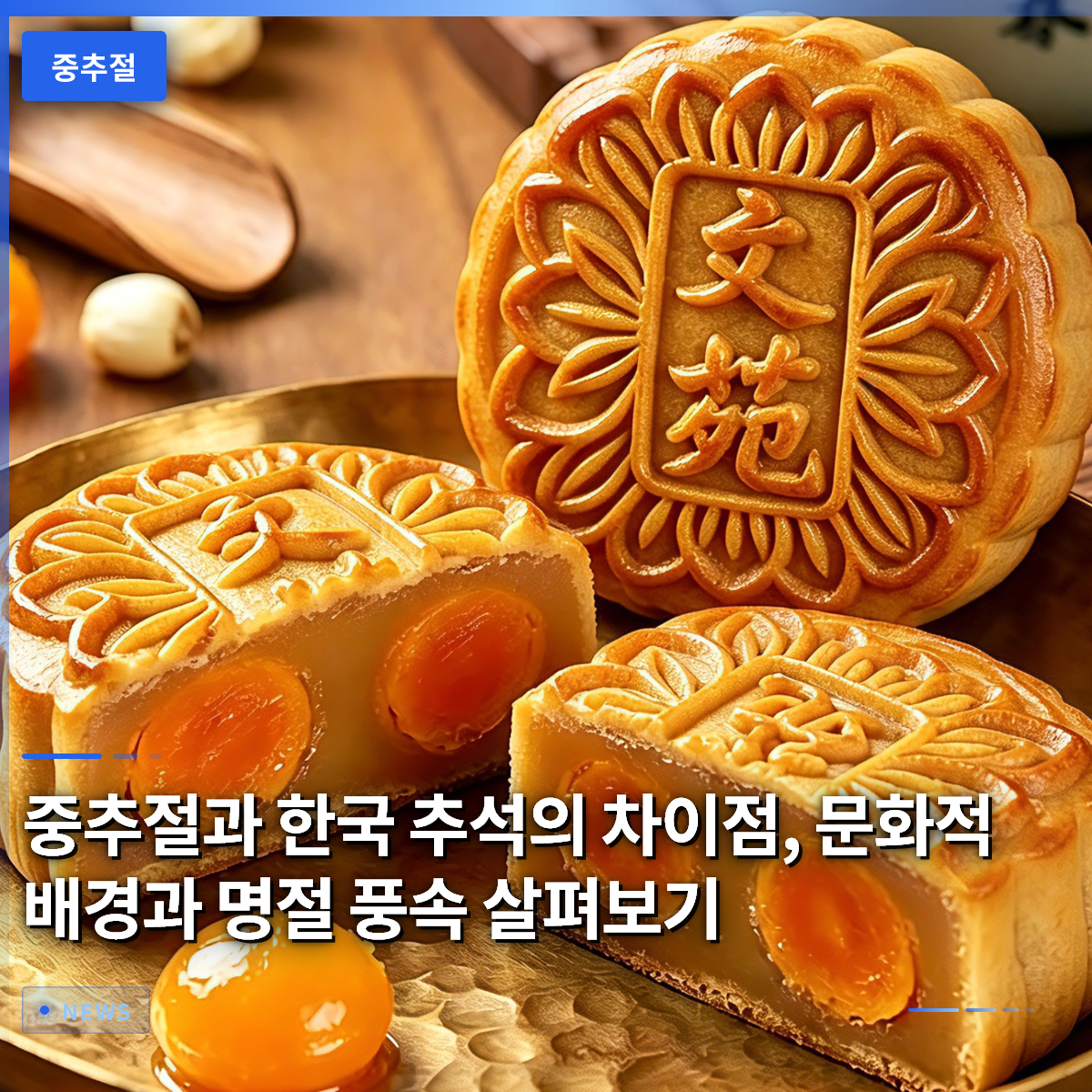
1. Fundamental Differences Between the Mid-Autumn Festival and Korea’s Chuseok

The Mid-Autumn Festival is a holiday in China commemorating the middle of autumn, having developed in a distinct form over a long history. This contrasts with Korea’s Chuseok, a tradition dating back to the Silla period where villagers gathered in the square to sing, dance, and enjoy a festival of production. In contrast, the continental Mid-Autumn Festival has a strong character of locking the family door and gathering blood-related family members to spend intimate time together. This difference is a natural phenomenon resulting from the different forms of agricultural society and social structures.
Despite entirely different cultural backgrounds, some netizens make claims confusing the origins. Professor Seok Kyung-deok has also directly refuted such forced claims through social media to raise awareness of the uniqueness of our culture. The holiday dates merely coincide by chance; the historical memories and emotional orientations filling them are completely separate stories. Just as we knead songpyeon (rice cakes) during Chuseok to share with neighbors and pray for abundance, they welcomed autumn in their own way. Thus, cultures with different roots have beautifully bloomed in their own ways within the broad fence of Asia.
The Mid-Autumn Festival and Korea’s Chuseok share the same lunar timing but have entirely different social backgrounds and historical development processes.
2. The Story of Mooncakes and Family Unity
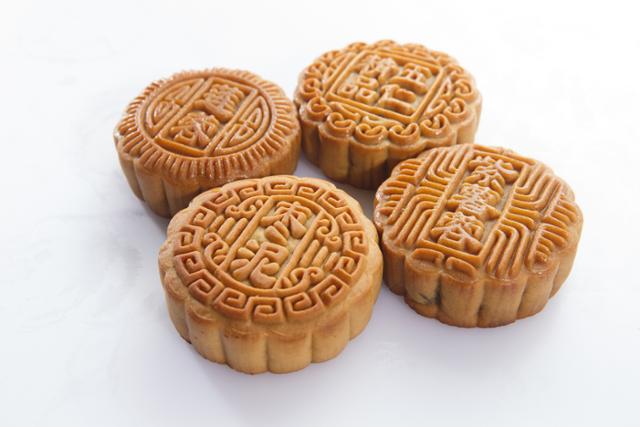
The most representative food symbolizing the Mid-Autumn Festival is the round mooncake. The mooncake is round to embody the wish that families, like the round full moon in the sky, gather in one place, do not separate, and live harmoniously. The core objective of the Mid-Autumn Festival, which originated from the custom of the Zhou dynasty monarchs performing sacrifices to the cool autumn moon, is expressed by the term “tuan yuan” (family reunion). Even children who have gone far away return to their hometowns during this time to sit around the dining table with their parents.
They eat the mooncakes placed on the table, divided equally with a knife, reflecting on the meaning of scattered families coming together as one. While similar in context to the Korean tradition of kneading crescent-shaped or pebble-shaped songpyeon to bless each other during Chuseok, there are subtle differences in shape and philosophy. The mooncake, with its sweet filling packed into a round, firm dough, is itself a symbol that has maintained the identity of the holiday for a long time. The act of sharing this food is an important ritual that strengthens the cohesion of the kinship community, going beyond merely filling one’s stomach.
The round mooncakes eaten during the Mid-Autumn Festival contain the meaning of “tuan yuan,” signifying that families gather in one place without separating.
3. The Landscape of Golden Week and Large-Scale Population Movement

During the Mid-Autumn Festival period, all of Asia is engulfed in a wave of massive population movement. In particular, in China, when the Mid-Autumn Festival and National Day holidays coincide, highways and train stations are packed with returning home and travelers, leaving no room to step. In years when highway tolls remain paid, severe traffic congestion occurs, causing hardship for drivers, but it does not stop their journey toward their hometowns. It has become common for younger generations to exchange fun Mid-Autumn Festival emoticons via smartphone messengers to check on each other.
These major holiday breaks not only affect the domestic market but also have a significant impact on the tourism markets of neighboring countries. As tourists from neighboring countries take advantage of the holiday, they flock to nearby countries, including Korea, bringing vitality to major urban tourist attractions. The average daily number of passengers at Incheon International Airport surges well above normal, and the flow of foreign tourists to major landmarks in Myeongdong, Seoul, and Busan does not cease. Travel agencies and merchants prepare various welcome events targeting this period, managing busy schedules.
The Mid-Autumn Festival holiday is a massive golden week that drives the tourism industry across Asia, accompanied by large-scale traffic congestion.
4. Autumn Holiday Customs in Various Asian Countries
In addition to Korea and China, many Asian countries celebrate diverse autumn holidays around the 15th day of the eighth lunar month. Interestingly, Vietnam’s Mid-Autumn Festival arrives on exactly the same date as Korea’s Chuseok, and its nature is also very unique. Vietnam’s autumn holiday has a much stronger festival atmosphere where children are the protagonists running through the streets, rather than a ritual centered on elders. Colorful lion dances are performed on every street, and children participate in parades holding colorful lanterns in their hands.
In Taiwan, the Mid-Autumn Festival is also a significant national holiday, where a modern custom of families gathering outdoors to enjoy barbecues has taken root. In the past, the tradition of drinking tea while watching the moon was strong, but as generations have changed, the culture of the whole family gathering in the yard to grill meat has become the mainstream. Thus, even if the names are similar, the way holidays are enjoyed has evolved according to the social atmosphere and generation of each country. The process of respecting and understanding each other’s cultural differences makes the cultural diversity of the Asian region even richer.
Asian countries such as Vietnam and Taiwan enjoy autumn holidays in the same period with their own unique festival cultures.
5. Urban Landscapes Bustling with Foreign Tourists During Holidays
Recently, holiday breaks have become an important opportunity for international tourism exchange, going beyond simply families gathering. In years when Korea’s Chuseok, China’s Mid-Autumn Festival, Japan’s Silver Week, and Taiwan’s National Day coincide, the entire urban area is packed with global tourists. The flow of foreigners continues from airport arrival halls to large shopping malls, fully enjoying the holiday special. Seoul’s palaces and traditional markets are filled with tourists strolling in hanbok, radiating vibrant energy.
A considerable number of foreigners specifically time their entry to coincide with this holiday period to experience Korean pop culture content directly. It has become a common sight for them to visit places they saw in broadcasts or videos to take commemorative photos and taste traditional food. Office workers and students who have taken long vacations for their national holidays come to Korea to enjoy shopping and food tours. Thus, holidays have expanded beyond being a festival for a single country to a place of communication where Asian neighbors experience each other’s cultures firsthand.
When holidays from various countries overlap, Korean urban areas are bustling with foreign tourists, creating a new holiday landscape.
6. The Value of Holiday Culture and Future Prospects
Asian autumn holidays, including the Mid-Autumn Festival and Chuseok, have served as a sturdy prop strengthening the cohesion of each society over a long period. Although the way holidays are spent is gradually changing from visiting hometowns to travel and leisure activities as time passes, the warm hearts contained within remain unchanged. The preciousness of time spent gathering with family and friends who rarely meet due to busy daily lives to share their hearts will remain eternal in the future. We hope that the unique historical value of each country’s holiday will not be damaged and will lead to peaceful cultural exchange based on mutual respect. On the upcoming holiday, please enjoy the abundance of autumn by sharing a warm cup of tea with your loved ones. We hope that we can all spend a meaningful time finding a little leisure in our own places and looking around us.
Autumn holidays maintain the essential value of sharing warm affection between people, even amidst changes in form.
Frequently Asked Questions
=