The Individual Retirement Pension (IRP) account is an essential financial product that allows you to maximize tax deductions of up to 9 million KRW annually while simultaneously growing your retirement assets. Unlike in the past, when severance pay was primarily paid as a lump sum, more and more people are now managing their own retirement funds through the individual retirement pension system. It is widely accessible, as freelancers and self-employed individuals can join in addition to regular employees. In fact, it is common to see colleagues rushing to make additional contributions right before the year-end tax settlement or opening accounts late and missing out on the benefits. In this article, we will detail everything from the exact eligibility criteria for IRP accounts to tax deduction limits, asset management methods, and smart payout strategies. If you follow along step by step, you will be able to formulate a solid strategy to protect your valuable retirement savings.
=
Essential Strategies for IRP Tax Deduction Limits and Payout Methods
1. IRP Eligibility and Basic Concepts

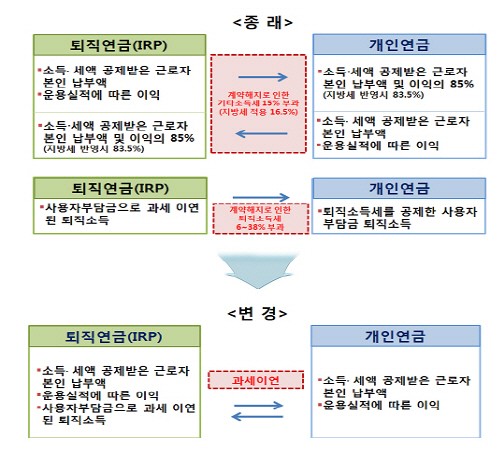
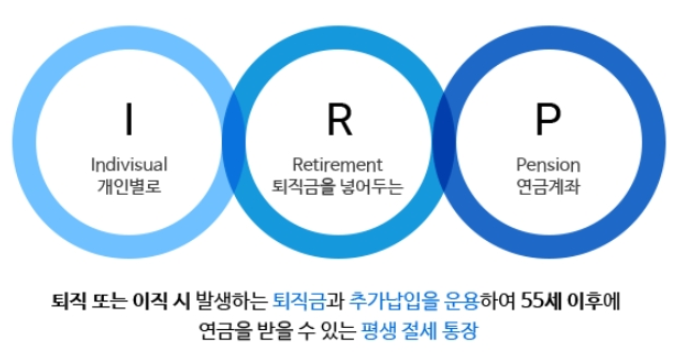
The IRP account is a powerful tax-saving tool available to all economically active individuals with income. While it was once considered exclusive to corporate employees, recent legal amendments have significantly expanded eligibility to include self-employed individuals and freelancers. Even those enrolled in occupational pension schemes, such as civil servants, military personnel, and teachers, can open accounts in their personal capacity and enjoy tax benefits at any time. If you are an employee whose company operates a Defined Benefit (DB) or Defined Contribution (DC) pension plan, you can naturally transfer the severance pay received upon retirement into this account to continue growing your assets. You have likely heard stories of freelance acquaintances who contributed to their IRP accounts during their comprehensive income tax filing and received substantial tax refunds. This way, anyone with verifiable income can achieve the dual goals of retirement preparation and tax savings. A major advantage is that, in addition to company-paid severance, contributors can voluntarily make additional cash deposits to grow their savings. The account is designed to allow investment in a variety of financial products, ranging from standard bank deposits to performance-linked funds. In particular, the key to saving taxes when changing jobs or retiring is to transfer your existing severance pay directly into this account rather than using it elsewhere. If you receive severance pay as a lump sum, you must pay severance tax immediately; however, if you transfer it to a pension account, tax payment is deferred until you actually receive the pension. Ultimately, you can enjoy the compounding effect of your principal growing, making this a necessity rather than an option for employees with job-hopping experience.
All employees, self-employed individuals, and freelancers with income can join, and transferring severance pay upon job changes allows for tax deferral benefits.
2. Tax Deduction Limits and Differences from Pension Savings
To fully utilize pension accounts, it is crucial to accurately understand the annual tax deduction limit structure. Under current tax laws, you can receive tax deductions of up to 9 million KRW annually by combining Pension Savings accounts and IRP accounts. While Pension Savings alone allows for a maximum deduction of 6 million KRW, utilizing an IRP account allows you to fully reach the 9 million KRW limit. Employees with a total annual income of 55 million KRW or less can enjoy a high deduction rate of up to 16.5%, resulting in a maximum refund of 1.485 million KRW. Even if your total income exceeds this amount, you can still receive a deduction rate of 13.2%, allowing you to recover a significant amount during year-end tax settlement. Many people are confused about the differences between Pension Savings and IRP accounts, but the main distinction lies in the autonomy and mandatory nature of the available products. Pension Savings allows for free investment in risky assets, such as stocks and Exchange-Traded Funds (ETFs), up to 100% of the assets, offering a wide range of management options. In contrast, IRP accounts have a legal requirement to hold at least 30% in safe assets to ensure the security of retirement funds. Additionally, because IRP accounts are designed to receive mandatory severance pay, the conditions for early withdrawal are much stricter than those for Pension Savings. It is not uncommon to see people regretfully facing a “tax bomb” in the form of miscellaneous income tax after canceling their IRP accounts for urgent cash needs. Therefore, when making contributions to maximize tax deduction limits, you should carefully understand the characteristics of both accounts and adjust the allocation according to your investment style.
You can receive tax deductions of up to 9 million KRW annually by combining Pension Savings and IRP, and IRP accounts require a mandatory 30% allocation to safe assets.
3. Asset Management Strategy: 70% Risky Assets and 30% Safe Assets
Within an IRP account, the allocation to risky assets, such as equity funds or ETFs, is capped at 70% of the total portfolio. The remaining 30% must strictly be allocated to safe assets, such as bond funds, term deposits, or principal-guaranteed products. While aggressive investors may find this rule limiting in terms of potential returns, it serves as a shield to protect the stability of retirement funds. In practice, even during stock market crashes, safe assets effectively mitigate the overall portfolio losses. It is necessary to periodically review asset allocations and rebalance into safe assets if the proportion of risky assets has increased due to stock price rises. Simply leaving the 30% safe asset allocation in low-interest general deposits is not a wise strategy when considering inflation. Recently, a common strategy is to utilize fixed-term interest rate products or IRP-specific preferential interest rate products to secure stability while earning slightly higher interest. Conversely, the 70% risky asset space is used to actively grow assets by investing in index-tracking ETFs, which have high volatility but are expected to trend upward over the long term. Setting up automatic monthly transfers on payday and consistently purchasing designated funds or ETFs through systematic investing is the most stress-free approach. If you remain unaffected by short-term market fluctuations and consistently accumulate funds with a long-term perspective of ten years or more, you will clearly experience the magic of compound interest.
Maintain the 70/30 ratio of risky to safe assets, and pursue both returns and stability through periodic rebalancing and systematic investing.
4. Early Withdrawal Conditions and How to Avoid Tax Penalties
Since IRP accounts are intended for retirement, contributors are generally not allowed to withdraw funds at their discretion. However, early withdrawal is permitted if specific legal conditions are met, such as purchasing a home in one’s own name (for non-homeowners), securing a deposit for a lease, or requiring medical treatment for six months or more for oneself or a family member. Exceptionally, withdrawals are also allowed in cases of severe financial hardship, such as company bankruptcy, personal bankruptcy declaration, or the initiation of personal rehabilitation proceedings. If you cancel or withdraw funds for simple change of heart or personal financial needs without meeting these legal conditions, you will suffer significant losses. You will have to return all tax deduction benefits received to date, and a high miscellaneous income tax rate will be applied to the investment returns and a portion of your principal contributions. While no tax is imposed on personal contributions that did not receive tax deductions, there is the inconvenience of having to submit proof documents directly to the financial institution. A substantial tax rate of 16.5% is withheld on the amounts that received tax deduction benefits and the investment returns generated from them. You may find yourself in an absurd situation where you cancel the account for urgent cash needs, only to be hit with an unexpected tax bomb, resulting in less money in hand than expected. Therefore, when you urgently need a lump sum, it is far more advantageous to explore collateral loans or policy loans offered by financial institutions rather than canceling the entire account. You must always remember that paying a little in loan interest is a shortcut to preserving your assets by avoiding tax payments.
Early cancellation without legal grounds incurs a 16.5% miscellaneous income tax, so consider alternatives like loans first.
5. Retirement Payout Methods and Tax-Saving Tips
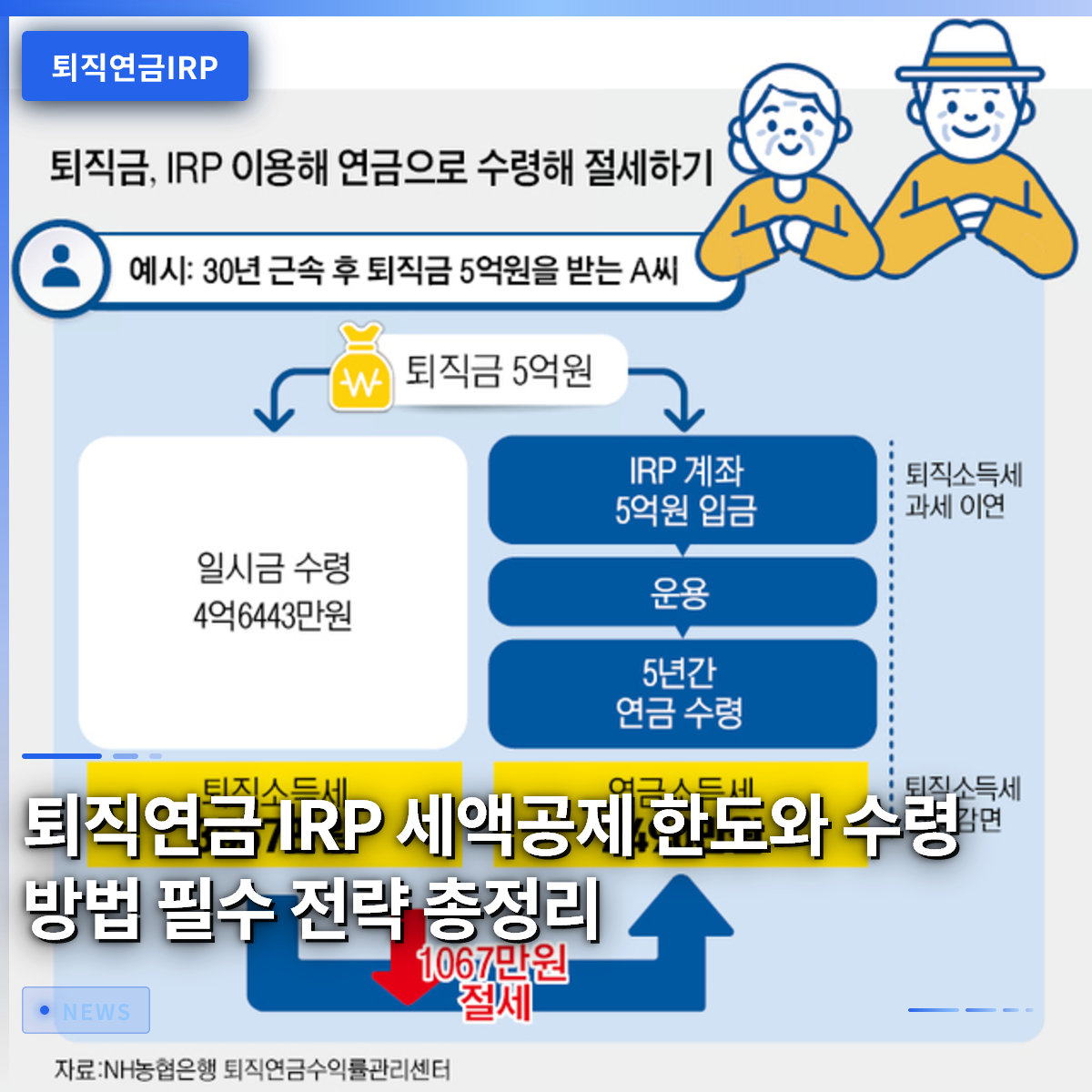
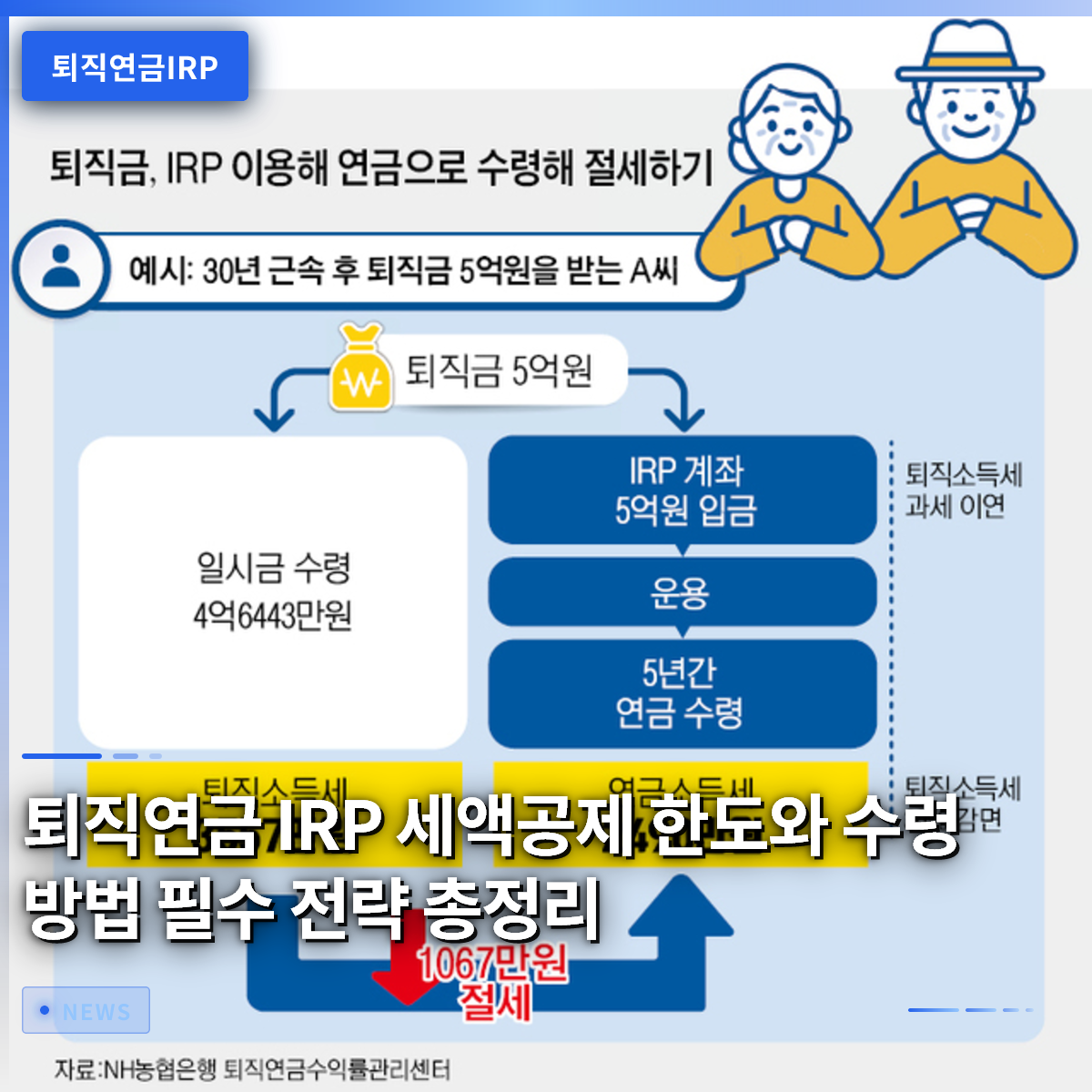
When it is time to withdraw funds from your IRP account upon retirement, receiving the money as a pension rather than a lump sum is the key to saving on taxes. When severance tax is withheld, receiving it as a pension allows for a 30% reduction in the original tax liability, and this reduction rate increases with the number of years of service. For example, if you have been receiving the pension for more than 10 years, the severance tax can be reduced by up to 40%, dramatically lowering the tax burden. Additionally, by adjusting the period so that the annual pension receipt does not exceed 15 million KRW, you can avoid comprehensive income tax aggregation and opt for separate taxation at a lower rate. This is the most exemplary way to design a retirement plan that creates a stable cash flow while wisely saving on taxes. To fully enjoy these tax benefits, you must be at least 55 years old and choose to receive the pension over a period of at least 10 years. You can freely set the receipt frequency, such as receiving a fixed amount monthly or quarterly, to match your post-retirement lifestyle. After retiring, transferring funds to an IRP account and delaying the start of withdrawals as long as possible is also a good strategy if you do not immediately lack living expenses. This is because the funds continue to be managed in financial products, generating returns while they remain in the account. This is why many retired seniors choose to extend their pension receipt period as long as possible, using the monthly payments as their living expenses.
Receiving funds as a pension over a period of 10 years or more instead of a lump sum can reduce severance tax by up to 40%, significantly lowering the tax burden.
6. Outlook for IRP Utilization for a Successful Retirement
The IRP system will continue to evolve in a more flexible direction with enhanced benefits to guarantee substantial retirement income for citizens in an aging society. The government and financial institutions are continuously upgrading digital systems and integrated asset management services to allow contributors to manage assets and receive consultations more conveniently. It has become a natural part of daily life for employees to check their accounts to maximize tax deduction limits every year during the year-end tax settlement period. In a reality where prices continue to rise and post-retirement life is getting longer, the IRP account is not an option but an essential survival tool. Even if the amount is not burdensome right now, starting with small monthly contributions is the most certain investment for your future self. Based on the tax deduction limits and management principles learned today, please establish your own solid retirement asset management plan right now.
In an aging society, IRP is an essential survival tool, and consistent small contributions and systematic asset management lead to a successful retirement.
Frequently Asked Questions
=