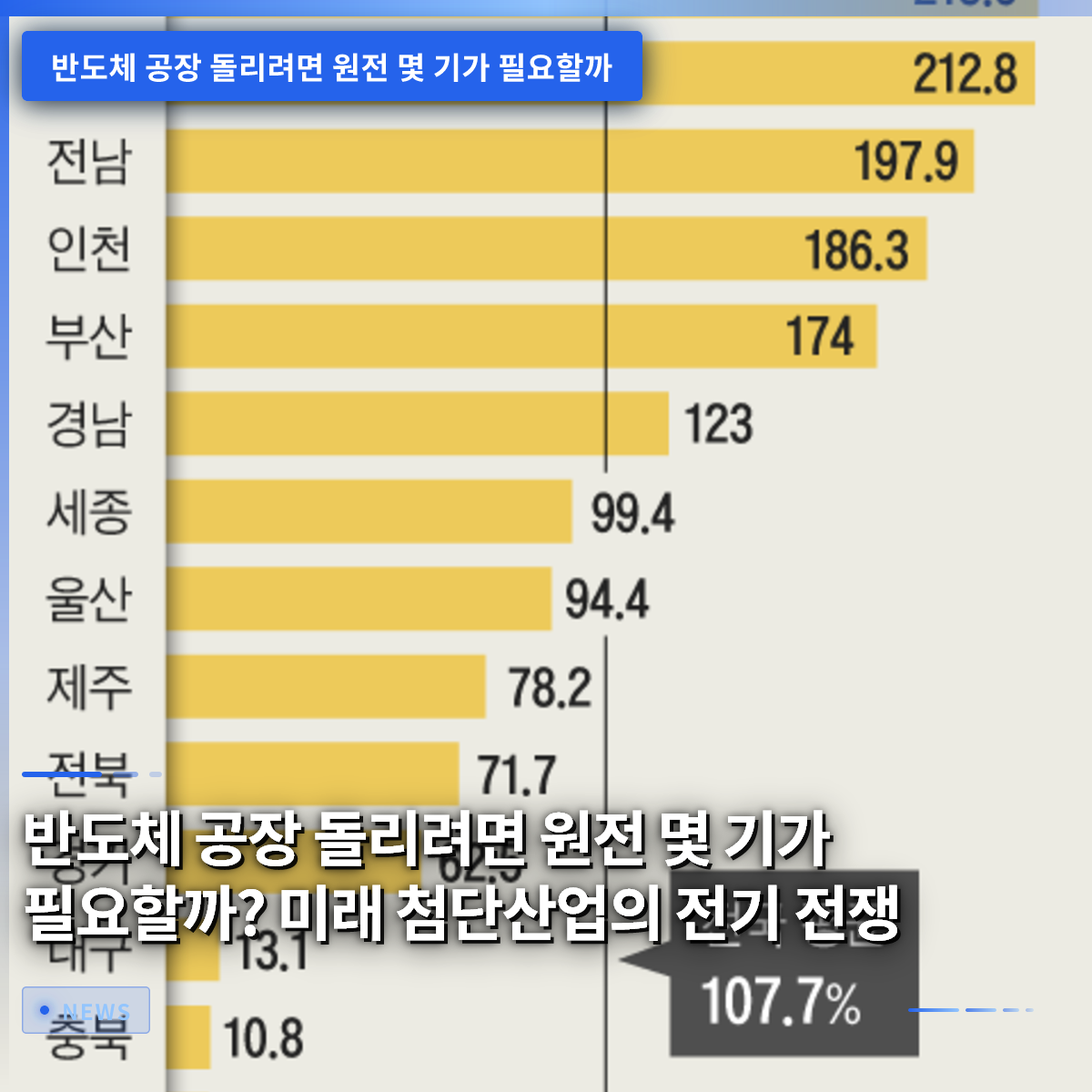
The infrastructure required to produce a single fingernail-sized semiconductor and run artificial intelligence smoothly is becoming unimaginably massive. Semiconductor fabrication plants must operate hundreds of precise processes without a single second of downtime, while AI servers run 24/7, constantly dissipating heat. As the government designates semiconductors and AI as the next growth engines, the speed at which we secure the necessary power, water, and transmission grids has become a critical issue. According to relevant ministries, the additional power required for the government’s large-scale projects is estimated to reach a staggering 38 gigawatts. Compared to the installed capacity of major domestic nuclear reactors, this is an enormous scale that would require building 27 entire reactors to handle. Of course, we are not actually going to build that many reactors, but this figure clearly illustrates the immense burden that future advanced industry investments will place on our power market. Today, we will take a detailed look at why such a massive amount of electricity is needed to run advanced factories and what the challenges are in solving this problem.
=
How Many Nuclear Reactors Are Needed to Power a Semiconductor Factory? The Power War for Future Advanced Industries
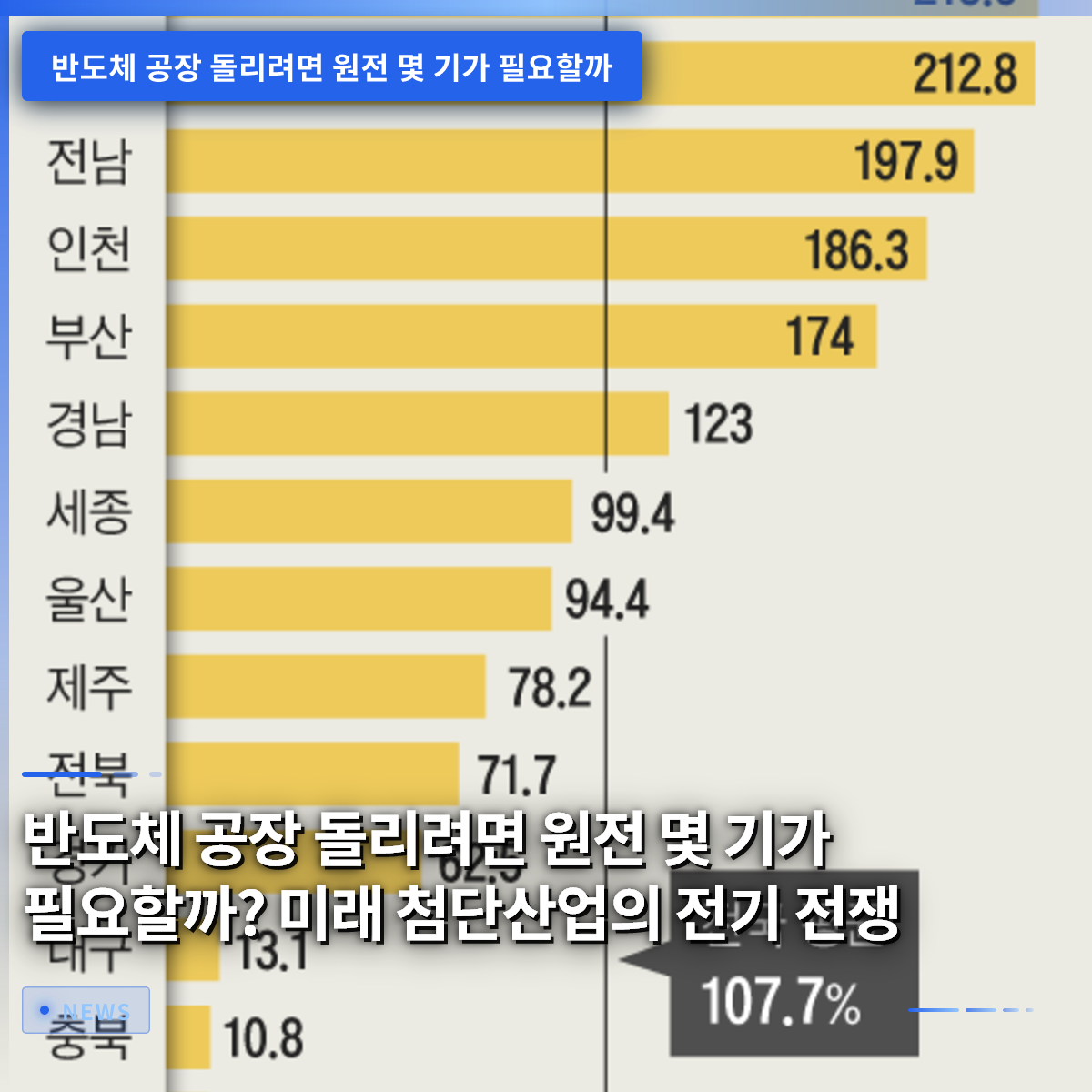
1. Soaring Power Demand
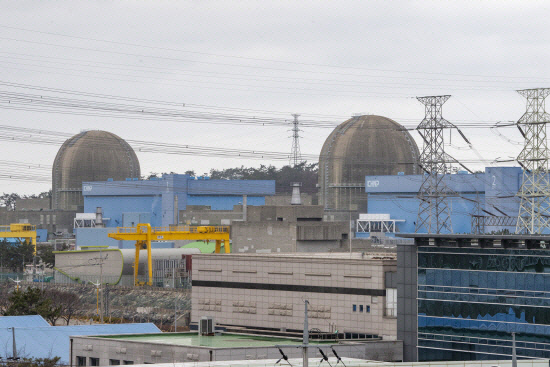
Semiconductor factories are easily considered the biggest power consumers among South Korea’s industrial sites. To etch microscopic circuits onto silicon wafers, the process must go through hundreds of complex stages, from deposition to exposure, etching, and cleaning. Since massive equipment must operate continuously during this process, the instantaneous power consumption is enormous. Furthermore, because even a single speck of dust can cause defects, the air conditioning systems that perfectly control the temperature and humidity inside the factory run all day long. Compared to factories of the past, today’s advanced facilities require an incomparably larger amount of electricity. Even a slight interruption in power supply can lead to an accident where thousands of wafers must be discarded entirely. Therefore, stable power supply can be seen as an invisible core factor determining semiconductor yield.
The semiconductor manufacturing process, a core driver of the domestic industry, is highly sensitive to power outages. As air conditioning facilities and manufacturing equipment operate 24/7, power consumption increases exponentially.
The complex manufacturing processes and rigorous environmental maintenance systems in semiconductor factories consume massive amounts of electricity continuously.
2. The Weight of the Yongin Cluster

The large-scale semiconductor cluster being developed in Yongin, Gyeonggi Province, stands at the forefront of this power crisis. This massive complex, where production facilities from Samsung Electronics and SK Hynix will be built side by side, is planned to house 10 factories. It is estimated that once all these production facilities are fully operational, their daily power consumption will reach 14.7 gigawatts. This figure is a level that can barely be met by drawing power from more than 10 major domestic nuclear power plants. Supplying such an enormous amount of electricity at once to the limited area of the metropolitan region is a practically very difficult task. This is why it is necessary to either draw power from other regions or establish self-generation facilities within the complex. It is often said that bringing in the electricity for a factory is harder than building the factory itself.
The large-scale semiconductor complex in Yongin requires the equivalent of 10 nuclear reactors’ worth of electricity. Combined with the concentration of population in the metropolitan area, formulating a power supply plan involves immense deliberation.
A single Yongin semiconductor complex will consume power equivalent to 10 nuclear reactors, placing a huge burden on the metropolitan power grid.
3. The Hidden Cost of AI
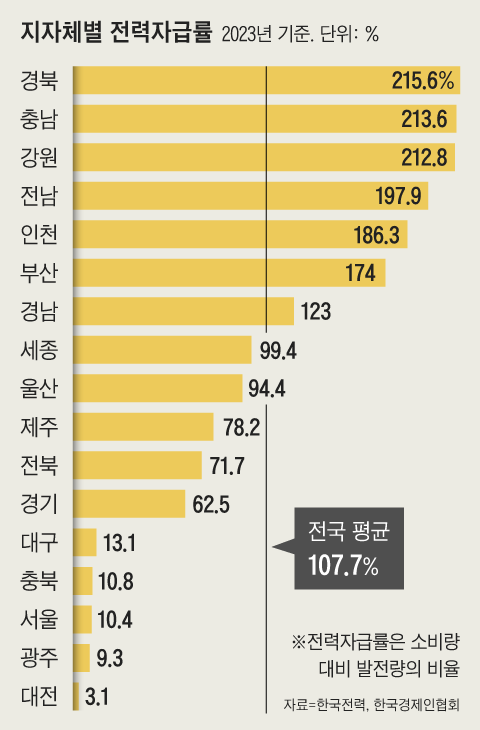
The rapid spread of artificial intelligence technology and the construction of large-scale data centers across the country are also major drivers of the surge in power demand. Servers equipped with tens of thousands of high-performance graphics processing units perform massive computations and emit intense heat. When you add the huge cooling systems needed to dissipate this heat and the devices that stably convert power, data centers consume electricity on the scale of a power plant. The government has planned to distribute large-scale AI data centers across various regions, including Chungcheong, Gangwon, Yeongnam, and the southwest. However, concerns are emerging that the power self-sufficiency of each region could be destabilized every time a data center is built. Just like semiconductor factories, AI facilities become useless if they cannot receive a stable power supply. Behind the brilliance of the AI era lies the heavy price of such massive power consumption.
Servers equipped with high-performance graphics processing units consume more electricity than one might imagine. With massive cooling facilities running constantly to cool the servers, data centers are becoming power black holes.
The expansion of AI data centers and cooling facilities causes massive power consumption comparable to that of semiconductor factories.
4. The Limits of Power Lines

No matter how much electricity is generated at power plants, it is useless if there are no transmission lines to carry it to the factories. For the Yongin semiconductor cluster, plans were made to build a liquefied natural gas (LNG) power plant within the complex to supply initial power. However, since self-generation alone can never handle the massive amount of power ultimately required, electricity must be drawn from external sources. Ultimately, the structure requires sending electricity generated at power plants in other regions, such as the East Coast or the Central Region, to the metropolitan area through a large-scale transmission grid. The problem is that constructing a single transmission line is blocked by numerous hurdles, from route selection to persuading residents and obtaining various permits. There is a legitimate concern about a worst-case scenario where the factory is completed on schedule, but the factory cannot be operated because the transmission towers to send electricity have not been erected in time. This is why laying the path to safely deliver electricity is as urgent as increasing power generation facilities.
Expanding transmission grids and substations to send electricity from power plants to demand sites is urgent. Constructing transmission lines takes an enormous amount of time due to resident opposition and permitting issues.
Building power grids, such as transmission lines and substations, is just as crucial as securing power generation capacity for the success of the project.
5. Government’s Proactive Investment
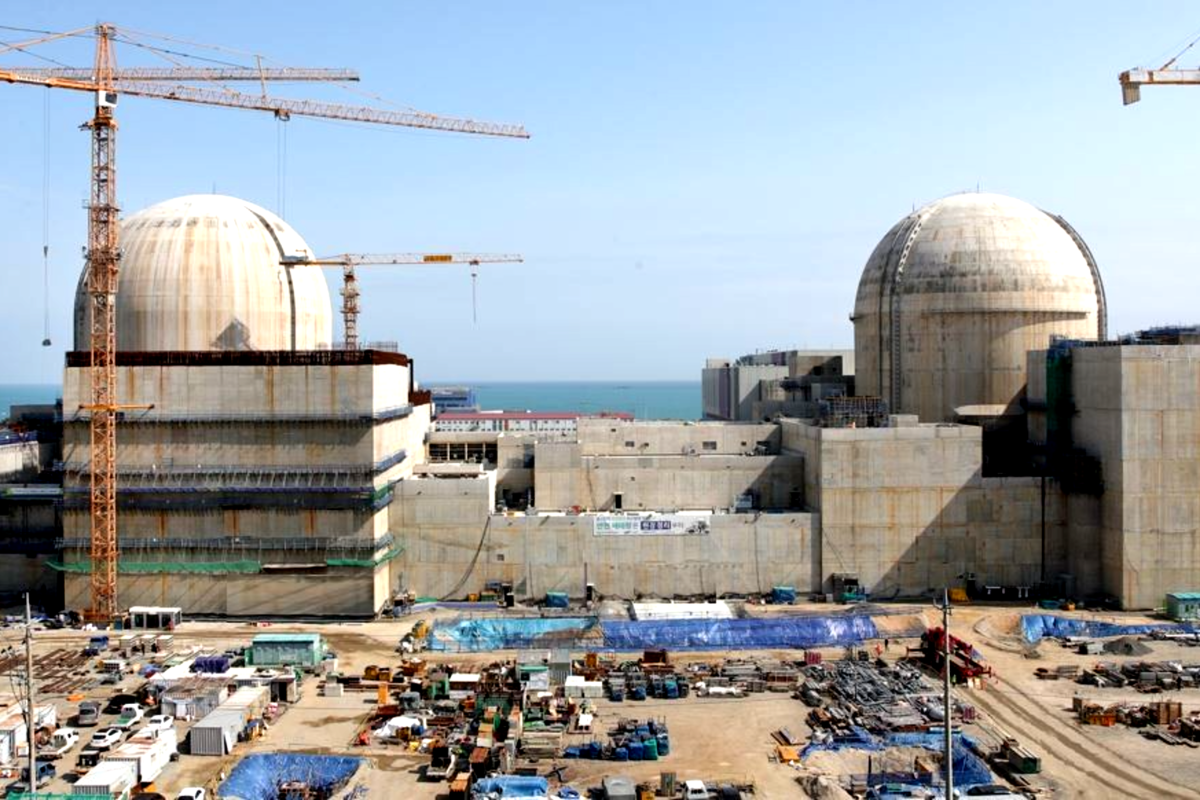
The government is also moving quickly to prevent a situation where companies spend hundreds of trillions of won to build impressive factories only to have them stop due to a lack of electricity and water. In the past, the approach was to build the factory first and follow up with infrastructure, but policy has now shifted to a pre-investment method where power lines and water pipes are laid first. The policy is to define the power grid not as a mere ancillary facility but as a core strategic asset of the nation, and to invest government funds to prepare it in advance. This is driven by the sense of crisis that if large-scale transmission grids and substations are not built on time under national leadership, the golden time for advanced industries will be missed. The silent war to secure dominance in semiconductors and AI ultimately depends on how quickly stable infrastructure can be established. Only when private corporate investment and government infrastructure support mesh organically can we truly leap forward as an industrial powerhouse.
The government is pursuing a pre-investment strategy to build power and water infrastructure before factory construction. It is determined to secure these in advance by treating the power grid as a national strategic asset and investing government funds.
To ensure the success of advanced industries, the government is proactively expanding power grids and water facilities before factories are completed.
6. Challenges for the Future
The massive power demand required by semiconductor factories and AI facilities is demanding a paradigm shift in our society’s energy policy. To supply electricity equivalent to dozens of nuclear reactors in an eco-friendly and stable manner, we need the wisdom to harmoniously utilize both nuclear and renewable energy. Institutional mechanisms must also be put in place to resolve transmission grid conflicts amicably and to eliminate power imbalances between regions. Companies must strive to reduce power consumption by improving production efficiency through advanced technology, while the government must support this with a robust power grid. For South Korea to continue surviving as a global hub for advanced industries, bold investment in power infrastructure must not stop. Only those who win this massive power war will become the true leaders of the coming future.
The harmonious expansion of energy security and eco-friendly power sources will determine future industrial competitiveness. The government, companies, and local communities must join forces to build a sustainable power ecosystem.
To handle massive power demand, securing stable power sources and resolving power grid conflicts are essential.
Frequently Asked Questions
=