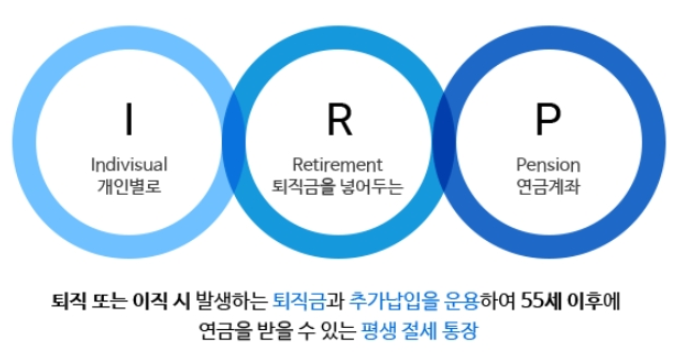
The IRP (Individual Retirement Pension) is the best tool for increasing your retirement funds and saving on taxes. This article covers all the essential information, including eligibility requirements, various account types, and tax benefits. We also explore practical perks like BNK Gyeongnam Bank’s recent IRP Home Run Event. Start using IRP today to secure your future with confidence. This guide will serve as a reliable roadmap for getting started with IRP.
=
Everything You Need to Know About IRP Retirement Pensions: From Enrollment and Tax Savings to Payouts – Check It Out Now
1. IRP Enrollment Conditions and Required Documents

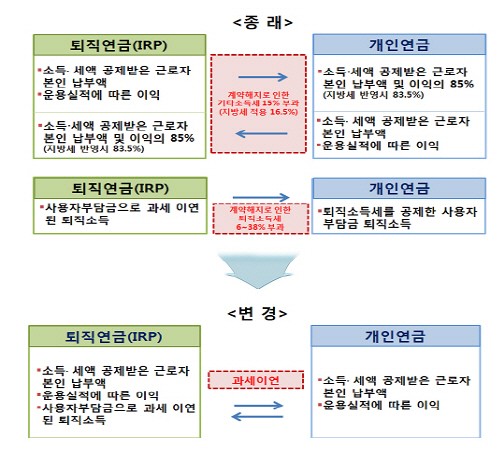
To enroll in an IRP, you must first have an income. Anyone, from office workers to self-employed individuals, can join, with no age restrictions. Required documents include a resident registration card (ID) and a withholding tax receipt for employment income (or a business registration certificate). A specific example is needed. Mr. Kim, a 30-year-old company employee, enrolled in an IRP with an annual salary of 40 million KRW and is currently contributing 300,000 KRW monthly. On the other hand, Mr. Park, a 45-year-old self-employed individual, enrolled in an IRP by proving his business income. Please note that individuals without income cannot enroll in an IRP. Additionally, if overlapping enrollment with an existing retirement pension is unavoidable, you must transfer your existing Defined Benefit (DB) or Defined Contribution (DC) pension. Only then can you receive tax benefits through the IRP. You simply need to prepare your ID and income verification documents and submit them to the financial institution.
IRP accounts are divided into various types based on contribution methods and investment products. The most common type is the deposit type, which operates like a regular savings account. Deposit types guarantee the principal but offer lower returns. In contrast, fund types invest in stock or bond funds to aim for higher returns. You must always consider your own risk tolerance. Recently, the IRP Home Run Event conducted by BNK Gyeongnam Bank targeted fund and ETF investors, attracting significant interest from many office workers. ETF-type IRPs offer the advantages of diversified investment and low fees. Even small monthly investments can lead to substantial asset growth from a long-term perspective. Therefore, choosing the type that matches your investment style is essential to fully utilize the benefits of an IRP. Finally, since IRP accounts can be managed for a lifetime, you should carefully consider various factors, such as receiving a pension before cancellation.
Anyone with income can enroll in an IRP, requiring an ID and income verification documents. Receiving funds as a pension allows for tax savings, so you should be cautious when selecting an investment type and making cancellation decisions.
2. Comparison of IRP Account Types: Deposit vs. Fund vs. ETF
Deposit-type IRPs guarantee the principal but offer returns of around 2–3% annually. They are suitable for office workers seeking stable returns and are easy to manage without complex investment knowledge. In particular, choosing the deposit type during BNK Gyeongnam Bank’s IRP Home Run Event period can earn you additional interest, which is useful. However, considering inflation, the real rate of return could be negative. If you want long-term asset growth, you should consider fund types or ETFs. Fund-type IRPs diversify investments across stock, bond, and real estate funds. For equity funds, the average return over the past 10 years was 7–8% annually. However, due to high market volatility, losses can occur, making diversification essential.
ETF-type IRPs have lower fees than funds and allow for real-time adjustment of the investment portfolio. The KOSPI 200 Index ETF is a representative product chosen by many office workers. For example, Mr. Lee, a 40-year-old office worker, invests 500,000 KRW monthly in ETFs through his IRP account, achieving returns of over 5% annually. Additionally, BNK Gyeongnam Bank’s IRP Home Run Event offers fee waiver benefits for ETF transactions, which is advantageous. ETFs are highly safe as they are operated by exchanges, but returns vary depending on individual stock fluctuations. Therefore, you should choose among deposit, fund, and ETF types based on your investment experience and time commitment to truly enhance the value of your IRP.
Deposit types are stable but offer low returns, while funds and ETFs pursue higher returns but carry greater risk, making diversification essential. Make good use of BNK Gyeongnam Bank’s event benefits as well.
3. IRP Tax Benefits and Tax-Saving Strategies
The full amount of contributions to an IRP is eligible for income deduction. You can receive a tax credit of up to 7 million KRW during the year-end tax settlement, resulting in significant tax savings. For example, an office worker with an annual salary of 50 million KRW who contributes 6 million KRW to an IRP each year can save approximately 1 million KRW in taxes. The higher the contribution amount, the higher the deduction limit. Self-employed individuals can also receive the same deduction if they have business income.
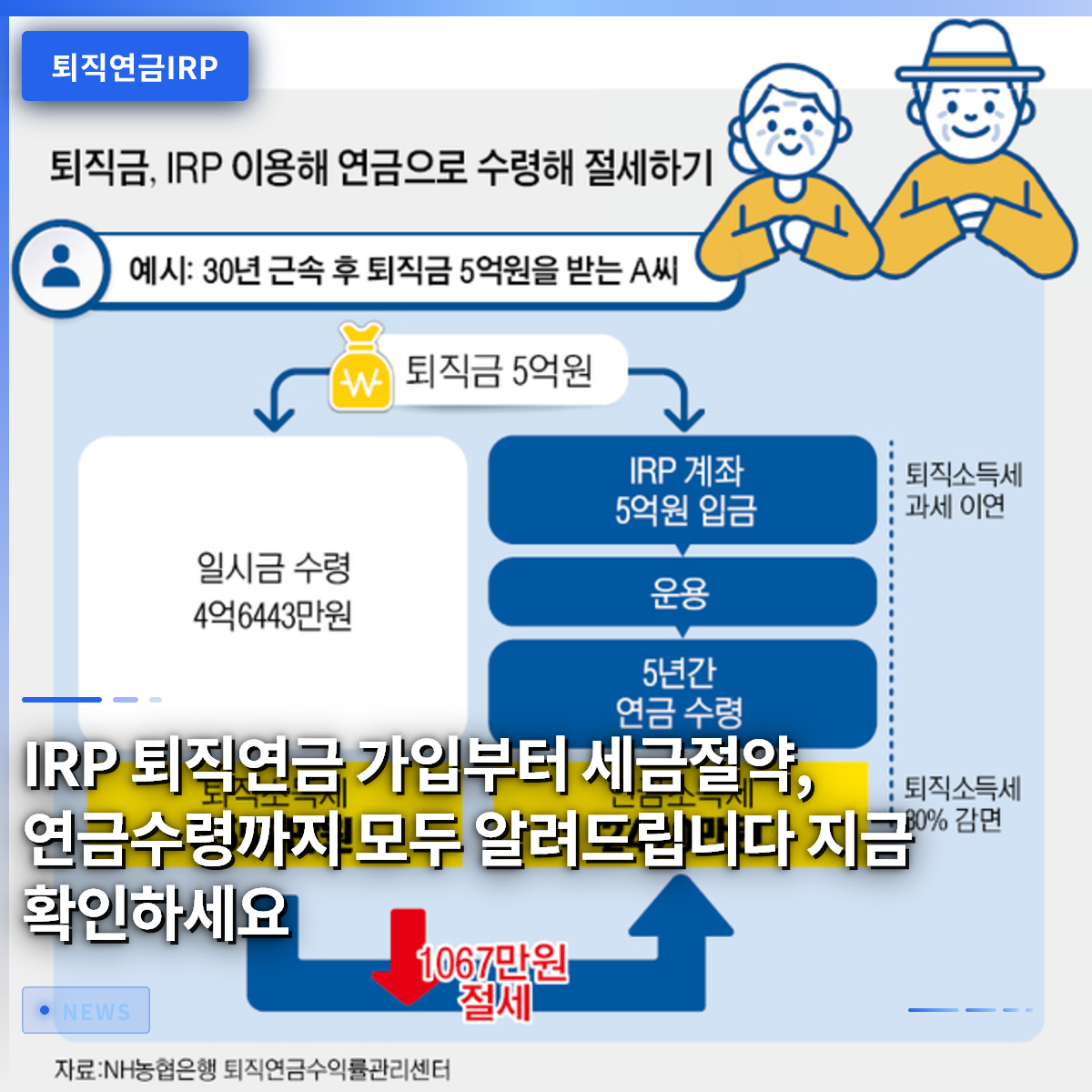
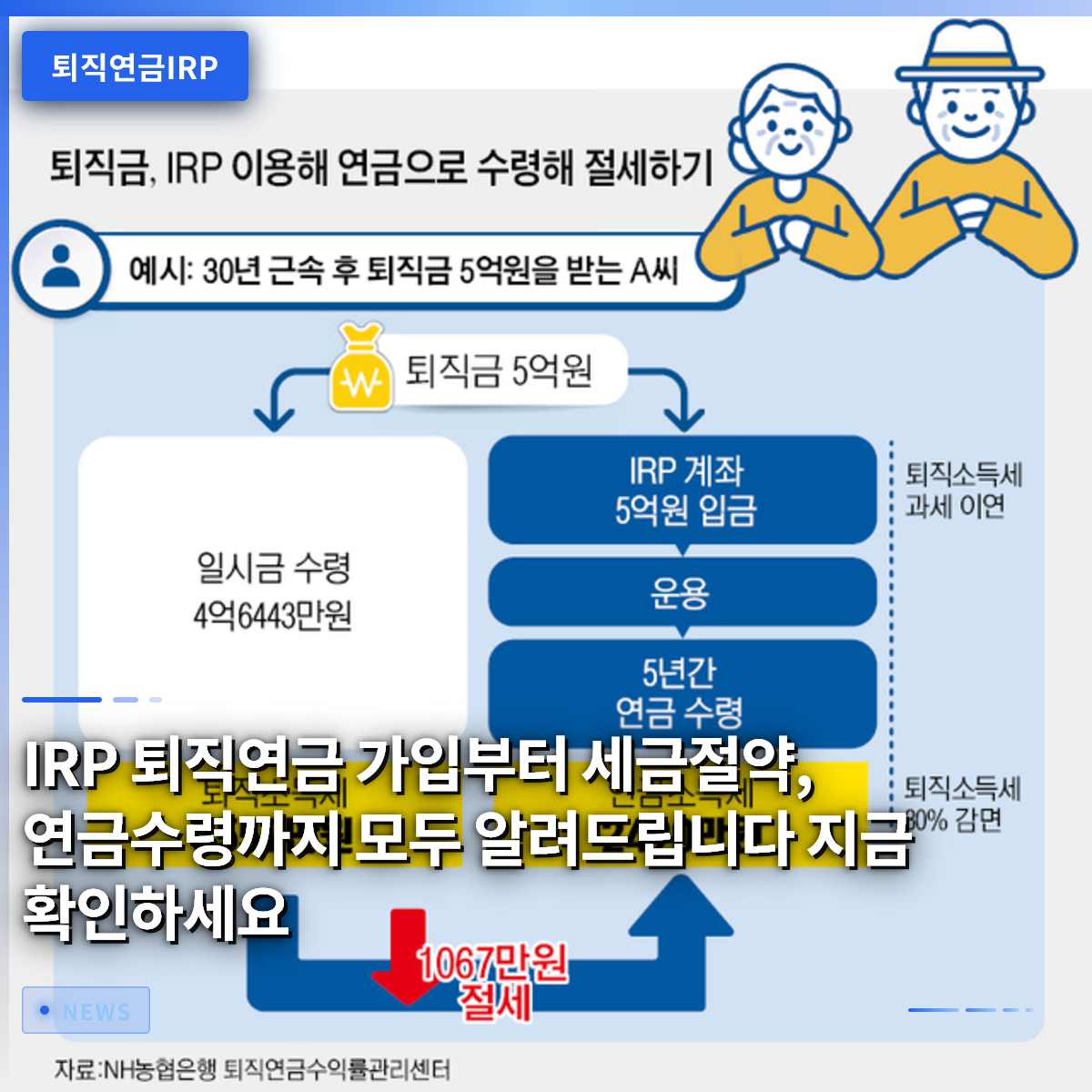
Choosing the pension payout method is crucial for tax-saving strategies. If received as a lump sum, retirement income tax is applied, but if received as a pension, taxes can be reduced by up to 50%. Receiving a pension after age 55 significantly reduces the tax burden. Additionally, early cancellation incurs other income tax, so it is advantageous to convert to a pension before cancellation. However, be aware that canceling an IRP account voids previous tax benefits. BNK Gyeongnam Bank’s IRP Home Run Event offers additional benefits for pension payouts, so it is a good idea to consider converting to a pension during the event period.
IRP contributions are fully income-deductible, and receiving funds as a pension offers significant tax savings. You should carefully choose between lump-sum and pension payout methods.
4. Pension Payout Methods: Lump Sum vs. Pension
Lump-sum payout is a method of receiving the contributed principal and investment returns all at once. It is advantageous when liquidity is needed or when a large sum of money is required immediately. However, retirement income tax is applied, and the tax burden can become heavy. In particular, since tax is applied to the entire amount in a lump-sum payout, it is disadvantageous for large amounts. Nevertheless, you may consider a lump-sum payout if there is an urgent need for funds. BNK Gyeongnam Bank’s IRP Home Run Event sometimes offers additional fee discount benefits for lump-sum payouts.
Pension payout is a method of receiving a fixed amount monthly after age 55. Receiving funds as a pension offers significant tax savings, reducing taxes by up to 50%. It also ensures a stable source of retirement income for life. It is particularly advantageous if a spouse pension option is included. However, if you pass away during the pension payout period, inheritance is possible through a survivor pension. The choice of payout method varies depending on individual financial situations and post-retirement plans. Converting to a pension without canceling the IRP account allows you to maintain tax benefits. BNK Gyeongnam Bank’s IRP Home Run Event offers additional benefits for pension payouts, so you should make good use of the event period.
Lump sums are useful when a large amount of money is needed but carry high taxes, while pensions offer significant tax savings. You should choose a payout method that fits your retirement plans.
5. Tips for Managing Retirement Assets with IRP
First, you should diversify your IRP assets to reduce risk. Mixing deposit types, fund types, and ETFs in appropriate ratios can help pursue stable returns. For example, Mr. Kim, an office worker in his 40s, invests 40% of his IRP account in deposit types, 30% in bond funds, and 30% in ETFs, achieving consistent results. Additionally, since IRPs can be managed for a lifetime, you should review your portfolio annually. Adjusting asset allocation ratios to respond to market changes is important.
Second, you should use IRP to save on taxes during the year-end tax settlement. Maximizing the income deduction limit increases the tax credit effect. Even if your salary is low, you should contribute consistently, even in small amounts. Also, since IRP contributions can receive tax credits even when received as a pension, it is advisable to plan contributions from a long-term perspective. BNK Gyeongnam Bank’s IRP Home Run Event offers additional tax-saving benefits, allowing you to utilize more funds for retirement preparation. Finally, converting to a pension without canceling the IRP reduces the tax burden. To ensure a stable cash flow in retirement, you must maintain and manage your IRP account in the long term.
Diversified investment, regular portfolio reviews, and maximizing income deductions during the year-end tax settlement are key to managing retirement assets with IRP. Make active use of event benefits as well.
6. Introduction to BNK Gyeongnam Bank’s IRP Home Run Event
BNK Gyeongnam Bank is currently running the IRP Home Run Event for new individual IRP enrollees and fund/ETF investors. This event was designed to help IRP customers effectively manage their retirement assets and access diverse investment opportunities. During the event period, new enrollees can receive a sign-up bonus, and fee benefits are provided for fund and ETF transactions. In particular, the benefit of waived additional fees for early cancellation has attracted interest from many office workers. As of September 2026, this event will be a great opportunity for office workers holding IRP accounts to save on taxes and grow their assets.
For example, Mr. Park, an office worker, started fund investing during the IRP Home Run Event period and is contributing 200,000 KRW monthly. His account currently holds approximately 50 million KRW in assets, and additional returns are being generated due to the fee waiver benefit. Additionally, it is convenient to manage IRP accounts easily through BNK Gyeongnam Bank’s mobile app. The event will run until the end of November 2026, and anyone can participate. If you are looking to prepare retirement funds through IRP, check out BNK Gyeongnam Bank’s IRP Home Run Event right now.
BNK Gyeongnam Bank’s IRP Home Run Event offers fee benefits, bonuses, and more to new enrollees and fund/ETF investors. Take this opportunity to start an IRP and effectively grow your retirement assets.
Frequently Asked Questions
=