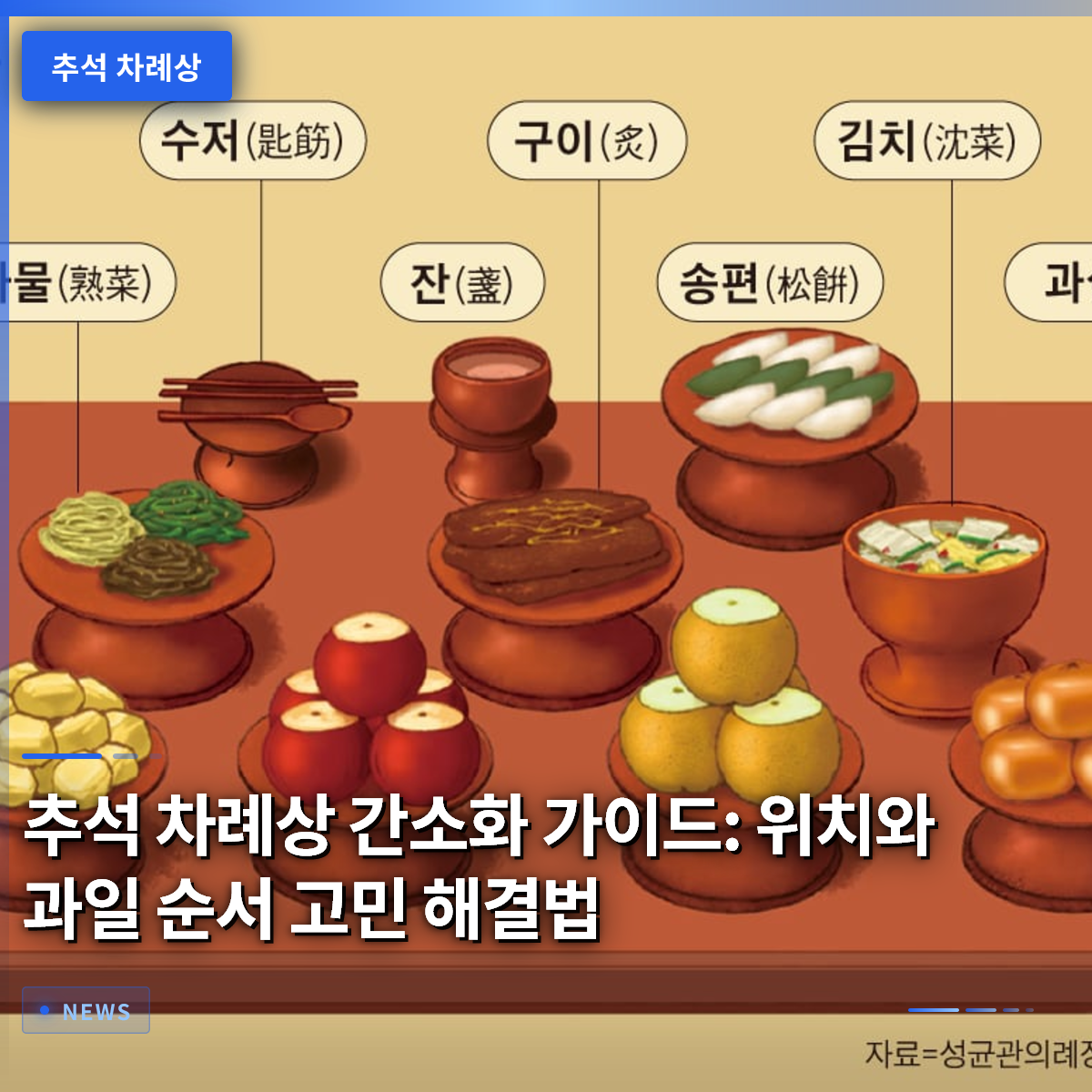
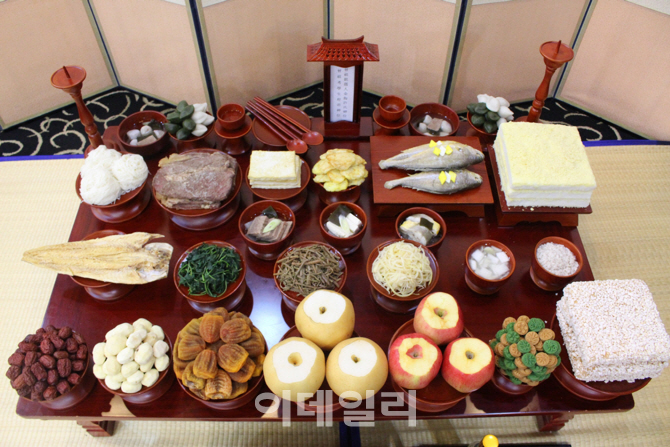
For this year’s Chuseok ancestral ritual table, it is wise to prioritize family harmony and keep the setup simple rather than being bound by complex rules. Every holiday, people often struggle with how to write the memorial tablet (jibang) or where to place the food, leading them to repeatedly search for photos taken previously or ask relatives for advice. As the number of housewives complaining about holiday stress and body aches from frying jeon (Korean pancakes) increases, the approach to preparing the ritual table has undergone significant changes. The Seonggyungwan Committee for Establishing Rituals has also announced that strict orders based on the color or type of fruit are not fixed rules. In this article, we will examine various tips that make the preparation process much easier while preserving the original meaning of honoring ancestors. You do not need to strain yourself to make every dish from scratch; appropriately utilizing convenient holiday foods from convenience stores or commercially available products is sufficient to hold a heartfelt ritual.
=
Guide to Simplifying the Chuseok Ancestral Ritual Table: Solving Concerns About Placement and Fruit Order
1. The Truth About Simplifying the Ritual Table According to Seonggyungwan
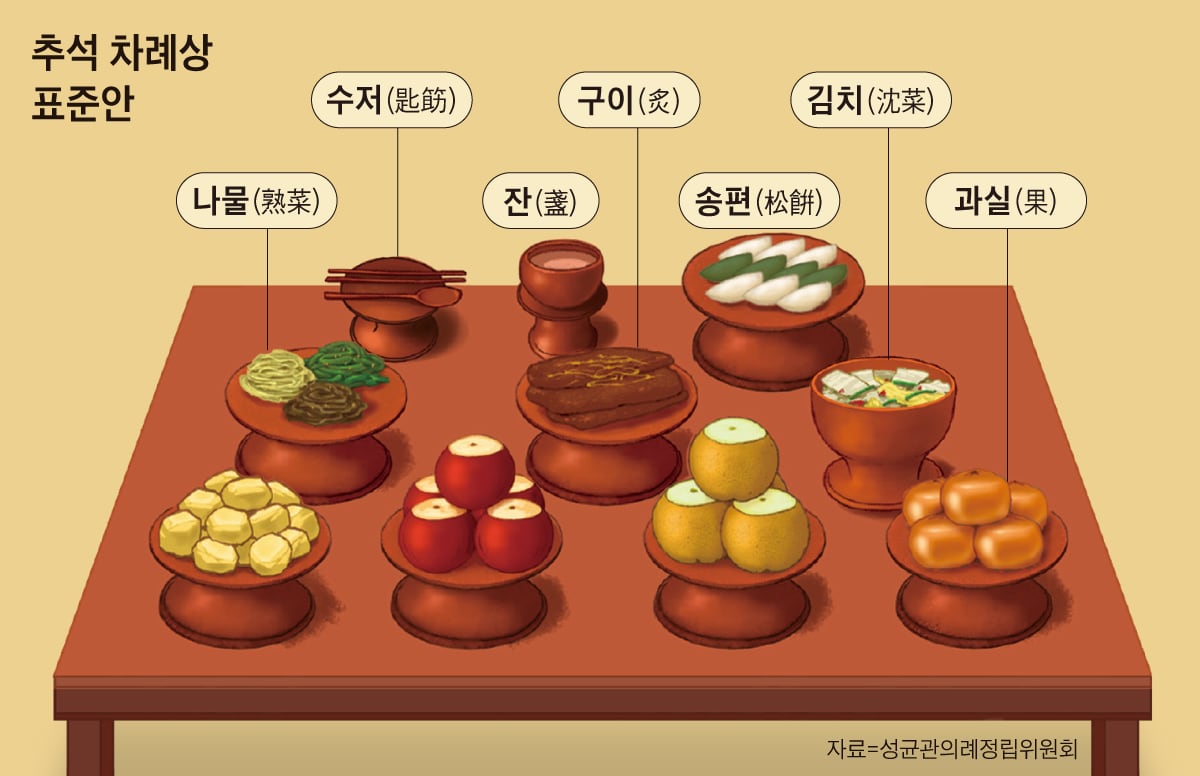
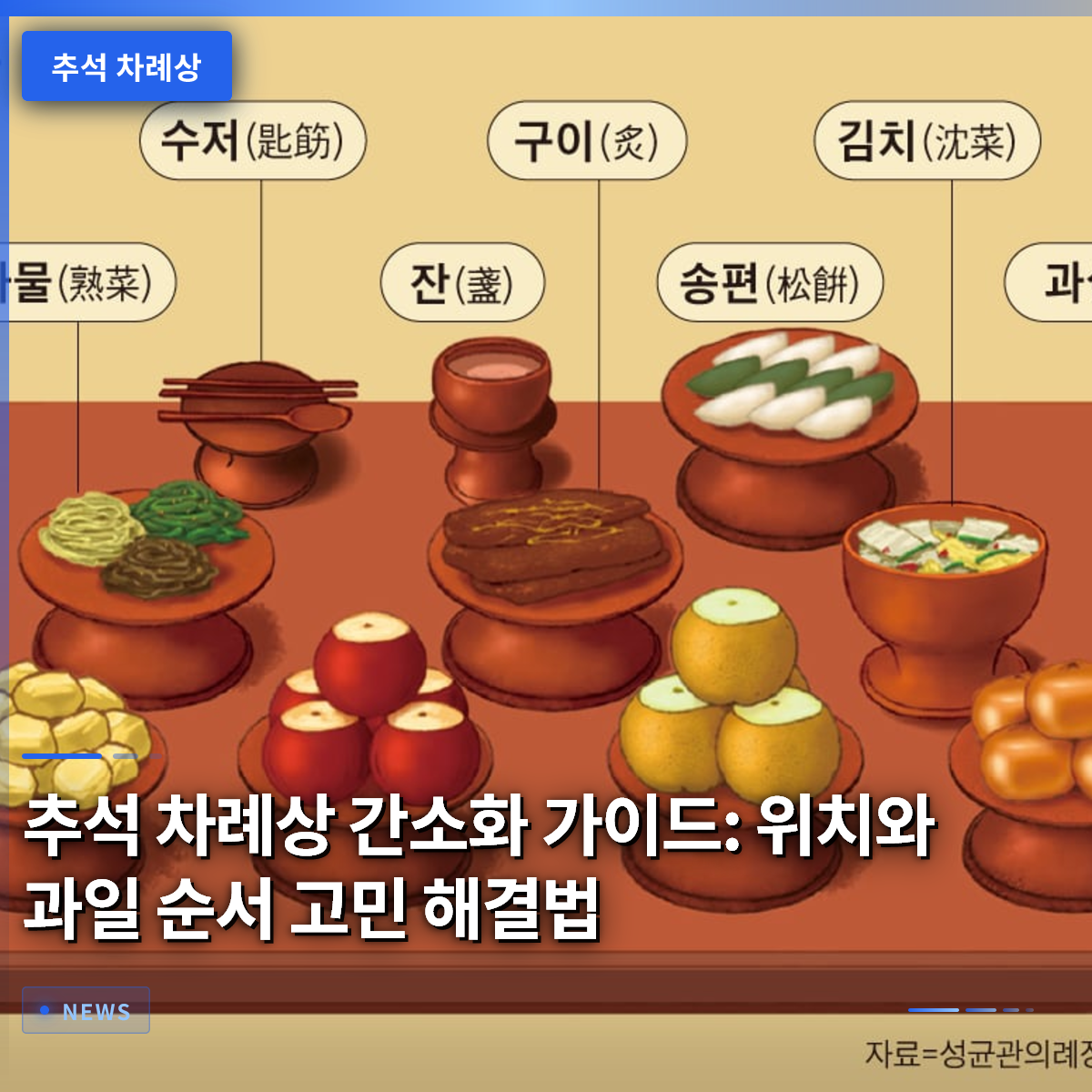
The first thing to remember when preparing the Chuseok ancestral ritual table is that family sincerity and harmony are far more important than formalities. Many people suffer from stress every holiday, worrying about which fruits to place where. In the past, it was believed that complex rules such as “Jowuri” (plum, pear, persimmon, jujube) or “Hongdongbaekseo” (red on the east, white on the west) had to be strictly followed, but recently, this burden has been greatly reduced. According to the announcement by the Seonggyungwan Committee for Establishing Rituals, the color or arrangement order of fruits is not an absolute fixed rule. Since the ritual is a precious time to honor ancestors and for descendants to gather and share warm well-wishes, there is no need to be overly bound by formality.
I actually remember a small disagreement among the elders regarding the fruit arrangement when we gathered with relatives last Chuseok. One insisted on “Hongdongbaekseo,” arguing that red fruits should be placed on the east side, while another claimed the positions of apples and pears should be different. However, we have agreed as a family to freely place fruits that are easy to eat and easy to arrange on the table, moving away from such futile debates. Reducing the labor intensity for family members preparing the food is the true modern holiday culture of honoring ancestors and cherishing one another. The moment you let go of complex rules, holiday preparation transforms completely from a source of stress into a joyful family event.
Since fruit arrangement order and complex formalities are not absolute rules, it is desirable to simplify them through family consensus.
2. Fruit Order and Food Placement: How Should They Be Arranged?
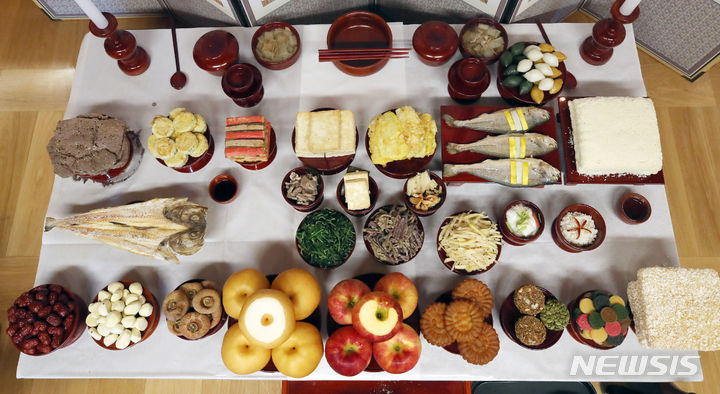
The basic principle when setting up the Chuseok ancestral ritual table is to distinguish left and right based on the direction of the ancestral tablet and place the food accordingly. However, traditional table-setting methods widely known to the public, such as “Hongdongbaekseo” or “Jowuri,” were closer to regional and family customs rather than absolute laws. Therefore, you do not need to obsess over the type or number of fruits; it is sufficient to place the food considering the overall balance and convenience of the table setting. Similarly, if writing the memorial tablet in complex Chinese characters is difficult, there is a growing trend of writing it in an easy-to-understand modern style or using photos instead of the tablet.
It is a common scene for us to flip through old photo albums on holiday mornings, confused about how many spoons to place or which way the chopsticks should face. Since the core of the ritual table is sincerity, there is absolutely no need to forcibly increase the variety of food on the table. It is much more reasonable to fill the table with foods that ancestors liked or dishes that the family can enjoy together. When determining positions, a flexible attitude is needed that harmoniously reflects family tradition and realistic preparation conditions, rather than applying strict standards.
While adhering to the left-right distinction based on the ancestral tablet, the fruit order and variety can be flexibly adjusted according to the family’s situation.
3. Ending the Stress of Frying Jeon: How to Use Convenience Store Meals
The main culprit that exhausts housewives the most during holiday food preparation is the endless labor of frying jeon. After hunching over for hours frying jeon while enduring the smell of oil, the holiday break often becomes a cause for visiting the hospital rather than enjoying it. Recently, to reduce the burden of such domestic labor, there is a trend of actively purchasing convenient holiday foods like mixed jeon or japchae (stir-fried glass noodles) sold at convenience stores and large marts. Not only are “honjok” (people who live alone) replacing the ritual table with convenient foods, but the number of general families moving away from large-family-centric holidays is also rapidly increasing.
In fact, ahead of this year’s Chuseok holiday, various convenience store brands have successively launched diverse holiday bento boxes and convenient foods targeting single-person households and the “simplification generation.” While there may be slight regrets in taste or composition compared to jeon fried by hand, the convenience of the preparation process and the time-saving effect are beyond imagination. Rather than filling the entire ritual table with expensive handmade food, using convenient foods for just the labor-intensive items can drastically reduce the labor intensity. If you discard the stereotype that all food must be made from scratch at home, your mindset toward the holiday becomes much lighter.
More families are using commercially available convenient holiday foods to reduce heavy domestic labor such as frying jeon.
4. The Original Meaning of the Ritual Table and Family Harmony
The essence of the Chuseok ancestral ritual table is not about preparing a large amount of luxurious and expensive food, but about missing the deceased ancestors and sharing affection among the remaining family members. As we enter modern society, holiday customs have changed significantly, but the core values of respecting elders and sharing well-wishes with relatives remain valid. Getting red-faced or fighting with family members while buried in formal procedures and strict laws is an action that completely contradicts the original purpose of the ritual. The time when the whole family shares food together while deeply cherishing the longing and memories for ancestors is the true completion of the holiday.
The greatest value of the holiday is the moment when you sit down with relatives you haven’t seen often due to busy daily lives, ask about each other’s well-being, and encourage one another. Even if you cannot see the faces of your parents or grandmother directly, the process of commemorating their lives while offering the ritual provides warm comfort within us. Instead of simplifying the formalities, increasing the time focused on each other can greatly reduce the fatigue and emptiness that follow the holiday. The very act of the whole family gathering to joyfully discuss how to set the table this year is already a wonderful start to the holiday.
The true meaning of the ritual lies not in formal procedures, but in family harmony and warm longing for ancestors.
5. How to Enjoy a Bountiful Chuseok Holiday Even More
If you have safely completed the ritual on the morning of Chuseok, it is a good idea to enjoy various cultural events or outings using the remaining long holiday period. Local governments and cultural institutions, including the Seoul Metropolitan Government, provide diverse attractions such as traditional game experiences and traditional performing arts shows to celebrate the holiday. For example, traditional tightrope walking performances or national music festivals held in palaces or cultural spaces in the city are perfect for the whole family to enjoy together. Additionally, paying attention to community programs such as warm sharing activities for vulnerable groups or communal ritual table setups is a meaningful way to spend the holiday.
To soothe the regret of the holiday ending, visit a special Chuseok exhibition at a nearby park or museum and enjoy a light walk. Escaping the stress of the crowded roads back home and back to the city, and savoring the leisure in the urban environment, allows you to fully recharge your energy for returning to daily life. Calmly reviewing your second-half financial planning through asset management or financial product subscription events is also a practical way to utilize the holiday. The holiday is not just a time to rest, but a precious opportunity to look around at what has been neglected and prepare for the future.
After completing the ritual, you can enjoy a bountiful and fulfilling holiday by participating in various cultural events and outings.
6. The Future of Holidays with a Simplified Ritual Table
Future Chuseok ancestral ritual tables are expected to rapidly evolve in a more practical and family-friendly direction. Moving away from the heavy sense of responsibility and complex procedures of the past, flexible table settings tailored to each family’s situation and values have become the mainstream. As the burden of preparing food decreases, holidays are being reborn as spaces purely for rest and communication, which also greatly contributes to reducing intergenerational conflicts. For the upcoming holiday, please boldly choose a comfortable and happy way that is unique to your family, without being bound by others’ gazes or formalities. As long as the warm heart honoring the ancestors’ grace remains unchanged, any form of table setting will be a perfect Chuseok in itself.
A simplified ritual table centered on practicality and family harmony will become an even more universal holiday culture in the future.
Frequently Asked Questions
=