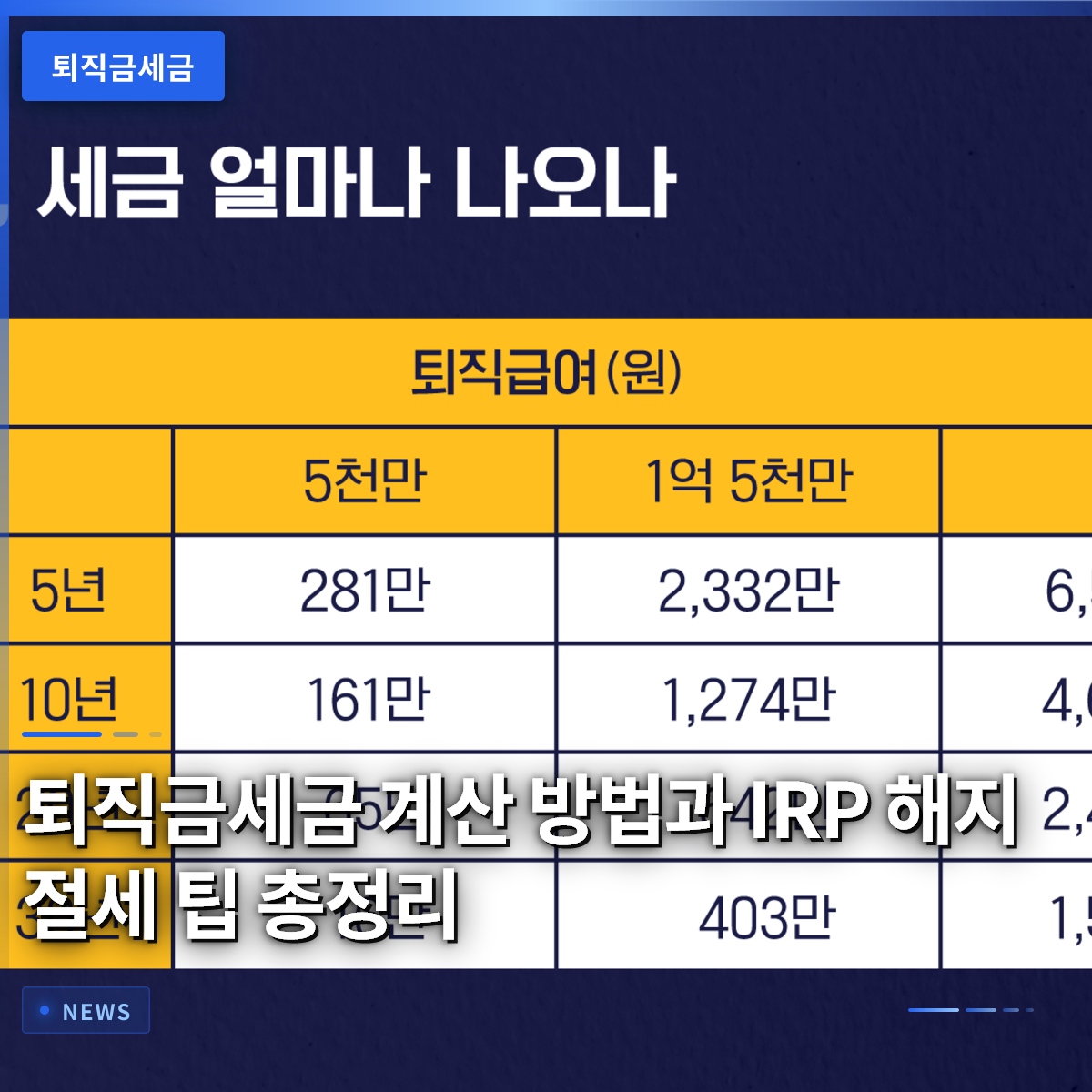
Severance pay taxes have a unique calculation structure that is completely different from regular employment income, so it is essential to carefully review the deduction rates and the length-of-service deduction system before receiving it as a lump sum. If you do not anticipate how much tax will be deducted from the lump sum you receive upon leaving your job, you may be caught off guard by receiving less than expected. Many people only vaguely consider the amount deposited into their bank account when quitting their job and often overlook tax issues. In particular, if you transfer your severance pay directly to a regular account or fail to properly utilize an Individual Retirement Pension (IRP) account, you may end up paying taxes ranging from hundreds of thousands to millions of won. In this article, we will explain step by step, from the exact calculation method for severance pay taxes to practical tax-saving strategies that can reduce taxes by up to 50%. We will use specific examples to help you understand easily, even if complex tax terminology has given you a headache in the past.
=
How to Calculate Severance Pay Taxes and IRP Cancellation Tax-Saving Tips: A Complete Guide

1. Basic Concepts and Calculation Structure of Severance Pay Taxes

The tax imposed on severance pay is treated as a separate item called “severance income tax,” which is calculated in a manner entirely different from regular employment income tax or business income tax. Considering that this income has accumulated over a long period of service, it does not tax the entire amount as if it were earned in a single year. Instead, it adopts a method of dividing the income over several years before applying tax rates. This means the tax burden gradually decreases the longer you have served, making the structure relatively favorable for long-term employees. To determine the taxable base, you subtract the non-taxable income defined by law and the deduction amount based on years of service from the total severance pay. Then, you divide this taxable base by the years of service to find the annual average taxable base, multiply it by the basic tax rate, and finally multiply by the years of service to calculate the final tax amount. Because these steps are complex, it is much more convenient to use calculators provided by the National Tax Service or financial institutions rather than calculating the tax amount yourself. However, you must understand the basic flow of the calculation to respond correctly if you are later found to have been overcharged. Severance pay tax calculation uses a method that is advantageous for longer service periods, providing significant benefits to long-term employees. The process involves deducting non-taxable income and length-of-service deductions from the total severance pay to determine the taxable base.
Severance pay taxes are calculated separately from regular income and are structured so that the tax burden decreases with longer service.
2. Differences Between Receiving Funds in a Regular Bank Account vs. an IRP Account
If you have your company deposit your severance pay directly into a regular bank account upon resignation, the severance income tax is immediately withheld, making it difficult to fully enjoy tax benefits. On the other hand, if you arrange for the company to transfer the severance pay to a legally mandated Individual Retirement Pension (IRP) account, you can defer the tax payment. Deferring the tax means you do not have to pay it immediately, allowing you to keep the money in the account to grow over time. If you do not withdraw the money immediately and instead receive it as a pension after the age of 55, you can enjoy a significant benefit of a 30% to 50% reduction in the severance income tax you would have originally owed. For example, if an employee named Kim receives 30 million won in severance pay, receiving it in a regular account results in immediate tax deduction, whereas transferring it to an IRP account defers the tax payment. Thanks to this deferred tax, the principal in the account grows, allowing for greater investment returns, and you can avoid a tax bomb when receiving it as a pension later. Therefore, when receiving severance pay, it is wise not to rush to withdraw it all at once into a regular account but to transfer it to an IRP account first. Receiving severance pay directly in a regular bank account leads to immediate withholding of severance income tax, potentially causing financial loss. Utilizing an IRP account allows you to defer tax payments and receive significant tax reductions when receiving pension benefits.
You must receive severance pay in an IRP account to defer taxes and secure reduction benefits when receiving pension benefits later.
3. Types of Taxes Incurred When Canceling an IRP Account
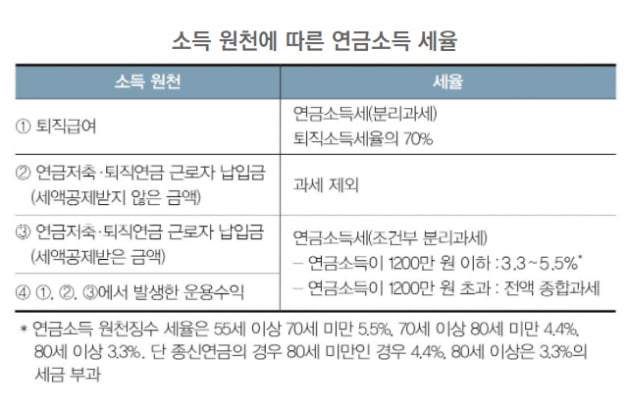
The taxes incurred when withdrawing money from an IRP account vary completely depending on the nature of the funds, so caution is required when canceling the account arbitrarily. The account contains deferred severance income contributed by the company, amounts you personally contributed and received tax deductions for, and accumulated investment returns. If you are forced to cancel the account midway before turning 55 or withdraw the entire amount as a lump sum rather than as a pension, a heavy tax called “other income tax” is imposed. Since a high rate of other income tax applies to your personal contributions (for which you received tax deductions) and investment returns, the amount of money you actually receive is significantly reduced. For example, an employee named Park once regretted withdrawing the full amount as a lump sum from his IRP account due to an urgent need for cash, only to find that more tax was deducted than he had expected. You must accurately understand the structure where the original severance income tax applies to the company’s severance pay, while other income tax applies to your personal contributions and interest. Therefore, unless there are special circumstances, it is always advantageous from a tax perspective to maintain the IRP account until after retirement. Canceling an IRP account midway results in high other income tax being imposed on tax-deducted contributions and investment returns. Since the tax imposed varies depending on the nature of the funds in the account, receiving benefits as a pension is more advantageous than receiving a lump sum.
You should be cautious, as canceling the account midway or withdrawing funds as a lump sum can result in a heavy other income tax bill.
4. Length-of-Service Deduction and How to Apply for a Refund
The first system to check to reduce severance pay taxes is the length-of-service deduction, where the deduction amount increases with longer service periods. In the past, taxes on severance pay were much heavier, but the government has continuously refined the deduction system to favor long-term employees and robustly protect retirement funds. If there are omitted deduction items in the company’s tax filing and payment process, or if your length of service was calculated incorrectly, you can receive a refund later through a correction application. For example, there are cases where employees received refunds after paying excessive taxes because their company failed to consolidate severance pay from their previous and current employers during a job change. You can access the National Tax Service’s Hometax website to review your past severance income details and taxes paid in detail, so it is a good idea to check carefully. You can easily file a correction application online without visiting the tax office in person, so if you have overpaid taxes, you should actively apply for a refund. If you do not take care of your own rights, you may lose valuable tax money, so you should keep relevant documents well-preserved for several years after retirement. Utilizing the length-of-service deduction system allows you to significantly reduce taxes in proportion to your service period, and refunds are possible if deductions were omitted. You can receive a refund for overpaid amounts by checking your tax payments and filing a correction application through the National Tax Service website.
You must thoroughly verify the application of the length-of-service deduction and receive refunds for incorrectly paid taxes through a correction application.
5. Actual Receipt Amount Simulation by Amount Range
The actual amount deposited into your bank account varies significantly depending on your length of service and receipt method, whether your severance pay is 10 million, 30 million, or 50 million won. For example, if an employee with five years of service receives 10 million won in severance pay, a small amount of severance income tax is incurred if received directly in a regular bank account, but no tax is incurred if transferred to an IRP account. On the other hand, if an employee with ten years of service and 30 million won in severance pay receives it as a lump sum, a considerable amount of severance income tax is withheld, and the actual receipt amount may drop to the mid-20 million won range. When receiving a lump sum of 50 million won or more, the proportion of tax becomes larger, so the final asset size can differ noticeably depending on how you plan your tax reduction strategy. An employee named Choi was able to save hundreds of thousands of won in taxes by depositing his 50 million won severance pay into a pension account and withdrawing it in installments over several years rather than taking it out immediately. As such, calculating the effective tax rate for each amount range in advance and choosing the most advantageous receipt method for yourself is the core of retirement finance. Do not rely on hearsay; you must run simulations based on your exact length of service and severance pay size. As the size of the severance pay increases, the proportion of tax also increases, so it is important to grasp the effective tax rate for each amount range in advance. Utilizing pension account transfers and split withdrawals can help preserve the size of the lump sum you actually receive.
You should simulate the actual receipt amount based on the size of the severance pay and length of service in advance to determine the optimal receipt method.
6. Tax-Saving Strategies for a Successful Retirement
Wisely managing severance pay taxes is not just about saving on taxes; it is the most certain starting point for completing a prosperous retirement asset. The lump sum given at the moment you leave your company is precious capital for preparing a new chapter in life, so you must prevent as much of it as possible from leaking away in taxes. You should develop a strategy to organically utilize IRP accounts and pension savings accounts while closely monitoring upcoming tax law amendments and changes in the financial market. Rather than blindly canceling your account because you urgently need cash on hand, you need the mindset of designing your cash flow after retirement. Try to exercise wisdom by seeking expert assistance or continuously learning about relevant financial information to avoid tax bombs and fully enjoy tax-saving benefits. We hope you will start checking your accounts and preparing for the future step by step from today, so that your valuable severance pay, filled with your sweat, does not vanish in vain due to taxes. Managing severance pay taxes is an essential element for forming successful retirement assets and requires continuous learning and account checks. You can create a stable cash flow after retirement through wise tax-saving strategies.
Thoroughly managing severance pay taxes and maintaining pension accounts is the key to a successful retirement life.
Frequently Asked Questions
=