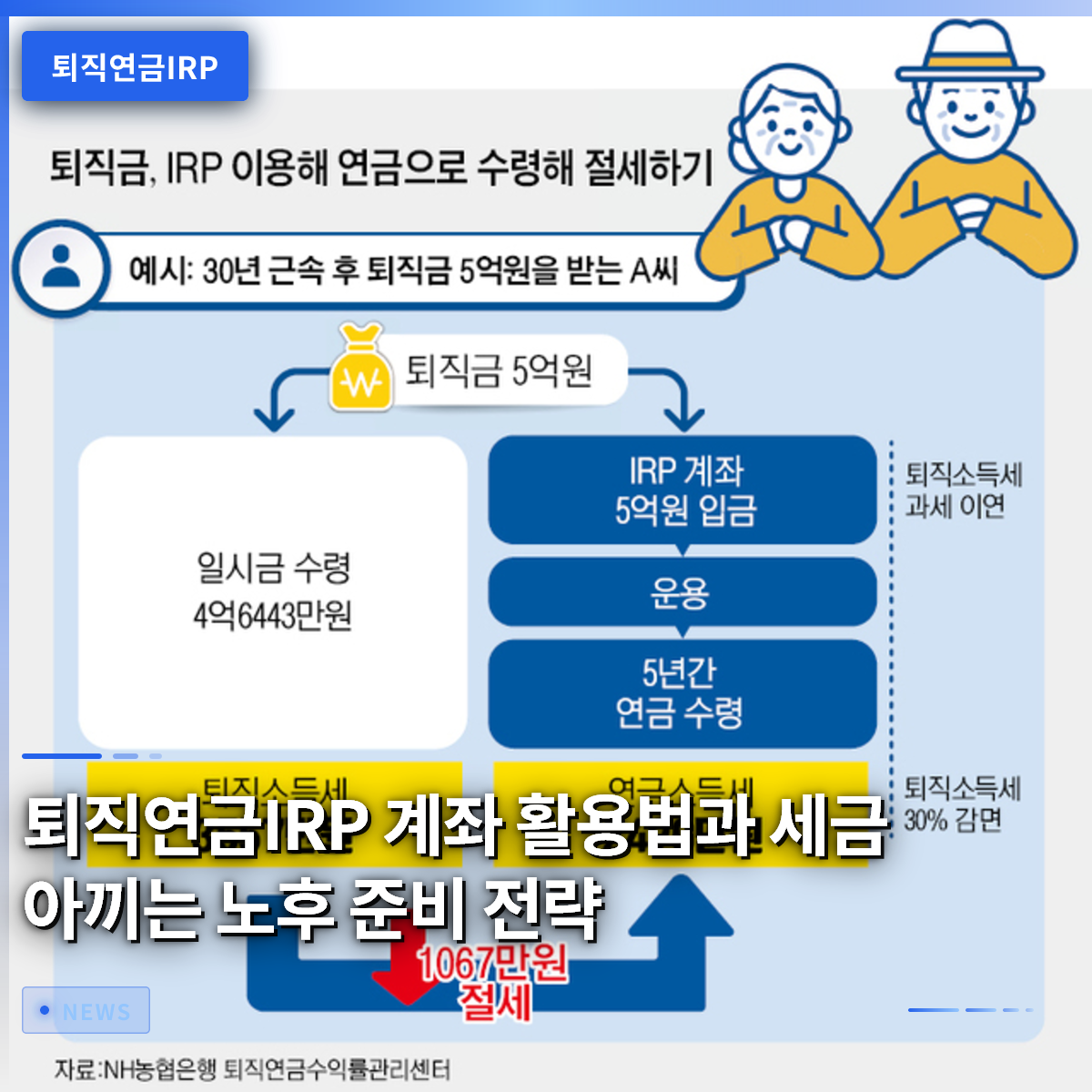
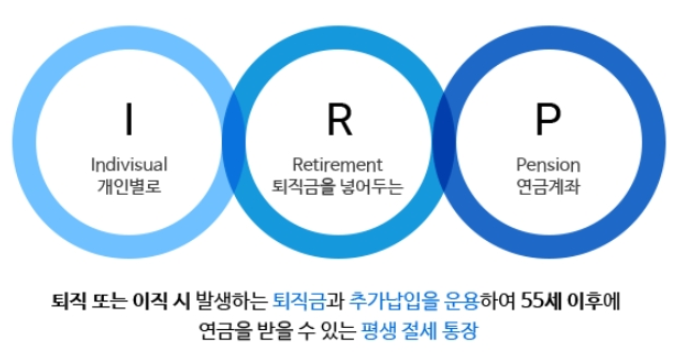
The Individual Retirement Pension (IRP) account is an essential gateway for avoiding the tax burden that comes with receiving your severance pay directly into a checking account and for growing your retirement assets. Mr. Kim, a corporate employee, was about to receive his severance pay in a regular account when he changed jobs last month. Following a colleague’s advice, he transferred the funds to an IRP account and saved hundreds of thousands of won in taxes. Many employees feel overwhelmed about how to handle their funds when changing jobs or retiring, but if you understand the system properly, it becomes an excellent tax-saving tool. Recently, the government and financial institutions have improved the system to broaden investment options and encourage long-term holding rather than early withdrawal. Let’s take a step-by-step look at specific ways to utilize this system to safely protect and grow your assets.
=
How to Use Your IRP Account: Strategies for Tax Savings and Retirement Planning
1. Why You Should Receive Your Severance Pay via an IRP Account

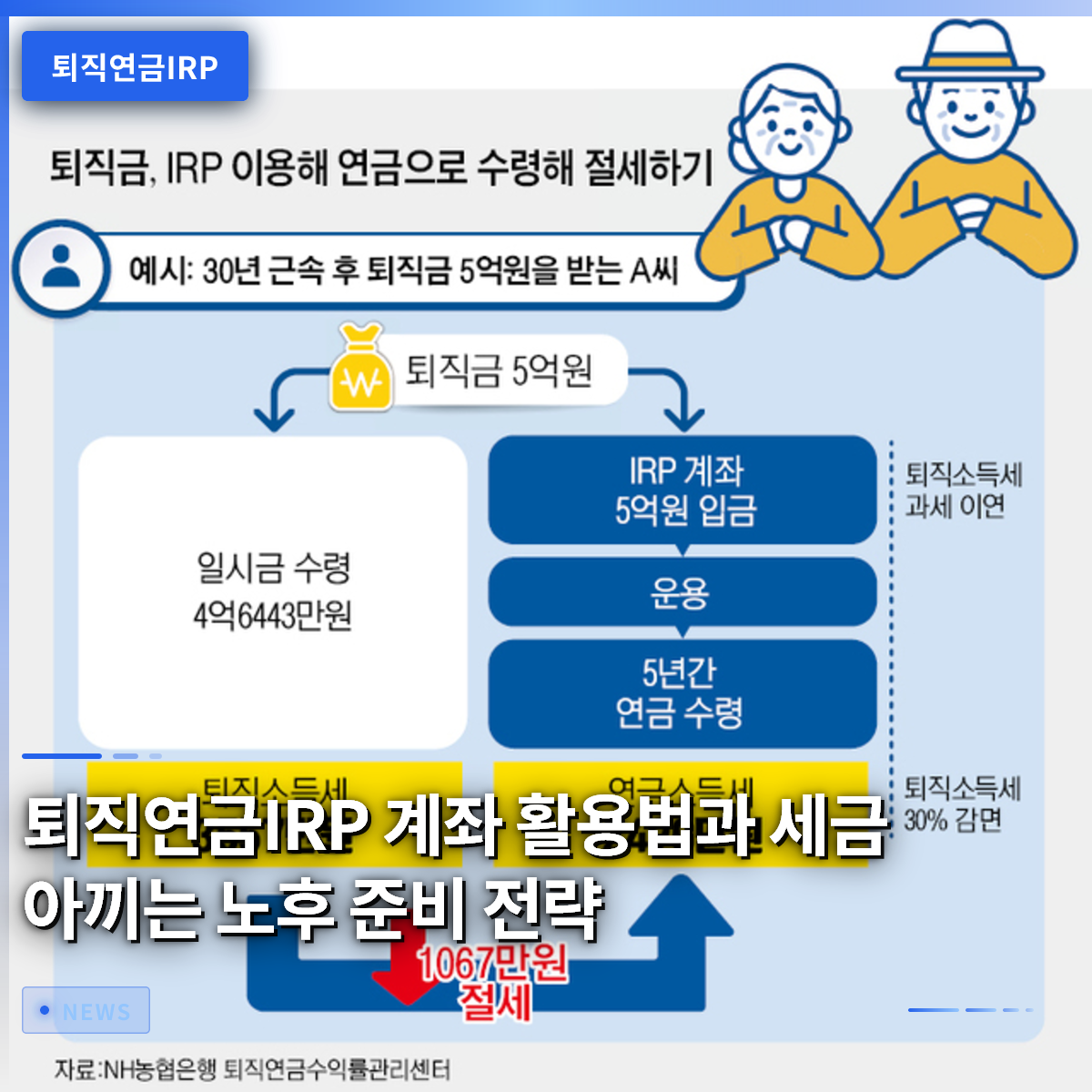
If you receive your severance pay directly into a regular checking account, you are subject to withholding tax on severance income, which significantly reduces the amount you actually take home. On the other hand, transferring the funds to an IRP account defers taxation, allowing the entire principal to grow—a magical effect. In reality, the longer you have worked, the larger your severance pay will be, and the more significant the tax savings will feel. This system is not merely a safe to store money temporarily; it is an autonomous space where you can actively grow your assets. Employees planning to change jobs or retire must open an account in their own name in advance, following their company’s payment procedures. If these prepared funds are later received as a pension, they are subject to a much lower tax rate than standard severance income tax, providing substantial support for your retirement living expenses.
A major advantage is that you can manage your funds freely and make additional contributions to enjoy tax deduction benefits simultaneously. This is why employees pay close attention to this system during the year-end tax settlement season.
You must receive your severance pay through an IRP account to enjoy the benefits of tax deferral and save on taxes.
2. Long-Term Management Strategies to Avoid the Trap of High Cancellation Rates
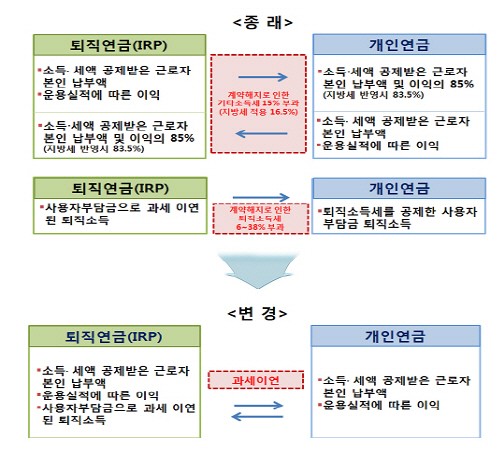
Despite the massive amount of funds transferred to this system in recent years, more than half of the subscribers regretfully close their accounts midway. If you choose to cancel the account because you need a lump sum of money immediately, you not only have to return all the tax benefits you received but may also face a heavy tax burden on miscellaneous income. Mr. Lee, an employee, urgently closed his account to secure a deposit for a rental apartment, only to deeply regret it after paying far more in taxes than he had expected. Therefore, even if you face short-term financial pressure, you need the wisdom to prioritize loans or other methods over closing the account. To achieve the original goal of securing retirement funds, patience to steadily build assets without wavering is paramount.
Those who remain steadfast against temptations and temporary economic crises are the ones who ultimately succeed. Financial authorities are implementing various measures to prevent excessive cancellations, and subscribers themselves must maintain a sense of urgency.
Early cancellation leads to a tax burden, so you should prioritize maintaining the account even if you need a lump sum of money.
3. Expanded Investment Options with the Introduction of Retail Government Bonds
Starting this month, it has become possible to directly purchase 10-year and 20-year retail government bonds through Defined Contribution (DC) and IRP accounts. This is very welcome news for conservative investors who have felt hesitant about putting their severance pay into volatile assets like stocks or funds. Since the minimum investment amount starts at 100,000 won, you can safely allocate your funds in installments without needing to lock up your entire severance pay at once. With stable coupon rates for 10-year and 20-year bonds, they are perfect for defending against inflation while preserving principal over the long term. Investors who have felt anxious every time the stock market fluctuated should actively consider this opportunity to include government bonds in their portfolio.
Including government bonds, which guarantee principal and interest unless the country defaults, in your pension assets significantly enhances portfolio stability. With the possibility of diverse asset allocation, you can develop a customized strategy that matches your investment style.
The newly introduced retail government bonds can significantly increase the safety of your pension portfolio.
4. Tips for Utilizing Secondary Battery and Various ETFs
Investors who want to aggressively grow their assets while enjoying tax benefits are closely watching various domestic and international Exchange-Traded Funds (ETFs). In particular, demand for systematic long-term purchases of secondary battery-related products continues, prompting securities firms to release numerous analyses. However, products on the market may look similar in name but differ significantly in their underlying indices and management methods, so careful comparison is essential. Mr. Park chose a product based solely on its popularity, only to start studying the details after suffering significant fluctuations in his principal. When investing within a pension account, you must comply with the 30% safe asset regulation, so it is wise to mix in bond-hybrid products.
The key to building a balanced long-term portfolio is appropriately adjusting the ratio between equity products and safe bond products. You should refer to expert advice, establish your own investment principles, and develop the habit of regularly checking your asset status.
When including ETFs in your pension account, you must compare asset allocation regulations and product characteristics.
5. Methods to Reduce Tax Burden and Grow Retirement Funds
When the time comes to decide whether to receive your severance pay as a pension or a lump sum, you must carefully consider the tax differences. Receiving severance income as a lump sum results in a large tax bill at once, but receiving it as a pension allows for significant tax reductions. If you receive it in installments within the annual limit, you benefit from a discount on the deferred severance income tax, significantly reducing the actual amount paid. Mr. Choi, an employee nearing retirement, resisted the temptation of a lump sum and chose the pension method, creating a stable monthly cash flow. These secured funds also positively impact reducing the burden of national health insurance premiums after retirement, thereby increasing your actual disposable income.
Life after retirement is longer than many expect, so a structure that provides a warm, monthly income is far more advantageous than spending money all at once. Maximizing the tax-saving benefits provided by the national system is the shortcut to successful retirement planning.