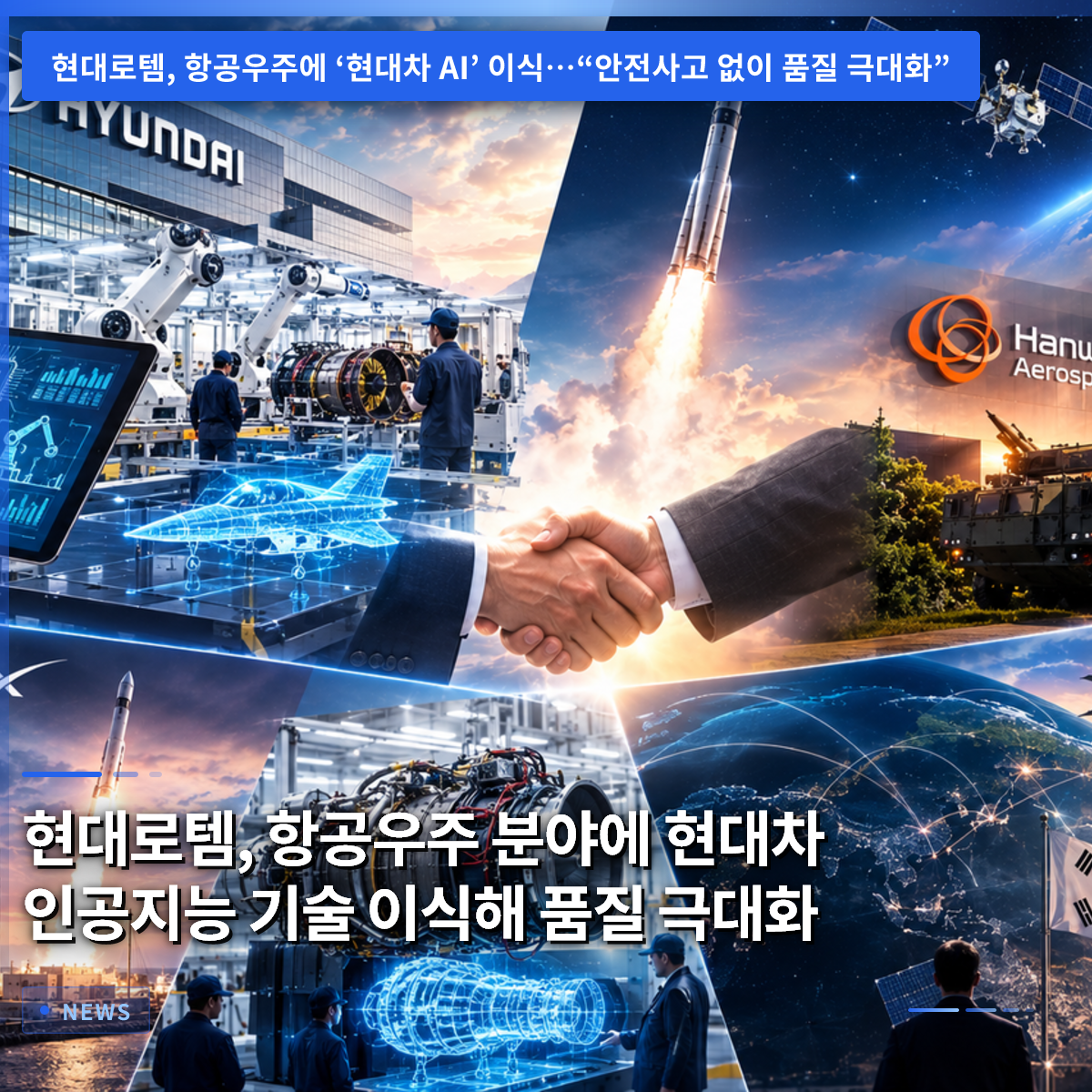
Hyundai Rotem, a subsidiary of the Hyundai Motor Group specializing in rail and defense, has decided to comprehensively introduce Hyundai Motor’s artificial intelligence technology into its aerospace production sites, drawing significant attention from the industry. This technological collaboration is expected to serve as a core driver for fully expanding the company’s business territory from a focus on ground weapon systems to the aerospace defense sector. The intent is to fundamentally prevent potential safety accidents that can occur when manufacturing products requiring extreme precision, such as advanced engines and space launch vehicles. In fact, safety accidents in large-scale manufacturing sites often lead to complete halts in R&D schedules or substantial losses. Therefore, this initiative to transplant proven smart factory technology is expected to become a model case for manufacturing innovation. Let’s take a detailed look at the blueprint and specific collaboration details that Hyundai Rotem will unveil in the aerospace defense field.
=
Hyundai Rotem Transplants Hyundai Motor’s AI Technology into Aerospace to Maximize Quality
1. Signing a Comprehensive Technology Cooperation Agreement with Hyundai Motor
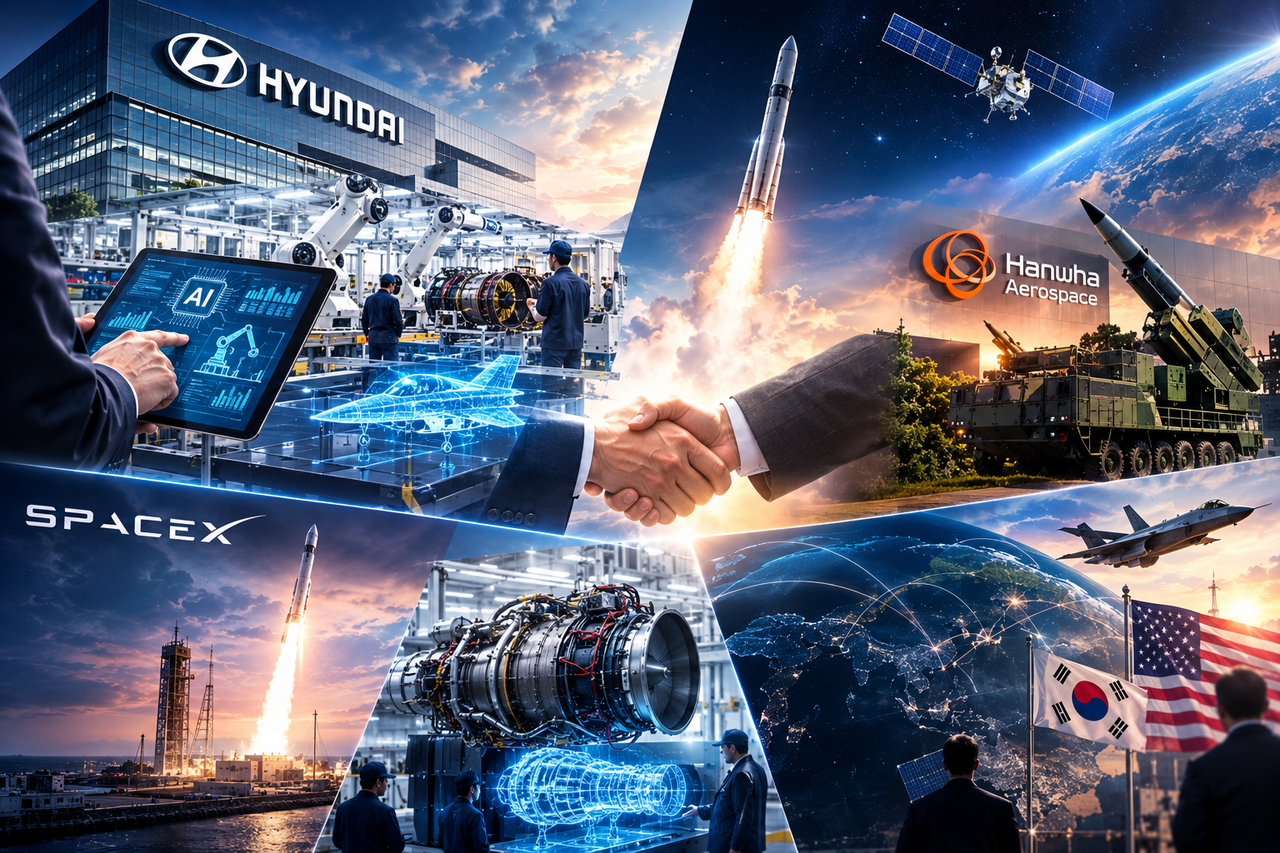
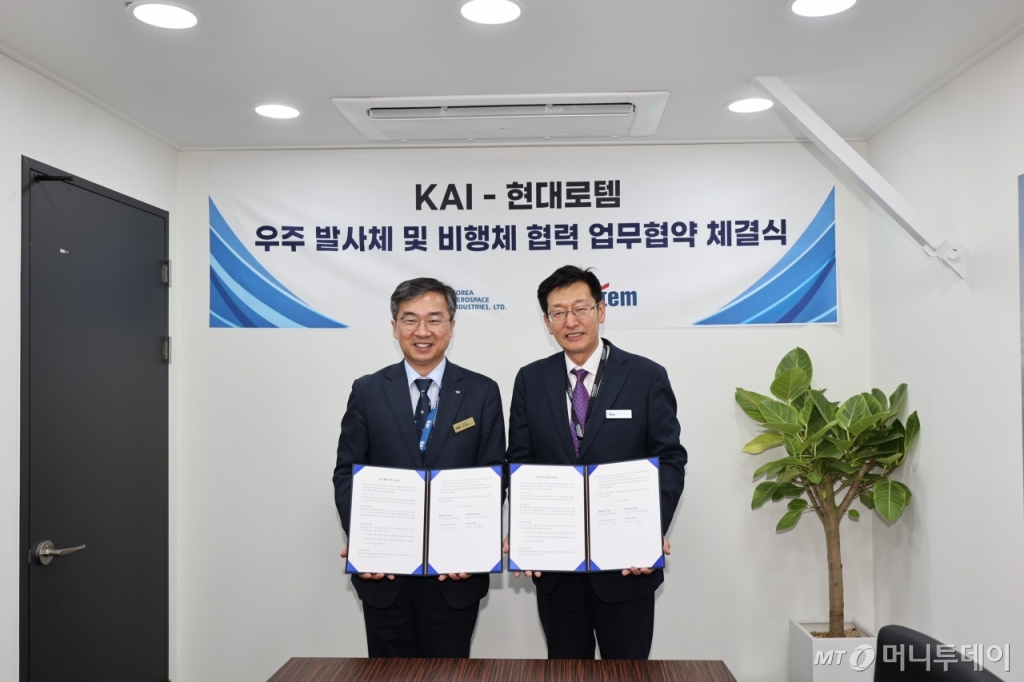
Hyundai Rotem recently announced that it has signed a comprehensive technology cooperation memorandum of understanding with Hyundai Motor to promote automation in production sites. This agreement focuses on combining the core manufacturing capabilities of both companies to dramatically enhance on-site safety. In particular, the company plans to prioritize worker safety by deploying Hyundai Motor’s automation equipment in high-risk processes where direct human access is dangerous. Hyundai Motor has already thoroughly proven its capabilities in production process automation and AI-based quality control globally. It is highly significant that this advanced technology is being transplanted from ground weapons to aerospace manufacturing lines. The cooperation between the two companies aims to transform the entire production process into an intelligent environment, going beyond merely introducing equipment. Only when an environment is created where on-site workers can work with peace of mind can space equipment of perfect quality be born. The strategic moves by both companies to achieve both on-site worker safety and product quality are expected to accelerate further. The wave of AI innovation sweeping through the manufacturing industry as a whole is deeply penetrating into the defense and aerospace fields. Readers are encouraged to pay attention to the synergistic effects that the collaboration between these two enterprises will create.
Hyundai Rotem and Hyundai Motor have signed a comprehensive technology cooperation memorandum of understanding to enhance safety and quality in aerospace production sites.
2. Leap from Ground Weapons to Aerospace Defense
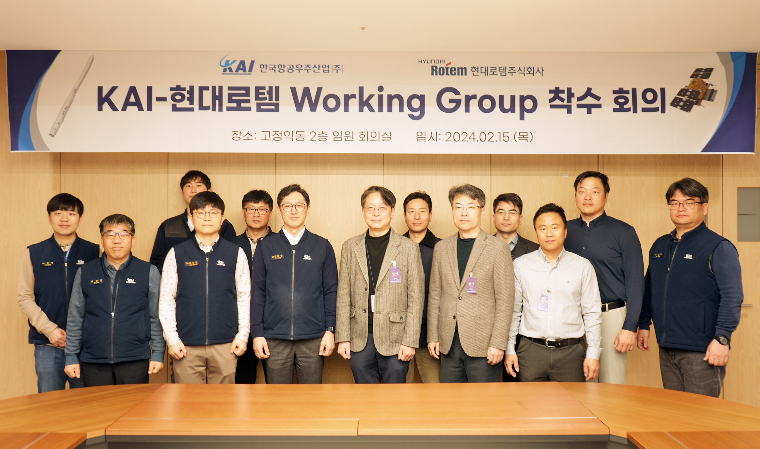
Hyundai Rotem is a comprehensive manufacturing company that has solidified its position in ground weapon systems such as tanks and armored vehicles, as well as rail vehicles. However, in recent years, the company has been betting everything on securing next-generation guided weapon engines and space launch vehicle technology, rather than staying within its existing domain. In line with these changes, the company has completely reorganized its organizational structure, including restructuring existing defense-related organizations and establishing a Space Mobility Team. This is a strong expression of the will to completely transform from a ground-centric defense company into a future-oriented aerospace defense specialist. In fact, the company is successfully carrying out projects to develop engines for air-to-air guided weapons and hypersonic vehicles in close cooperation with the Agency for Defense Development (ADD). It is steadily building future growth drivers by securing even methane engine technology essential for space launch vehicles. It is a lesser-known fact that the company has accumulated deep expertise in the aerospace engine field for decades, beyond the rail and tanks commonly associated with it. The R&D capabilities consistently pursued over the past nearly thirty years are now on the verge of bearing substantial fruit. Hyundai Rotem’s grand challenge from the ground to space will be an important opportunity to broaden the horizons of South Korea’s defense industry.
Hyundai Rotem is leaping into the aerospace defense sector by focusing on space launch vehicles and next-generation engine development, going beyond its traditional ground weapons.
3. Practical Application of AI Smart Factory Technology
The process of manufacturing aerospace parts and engines requires extreme precision and error-free processes, leaving no room for even minor mistakes. Hyundai Rotem plans to directly transplant Hyundai Motor’s AI-based smart factory technology into these demanding production processes. A system will be introduced where AI algorithms detect and analyze potential hazards and defects in real-time to prevent them in advance. For example, Boston Dynamics’ quadruped robots or wearable devices will be actively deployed in processes involving heavy materials or hazardous substances. These advanced unmanned equipment and intelligent systems will drastically reduce the risk of on-site safety accidents while maximizing production efficiency. Since workers are not directly exposed to dangerous environments, they can focus solely on high-precision tasks with psychological stability. Given the nature of the defense industry, which requires the uninterrupted supply of engines and propellants of perfect quality, such process innovation is a necessity, not an option. A Hyundai Rotem official emphasized that thorough prevention is the top priority, as a safety accident could derail the entire R&D schedule. It is highly anticipated what amazing performance the space equipment produced in AI-monitored smart factories will demonstrate in the future.
AI and robotics technology are applied to high-risk processes to prevent safety accidents and maximize the quality of aerospace products.
4. Long-Standing Aerospace Engine Development Capabilities
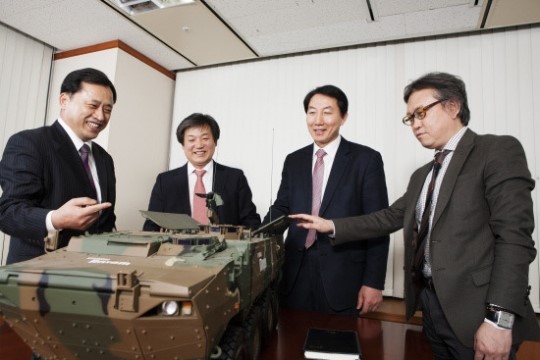
While many people first associate Hyundai Rotem with rail vehicles or massive tanks, the company actually possesses deep history and technology in the aerospace field. It solidified the foundation of space technology by participating in the development of Korea’s first liquid-propulsion rocket in the 1990s. Following this, it continued its challenges by starting the development of ramjet engine technology in the early 2000s. Recently, it has expanded its research scope to the more advanced field of hypersonic engines, playing an active role at the forefront of South Korea’s aerospace technology. Thanks to this long-accumulated know-how, the company was able to successfully win the bid for the core technology project for long-range air-to-air guided missiles commissioned by the Agency for Defense Development. It already possesses the capability to perform detailed designs at a level equivalent to actual mass-produced products, going beyond simple theoretical research. It is impressive to see the company proactively leading national core defense projects while having fully secured component-level manufacturing capabilities. This is a moment when the sweat of researchers who have diligently honed their technology behind the scenes for many years is finally shining. The process of growing into a company with technological capabilities covering the ground, sky, and space serves as a great inspiration for domestic manufacturing companies.
Based on nearly 30 years of aerospace engine development capabilities, Hyundai Rotem is carrying out core technology projects such as long-range guided missiles.
5. Building a Large-Scale Integrated Production Base in Mueju, Jeonbuk
Hyundai Rotem is not only securing technological capabilities but also investing enormous resources in physical infrastructure for actual production. In March, the company signed an investment agreement with the Jeonbuk Special Self-Governing Province and Mueju County to newly establish an aerospace production base. The plan is to complete a massive integrated production base by investing a substantial amount of 300 billion won by 2034. This site will serve as an advanced complex hub where R&D and actual production are organically combined, going beyond a simple parts assembly factory. This infrastructure investment, being promoted in close coordination with local governments, is expected to contribute significantly to regional economic revitalization. By establishing core infrastructure for the advanced defense and aerospace industries in the provinces, it is creating a model case for balanced development. Once the production base is fully operational, the company will gain a solid foundation to stably handle future space mobility volumes. When research institutes and factories are gathered in one place, facilitating communication and collaboration, the speed of product development will accelerate even further. The practical manufacturing infrastructure necessary for South Korea to leap into a space power is gradually taking shape.
Hyundai Rotem will invest 300 billion won by 2034 to build a large-scale aerospace integrated production base in Mueju, Jeonbuk.
6. Zero Safety Accidents and Perfect Quality Supply
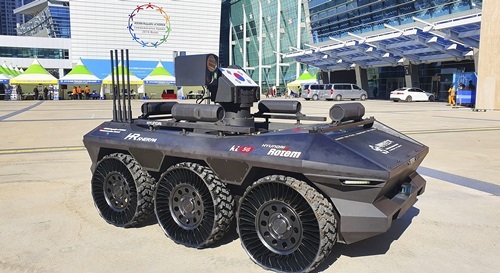
Hyundai Rotem has set a strong goal to completely eradicate safety accidents in all future aerospace production sites. The plan is to actively utilize advanced unmanned technology and AI-based monitoring systems to permanently eliminate the probability of accidents. Only when worker safety is fully guaranteed can the birth of defect-free, perfect quality engines and propellants become possible. Aerospace and defense items, which are directly linked to national security, are a solemn domain where not even a single inch of error or defect is tolerated. The smart factory technology being introduced through the cooperation with Hyundai Motor will be the most certain key to achieving this goal. As the company’s accumulated defense technology combines with the group’s advanced information technology, the synergistic effect is reaching its peak. We look forward to a future where South Korea perfectly launches launch vehicles and guided weapons soaring through space using its own technology. Readers are asked to continue watching with warm eyes the new space history and safety innovation steps that Hyundai Rotem is writing. We support the future of Hyundai Rotem, which will stand as a major player in the global defense market based on meticulous safety management and top-level quality.
Through thorough safety accident prevention and unmanned technology, it is expected that aerospace products of perfect quality will be supplied without interruption.
Frequently Asked Questions
=