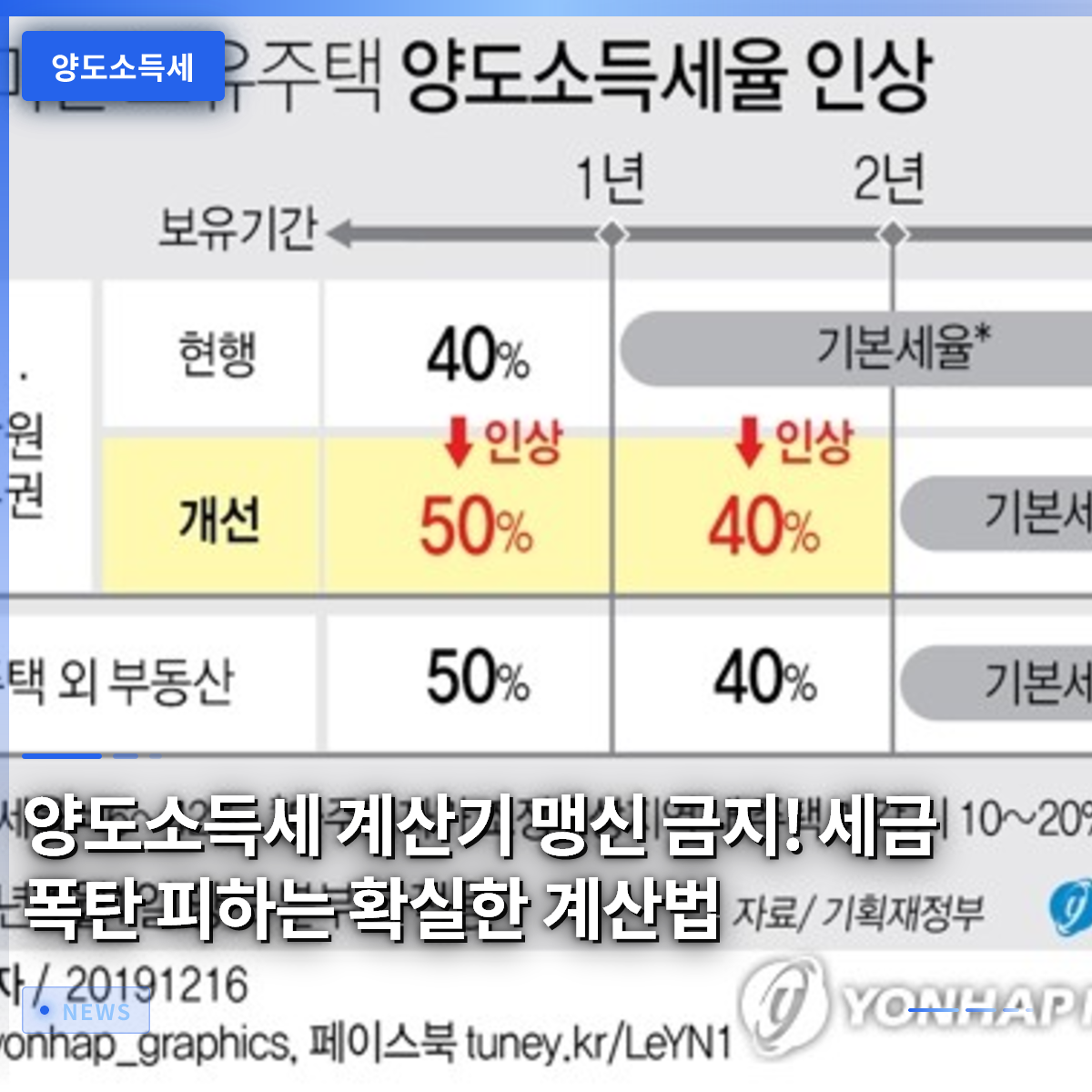
Capital gains tax is a notoriously tricky and complex tax where relying solely on the figures from simple online calculators can lead to serious financial trouble. In fact, a significant portion of appeals filed with the National Tax Service stem from errors related to capital gains tax, highlighting a major gap between tax authority standards and individual perceptions. A common misconception among office workers is the belief that capital gains from real estate are aggregated with income tax from their primary employment; however, these are strictly separate and independently taxed items. Furthermore, the final tax amount can vary by tens of millions of won depending on how the acquisition cost and necessary expenses are substantiated, requiring extreme caution. Through this article, we will thoroughly examine practical tips for settling capital gains tax that protect your assets without being misled by inaccurate information circulating in the market. From here on, I will clearly outline the core aspects of complex real estate tax laws, so please follow along step by step to the end.
=
Don’t Blindly Trust Capital Gains Tax Calculators! The Surefire Way to Avoid a Tax Bomb
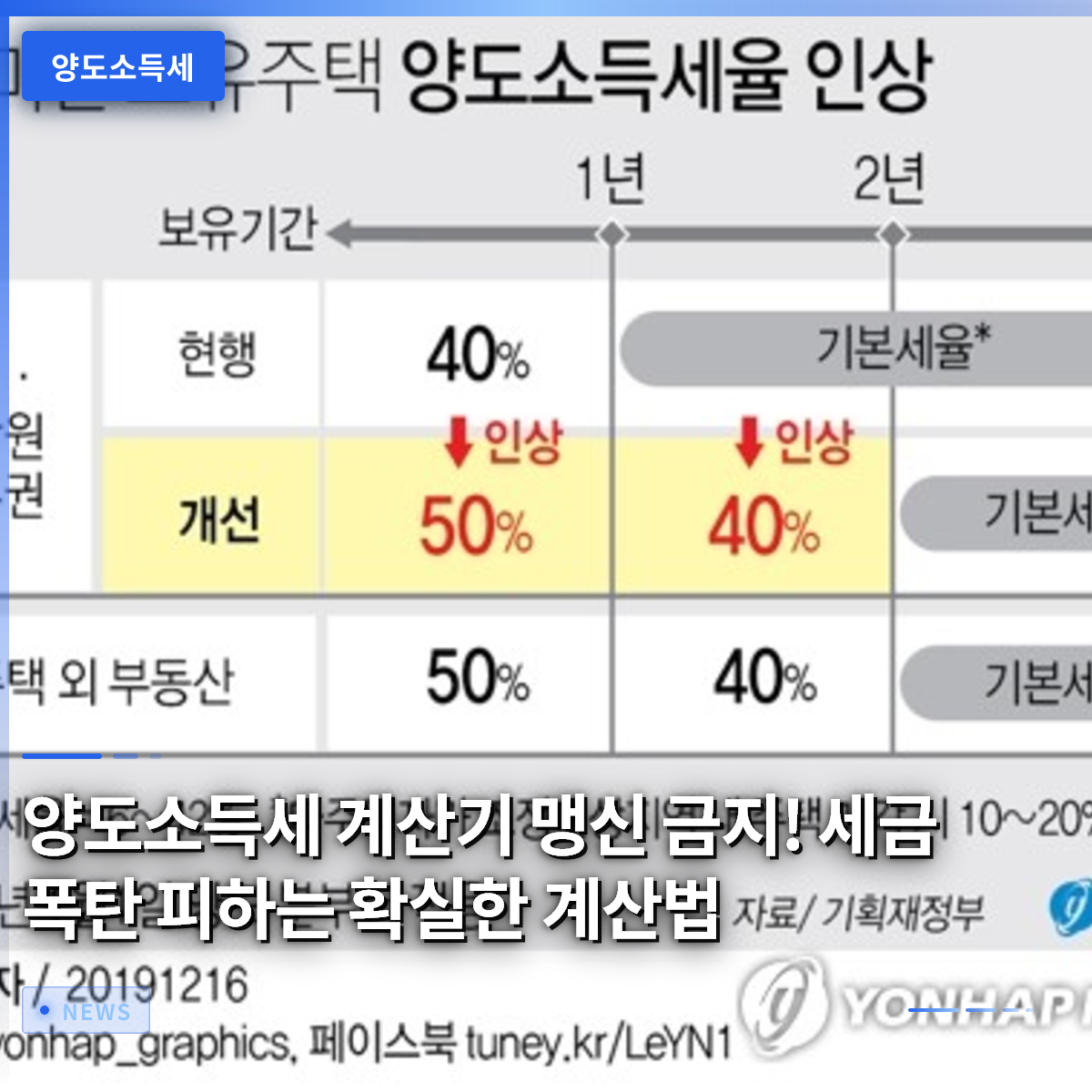
1. The First Step in Calculating Capital Gains Tax: Determining Capital Gains and Necessary Expenses
When disposing of real estate, the first item that must be accurately calculated is the capital gain, which is the selling price (transfer amount) minus the purchase price (acquisition cost). Many people simply plug in the amounts from the sales contract to estimate the tax, but in the actual tax filing process, the decisive factor is how meticulously you gather deductible necessary expenses, such as capital expenditures and transfer costs. For example, while simple interior renovation costs are difficult to claim, expenses that substantially increase the asset’s value, such as boiler replacement or window frame construction, are fully deductible as necessary expenses. However, if you paid for these expenses in cash without obtaining receipts, the tax office will absolutely not recognize them as costs, making it essential to develop the habit of thoroughly keeping tax invoices and cash receipts. Additionally, in transactions between special relationships, such as family members or low-price transfers, the rule of denial of unjustifiable acts may be applied based on the difference between the market price and the transaction price, potentially resulting in an unexpected tax bomb. Therefore, it is crucial to calculate the exact capital gain in advance by checking surrounding actual transaction prices and consulting with a tax professional before signing the contract. In practice, cases where individuals pay millions of won in extra tax due to missing receipts are frequent, so even minor expense proofs should not be taken lightly. Clearly distinguishing between items recognized as necessary expenses and those that are not is the fundamental core of tax saving.
To reduce capital gains, you must meticulously record capital expenditure costs and transfer fees and secure proper documentation.
2. Understanding the Tax System Completely Separate from Employment Income
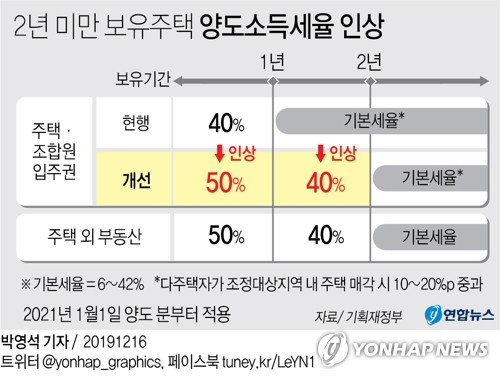
The biggest source of confusion for office workers during the capital gains tax filing period is the worry that their employment income and income from real estate sales might be aggregated, leading to a higher tax rate. To state the conclusion first, capital gains tax falls under a completely independent income category separate from employment income or business income under the Income Tax Act, and is not aggregated with other income to be taxed at the comprehensive income tax rate. In other words, even if a high-earning corporate employee realizes a capital gain from disposing of multiple houses, that capital gain is calculated and filed independently according to the real estate capital gains tax rate system. However, depending on the period of the surtax for multi-home owners or whether the property is in a designated adjustment area, additional tax rates may be added to the basic rate, so one must recognize that the nature of the income is different from the weight of the tax burden. For instance, even if an office worker received a large refund during year-end settlement, the tax incurred from selling real estate is settled according to statutory rates entirely unrelated to that year-end settlement result. If you do not accurately understand this structure of tax law, you may underestimate the amount of tax you owe or, conversely, become excessively anxious. Therefore, it is helpful to build basic economic knowledge about how tax standards and filing deadlines differ according to the type of income. You must never miss tax payment deadlines or incur surcharges due to misunderstandings about income aggregation. It is wise to accurately recognize the characteristics of the tax structure and prepare a customized payment plan suited to your asset situation in advance.
Capital gains tax is calculated separately and not aggregated with other income such as employment income, so you must accurately understand the independent tax rate system.
3. The Pitfalls of Surtax for Multi-Home Owners and Gifting That Trigger a Tax Bomb
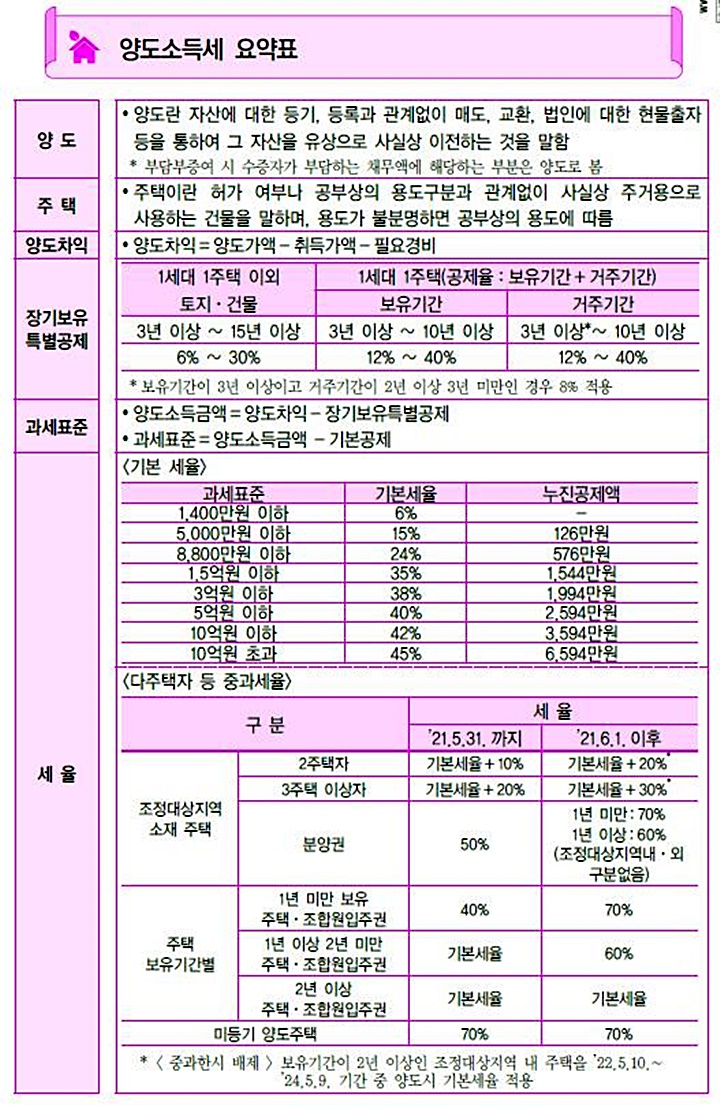
Recently, in the real estate market, there has been a steady trend of people trying to gift houses to their children or spouses to avoid the pressure of holding taxes and capital gains tax, but this can also have the opposite effect if not accompanied by thorough preliminary calculations. Every time the grace period for the capital gains tax surtax on multi-home owners or related regulations changes, the phenomenon of “locked-in properties” intensifies, sometimes causing housing prices in core Seoul areas to fluctuate. In fact, cases where people choose gifting over urgent disposal have surged; if you proceed without properly calculating the gift tax burden and acquisition tax surtax regulations, you may face a much larger tax burden than if you had sold the property. Moreover, more people are becoming targets of National Tax Service audits by blindly trusting unverified tax-saving methods circulating on YouTube or elsewhere, such as splitting cash deposits or poorly explaining the source of funds. Even in financial transactions between parents and children, if no promissory note is written and no records of principal and interest repayment are kept, the National Tax Service will judge it as a clear gift and impose a terrifying tax bomb including surcharges. Therefore, when considering selling in a multi-home situation, rather than choosing excessive gifting solely to reduce taxes, you should coldly compare the practical benefits of selling versus gifting. Acting on internet rumors without undergoing a precise simulation by a tax professional is a shortcut to putting your assets at risk. Since the surtax regulations for multi-home owners change frequently according to shifts in the government’s real estate policy direction, you must always keep a close eye on the latest legal amendments. Instead of impulsive gifting driven by emotion, you should find legal pathways that minimize the tax burden from a long-term perspective.
Indiscriminate gifting to avoid the surtax for multi-home owners can lead to a massive gift tax and acquisition tax bomb, so caution is required.
4. The Importance of Source of Funds Investigation and Tax-Exempt Housing Reporting
Even if you meet the requirements for the one-household-one-house tax exemption and do not have to pay any tax at all, you can be severely penalized later if you neglect to file the report, which is the reality of real estate taxation. Even for tax-exempt houses, the relevant reporting procedures must be completed because they serve as decisive evidence to prove the acquisition cost when acquiring other real estate or to establish the legal source of funds for children in the future. If you do not formally file a tax exemption report with the tax office, it becomes very difficult to prove past tax-exempt transactions when the National Tax Service requests an explanation of the source of funds years later. In particular, there are many cases where incorrect information, such as “tax exemptions do not require reporting,” is spread on YouTube or blogs, but this is dangerous advice that leads to misunderstanding the whole by looking only at one aspect of tax law. In fact, a significant portion of tax notices issued by the National Tax Service are either incorrectly imposed or lack sufficient explanation, leading to complaints, which shows that tax administration demands meticulous evidence. You must file detailed records yourself by visiting the tax office or using the Hometax system to be free from unnecessary tax audits or collection pressures that may arise in the future. Remember that not paying tax does not exempt you from administrative procedures, and all real estate transactions must be recorded transparently. Transparent transaction reporting and thorough management of the source of funds are the strongest shield against potential tax risks. Even if you receive tax exemption benefits, you need to carefully gather related documents and maintain an attitude that aligns with the transparency of tax administration.
Even for tax-exempt houses, you must go through the proper reporting procedures to ensure future proof of source of funds and confirmation of acquisition cost.
5. Hidden Capital Gains Tax Reductions: From Farmland to Overseas Stocks
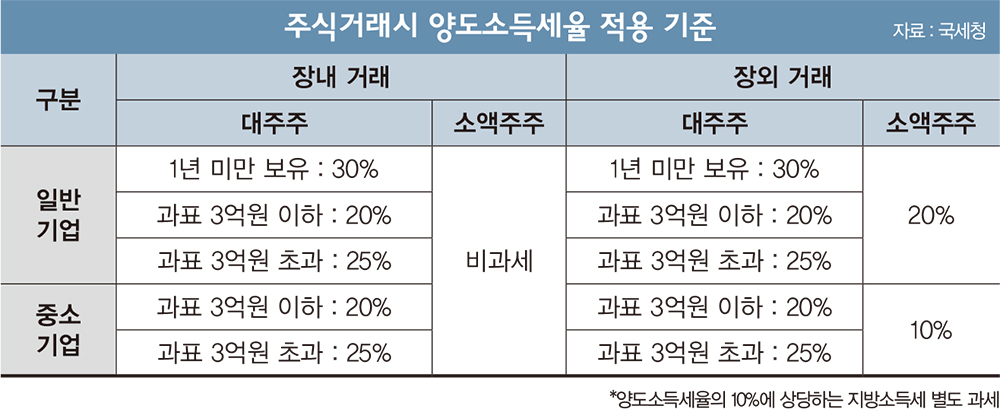
Among real estate, a core system that farmers who have directly cultivated farmland for a long time must not miss is the capital gains tax reduction benefit for farmland self-cultivated for more than 8 years. The most important core here is not simply that the ownership period of the farmland exceeds 8 years, but proving the clear fact of self-cultivation, meaning that you actually farmed on that land for more than 8 years. If there is a lack of objective data proving that you personally worked hard to farm, such as farm ledgers, agricultural business entity registration, receipts for fertilizer and pesticide purchases, and rice purchase records, the reduction application will be immediately rejected. On the other hand, due to the diversification of asset markets, there is a rapidly increasing trend of investors paying attention to capital gains tax on overseas stock investment returns, not just real estate. If the profits from overseas stock trading are large, a strategic approach is needed to reduce taxes by utilizing the aggregation of gains and losses with domestic stocks or the basic deduction system at year-end. As such, capital gains tax is not a concept limited to real estate but exists across various asset areas, so you must comprehensively utilize tax-saving know-how suited to the characteristics of each asset. Whether your asset portfolio consists of farmland, housing, or overseas assets, you must accurately master the requirements of the relevant tax laws to prevent unnecessary tax expenditures. Systems such as farmland self-cultivation reduction or stock gain/loss aggregation become useless if you miss even one requirement, so thorough preliminary preparation is essential. It is safe to carefully compare the reduction regulations applicable to your asset form and seek expert advice.
You must accurately meet the strict requirements of asset-specific reduction systems, such as the 8-year self-cultivated farmland reduction or overseas stock gain/loss aggregation.
6. Final Checks and Future Outlook for Avoiding a Capital Gains Tax Bomb
As of 2026, with increasing uncertainty in the real estate market and tax authorities’ verification systems becoming more sophisticated day by day, capital gains tax management has become a survival necessity rather than an option. If you proceed with transactions relying on unverified calculator figures or internet rumors, you may lose your life savings to taxes or face a bomb of back taxes from the National Tax Service. From the stage before signing a sales contract, you must meticulously re-examine capital gains, necessary expenses, surtax applicability for multi-home owners, and the possibility of missing tax exemption reports from scratch with a tax professional. It is also time to exercise the wisdom to grasp the optimal selling timing by continuously monitoring the direction of the government’s tax reform and price fluctuation trends in the real estate market. Instead of using dubious methods that teeter on the edge of the law out of eagerness to reduce taxes, following the standard procedure of securing evidence and filing transparently is ultimately the most certain way to save on taxes. To safely protect your assets and prevent unnecessary tax risks, please deeply engrave the core contents learned today in your mind. I hope that in upcoming real estate transactions, you will achieve a worry-free sale with the meticulousness to miss not a single document or requirement. Thorough preliminary preparation and consultation with tax professionals are the only and certain answers to protecting assets in the complex capital gains tax landscape. Now, check the status of your held real estate and assets, and calmly make a plan to prepare for upcoming transactions.
To reduce tax risks, you should establish transparent and legal tax-saving strategies through thorough preliminary checks and expert consultations.
Frequently Asked Questions
=