Personal pension savings are the most reliable and powerful tax-saving tool, allowing you to receive refunds ranging from hundreds of thousands to millions of won during your annual year-end tax settlement. Mr. Kim, an office worker, was able to enjoy a family dinner out thanks to a substantial tax refund he received this year, thanks to his consistent contributions to his pension savings account last year. If you have always felt overwhelmed by the uncertainty of how to manage pension savings after hearing about them, it is worth reading this article to the end. Many people simply sign up for products at banks or leave their pension savings insurance policies untouched, but to beat inflation, you need to consider fund accounts. In this article, we will thoroughly explain everything from the basic concepts of personal pension savings to tax deduction limits and tips for transferring accounts from other financial institutions, making it easy for anyone to understand. Stop paying taxes in full and start building a secure retirement fund wisely by saving taxes. Let’s explore the methods one by one.
=
Preparing for Retirement with Personal Pension Savings: Tax Deduction Limits and Fund Transfer Tips
1. What is Personal Pension Savings and Why You Must Join
Personal pension savings are a representative savings product and tax-benefited account created by the government to ensure a comfortable retirement for its citizens. Since the National Pension paid monthly is often insufficient to live a wealthy life after retirement when considering inflation, the government encourages individuals to save voluntarily. Not only office workers but also self-employed individuals and freelancers with income can join, allowing them to prepare for retirement while significantly reducing their annual tax burden. In the past, bank pension savings trusts and insurance company products were dominant, but recently, pension savings funds through securities firms have gained overwhelming popularity. This is because securities firm accounts allow direct investment in various domestic and international Exchange-Traded Funds (ETFs) and equity products, enabling investors to balance both returns and stability. It is easy to find examples of acquaintances who receive hundreds of thousands of won in tax deductions annually through their pension savings accounts while simultaneously growing their assets. Therefore, personal pension savings can be considered an essential financial product that should be established as soon as you secure a job or start earning income. You must clearly understand the basic framework of personal pension savings, the most popular method for achieving both retirement fund preparation and tax savings. Knowing the differences between bank and securities firm products and making a choice that suits your investment style is the first step in asset growth.
Personal pension savings are an essential financial account that allows you to prepare for retirement and benefit from year-end tax deductions simultaneously.
2. The Perfect Harmony of Pension Savings Tax Deduction Limits and IRP
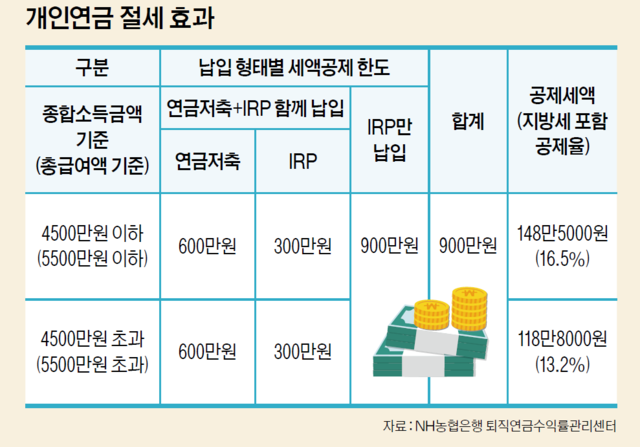
The biggest appeal of personal pension savings is undoubtedly the powerful tax deduction benefit provided during the year-end tax settlement. Under current tax laws, the annual contribution limit eligible for tax deduction for a standalone pension savings account is up to 6 million won. If you utilize an Individual Retirement Pension (IRP) account alongside it, you can increase the combined limit to a maximum of 9 million won, maximizing the tax-saving effect. Employees with a total annual salary of 55 million won or less are subject to a 16.5% deduction rate, allowing them to receive a substantial refund of up to 1,485,000 won. Even if your total salary exceeds 55 million won, you can receive a refund of up to 1,188,000 won with a 13.2% deduction rate, making it an excellent wealth management tool for office workers. An office worker who consistently contributes 500,000 won monthly to their pension savings is essentially receiving a bonus of over 1.3 million won at year-end as a reward for their diligent savings throughout the year. Knowing the exact tax deduction limits and adjusting your contribution amount according to your income bracket is a hidden secret to successful wealth management. To fully enjoy the tax deduction benefits, you need the wisdom to prioritize pension contributions even amidst your fixed monthly expenses. Rather than regretting it when the year-end tax settlement season arrives, it is recommended to set up automatic transfers of a fixed amount starting now.
By combining pension savings and IRP, you can receive tax deductions of up to 9 million won annually, securing a generous refund.
3. How to Transfer Your Pension Savings Account from Insurance to Funds
Many people feel frustrated with the low returns of pension savings insurance they joined in the past and are looking to switch to securities firm funds. In reality, pension savings insurance policies left untouched for long periods often fail to keep up with inflation, causing their real asset value to decline. In such cases, instead of canceling the existing contract, you can utilize the inter-financial institution transfer system to move your account to a securities firm pension savings fund without losing your principal. You can easily apply for the transfer by visiting a securities firm branch or through their mobile app, and your previous contribution period will be fully recognized. Recently, many securities firms are running various cash payment events for customers transferring their pensions from other financial institutions. By taking advantage of these events, you can enjoy the dual benefit of transferring your account and receiving a small investment subsidy. However, it is crucial to transfer the account rather than canceling the insurance and signing up for a new one, ensuring that your existing contribution period and tax benefits are carried over without any disadvantages. If you are not satisfied with the returns of your current product, do not hesitate to transfer your account to a securities firm and begin more active asset management. Utilizing expert advice or a securities firm’s robo-advisor service allows even beginners to build a stable portfolio.
Transferring your existing pension savings insurance to a securities firm fund without canceling it allows you to enjoy both improved returns and event benefits.
4. Receiving Additional Tax Deductions by Converting ISA Maturity Funds to Pensions
Recently, the number of people converting their matured Individual Savings Account (ISA) funds to pension savings is increasing sharply. If you transfer your matured ISA funds to a pension savings or IRP account, you receive an additional tax deduction equivalent to 10% of the transferred amount. For example, if you transfer 30 million won of matured funds to a pension account, you can receive an additional deduction benefit within the limit of 3 million won. Since you can receive this additional deduction benefit on top of the existing annual contribution limit of 9 million won, it is the best way to maximize tax savings. It is considered an essential course even among the wealthy, as it allows you to deposit a lump sum into a pension account, save on taxes, and build a robust retirement fund all at once. Securities firms are also actively marketing to customers converting matured funds by offering special interest rate preferences or gift certificates. Therefore, if you are approaching your ISA maturity date, you should seriously consider converting to a pension account rather than simply withdrawing the cash. Just by understanding and executing the organic flow of funds between tax-saving accounts, the speed of asset formation for office workers can change completely. Wise investors do not stick to just one account but organically connect multiple tax-saving methods to minimize taxes.
Converting your matured ISA funds to pension savings allows you to receive additional tax deduction benefits while building a robust retirement fund.
5. Managing Your Pension Assets at a Glance Using the Integrated Pension Portal
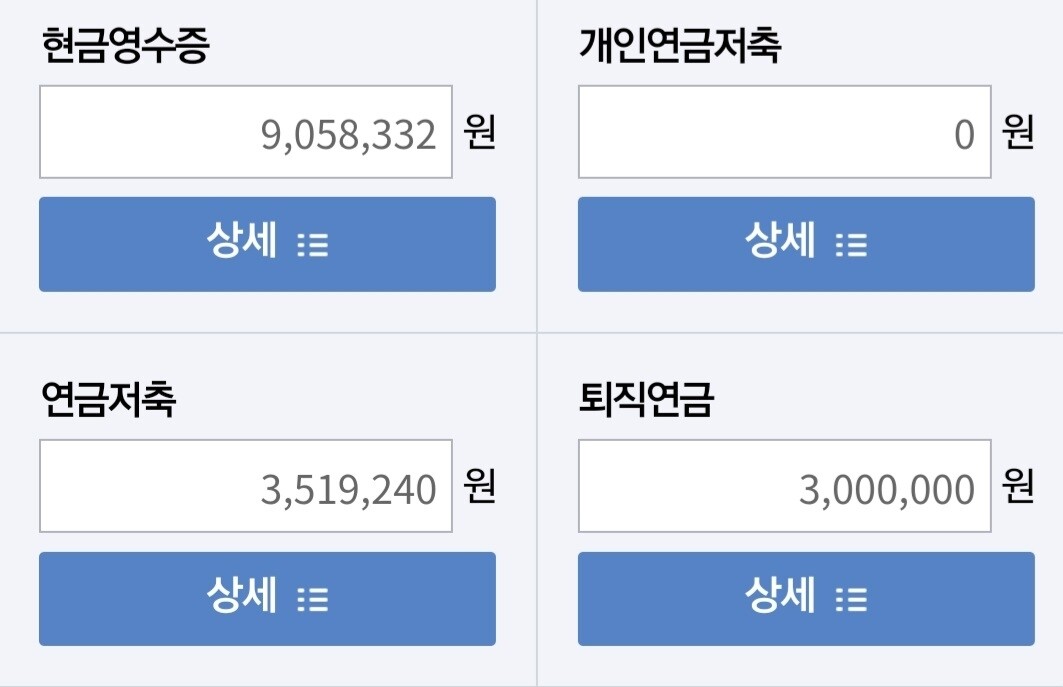
Not many people accurately know the exact amounts of their public pensions, retirement pensions, and personal pension savings. By using the Integrated Pension Portal website operated by the Financial Supervisory Service, you can view all pension information registered under your name for free at a glance. This website is like a treasure trove for early-career professionals who have changed jobs frequently or middle-aged individuals who have forgotten about insurance policies they joined in the past. Simply logging in with a public certificate or simple authentication allows you to check not only the estimated receipt amount but also the detailed breakdown of each product. Even when your retirement pension is transferred to an IRP due to a job change, it is reflected in real-time in this portal’s system, making it convenient to manage. You should develop the habit of periodically checking your pension asset status to ensure you have enough funds for your retirement. Retirement preparation succeeds only when you set specific plans based on accurate data and execute them, rather than acting on vague anxiety. Finding hidden pensions under your name and setting specific goals for how much more you need to save is a shield against retirement bankruptcy. The small step of accessing the Integrated Pension Portal today to check your pension report card can change your future.
Using the Integrated Pension Portal allows you to view and manage your scattered public, retirement, and personal pensions for free at a glance.
6. Mindset for Successful Management of Personal Pension Savings
Do not assume that your retirement preparation is complete just because you opened a personal pension savings account and received a tax deduction; this is where the real journey begins. You need consistent interest and study to determine how to grow the valuable money in your account by investing in specific stocks or ETFs. The wisest approach is to consistently invest in high-quality assets with an upward trend through regular accumulation, without being swayed by short-term market fluctuations. You must stick to your investment principles and manage your assets from a long-term perspective, ignoring hearsay, to ensure you can smile after retirement. In the future, as AI-based asset management systems become more advanced, everyone will be able to easily manage expert-level portfolios. You must not neglect the effort to actively manage your pension account and switch to optimal products to keep up with these changes. Start today by opening your pension savings account, checking which stocks you are invested in, and taking the first step toward a wealthy retirement. Your life after retirement will differ 180 degrees depending on which accounts you chose and how you managed them in your younger years. While immediate tax refunds are important, please invest joyfully while imagining the scale of your assets in 10 or 20 years.
Personal pension savings require consistent asset management and long-term investment beyond just signing up to become a successful retirement preparation.
Frequently Asked Questions
=