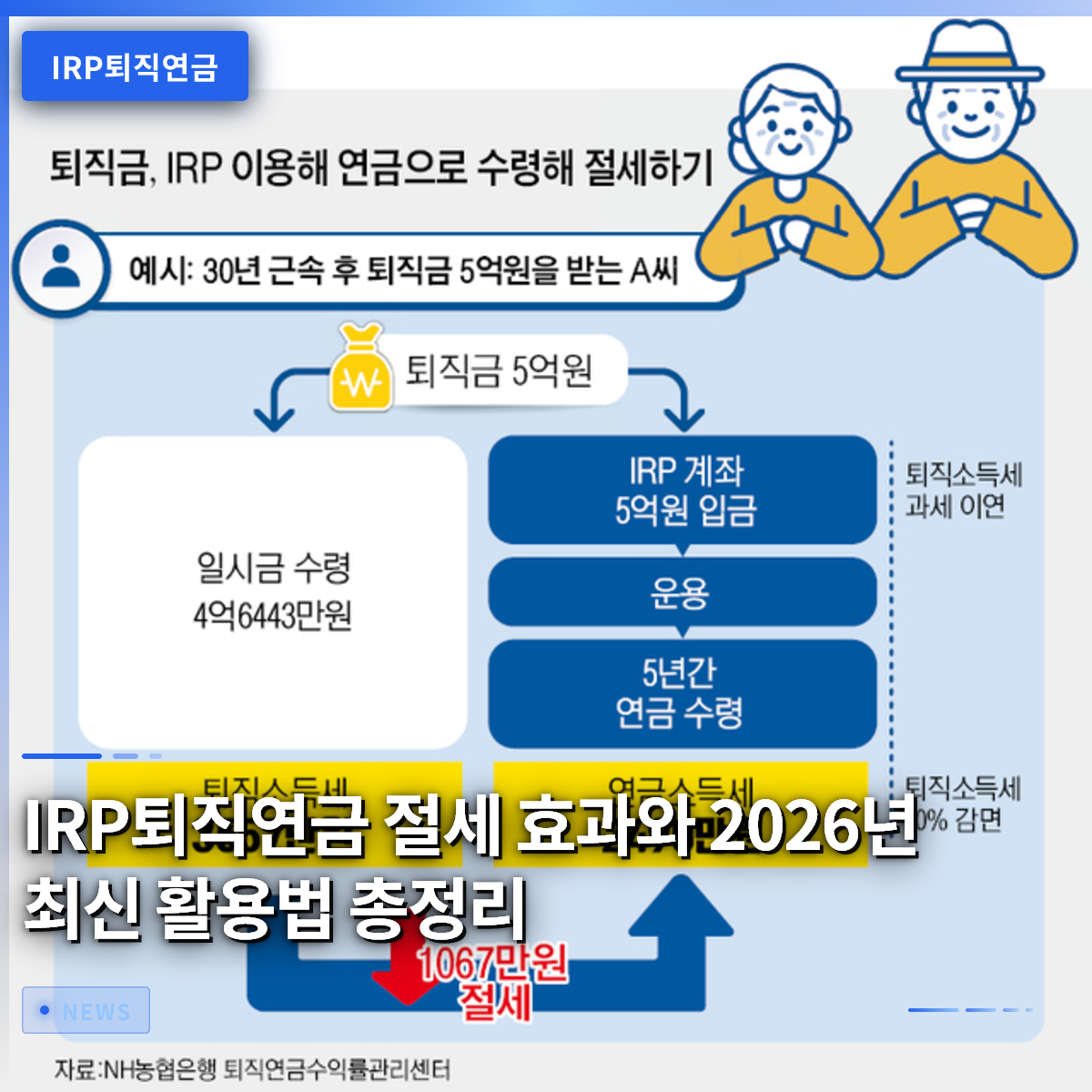
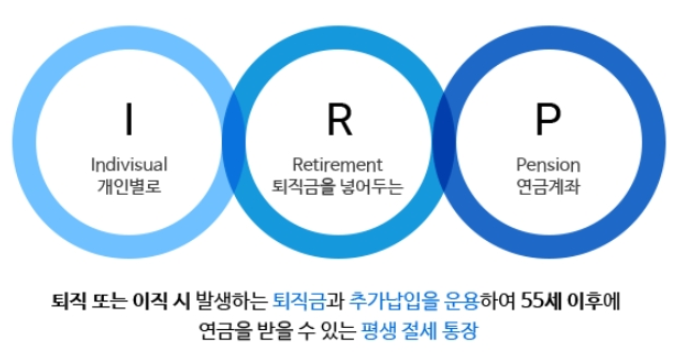
If you carelessly receive your severance pay into a regular checking account, you may face a tax bill larger than expected. Therefore, you must receive it into an IRP (Individual Retirement Pension) account. In fact, last year, many employees lost significant amounts of money to taxes because they failed to manage their accounts properly during job changes or resignations. To protect the valuable severance pay you have earned through hard work, you must accurately understand the relevant systems and act wisely. In this article, we will thoroughly cover the basic concepts of the account, how to maximize tax deduction benefits, and recently added investment options. We will explain practical ways to protect your assets through specific, common scenarios, so please stay with us to the end.
=
IRP Retirement Pension: Tax Savings Benefits and 2026 Usage Guide
1. The Real Reason You Should Receive Severance Pay in an IRP Account

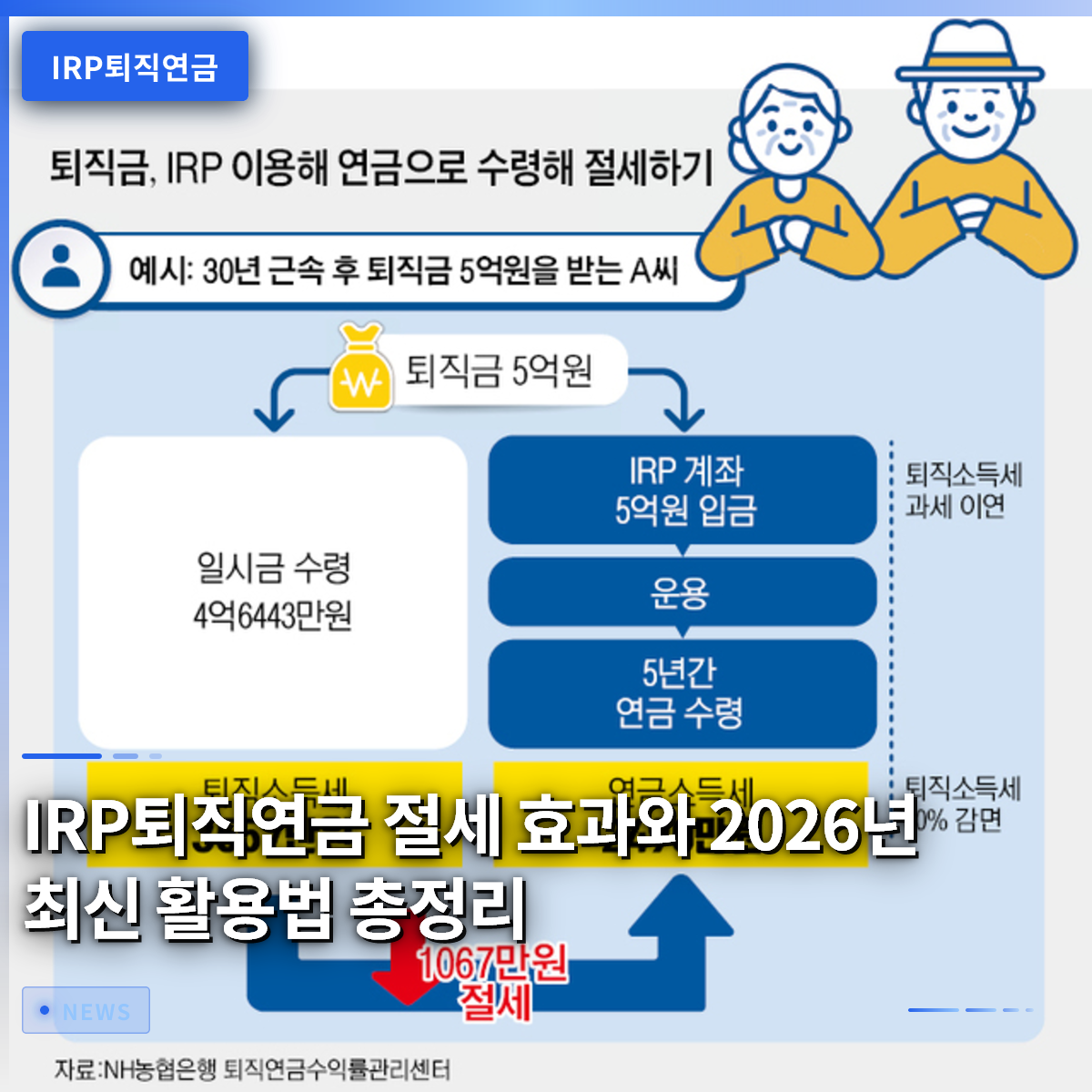
Mr. Kim, a worker approaching retirement, was shocked to see a tax notice after receiving his severance pay into a regular checking account, intending to use it immediately for living expenses. This is because severance income tax is incurred all at once upon leaving a company, and if the funds are not transferred to a legally designated account, the tax is withheld immediately. According to the law, except for certain exceptional circumstances, employers are obligated to pay severance pay to an account in the employee’s own name. Using this account allows you to defer taxation rather than paying it immediately, enabling you to grow your funds favorably until retirement. Instead of paying taxes right away, you can invest the entire amount, so the asset growth effect becomes enormous over time. Therefore, when changing jobs or retiring, it is financially the most beneficial choice to always set up an account in your own name first.
Receiving severance pay in an IRP account defers taxes, allowing you to grow your assets more significantly.
2. How to Maximize Tax Deduction Limits and Year-End Settlement Tips
Every year during the year-end tax settlement season, the biggest concern for employees is how much tax they can get back. By appropriately combining pension savings and this account, you can fill the tax deduction limit up to 9 million won, making it an essential tax-saving tool for employees. You can receive a deduction of up to 6 million won with the IRP account alone, and the limit increases to 9 million won when combined with pension savings products. If you make consistent contributions regularly, you can secure a substantial refund ranging from hundreds of thousands to millions of won during the annual year-end settlement. Last year, Mr. Park, a colleague, received almost no refund because he was unaware of the system and did not join, while Mr. Lee, who carefully joined, received a large refund and became the envy of others. Since you can prepare for your retirement funds while saving on taxes every year, it is hard to find a better financial strategy.
Using pension savings and the IRP account together allows you to enjoy tax deduction benefits of up to 9 million won.
3. Investing in Safe Assets and Retail Government Bonds Within the Account
For risk-averse employees who believe that investing severance pay directly in the stock market is too risky, bonds and government bonds are excellent alternatives. Due to recent regulatory changes, you can now directly subscribe to safe 10-year and 20-year retail government bonds in both IRP accounts and Defined Contribution (DC) pension plans. Since the minimum investment amount starts at 100,000 won, you can easily start with small amounts without the burden of investing a large lump sum. For example, Mr. Jung, an employee anxious about stock market volatility, builds his portfolio calmly by investing small amounts in government bonds every month. In addition to the coupon rate, a premium rate is added, allowing you to expect long-term stable interest income under more favorable conditions than bank deposits. A great investment strategy that safely protects your principal while defending against inflation is hidden right here.
Recent regulatory reforms allow you to directly purchase retail government bonds in small amounts within the account.
4. Reasons for High Cancellation Rates and the Tax Bomb of Early Withdrawal
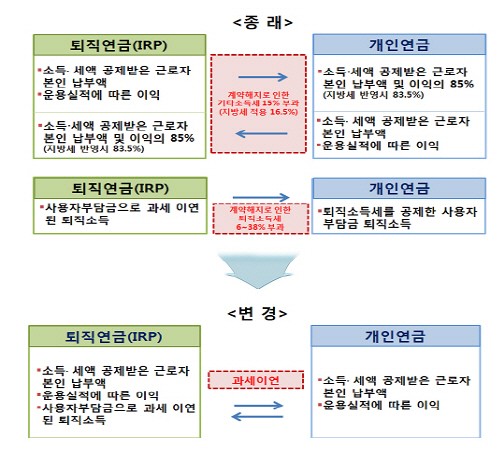
Unfortunately, many employees cancel these accounts midway because they suddenly need money before retirement, which is more common than one might think. Statistics show that while a significant amount of money has been transferred to these accounts, a high percentage of cancellations has occurred, prompting concerns from the government and experts. If you cancel the account to put out an immediate financial fire, you must return all tax deduction benefits received to date and also pay miscellaneous income tax. Last year, Mr. Choi, who broke his account to fund a home purchase, deeply regretted it after facing a tax bomb, wishing he had looked into collateral loans or pension loans instead. Even if you find yourself in a situation where you urgently need money, it is wiser to first explore exceptional withdrawal conditions allowed by law or loan systems rather than canceling the account. If you break the assets you have accumulated for your long-term retirement, you will ultimately be the one who suffers the greatest loss.
Early cancellation requires returning all tax benefits received, so it is best to maintain the account unless there are special circumstances.
5. Preventing Losses Through Wage Peak Response and Switching to Defined Contribution Plans
After a long career, you will eventually reach a stage where your salary decreases as you age, and at this time, you should carefully examine how your severance pay is calculated. If you enter a phase of declining wages, it is advantageous to switch from a Defined Benefit (DB) plan to a Defined Contribution (DC) plan to actively prevent severance pay losses. DB plans are calculated based on the average salary just before retirement, so there is a high risk that the final severance amount will decrease during periods of wage cuts. On the other hand, using a DC plan or an IRP account allows you to directly manage the amounts accumulated each year, effectively responding to the uncertainties of the wage peak system. In fact, a manager at a large corporation who switched plans in advance before mandatory retirement successfully defended his total severance pay and also fully enjoyed tax reduction benefits. Carefully understanding the characteristics of the pension plan offered by your company and wisely switching at the right time is the core of employee financial management.
During periods of declining wages, you should switch plans to prevent severance pay losses and manage assets efficiently.
6. Correct Practical Strategies for Retirement Asset Management
As we have seen, this system is not just a place to store severance pay but a core asset management tool that determines your life after retirement. You should make consistent contributions annually to secure tax deduction benefits while diversifying your portfolio with a focus on safe assets. To succeed, you must not be swayed by rumors or short-term market fluctuations, but rather proceed steadily with a long-term perspective, considering your investment style and retirement timing. In the future, the importance of retirement planning using this account will undoubtedly be emphasized further alongside various government system improvements. We recommend that you start today by carefully checking the status of your account and beginning the small practice of adding spare funds each month. Your peaceful and abundant retirement truly begins with the right financial decisions you make today.
For retirement planning, you need to check your account now and consistently manage your assets.
Frequently Asked Questions
=