According to recently released statistics, while the money supply in circulation continues to show a steady upward trend, its pace of growth has noticeably slowed. At first glance, it may appear that money is continuously being injected into the market, but a closer look reveals that capital flows among different economic sectors are moving in completely opposite directions. While corporations are filling their coffers with surplus funds and semiconductor-related deposits, the financial situation of ordinary households is becoming increasingly tight. In fact, Mr. Kim, an office worker, reveals that his disposable funds have visibly decreased over the past three months due to rising prices and the burden of loan interest. In this article, we will examine the overall trend of the money supply and explore why corporations and households are taking such divergent paths. We will clearly identify the source of the economic pressure we feel daily by analyzing statistical figures.
=
Money Supply Up 12.7 Trillion Won, but Growth Rate Halved; Household Funds Decline for Third Consecutive Month
1. The Hidden Truth Behind the 12 Trillion Won Increase in Money Supply
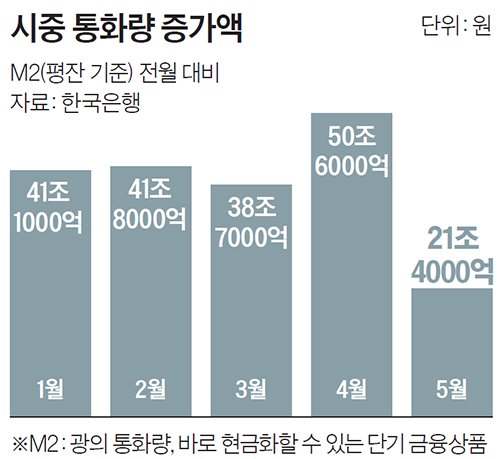
As of July this year, the seasonally adjusted average balance of broad money (M3) increased by approximately 12.7 trillion won compared to the previous month. This marks the ninth consecutive month of steady growth since the second half of last year. However, it is premature to feel reassured that funds are overflowing in the market based solely on this figure. When compared to the increase in June, just one month prior, the current growth is less than half of that amount. The year-over-year growth rate also clearly shows a slowing trend, indicating that the overall pace of capital inflow is being moderated. Behind this sharp deceleration in the overall growth rate of the money supply lies the divergent capital management strategies of various economic actors.
Experts analyze that this phenomenon does not simply mean a decrease in the money supply, but rather a complete shift in the pathways of capital movement. Although the total amount of money in the market has increased, the “temperature” of the economy felt by the public varies greatly depending on where that money is stuck. For example, Mr. Park, a self-employed business owner, says that news about increasing money supply feels irrelevant to him because his sales are stagnant while raw material prices are rising. Ultimately, the gap between macroeconomic indicators and the reality felt by individuals is widening. We need to accurately read the changes in actual capital flows hidden behind these statistical indicators.
The money supply has shown growth for nine consecutive months, but the magnitude of the increase has plummeted to half of the previous month’s level.
2. Massive Capital Concentration in Time Deposits and Money Market Trusts

Looking at the detailed breakdown by product, a massive amount of capital has been concentrated in time deposits and savings with terms of less than two years. During this period, time deposits and savings surged by a whopping 27.3 trillion won, easily surpassing the previous month’s increase. Additionally, funds related to the derivatives market and corporations’ ample cash assets flowed directly into deposit products. Money market trusts with terms of less than two years also increased by 11.4 trillion won, clearly demonstrating the preference for safe assets among funds in circulation. This phenomenon is due to large-scale funds, unable to find appropriate investment outlets amidst an uncertain economic environment, flocking to places where they can safely earn interest.
On the other hand, demand deposits and savings accounts with on-demand withdrawal capabilities evaporated by a massive 27 trillion won in just one month, reversing into a sharp decline. Money market funds also decreased by 11.6 trillion won, indicating a large-scale outflow of short-term funds that are easily convertible to cash. As a result, the scale of narrow money (M1), which includes cash, demand deposits, and on-demand savings, plummeted by more than 30 trillion won compared to the previous month. This is the result of short-term idle funds that were heading toward risky assets like stocks and real estate either freezing or fleeing to stable deposits. Ultimately, money in circulation has not disappeared; rather, it is deeply hiding in safe long-term products depending on its nature.
While short-term funds largely flowed out, massive capital was concentrated in time deposits and money market trusts with terms of less than two years.
3. The Massive Illusion Created by Semiconductor Corporations’ Deposits

The main drivers behind this increase in the money supply were none other than non-financial corporations. The broad money balance held by non-financial corporations increased by more than 20.6 trillion won, showcasing their continued financial strength. Although the pace has moderated slightly compared to the massive increase in the previous month, corporate coffers remain well-stocked. In particular, one of the decisive factors in this increase in the money supply was the large-scale deposits from major domestic semiconductor companies. As the semiconductor industry recovers, enormous operating profits and surplus funds have flowed into the financial sector.
While ordinary small and medium-sized enterprises and small business owners are still struggling with funding difficulties, capital inflows centered on large corporations have pushed up overall statistical indicators. In fact, Mr. Choi, a factory owner in Seoul, complains that while large corporations are hoarding money, their suppliers are struggling to receive payment for their goods, leaving them breathless. As polarization deepens even within the corporate sector, there is a significant gap between overall statistical figures and the on-the-ground reality. A Bank of Korea official also explained that temporary fund deposits from specific large semiconductor companies had a decisive impact on this increase in the money supply. Behind these huge statistical figures lay the specific factor of capital flows from a particular industrial sector.
The amount of money held by non-financial corporations increased significantly, with deposits from semiconductor companies having a major impact.
4. The Shock of Three Consecutive Months of Decline in Household Money Holdings
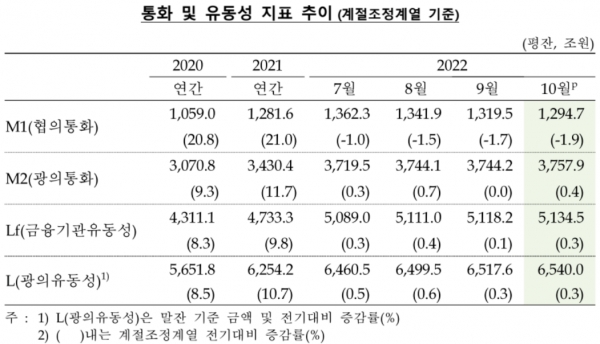
Unlike corporations, which are filling their coffers, the money holdings of households and non-profit organizations have shrunk dramatically. As of July, the broad money balance held by households decreased by a whopping 11.6 trillion won from a level exceeding 21 trillion won. Since more than 18 trillion won and 19 trillion won had already flowed out in May and June, respectively, this decline marks a record of three consecutive months. In just three months, the amount of money disappearing from household pockets has exceeded 50 trillion won. This shows that ordinary families are draining their cash reserves to cope with soaring living expenses and repay loan principal and interest.
Mr. and Mrs. Lee, a dual-income couple, say that their bank accounts are emptying every month as they struggle to cover their children’s tutoring fees and soaring grocery prices, and they are on the verge of breaking their savings. With the burden of mortgage interest piling on, ordinary households are not just failing to make new savings; even their existing emergency funds are running dry. Although the money supply indicator is reported to have increased overall, a distorted structure is becoming entrenched where the assets of households, which make up the majority of the population, continue to decrease. The fundamental reason why consumer sentiment cannot help but shrink lies in this continuous decline in household money holdings. The core cause of the frustrating reality where the domestic economy is struggling to revive is clearly contained in these statistics.
Household money holdings have decreased for three consecutive months, with more than 50 trillion won evaporating during this period.
5. Diverging Capital Flows in Other Financial Institutions and the Public Sector
Looking at capital movements in other financial institutions and the public sector, in addition to corporations and households, allows for a clearer understanding of the complex aspects of the current economy. The broad money held by other financial institutions decreased by approximately 5.7 trillion won, showing signs of capital outflow. On the other hand, the money supply in the “other” sector, which includes social security organizations and local governments, increased by 6.3 trillion won. This is interpreted as the result of public funds being allocated to specific sectors and remaining in financial institutions in the form of deposits or trusts. Since the places where money is stuck and the directions it flows vary greatly among different economic actors, it is very difficult to define the overall economic trend in a single sentence.
The average balance of financial institution liquidity, an indicator showing the overall liquidity of financial institutions, also decreased by 0.4% compared to the previous month, showing signs of contraction. The phenomenon of capital tightness is intensifying, where money is not circulating fully in the market but is trapped in specific safe assets or large corporate accounts. Although the total amount of money has increased, the turnover rate that injects vitality into actual economic activities is declining. Households with dried-up money sources close their wallets, while large corporations and the public sector, which hold the funds, safely bury their capital, creating a vicious cycle. Since such structural problems are difficult to resolve in the short term, close monitoring by the government and financial authorities is urgently needed.
Capital flows diverged by sector, with funds in other financial institutions decreasing while those in the public sector increased.
6. Future Economic Outlook and Survival Strategies We Should Adopt
As we have seen so far, the increase in the money supply in July is merely an illusion created by specific capital inflows from large corporations and the semiconductor sector. Ordinary households are facing the cold reality of depleting assets to maintain their livelihoods, with funds decreasing for three consecutive months. Future economic outlooks also suggest that household burdens will not easily diminish depending on price trends and interest rate changes. Experts advise that during such times, a strategy of strictly managing cash flow and repaying debts early is safer than making reckless investments. Readers, please do not be misled by macroeconomic news alone; carefully check your actual household ledger. In the approaching uncertain economic environment, the wisdom to build a solid asset defense wall for oneself is more urgent than ever.
Given the continued financial pressure on households, thorough asset management and defensive financial strategies are necessary.
Frequently Asked Questions
=