Moves by the National Assembly to strengthen control over the 162 trillion won Future Response Fund are becoming concrete. This stems from the intention to establish oversight mechanisms to ensure the fund is used for its intended purposes. Although the government has stated that it does not welcome interference from the National Assembly, the debate is heating up. A full-scale review of the fund is expected to begin in the Finance and Economic Planning Committee of the second half of the 22nd National Assembly. The National Assembly has decided to ensure operational stability through additional legislation. In particular, making National Assembly consent mandatory when transferring ongoing projects has emerged as a core issue. It is highly likely that a power struggle between the government and the National Assembly will continue in the future. This article examines these issues in order and summarizes key points for readers to keep in mind.
=
National Assembly Seeks to Strengthen Control Over 162 Trillion Won Future Response Fund

1. The Need for Strengthened Control
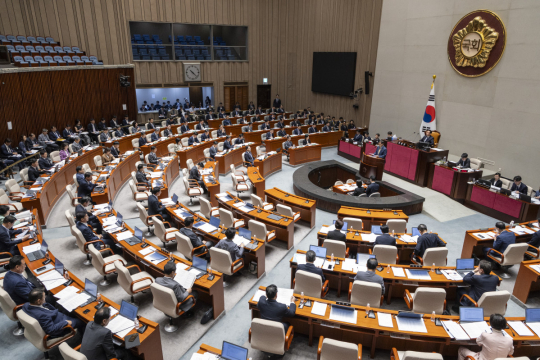
The National Assembly argues that continuous oversight is necessary to ensure the Future Response Fund does not deviate from its established purpose. Given the massive scale of the fund, even minor biases could have a significant impact on the national budget. Therefore, there are strong calls to establish transparent reporting mechanisms throughout the entire operation process. The National Assembly is attempting to inspect current operational conditions and prepare mechanisms to immediately rectify any issues that arise. Along with this, it emphasizes the need to regularly disclose fund usage details to preserve citizens’ right to know. It is repeatedly pointed out that without strengthened oversight, the risk of funds flowing into inappropriate projects increases. Ultimately, strengthening control is seen as a minimal measure to maintain fiscal soundness.
The National Assembly believes that transparent and continuous oversight mechanisms must be established to ensure the fund adheres to its purpose.
2. Details of Legislative Measures
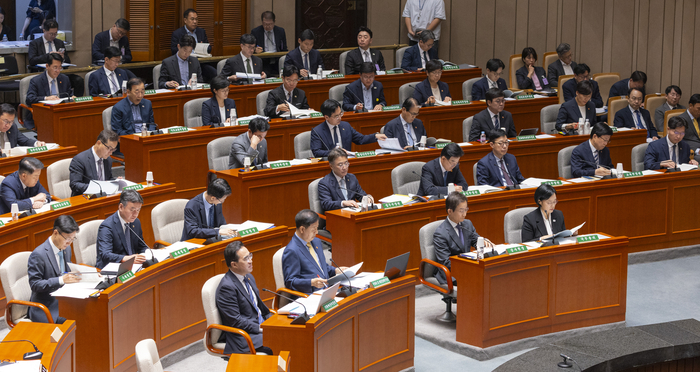
The National Assembly is preparing to include specific control clauses in the legislation for the Future Response Fund. A proposal to mandate the submission of annual fund operation plans along with the budget bill is under discussion. It is widely agreed that prior approval from the National Assembly should be required in cases of significant changes to the fund’s purpose or fund transfers between accounts. The plan is to codify these clauses in the National Assembly Act or the supplementary provisions of the fund law to enhance legal binding force. Additionally, there are arguments to make National Assembly consent mandatory when transferring existing general account or fund projects to the new fund, to prevent indiscriminate transfers. It is also emphasized that fiscal impact analyses for such transfers should be mandatory to minimize budget shocks between projects. This will allow the fund to be positioned not merely as a place to hoard money, but as an efficient fiscal management tool.
The legislative bill includes provisions for submitting fund operation plans, approving purpose changes, requiring National Assembly consent for transfers, and mandating fiscal impact analyses.
3. The Issue of Transferring Ongoing Projects

Currently, of the 130 projects included in the Future Response Fund submitted by the government to the National Assembly, 51 are classified as ongoing projects. These 51 projects can be seen as cases transferred from the general account or other funds to this new fund. Going forward, it is expected that even these ongoing projects will require National Assembly consent for transfer. This means putting a brake on project transfers that have been done as a matter of course. While the government argues that including ongoing projects in the fund is efficient from a fiscal management perspective, the National Assembly opposes this. Concerns are raised that keeping ongoing projects in the fund could negatively impact the funding of existing projects. The issue of potential delays in budget allocation for essential projects is highlighted. Therefore, it appears that a more cautious review process for transferring ongoing projects will be necessary in the future.
Making National Assembly consent mandatory for the 51 ongoing projects will significantly change future transfer processes.
4. Government Stance and Outlook on Conflict

The government strongly objects, arguing that interference from the National Assembly will reduce the flexibility of fiscal management. Citing the need for rapid decision-making in fund operations, it claims that excessive control could actually lead to adverse effects. In particular, it emphasizes that filling a newly established account or fund solely with new projects is unrealistic and explains that ongoing projects must also be included. The government’s stance is intertwined with moves to explicitly state the fiscal stabilization function in the National Fiscal Act. The gap between the government and the National Assembly is widening, making a prolonged power struggle likely. Debates in the Finance and Economic Planning Committee are already heating up. If this conflict continues, it could cause delays in fund operations and hinder the achievement of policy goals. Therefore, efforts by both sides to find a middle ground are urgent.
The government opposes control, emphasizing flexibility, which is expected to deepen the conflict with the National Assembly.
5. Additional Tasks by the Democratic Research Institute

The Democratic Research Institute proposes that the fiscal stabilization function of the Future Response Fund should be explicitly stated in its legal status. It suggests adding a “Management of National Fiscal Stabilization Function” item to Article 7 of the National Fiscal Act to manage it as part of the National Fiscal Operation Plan. Furthermore, it demands that the criteria for determining tax revenue shortfalls and adjustment mechanisms be clearly defined in the law. To this end, a proposal is made to impose a regular review obligation to enable rapid response to changing economic conditions. It emphasizes the need to enhance the independence of the Fund Operation Review Committee and introduce external governance to strengthen transparency and performance evaluation. It also includes making it mandatory to disclose performance indicators and evaluation results to ensure accountability. Discussions are also underway regarding strictly defining criteria for selecting investment projects and establishing clauses to prevent duplicate investments. If these tasks are legislated, the operational efficiency and reliability of the fund will significantly improve.
The Democratic Research Institute presented specific legislative tasks, including specifying the fiscal stabilization function, criteria for tax revenue judgment, and strengthening transparency and performance evaluation.
6. Outlook and Reader Action

It is expected that the outcome of negotiations between the National Assembly and the government will determine the direction of the Future Response Fund’s operation. If control is strengthened, the fund is likely to be used more transparently and for its intended purposes. On the other hand, excessive interference could lower execution efficiency and cause disruptions in fiscal management. Readers should consistently follow related news and pay attention to how the legislative bill is discussed in the National Assembly plenary session. Additionally, it is helpful to keep in mind that local fiscal projects in one’s area may be affected by the fund and to refer to opinions from civic groups or experts. It is important to remember that fiscal management is directly linked to citizens’ lives and to make one’s voice heard.
It is advisable to monitor the results of future discussions and, as a citizen, gather information and express opinions.