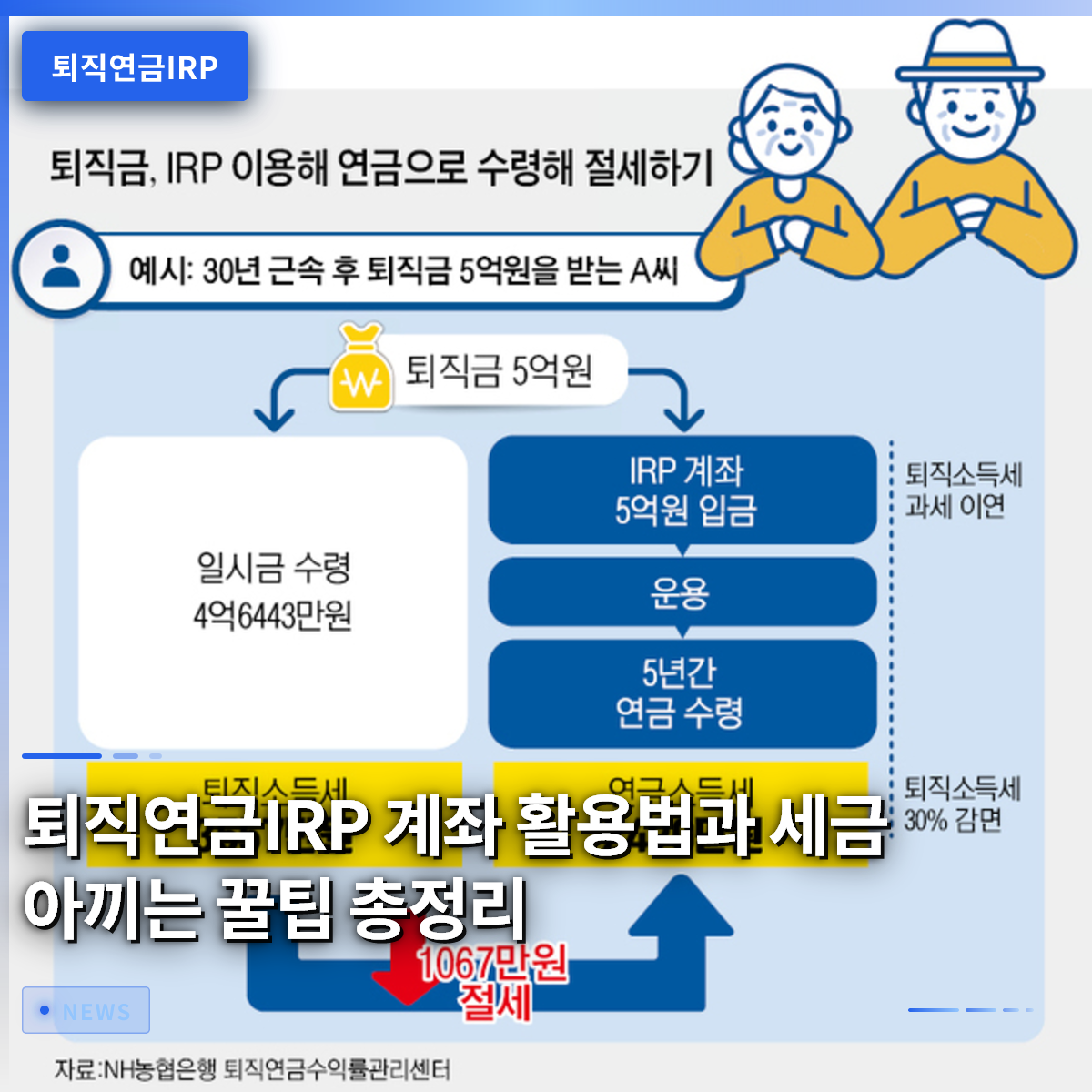
If you receive your severance pay directly into a regular bank account, a significant portion will be deducted as tax. Therefore, it is essential to receive it through a Retirement Pension IRP (Individual Retirement Pension) account. In reality, many people deeply regret cashing out their severance pay instead of transferring it to a personal IRP when changing jobs or retiring, as they end up paying a substantial amount of income tax. Past statistics indicate that a considerable amount of money is lost due to early termination of these accounts, so we must all make wise choices. In this article, we will thoroughly cover the tax-saving benefits of severance pay, methods to reduce fees, and newly available investment options. We will break down the complex pension system in an easy-to-understand manner, so please follow along step by step. Small habits in protecting your retirement funds can lead to a significant difference in your assets over the years.
=
The Complete Guide to Utilizing Retirement Pension IRP Accounts and Tax-Saving Tips
1. The Real Reason You Should Receive Severance Pay via IRP

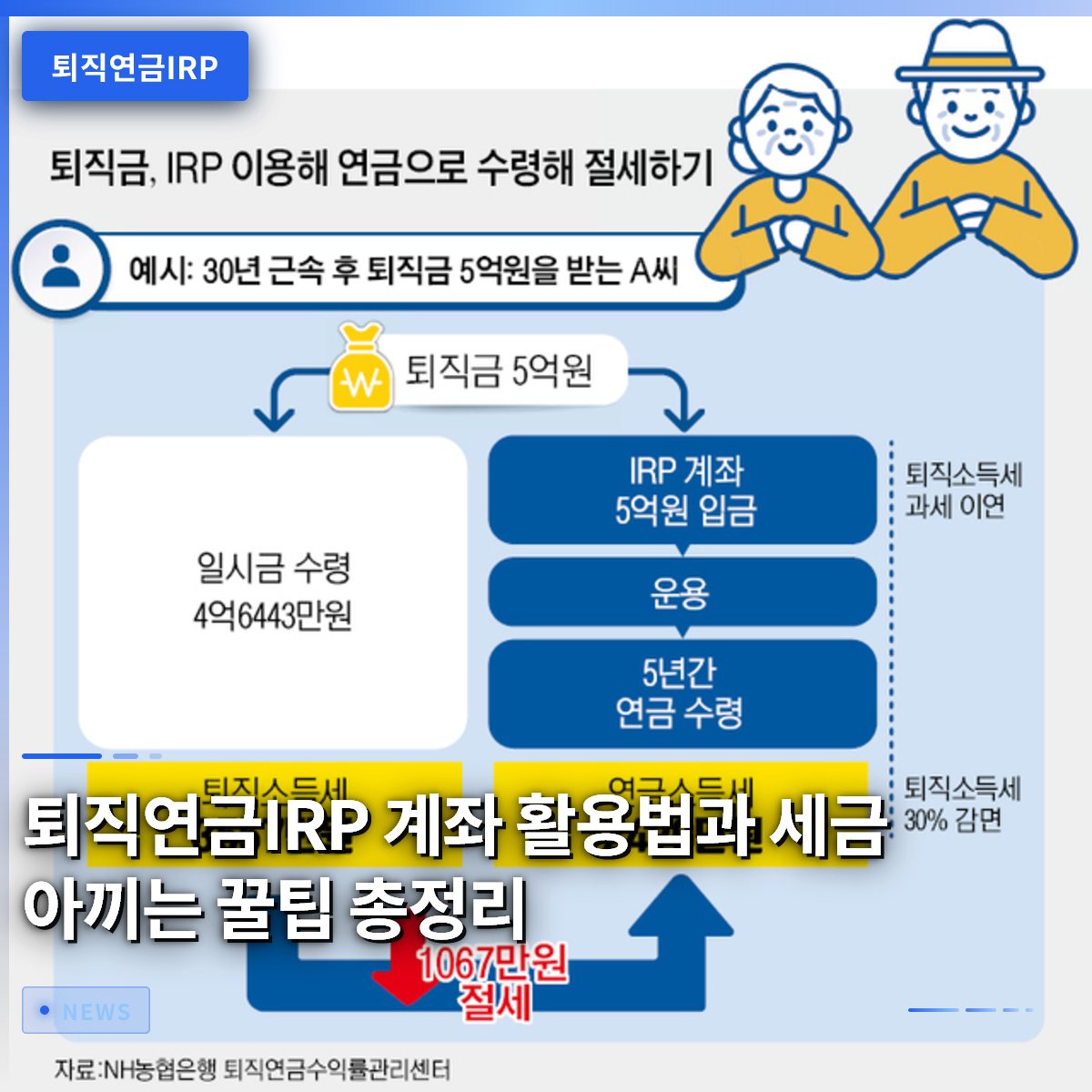
If you transfer your severance pay to a regular account upon leaving a company, the government immediately withholds retirement income tax. However, if you transfer the funds directly to a personal IRP account following the legally prescribed procedures, you can defer paying taxes immediately. This deferred tax is paid at a significantly lower rate when you eventually receive it as a pension after retirement, resulting in a substantial benefit. Mr. Kim, an office worker, boasted to his colleagues that he avoided a tax bomb by immediately transferring his severance pay to an IRP when he changed jobs last year. If he had withdrawn the money into a regular account for immediate use, he would have lost several million won in taxes. Even if you don’t need to use the severance pay right away, receiving it via IRP is the first step in proper tax planning.
Receiving severance pay via IRP allows you to defer taxes, making it absolutely advantageous for tax savings.
2. How to Save on Fees by Opening Accounts Non-Face-to-Face
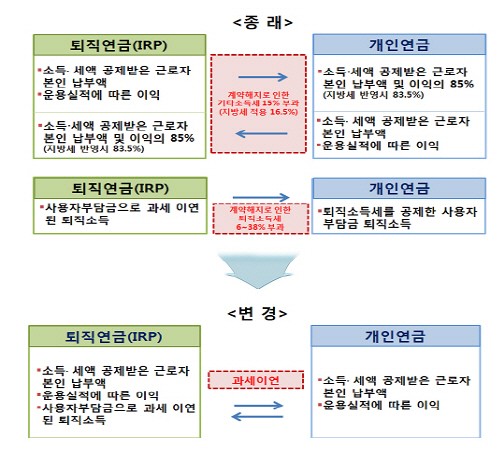
If you visit a bank branch in person to open an IRP account, the management fees can be surprisingly high, becoming a costly expense for long-term investments. However, by using a smartphone app to open an account non-face-to-face or converting an existing branch account to a non-face-to-face dedicated account, you can significantly reduce fees. For example, while rates vary slightly by financial institution, the fee rate for amounts under 50 million won can drop by more than half. Even if it feels a bit tedious to tap your smartphone screen, you must check for non-face-to-face conversion to save on costs that accumulate over several years. In reality, many colleagues have reported being charged consistent annual fees simply because they trusted a bank employee’s recommendation and signed up. To prevent your hard-earned severance pay from leaking away in small fees, turn on your phone now and check the status of your account.
Opening or converting your IRP account non-face-to-face can drastically reduce the annual management fees.
3. Utilizing Newly Added Government Bonds for Individual Investors
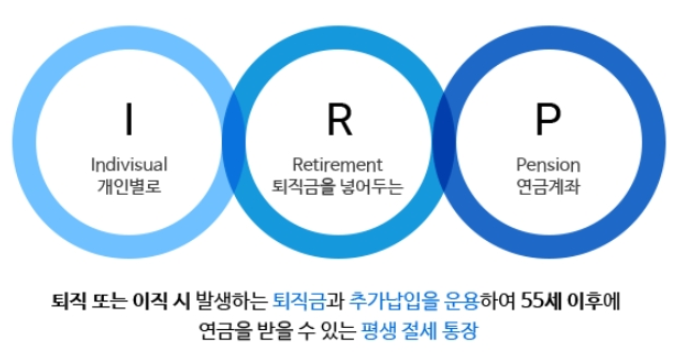
If you are an investor who finds stock market volatility too high or fears losing your principal, you should pay attention to the recently opened government bonds for individual investors. Previously, these could only be purchased through Mirae Asset Securities’ dedicated channel, but recent regulatory improvements have made direct subscription possible in IRP accounts at various securities firms. With a minimum investment of 100,000 won, you can easily diversify your assets without needing a large lump sum. Purchasing long-term government bonds, such as 10-year or 20-year issues, within your IRP allows you to steadily accumulate stable interest income. Mr. Park, an office worker who used to save his monthly salary to buy bonds like a fixed-term deposit, says he feels at ease knowing he can now safely invest part of his severance pay in bonds. For those afraid of putting all their assets into risky stocks, government bonds serve as the most reliable and safe shield.
You can directly purchase government bonds for individual investors in IRP accounts and DC-type retirement pensions, expanding your options for safe assets.
4. Strategy to Maximize Tax Deduction Limits
In addition to the severance pay from your company, you can enjoy significant tax deduction benefits during year-end tax settlement by voluntarily making additional contributions. You can fill the annual tax deduction limit of up to 9 million won by combining general pension savings funds and IRP accounts, making it an essential wealth management tool for office workers. By setting up automatic monthly transfers and topping up the remaining amount in a lump sum as year-end approaches, you can secure a generous tax refund. The Lee couple, who both work, uses a strategy of each maxing out their IRP limits to receive a year-end tax refund. By reinvesting this refunded amount, you can experience a noticeably faster growth in your assets. If you want to reduce taxes while simultaneously securing retirement funds, additional IRP contributions are not an option but a necessity.
Combining pension savings and IRP to receive tax deductions of up to 9 million won can help you avoid a heavy tax burden during year-end settlement.
5. Mandatory Safe Asset Ratios and Portfolio Composition
Since retirement pension accounts are valuable assets for your old age, regulations require that a certain percentage of the total accumulated funds be allocated to safe assets. Even if you want to invest entirely in equity products, you must adhere to the legal requirement of a 30% safe asset ratio, necessitating wise asset allocation. In this case, utilizing bond-hybrid products or stable dividend-focused assets allows you to meet regulations while pursuing appropriate returns. For example, including a safe hybrid product that tracks the U.S. stock market in your portfolio allows you to continue long-term investing with peace of mind. Mr. Jung, an office worker approaching retirement, restructured his portfolio by maintaining the safe asset ratio and generating steady returns rather than making aggressive investments. To remain unshaken even in highly volatile markets, a balanced asset allocation strategy must be firmly in place.
You must adhere to the mandatory 30% safe asset regulation while creating a balanced portfolio using products like bond-hybrid funds.
6. Completing Retirement Preparation with Wise Pension Receipts
When you fully leave the workforce and retirement approaches, you should be careful not to withdraw all your accumulated IRP assets at once, as this would result in a heavy tax burden. Receiving the funds as a monthly pension rather than a lump sum allows for additional reductions in retirement income tax. The government operates a system that significantly increases tax benefits the longer the pension receipt period is, aiming to promote stable retirement living. The quality of your life in retirement depends entirely on how you utilize the assets you have diligently accumulated over decades. Even if the financial environment and tax laws change slightly in the future, the framework of managing assets centered around an IRP account will never change. Starting today, please carefully check the balance and fee status of your IRP account and begin preparing for a secure retirement.
Receiving your retirement funds as a long-term pension rather than a lump sum saves more on taxes and allows for a stable retirement.
Frequently Asked Questions
=