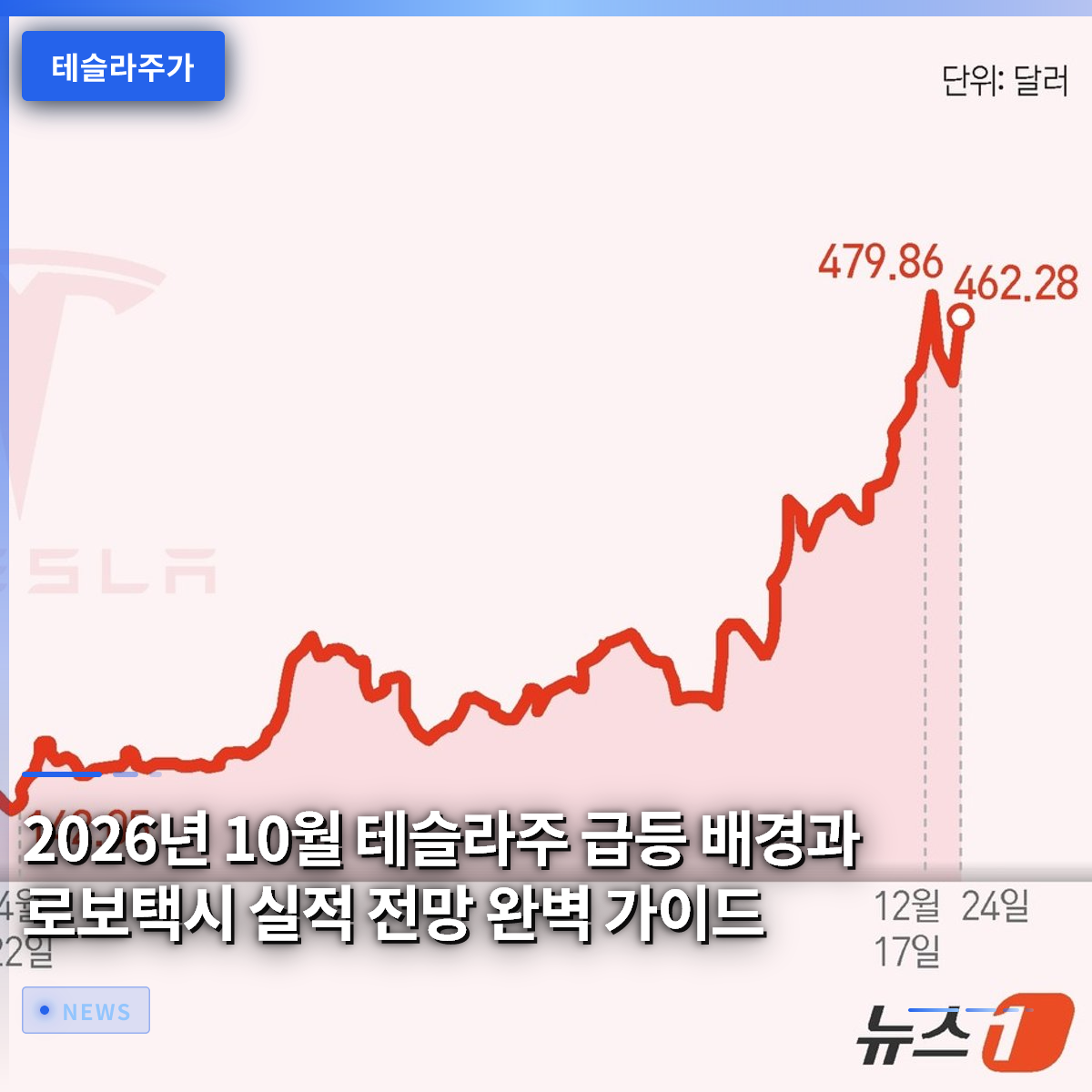
In October 2026, Tesla’s stock price is experiencing a sharp increase in volatility due to the convergence of news regarding the practical operational feasibility of autonomous robo-taxis and a mega-merger with SpaceX. With recent news breaking about external companies like Kids AI considering the procurement of robo-taxis, the market is closely watching whether Tesla’s technological advantage is being translated into actual revenue. However, it is also true that a trend is emerging where Korean retail investors (“Seohak Gaemi”) are shifting funds from Tesla to U.S. short-term Treasury ETFs or dividend ETFs, indicating a heightened preference for cash-equivalent assets. In a high-interest-rate environment where long-term bond yields exceed 5.3%, valuation pressure on growth stocks persists, yet the Nasdaq index is maintaining a gradual upward trend alongside Nvidia. In this article, we will delve into the key factors influencing Tesla’s stock price as of October 2026 to predict future price movements. Specifically, we will examine investment strategies and risk factors leading up to the end of October, when earnings reports are concentrated.
=
The Complete Guide to the Backdrop of Tesla’s Stock Surge in October 2026 and RoboTaxi Performance Outlook
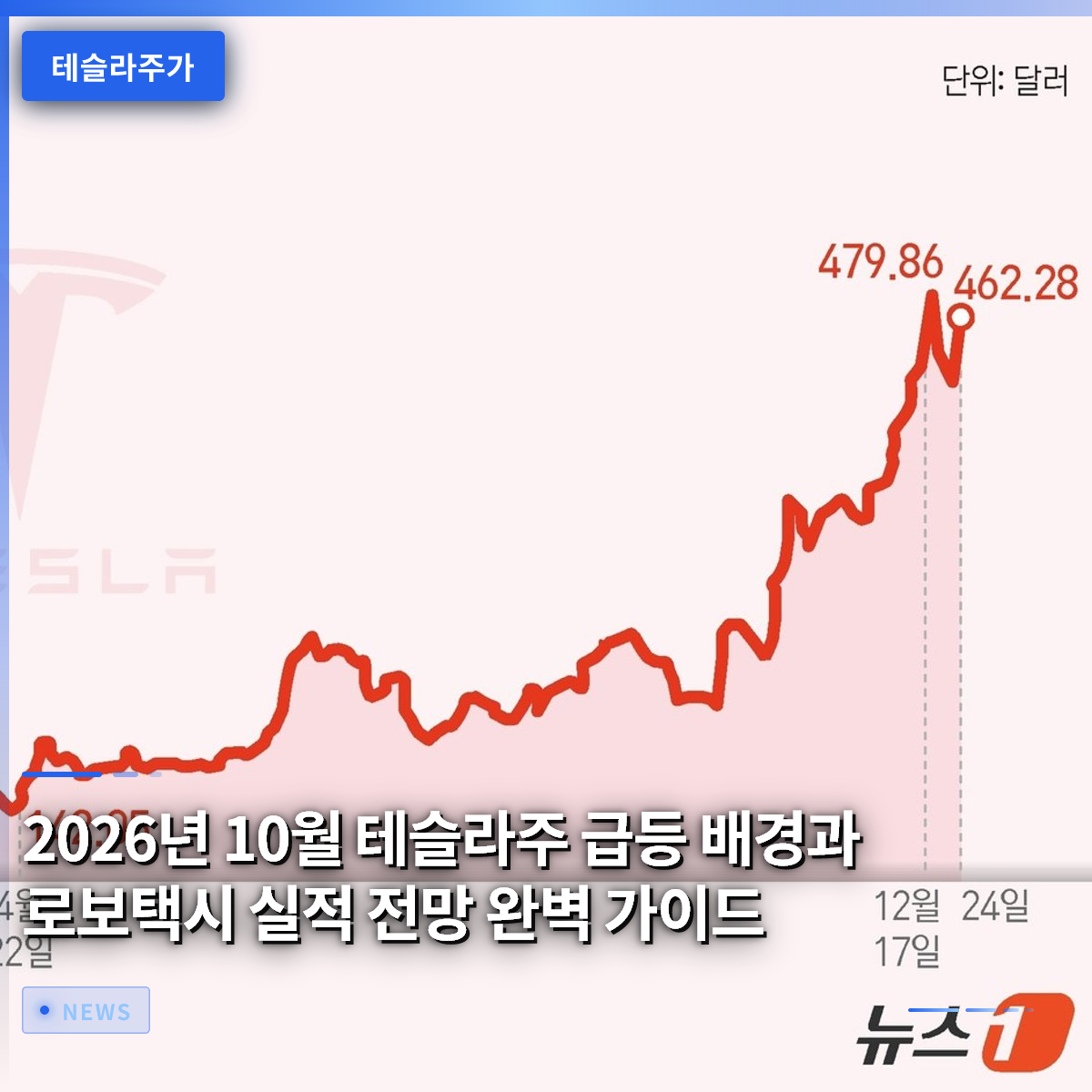
1. Strong Implications of the RoboTaxi Procurement Review

News that Kids AI, a Nasdaq-listed company, is considering the adoption of 500 Tesla robo-taxis is interpreted not merely as a simple order contract, but as a significant signal validating the market competitiveness of Tesla’s autonomous driving technology. The fact that this company, whose stock price had fallen by over 90% in the past year, is showing interest in Tesla vehicles demonstrates that Tesla’s robo-taxis are being recognized as a viable business model rather than just a concept. Although this is still at the initial procurement inquiry stage rather than a formal purchase contract, it has served to imprint on the market Tesla’s determination to establish itself as a supplier of autonomous driving solutions. In the past, Tesla has also strived to shift its direction from hardware sales to a software licensing revenue model, and such external inquiries support the effectiveness of that model. Experts are increasingly arguing that it is time for investors to re-evaluate Tesla not as an automaker, but as an autonomous driving platform company. Therefore, greater significance should be attached to the fact that third-party companies, rather than major operators, are in need of Tesla’s technology, rather than the number 500 itself.
Kids AI’s review of robo-taxi procurement is a result of recognizing the practical market value of Tesla’s autonomous driving technology and the effectiveness of its revenue model.
2. SpaceX Merger Rumors and a $3.5 Trillion Valuation
As the correlation between SpaceX and Tesla stock prices deepens, expectations for synergistic effects from the integration of the two companies have emerged as a rationale justifying an astronomical valuation of $3.5 trillion. With major shareholder Ron Baron expressing support, capital markets are treating the union of these two giants as a foregone conclusion, given the anticipated synergies centered on AI and data centers. However, governance issues remain a challenge to be resolved, similar to the legal disputes over Elon Musk’s compensation package. There is a possibility that controversies over board independence could resurface due to rulings by the Delaware Court of Chancery, which could act as a factor limiting shareholder participation or intensifying proxy fights. If the merger is realized, it would mark the completion of the transition into a global mega-tech company, but regulatory approval remains the biggest variable. It is essential to continuously assess whether such a macro-growth narrative remains valid even amidst a high-interest-rate regime.
The SpaceX merger rumor grants Tesla a new narrative as a global big tech company, but it comes with governance and regulatory risks.
3. Seohak Gaemi Fund Flows and Interest Rate Burden
Looking at the September trading data for Seohak Gaemi (Korean retail investors), net purchases of U.S. short-term Treasury ETFs like SGOV and dividend ETFs like SCHD stand out more than Tesla. This coincides with a selling bias in SOXL, a growth stock leverage ETF, suggesting that investors are focusing on securing cash-equivalent assets or pursuing stable returns rather than aggressive bets. In fact, while Tesla saw sell-offs of approximately $700 million, this is predominantly viewed not as a unilateral exodus, but as a defensive position in response to the high-interest-rate environment as part of overall portfolio rebalancing. With the U.S. 10-year Treasury yield surpassing 5.3%, its highest level since 2002, rising long-term rates are exerting direct pressure on growth stock valuations. Even if the Nasdaq index rises slightly, it is true that the upper resistance level has thickened due to interest rate burdens. Therefore, investors should monitor changes in the interest rate path before stock prices and adjust their position sizes accordingly.
Seohak Gaemi funds are shifting from Tesla to cash-equivalent assets and dividend ETFs, clearly establishing defensive positions amid the high-interest-rate regime.
4. Volatility Index Ahead of October Earnings Reports
October is a month when earnings reports are concentrated, including those from the Magnificent 7 companies, making it a period of maximized market volatility. Tesla will release its earnings on October 28, requiring strategic judgment on whether to wait until that point or buy in advance. The timing difference in Nvidia’s earnings release due to its fiscal year discrepancy provides some buffering effect, but changes in memory prices and the pace of supply increases in 2027 influence overall tech stock sentiment. Follow-up news, such as the negotiation news with Kids AI, can act as a catalyst causing sharp fluctuations in the stock price immediately after the earnings release. It is crucial to verify how much quarterly autonomous driving mileage data and robo-taxi utilization metrics have improved this quarter. Based on past experience, if trust is established in the market during the 1-2 weeks following the announcement, rather than on the day of the announcement itself, it can provide an opportunity to enjoy further upward momentum.
Tesla’s stock price will attempt a significant directional shift around the October 28 earnings release, depending on whether autonomous driving metrics show improvement.
5. Re-evaluation of Tesla’s Valuation in a High-Interest-Rate Environment
The fact that interest rate burdens persist despite price stability is always an obstacle for growth stocks like Tesla, which are expected to deliver long-term compounding effects. While Nvidia showed a modest 0.5% rise and Tesla a 0.6% rise, Meta fell by 1.8%, indicating deepening sector-specific differentiation. Tesla is now striving to reduce its sensitivity to interest rates by lowering its reliance on automotive sales and increasing the proportion of revenue from software and energy storage systems. However, the market’s discount factor still stems from the temporal delay in expected cash flows. Treasury yields exceeding 5.3% raise expectations for risk-free returns, maintaining a higher hurdle for the growth rate Tesla must present. Until this macro environment changes, the controversy over overvaluation is unlikely to end, making a gradual approach effective.