Personal pension savings allow for a tax deduction of up to 6 million won annually during year-end tax settlement, making it the most reliable way to simultaneously prepare for retirement and reduce taxes. As more office workers anticipate retiring earlier than expected, the importance of post-retirement assets is growing, and building wealth through tax-advantaged accounts has become an essential task. In reality, many people are no longer just putting holiday bonuses or spare cash into short-term deposits; instead, they are turning their attention to pension accounts from a long-term investment perspective. When you hear stories from acquaintances about creating a monthly cash flow of over 4 million won after retirement, you should not just feel envious but immediately review your own account structure. In this article, we will step-by-step examine how to maximize the tax deduction limit for pension savings and invest in high-quality domestic and international assets to prepare for a secure retirement. Instead of complex financial jargon, we will explain using everyday examples, so reading to the end will be greatly beneficial.
=
Personal Pension Tax Deduction Limits and How to Build a Monthly Cash Flow After Retirement
1. Subheading
Basic Concepts and Differences Between Personal Pension Savings and Retirement Pensions Paragraph 1: Many office workers look into various financial products to prepare for their retirement, but the most representative products that offer simultaneous tax benefits are pension savings and individual retirement pensions (IRP). Pension savings is a representative product where individuals voluntarily enroll to prepare for retirement, and accounts can be easily opened through securities firms, banks, or insurance companies. On the other hand, an individual retirement pension is a retirement asset management account where office workers can transfer their severance pay upon retirement or make additional contributions. Both accounts are designed to be received in the form of a pension after retirement, but there are differences in specific management methods and early withdrawal conditions. For example, it is relatively easier to withdraw a portion of the funds from a pension savings fund account when money is urgently needed. However, early withdrawal from an individual retirement pension is difficult unless there are special circumstances defined by law, so it is essential to understand the nature of the funds from a long-term perspective before enrolling.
Paragraph 2: These two accounts can be operated separately, but they form an excellent pair in that they can be combined to enjoy greater tax benefits. Mr. Kim, an office worker, used to worry about avoiding a “tax bomb” every year-end tax settlement season. Last year, he opened both a pension savings account and an individual retirement pension account simultaneously. By splitting a fixed amount each month, he received a much larger refund than expected at this year’s year-end settlement and smiled broadly. He actively recommended this method to his colleagues, expressing regret that he hadn’t started earlier. Understanding the nature of both accounts accurately and adjusting contribution amounts according to one’s income level is the first step in wealth management. If you develop the habit of consistently depositing money every month, you will eventually enjoy the joy of seeing your bank balance grow.
It is important to understand the characteristics of pension savings and individual retirement pensions and allocate funds in a way that suits you.
2. Subheading
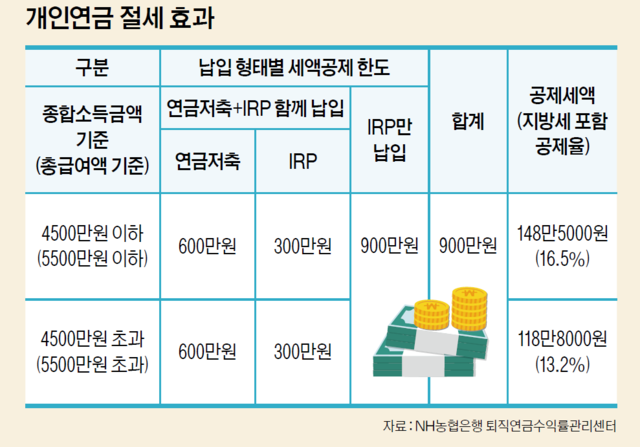
Strategy to Maximize the Annual 9 Million Won Tax Deduction Limit Paragraph 1: Looking at year-end tax settlement statistics released by the National Tax Service, the number of office workers maximizing tax deduction benefits is steadily increasing every year. Under the current system, the annual contribution limit eligible for tax deduction for pension savings alone is up to 6 million won. By additionally contributing to an individual retirement pension account, the combined deduction limit for both accounts can be increased to a maximum of 9 million won. If your total annual salary is 55 million won or less, you can receive a high deduction rate of 16.5%, resulting in a maximum refund of 1.485 million won. Even if your total annual salary exceeds this amount, a deduction rate of 13.2% applies, allowing you to save up to 1.188 million won in taxes. This means you can reduce your annual tax burden while simultaneously securing retirement funds.
Paragraph 2: However, Mr. Park, an office worker, initially hesitated because contributing a large sum of 9 million won at once felt burdensome. Then, he set up automatic transfers of 750,000 won per month and realized that it did not significantly affect his living expenses while naturally filling the limit. Consistently investing funds in installments from January to December allows for a dollar-cost averaging effect, buying equitably whether stock prices are high or low. This has the advantage of maintaining a stable portfolio without being shaken by market volatility, unlike putting in a lump sum. It is wise to plan and execute steadily from the beginning of the year rather than scrambling to find money urgently as year-end approaches. This difference in small habits becomes the decisive factor that completely changes your account balance several years later.
The core of tax savings is to fully utilize the annual limit of 9 million won by combining 6 million won in pension savings and 3 million won in individual retirement pensions.
3. Subheading
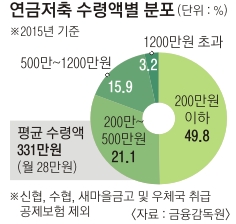
Specific Methods to Create a Monthly Cash Flow of Over 4 Million Won After Retirement Paragraph 1: The biggest concern for office workers in their 40s and 50s approaching retirement is how to cover their monthly living expenses after retiring. It is difficult to keep up with inflation relying solely on the National Pension, and simply depleting savings accumulated in youth can lead to the risk of retirement bankruptcy. Therefore, it is necessary to build a robust three-tiered cash flow system combining the National Pension, retirement pensions, and individual pension preparations. For example, based on the pension savings and retirement pension assets accumulated earlier, receiving a fixed amount as a pension monthly allows you to receive a stable “salary” until the end of your life. In reality, most people who create a monthly cash flow of over 4 million won after retirement are those who actively utilized long-term investments and tax deferral benefits. To live a comfortable and abundant life after retirement, you must design a monthly cash pipeline starting from this very moment.
Paragraph 2: Looking at a case study, Mr. Jeong, an office worker, has been consistently investing in his pension account for the past 10 years, building a substantial amount of assets. As his retirement date approached, he began to formulate a withdrawal strategy to adjust the receipt period and minimize taxes. If you receive the pension in monthly installments rather than withdrawing it as a lump sum, the pension income tax rate applies at a low rate ranging from 3.3% to a maximum of 5.5%. While general financial income is subject to comprehensive income tax, which can cause the tax burden to snowball, pension accounts can significantly reduce the tax burden. Watching the pension amount deposited into his account every month, Mr. Jeong says that retirement is no longer a frightening fear but an exciting opportunity to start a second life. Only thorough preparation and a specific receipt plan guarantee peace in old age.
You must complete a three-tiered pension system by combining the National Pension and personal pensions, and save taxes through installment receipts.
4. Subheading
Pension Savings Portfolio Composition and Equity Asset Utilization Strategy Paragraph 1: If you leave your pension savings account in cash, it will inevitably lose real asset value as it cannot keep up with inflation. Therefore, using a pension savings fund account opened through a securities firm app to invest in various domestic and international Exchange-Traded Funds (ETFs) is a common method. Recently, many individual investors are showing high interest in overseas equity products or index-tracking products, and these high-quality assets can be held within pension accounts. For example, including products that track major U.S. indices or stocks with excellent dividend yields evenly in your portfolio allows you to enjoy compound interest effects in the long term. However, wisdom is needed to mix bond-type assets or safe assets in appropriate proportions so that assets are not overly concentrated in specific themes. Building your own balanced portfolio that allows you to sleep soundly even when the market crashes is the shortcut to successful investing.
Paragraph 2: Mr. Choi, an office worker with little investment experience, initially felt shaken by the ups and downs of the stock market and frequently checked his account. However, referring to experts’ advice, he set up automatic purchases of high-quality index-tracking products on a fixed date every month. Even when the market experienced significant waves over several years, he kept his eyes closed and left it to the automatic transfer system, resulting in a lower average purchase price. As time passed, watching his assets snowball, he personally realized the true power of long-term installment investing. Seeing others around him repeatedly cutting losses due to short-term market fluctuations, he smiled, saying that thanks to the sturdy shield of his pension account, he was able to stay centered. The essence of pension investing is letting time and compound interest work for you without having to rack your brains over complex analysis.
You should invest in high-quality domestic and international index products via pension savings funds on an installment basis to enjoy long-term compound interest effects.
5. Subheading
The Risks of Early Withdrawal and the Mindset for Maintaining Long-Term Investment Paragraph 1: Even if you firmly resolve to put money into a pension account for your retirement, the uncertainty of life can easily lead to the temptation of withdrawing funds midway. Many people find themselves eyeing the money accumulated in their pension accounts when they suddenly need a large sum or move to a larger house. However, if you withdraw the principal and management profits from a pension savings account for which you received tax deductions, you must return the benefits received so far and are subject to miscellaneous income tax. In some cases, you may suffer the setback of having to pay a significant portion of the money you worked hard to save for a year as taxes. Therefore, you must establish a strict principle that funds in a pension account are emergency funds that should absolutely not be touched until retirement. It is safer to prepare emergency funds separately through a general deposit account or a separate short-term asset management account.
Paragraph 2: Mr. Han, an office worker who saw an acquaintance regret withdrawing from or canceling a pension account midway, established his own iron rule. With the mindset that the pension account would remain sealed forever, no matter how tempting the situation, he hid the account from his smartphone screen. Since it was out of sight, it naturally stayed out of mind, allowing him to focus on his daily life while only checking the amount automatically deducted each month. As a result of enduring silently for 10 years, the account size had grown beyond imagination, and he felt immense security as retirement approached. He personally proved the truth that long-term investing is completed not by the head, but by the patience to steady a wavering heart. The firm will to not be shaken by immediate small profits or urgent needs for cash is the true skill that determines a successful retirement.
You must recognize the risk of the tax bomb from early withdrawal and maintain your assets intact until retirement.
6. Subheading
Outlook for Pension Asset Management After 2026 and Reader Action Guidelines Paragraph 1: We have reviewed the various benefits and specific utilization strategies of personal pension savings, but the system changes subtly with the times. Recently, in the financial market, investors’ preference for overseas assets is increasing, and discussions on various shareholder return policies and tax benefit improvements are actively continuing at the government level. In this flow, the wisest attitude individuals can take is to respond nimbly to policy changes while adhering to unshakable principles. Do not be swayed by rumors of “everyone is doing this”; instead, consistently check your portfolio according to your own financial goals. It is now a clear fact known to everyone that the state cannot take responsibility for everyone’s retirement in the coming super-aged society. Only those who prepare for themselves will earn the qualification to enjoy economic freedom and leisure in their post-retirement life.
Paragraph 2: If you read this article today, please turn on your smartphone immediately, log in to your securities firm app, and check if you have a pension savings account. If you do not have an account yet, it is recommended to open one non-face-to-face today and start automatic transfers with a manageable monthly amount. If you already have an account, check how much of the current tax deduction limit you have filled and examine whether the products in your portfolio are suitable for long-term investment. Small changes in behavior can become a powerful magic that completely changes your bank balance and quality of life 10 or 20 years from now. Retirement preparation is not about waiting for the perfect timing; starting now is the perfect timing. If you start planting seeds for the future step by step from today, you will soon enjoy the joy of a bountiful pension receipt.
In the changing financial environment, you must check your pension account immediately and put long-term investing into practice.
Frequently Asked Questions
=