Personal pension savings accounts are a core tax-saving tool that allows employees to receive the largest refunds during their year-end tax settlement. Many people rush to sign up as the year-end approaches to avoid a tax burden, but to truly enjoy the benefits, it is essential to understand and manage the account properly in advance. Instead of just envying colleagues who boast about receiving large tax deductions, you should check the status of your own account. If you have been leaving products you signed up for at banks or insurance companies untouched, you need to check their rates of return immediately. In fact, Mr. Kim, an employee, was shocked to realize late that the return on his pension insurance, signed up 10 years ago, was even lower than the inflation rate. In this article, we will cover the basic concepts of personal pension savings, how to maximize tax deduction limits, and strategies for transferring accounts to increase returns in detail.
=
Preparing for Retirement with Personal Pension Savings Tax Deduction Limits and Fund Transfer Tips
1. Everything About Personal Pension Savings and Tax Deduction Benefits
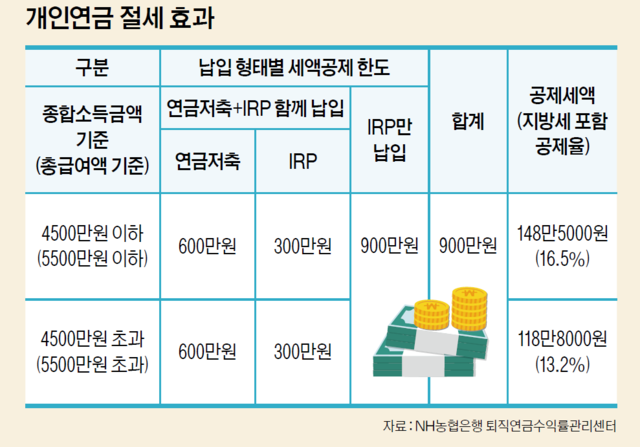
Personal pension savings provide the dual benefit of securing retirement living expenses and receiving annual tax refunds. Many employees tend to make additional deposits into their accounts to take advantage of tax deduction benefits as the year-end tax settlement season approaches. If your total salary is 55 million won or less, you can receive a tax deduction of 16.5 percent of the deposited amount, making it a godsend for employees. Even if your total salary exceeds this amount, a deduction rate of 13.2 percent applies, boasting high efficiency that cannot be compared to regular savings or fixed-term deposits.
These tax deduction benefits serve as a reliable catalyst that grows your long-term investment principal, going beyond simply saving on taxes. If you reinvest the refunds received each year or use them for additional savings, you can maximize the effect of compound interest. While some acquaintances use their annual year-end tax settlement refunds for family trips, those who reinvest the money into their investment accounts see a significant gap in their asset size over time. Therefore, it is wise to accurately assess your annual income bracket and set your deposit amount to match the maximum deduction limit. The most certain way to collect tax benefits while accumulating retirement assets is to actively utilize this account.
Personal pension savings offer tax deduction benefits of up to 16.5 percent depending on your income bracket, allowing you to achieve both retirement preparation and tax savings simultaneously.
2. The Decisive Difference Between Insurance-Type and Fund-Type Accounts and Selection Criteria
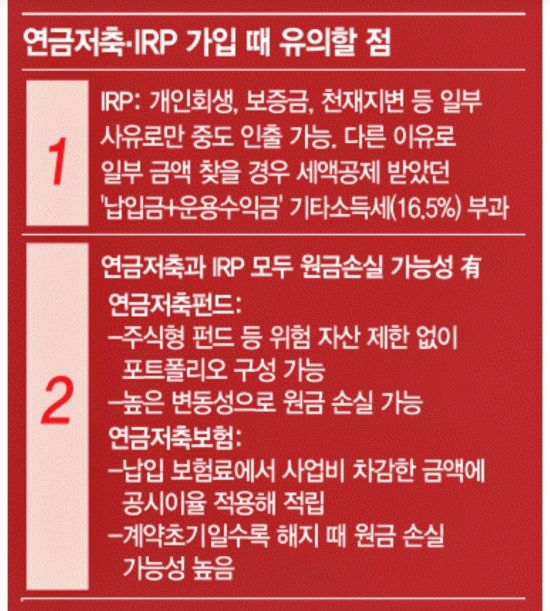
Many pension savings products signed up for in the past are often bundled in the form of insurance sold by insurance companies. While insurance products provide psychological peace of mind by guaranteeing the principal, the fees deducted as business expenses are substantial, resulting in disappointing long-term returns. It is easy to hear unfortunate news from acquaintances that the returns on variable insurance signed up for over the past 10 years have fallen well below the inflation rate, recording negative returns. If inflation continues to rise while your pension assets remain stagnant, it becomes very difficult to expect a comfortable retirement.
On the other hand, fund-type accounts opened through securities firms offer much higher potential for asset growth as they allow direct investment in the stock or bond markets. You can secure both stability and profitability by diversifying investments into domestic listed U.S. index-tracking products or high-quality companies. Mr. Park, an employee, decisively cleaned up his low-performing insurance product a few years ago and transferred it to a securities firm fund account. He then consistently purchased high-quality equity products monthly. As a result, the fee burden was significantly reduced, and the return rate improved noticeably, allowing him to imagine a much more comfortable life after retirement. Rather than insisting solely on stability, you should seriously consider transitioning to an investment-type account that can overcome inflation.
Rather than leaving insurance-type products untouched relying only on principal guarantees, you should look toward fund-type accounts which are advantageous in terms of profitability and fees.
3. How to Utilize Securities Firm Events and Asset Transfer Tips

Recently, many securities firms are running aggressive events for customers who transfer their pension savings assets from other financial institutions to their firms. Representative examples include events where they recognize a higher amount or provide cash incentives when you transfer a pension account or convert funds from a matured Comprehensive Asset Management Account (CMA). By effectively utilizing this competition among financial institutions, you can seize a golden opportunity to secure additional financial benefits while switching to a better investment environment.
If you decide to transfer, you should check whether the securities firm offers a rich selection of investment products you want, rather than just chasing event prizes. For example, it is wise to carefully examine the actual management costs and fee structures of U.S. index-tracking products and choose the most advantageous one. Mr. Lee, an employee, received a modest cash incentive through a securities firm transfer event and restructured his portfolio by heavily loading it with low-cost index products he had been watching. The account transfer process, which can seem complex, can be easily handled non-face-to-face through mobile apps, allowing employees to complete it easily during their lunch break. Actively utilize the inter-firm transfer system to improve the quality of your assets and pick up some extra income on the side.
By utilizing pension account transfer events between securities firms, you can receive additional incentives while moving to a place with lower fees and convenient management.
4. Differences and Priorities Between Personal Pension Savings and IRP
When starting retirement preparation, everyone eventually wonders which product to fill first: personal pension savings or the Individual Retirement Pension (IRP). While both accounts share the commonality of accumulating valuable retirement funds and receiving tax deductions, there are subtle differences in how the funds are managed and the regulations. Personal pension savings allow you to invest the entire deposit amount in equity products, whereas the IRP requires a mandatory minimum percentage of safe assets.
Due to these regulatory differences, investors seeking aggressive asset growth are better off filling the personal pension savings limit first. While the standard approach is to operate both accounts in a suitable mix to reach the annual tax deduction limit, it is wise to adjust the proportions according to your investment style. Mr. Jeong, an employee, found the return limitations caused by the mandatory safe asset ratio frustrating, so he fills his personal pension savings limit to the maximum and deposits the remaining amount into his retirement pension. If you design your deposit order and ratios in advance, you can avoid unnecessary fund restrictions and continue efficient asset management.
If you want aggressive investment, it is best to prioritize depositing into personal pension savings up to the limit, as you can allocate 100 percent to equities.
5. Robo-Advisor and Automatic Accumulation Investment Strategies
For employees who find it burdensome to pick stocks and time the market themselves every month, automatic accumulation services are an excellent alternative. By utilizing AI-based asset management systems or discretionary services like RoboLab offered by recent securities firms, your portfolio is managed for you as if by an expert. Once you set your desired stocks, amounts, and cycles, the system automatically purchases stocks and periodically adjusts weights, requiring almost no attention even in a busy daily life.
Accumulation investment, which mechanically buys at set intervals without being swayed by stock price volatility, is the most powerful weapon in long-term investing. When the market falls, you buy more shares, and when it rises, your assets grow, naturally enjoying the effect of lowering the average purchase price. I often see people around me who are hindered in their main jobs by checking the stock market flow every day, while those who have set up automatic systems maintain peace of mind and focus on their careers. If you lack the time or expertise to manage investments yourself, I recommend actively adopting the automation features of securities firms.
By utilizing AI-based asset management and automatic accumulation services, you can maintain consistent long-term investing without being swayed by emotions, even in a busy daily life.
6. Practical Guide for a Successful Retirement
Retirement preparation is not completed by making grand plans, but rather by consistently practicing small habits every month. Checking tax deduction limits, cleaning up high-fee insurance products, and transferring to securities firm accounts are practical tasks you can start right now. Instead of signing up just to look at the immediate year-end tax settlement refund, you should visualize the actual size of the assets you will hold at the time of retirement.
Time is on our side, and the magic of compound interest is quietly working even now. Do not be swayed by flashy short-term investment success stories around you; you must stick to your own principles and steadily fill your tax-saving account. If you are anxious about life after retirement, do not delay. Open your mobile app this afternoon and check the return rate and fees of your pension account first. Small changes in attention and action will create the biggest difference in determining the abundance and comfort of your retirement.
Checking your pension account right now, reducing fees, and consistently depositing ensures a comfortable and leisurely retirement.
Frequently Asked Questions
=