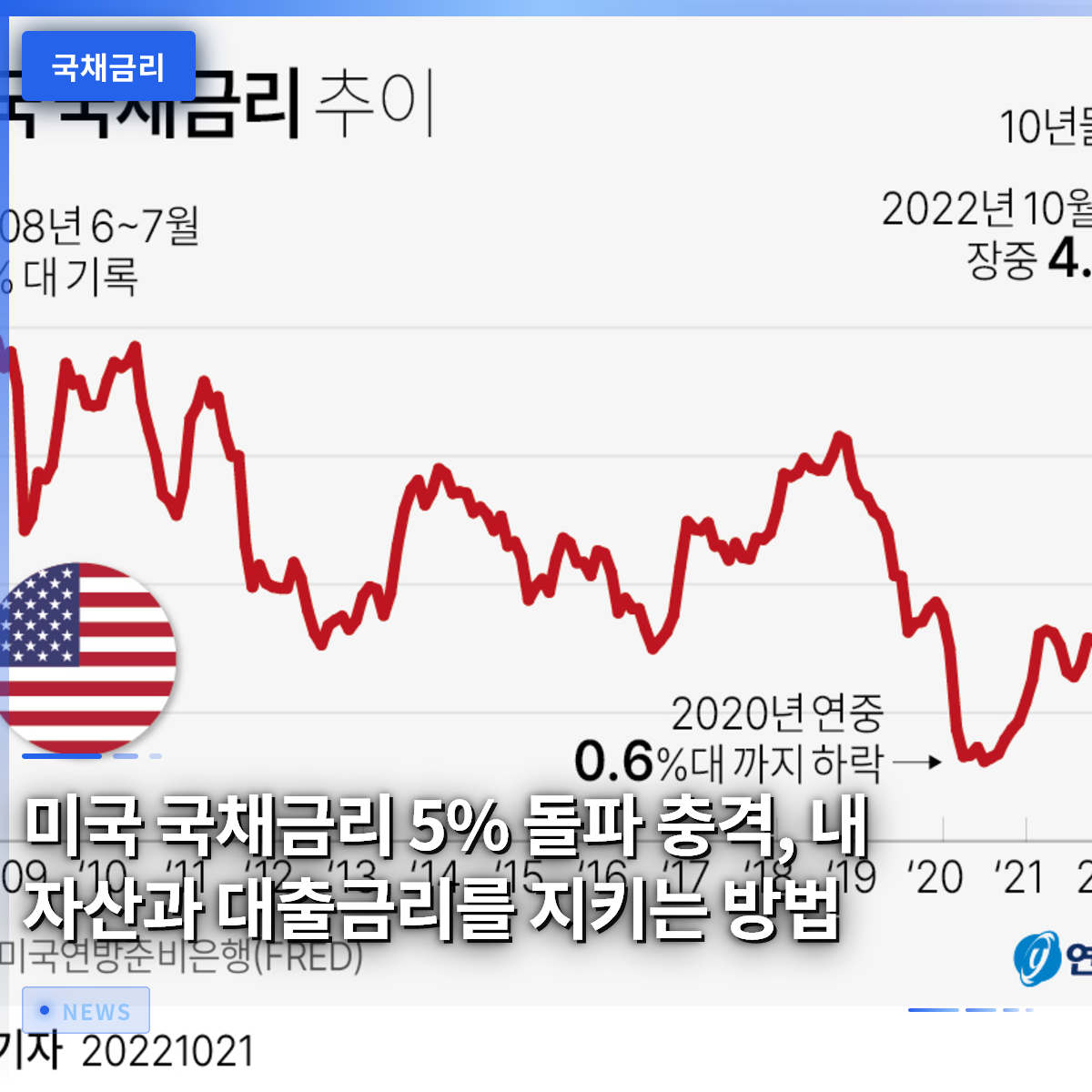
With U.S. Treasury yields surpassing 5%, their highest level in 19 years, an emergency signal has been triggered for our wallets and loan rates. Since investors can now secure guaranteed annual interest rates exceeding 5% by simply buying risk-free government bonds, global capital is rapidly flowing into safe-haven assets. This massive wave of rising interest rates is precisely why Mr. Kim, an office worker, was shocked when he recently checked his mortgage interest. In this complex period of rising exchange rates and stock market volatility, what choices should we make? In this article, we will thoroughly examine the causes of the surge in U.S. Treasury yields and their practical impact on our daily lives. We will step-by-step explore why events happening across the ocean in the U.S. directly hit our bank accounts.
=
Shock as U.S. Treasury Yields Breach 5%: How to Protect Your Assets and Loan Rates
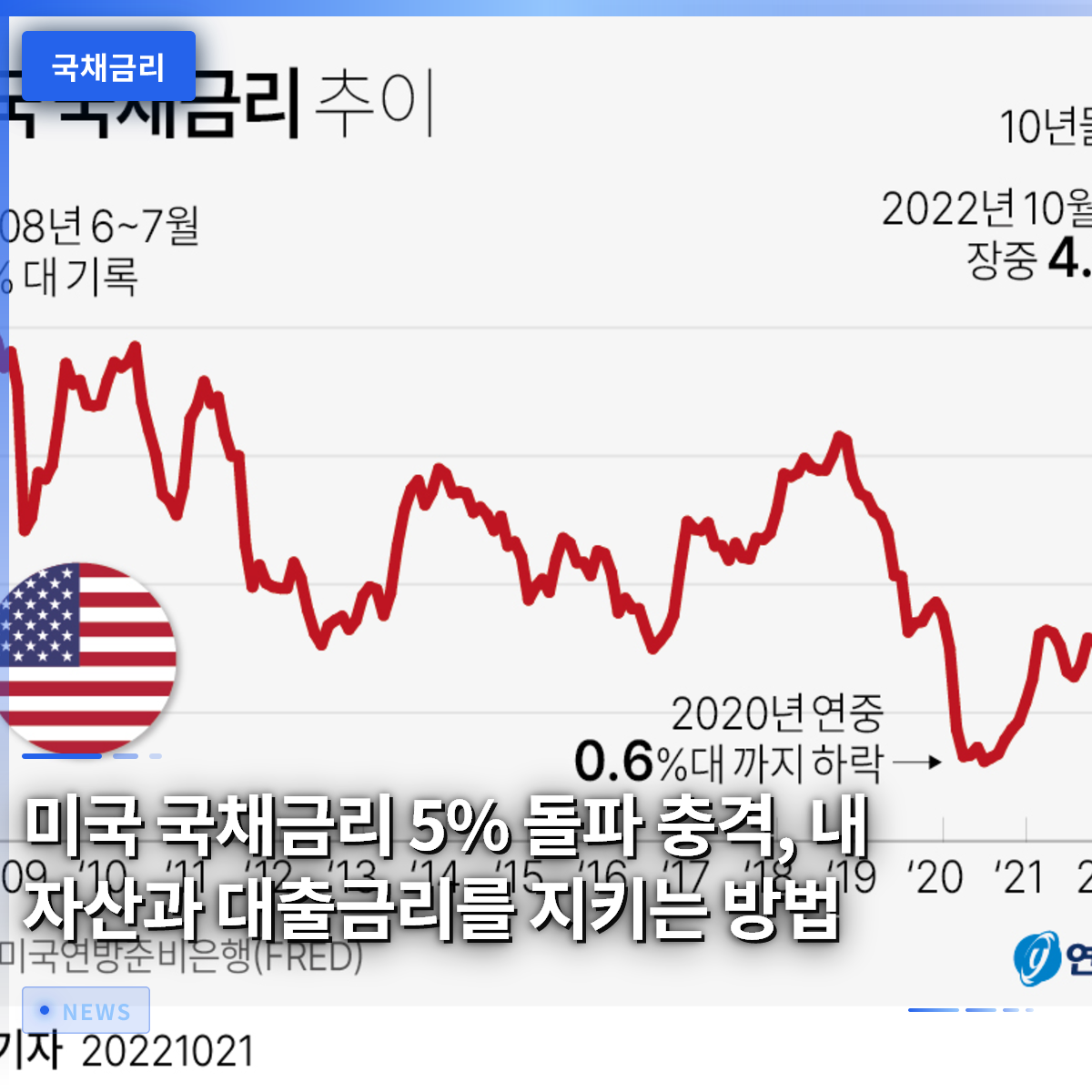
1. The Reality of the 5% U.S. Treasury Yield Shock, Unseen for 19 Years
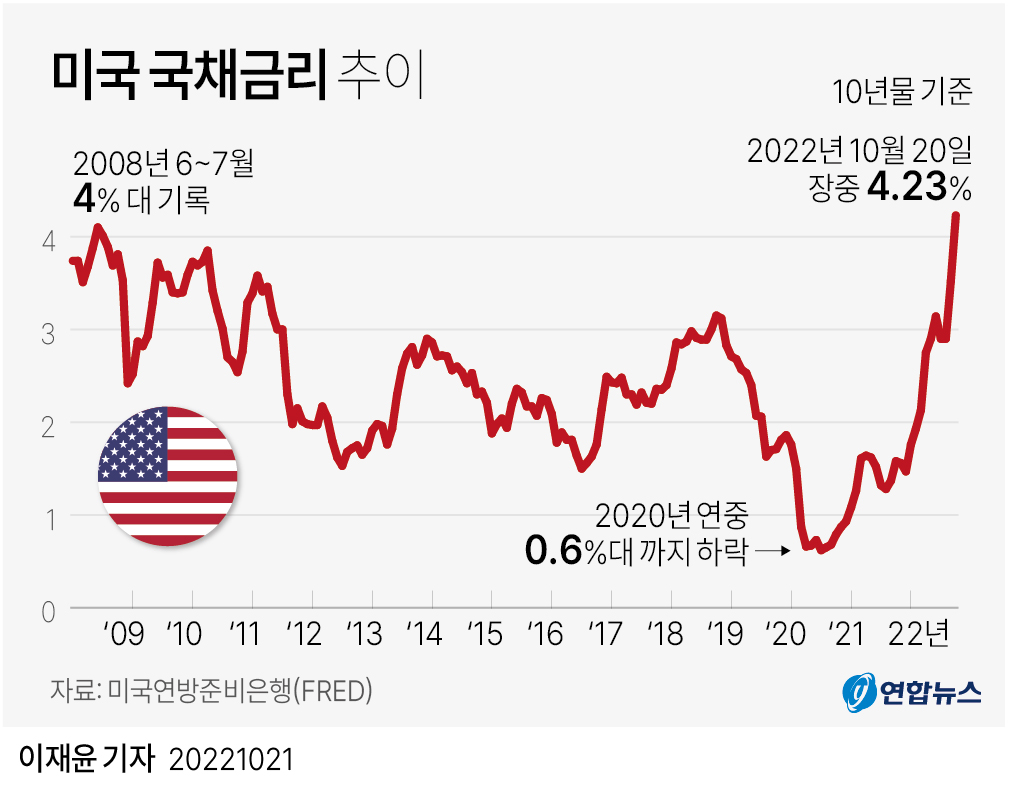
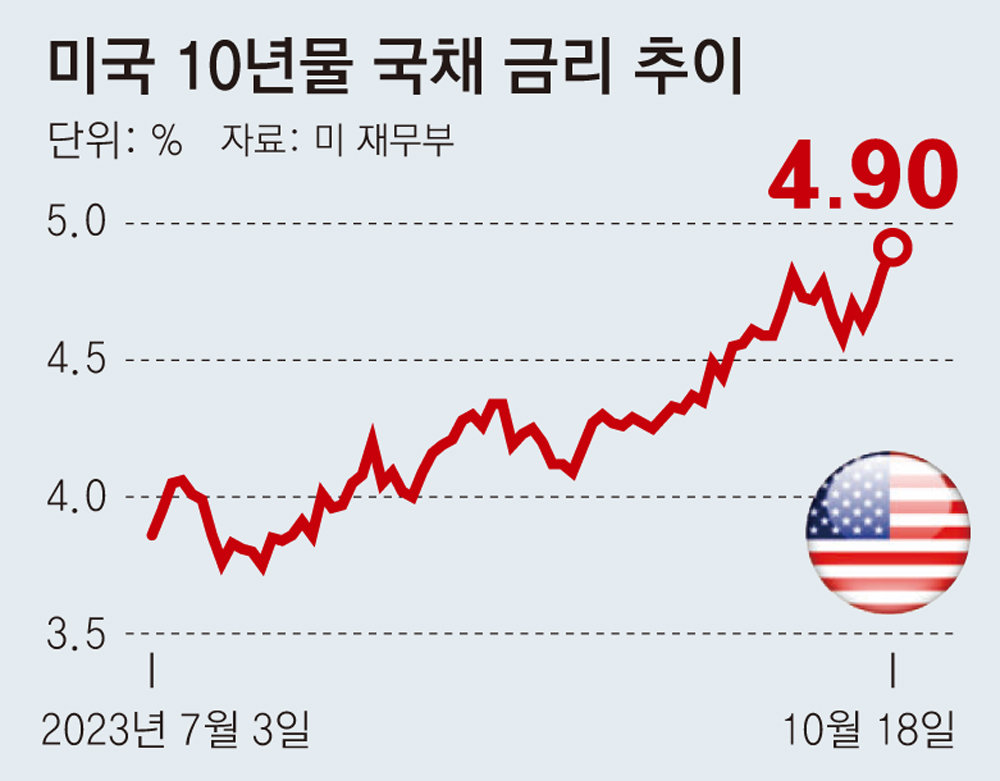
The U.S. 10-year Treasury yield surged past 5.2% intraday, sending shockwaves through financial markets. This is an unprecedented figure not seen since 2007, placing global investors at a massive crossroads. Returns that previously required investing in stocks or real estate can now be achieved simply by purchasing the safest U.S. government bonds. Consequently, massive amounts of global capital are moving out of risky stock markets and into U.S. Treasuries. Mr. Park, an office worker in Seoul, sighs every morning as he opens his securities app and sees his declining balance. Experts sigh as they analyze that since the government guarantees the principal (unless the country collapses) and offers such high interest, who would invest in risky corporate stocks? Ultimately, this massive capital shift is becoming a huge trigger that shakes the fundamental strength of global financial markets. This is because the U.S. central bank is maintaining a high-interest-rate policy to curb inflation, tightening the flow of money in the market. As bond yields rise and then skyrocket, governments and corporations around the world are forced to bear high interest costs without a moment to catch their breath. Behind the economic indicators we see in the news every day lies this giant monster: Treasury yields. As market capital flows become distorted, marginal companies that have been surviving on borrowed money are being pushed to the brink.
U.S. Treasury yields have breached 5% for the first time in 19 years, absorbing global funds and bringing financial market tension to its peak.
2. Soaring Exchange Rates and Import Prices: Signals Threatening Your Wallet
When U.S. Treasury yields rise, our foreign exchange market takes the first direct hit. As the value of the dollar soars without limit, the value of the won plummets helplessly. Mr. Lee, a self-employed business owner in Seoul who deals in imported fruits, is currently considering closing his business due to the daily rising costs of logistics and raw materials. As prices for imported raw materials, including oil, increase, grocery prices are rising uncontrollably. A rising exchange rate is not just a change in a single number; it is a matter of survival directly linked to the prices on our dining tables. The strong dollar phenomenon acts as a primary factor driving foreign investors to exit the Korean stock market. When exchange rates are unstable, foreigners lose the reason to keep their money in the Korean stock market. They sell their stocks, immediately convert the proceeds into dollars, and repatriate the funds, causing the KOSPI index to slump helplessly. This is exactly why we need to understand the movements of another country’s Treasury yields. When interest rates rise across the ocean, a chain reaction occurs where my stock account takes a hit and the price of bean sprouts at the local market goes up.
Rising Treasury yields lead to a stronger dollar and a weaker won, pushing up import prices and causing outflows of foreign funds from the domestic stock market.
3. A Cold-Hearted Reality Check for “Yeongkeul” Buyers and Mortgage Holders
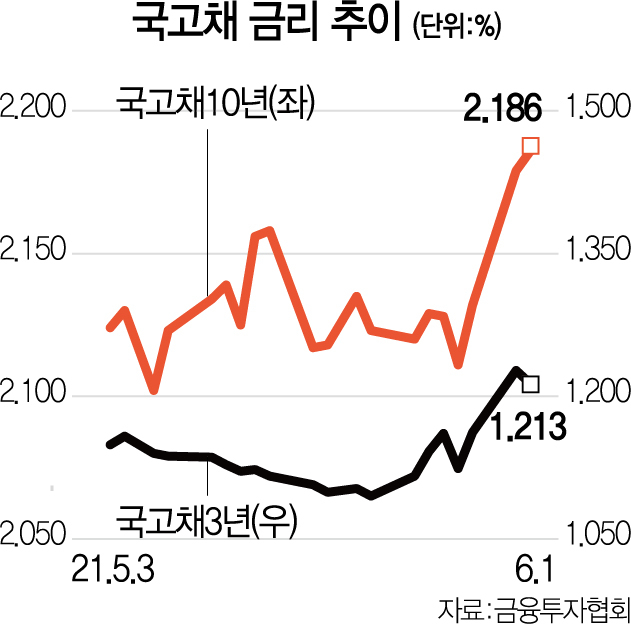
So-called “Yeongkeul” buyers (those who stretched their finances to the limit to buy a home) are recently losing sleep every night, staring at their interest rate notices. The rise in U.S. Treasury yields is being reflected in a chain reaction in Korean commercial bank rates, pushing up mortgage and credit loan rates at a terrifying speed. Mr. Choi, an office worker in Gyeonggi Province, finds his household budget tight as the monthly interest deducted from his account has increased by 300,000 won compared to half a year ago. As the possibility of the Bank of Korea raising its benchmark rate further increases, the sighs of borrowers who chose variable rates grow deeper. For those who scraped together every last penny to buy a house, this prolonged period of high interest rates is a painful trial. Commercial banks raise funds by issuing bonds; since Treasury yields have jumped, bank bond yields inevitably follow suit. Because banks must borrow money at high interest, the loan interest rates they charge ordinary citizens naturally rise as well. The real estate market has seen a freeze in buying sentiment, transactions have dropped off a cliff, and the force supporting home prices is rapidly draining away. Households that recklessly increased their debt now stand at a crossroads: should they dispose of assets or endure? It is necessary to abandon the naive expectation that interest rates will fall and adopt a defensive posture focused on securing cash.
The surge in Treasury yields increases commercial banks’ funding costs, raising mortgage rates and burdening borrowers with higher interest payments.
4. Why Are AI and Semiconductor Stocks Holding Up Amidst This Chaos?
Even in an environment of historically high interest rates, AI and semiconductor-related tech stocks are showing unexpectedly strong performance, surprising many. Traditionally, when interest rates rise, growth stocks that rely on future value crash, but a different scenario is unfolding this time. In the U.S. New York stock market, giant tech companies are defending themselves to some extent against the high-interest shock based on their outstanding performance and innovative technological capabilities. Mr. Jung, a developer in Pango who develops software, feels the flow of the times as he watches his company’s stock price rise while it secures large contracts daily. Rather than selling all stocks based solely on interest rates, the market is being reorganized around blue-chip stocks with solid performance. However, the strength of these tech stocks cannot serve as a shield guaranteeing the safety of all stocks. Small and mid-cap stocks or bio-themed stocks without backing performance are collapsing helplessly under the weight of high interest rates. Investors must now check whether their portfolios are filled with solid companies capable of bearing interest costs. The higher the interest rates, the more a company’s debt ratio and cash generation ability become the core criteria determining the rise or fall of its stock price. The era of blind investing is completely over, and thorough financial health analysis has become the only weapon for survival.
Even in a high-interest environment, AI and semiconductor blue-chips with solid performance are holding up well, while weak companies are suffering significant hits.
5. Three Realistic Survival Strategies to Protect Your Assets
In the midst of such a massive financial vortex, for ordinary individuals to protect their valuable assets, increasing the cash ratio is paramount. Those who went all-in on stocks or real estate should now liquidate some assets and diversify into safe deposits or short-term bonds. Since bank deposit rates have also risen, it is wiser to secure guaranteed interest rather than recklessly pursuing risky investments. Mr. Han, a self-employed business owner in Mapo, has recently locked all his surplus funds into short-term deposits and is calmly observing until the market stabilizes. In times of crisis, one must hold the true weapon of cash to seize opportunities when the time comes. Second, a debt management process is essential, such as switching variable-rate loans to fixed rates or reducing the overall loan size. In a situation where interest rates are highly likely to rise further, sticking to variable rates could lead to a catastrophe where one cannot bear the interest bomb. Third, one must formulate a strategy focused on assets that generate reliable cash flow. The portfolio should be restructured to focus on high-quality companies that consistently pay dividends or tangible assets that yield stable rental income. A flexible attitude of checking government and financial market movements daily serves as a compass for navigating this difficult situation.
During the Treasury yield surge, one must adhere to three survival strategies: expanding cash ratios, reviewing loan rates, and creating reliable cash flow.
6. Future Market Outlook and the Wise Posture We Should Adopt
Experts expect U.S. Treasury yields to remain at high levels for the time being, which is projected to act as a long-term downward pressure on our economy. The inflationary pressure and geopolitical risks are too complexly intertwined to be dismissed as a passing shower. From the perspective of ordinary office workers or self-employed individuals, we may not be able to directly change the flow of the global economy, but we can certainly change how we respond. We should avoid leveraged investments involving excessive debt for the time being and practice conservative investing that thoroughly consolidates our fundamentals. Those who remain steady and centered when the market panics will ultimately be the winners of the next bull market. Now is not the time to recklessly move in pursuit of new profits, but a period of defense where we must firmly protect the assets we have built. I recommend calmly rewriting your financial statement rather than reacting emotionally to the sensational headlines of daily economic news. You must carefully check how much loan interest is being paid and whether one month’s living expenses are safely stored in an emergency fund. Crisis opens another door of opportunity for the prepared, but brings deep despair to the unprepared. From this moment, please start taking concrete actions to reduce unnecessary expenses and defend your assets.
To prepare for prolonged high interest rates, stop reckless investments and maintain a defensive asset management posture focused on thorough protection.
Frequently Asked Questions
=