The surge in international oil prices has pushed U.S. long-term Treasury yields to their highest levels since 2004, sending shockwaves through global markets as both bonds and stocks plummet simultaneously. With Brent crude surpassing $105 per barrel, inflation concerns have reignited, and rising long-term rates are becoming a new burden for the stock market. Nasdaq futures are showing strong downward pressure, falling over 1.1% even before the opening bell, while S&P 500 futures are down 0.6%. This simultaneous weakness is not merely a temporary fluctuation but a signal reflecting the structural trend of prolonged interest rate tightening. As high oil prices, the possibility of an overheating U.S. economy, and increased global borrowing demand converge, market anxiety has reached its peak. In this article, we will systematically examine the background of the oil price spike, the mechanism behind rising long-term rates, the impact on stock and bond markets, and future investment strategies.
=
Surging Oil Prices Push Long-Term Rates to Highest Since 2004… Bonds and Stocks Fall Together Amid Downward Pressure on Nasdaq Futures

1. Background and Current Situation of the Oil Price Spike
Recent sharp increases in international oil prices have sent the global energy market into turmoil. Brent crude prices have broken through $105 per barrel, hitting their highest level in months. This surge is analyzed as being triggered by the overlap of supply restrictions from OPEC+ nations and geopolitical risks. When oil prices rise, energy costs increase, leading to a simultaneous rise in corporate expenses and household expenditures. In fact, research indicates that even a 10% increase in crude oil prices can impact the U.S. Consumer Price Index (CPI) by more than 0.3 percentage points. While rising oil prices may benefit energy stocks, they are a poison for the economy as a whole. U.S. household fuel costs have already increased by hundreds of dollars compared to last year, and rising delivery and logistics costs are being sequentially passed on to consumer prices. Thus, the oil price spike is acting as a fuse for reignited inflation, going beyond a simple raw material price issue.
As high oil prices revive inflation concerns, they are also influencing central bank interest rate policies. The Federal Reserve (Fed) is in a position where it must postpone further rate cuts to suppress inflation in the face of high oil prices. Market participants are forecasting that the Fed may delay its rate cut timeline by one or two more instances than previously expected. This outlook of prolonged rate tightening is acting as a factor that rapidly dampens investor sentiment. In particular, as the view that high rates must be maintained for the long term spreads, selling pressure on bonds is intensifying. Investors are restructuring their positions based on the logic that “if prices rise again, rates will have to stay high for longer.” With both oil prices and interest rates, two major macro variables, rising simultaneously, market anxiety has reached its peak.
The oil price surge is a core cause that triggers reignited inflation, delays the Fed’s rate cut timeline, and simultaneously leads to rising long-term rates and weakened investor sentiment.
2. The Significance of Long-Term Treasury Yields Hitting Their Highest Since 2004
The U.S. 30-year Treasury yield spiked to 5.44% during trading, marking its highest level since 2004. This figure is a strong signal indicating that investors are simultaneously concerned about long-term inflation and expanding fiscal deficits. Long-term Treasuries generally function as an inflation hedge, but their prices plummet when entering a period of rising interest rates. Since bond prices are inversely proportional to yields, longer-term bonds react more sensitively to rate changes. This time, selling was concentrated in long-term Treasuries, while short-term bonds found some stability. The widening gap between long- and short-term rates signifies that the market expects short-term stability but views long-term inflation and fiscal risks as high.
Rising long-term rates have an extremely large ripple effect on the entire economy. As mortgage rates and corporate long-term bond rates move in tandem, household debt and corporate financing costs rise simultaneously. In fact, U.S. 30-year mortgage rates have risen to the high 7% range this week. For corporations, the feasibility of long-term project investments is being shaken, forcing them to shift to a more conservative approach to capital expenditure. At the government level, the cost of refinancing maturing bonds has increased significantly, intensifying pressure to reduce the fiscal deficit. With the U.S. fiscal deficit already exceeding 6% of GDP, rising long-term rates will immediately impact next year’s budget formulation. Thus, the surge in long-term rates acts as a structural pressure on the entire real economy, not just a single market issue.
The 30-year Treasury yield hitting its highest level since 2004 is the result of concentrated market concerns over inflation and fiscal risks, delivering a structural shock that simultaneously raises mortgage and corporate financing costs.
3. Stock Market Shock and Nasdaq Futures Decline
In the wake of the surge in long-term rates, the U.S. stock futures market is showing a sharp decline. S&P 500 futures fell by nearly 0.6%, giving back most of the gains accumulated this week. Nasdaq 100 futures, centered on tech stocks, dropped 1.1%, recording a larger loss. This trend is a typical stock market pattern seen during periods of rising long-term rates. As interest rates rise, the present value of future cash flows decreases, leading to a contraction in the valuation of growth stocks. Tech companies listed on the Nasdaq are expected to generate a significant portion of their profits in the future, making them particularly sensitive to interest rate changes.
Investors are closely monitoring the decline in Nasdaq futures even before the market opens. Early this week, the Nasdaq was strong due to positive news regarding semiconductors and corporate earnings surprises, but all gains evaporated in an instant with the news of the oil price spike. Trading volume in Nasdaq futures in the after-hours market has increased by more than double the usual level. This phenomenon is attributed to institutional investors simultaneously executing position hedging and stop-losses. This trend also serves as a warning for individual investors. In an environment where both stocks and bonds are falling, the fundamental principle of asset allocation—diversification—becomes difficult to achieve. Market experts emphasize the urgency, stating, “One spike in oil prices shook the entire stock market this week.”
The rise in long-term rates caused by the oil price spike is a core shock factor that has pushed Nasdaq futures, centered on long-term growth stocks, down by more than 1.1%, significantly shrinking tech stock valuations.
4. Bond Market Trends and the Long-Short Rate Spread
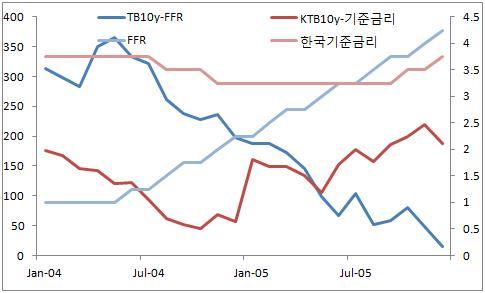
This week, the bond market has shown a clear divergence between long- and short-term trends. While long-term Treasuries faced concentrated selling, short-term bonds found some stability. This pattern reflects that market participants view short-term inflation concerns as limited but identify long-term fiscal deficits and increased borrowing demand as core risks. One reason for the concentrated selling of long-term bonds is the spreading perception that the U.S. government’s borrowing plans have increased significantly beyond market expectations. As the annual fiscal deficit expands, the issuance of long-term Treasuries has surged, creating a structure where supply pressure pushes long-term rates higher.
Bond investors are currently moving to restructure their portfolios. Some are shifting assets to short-term bonds or cash equivalents to reduce price decline risks associated with rising rates. On the other hand, speculative investors are watching for buying opportunities in long-term bonds offering yields over 5%, arguing that current yields are historically very high and thus attractive in the long run. However, if inflation persists longer than expected, the real yield for bondholders could turn negative, meaning the risk remains significant. This two-way sentiment in the bond market has a structure that could split extremely depending on the future direction of interest rates.