The situation where the US 10-year Treasury yield hit 5.13% intraday, reaching its highest level since 2007, is a serious economic event that directly affects our wallets. The fundamental reason for the broad weakness in the New York stock market on the 23rd was that concerns over the Federal Reserve’s prolonged high-interest-rate policy peaked due to the combination of robust Purchasing Managers’ Index (PMI) data and a rebound in international oil prices. From the price of the coffee we drink every day to the interest on our housing loans, movements in US Treasury yields across the Pacific are surprisingly quickly infiltrating our daily lives. For example, the fact that the apartment market in the Gangnam area of Seoul is also seeing a buildup of listings and a pause in activity due to the lingering effects of prolonged high interest rates is a representative case proving this. Let us now carefully examine what chain reactions this sharp rise in interest rates will have on our assets and what wisdom we must exercise to navigate this storm. The longer interest rates remain high, the more important it becomes to maintain a cool-headed approach to checking cash flows without being swayed by emotions.
=
US 10-Year Treasury Yield Breaks 5%: Impact on the Korean Economy and My Assets, and Response Strategies
1. The Significance of a 5% Treasury Yield
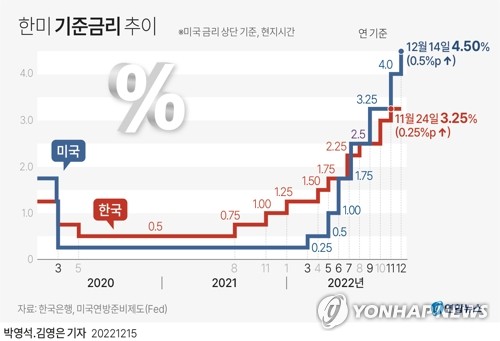
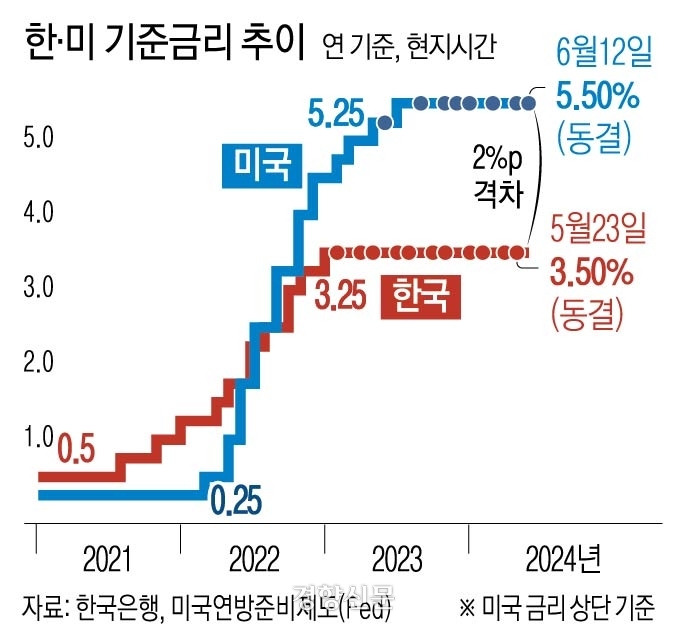
The fact that the US 10-year Treasury yield has surpassed 5.13% signifies more than just a numerical change in the financial market; it means that the benchmark for global funding costs has fundamentally shifted. Market participants are tense, noting that this rate hike is proceeding at a pace different in scale from the past. This high interest rate, unseen since 2007, signals to the market that one can secure a guaranteed annual return of over 5% simply by investing safely in government bonds. Consequently, there is a clear observation of funds flowing out of risky assets like stocks and real estate and rapidly retreating like a ebbing tide into safe assets such as bonds. Companies also have to bear much higher interest rates when borrowing from banks for new facility investments, inevitably leading to a contraction in overall business activities. Similarly, the government faces significant pressure in managing fiscal policy as the interest burden on issuing government bonds snowballs. These sudden changes in macroeconomic indicators ultimately translate directly into the painful reality of rising interest rates on personal credit loans and mortgages for ordinary workers. As the amount of interest deducted from bank accounts each month increases, household disposable income decreases, which naturally leads to reduced spending at local restaurants and retail stores. Ultimately, the figure of 5% serves as a strong warning to all economic actors worldwide that it is no longer sustainable to endure by taking on more debt.
The US 10-year Treasury yield breaking 5% is a signal that raises global funding costs and triggers a massive shift from risky to safe assets.
2. Ripples in the New York Stock Market and Domestic Equity Markets
The sharp rise in US Treasury yields pushed the three major New York stock market indices into a collective decline, and the shockwave is being transmitted directly to the domestic stock market. The significant correction in the Nasdaq and S&P indices is because high interest rates are the most certain poison that diminishes the future value of companies. In particular, growth stocks that had risen sharply on high expectations, such as AI-related semiconductor stocks, faced intense downward pressure as profit-taking selling poured in. With interest costs surging, marginal companies without supporting performance found themselves in a precarious position worrying about survival, and investor sentiment froze. In the domestic market as well, there are signs that foreign investors are selling and exiting Korean stocks to avoid exchange rate losses and high US interest rates. Both the KOSPI and KOSDAQ markets are facing the cold wind of global markets head-on, with volatility becoming extreme and investors’ sighs growing deeper. Rather than being shocked by the negative numbers in your stock account and hastily executing stop-losses, you should carefully examine the intrinsic value and debt ratio of the companies. Special caution is needed because pressing the sell button out of anxiety just because everyone around you is selling and leaving can cause you to miss the opportunity for a rebound that may come later. It is also necessary to hold the contrarian view that high-quality companies with solid cash-generating capabilities may actually present opportunities for buying at low prices during a crisis.
Prolonged high interest rates increase valuation pressure in the stock market, triggering significant corrections centered on tech and growth stocks.
3. Exchange Rates and Forex Market Emergency
As the interest rate gap between the US and Japan widens, the foreign exchange market is filled with a tension akin to walking on thin ice. When the value of the Japanese yen broke through 158 yen per dollar and was pushed to the brink of 160 yen, Japanese foreign exchange authorities entered a frantic defensive battle, including checking actual transactions in the market. While the Federal Reserve’s policy of maintaining high benchmark interest rates continuously pushes up the value of the US dollar, Asian currencies like the won and the yen are helplessly unable to escape weakness. As exchange rates rise, import prices soar, acting as a main culprit undermining domestic grocery price stability and making life even more difficult for ordinary citizens. Although foreign exchange authorities are deploying verbal interventions and actual funds to defend the currency, recalling past coordinated interventions, the prevailing assessment is that they are powerless to break the US’s strong interest rate hike momentum. For those planning overseas travel or considering investing in dollar-denominated assets, the current high exchange rate level inevitably becomes a significant burden. As exchange rate volatility increases, domestic manufacturing companies using imported raw materials face increased cost burdens, resulting in a sharp decline in operating profit margins. The instability of the foreign exchange market is not just a matter of exchanging money; it is a core variable that directly affects the credibility of the entire national economy and capital flows. Therefore, for Korea, which has an export-centric economic structure, it is essential to closely monitor the direction of US interest rates and exchange rate movements daily and check emergency plans.
The widened interest rate gap with the US has intensified dollar preference, putting downward pressure on major Asian currencies like the won and the yen.
4. Real Estate Market and Household Debt Shock
Although Seoul apartment prices have maintained an upward trend for a long time, the market is currently showing signs of contraction, particularly in the three Gangnam districts, due to the overlap of uncertainty over tax reform plans and concerns about prolonged high interest rates. As the wait-and-see mood thickens in a buyer’s market, listings with adjusted prices are gradually appearing, but actual demanders who must bear high loan interest rates are finding it difficult to move. The loan-driven buying frenzy of the past few years, represented by the term “maxing out” (yung-geul), has now returned as the fear of monthly interest repayments, squeezing household breathing room. Borrowers who took out variable-rate mortgages are struggling to find self-help measures, such as cutting living expenses and seeking side jobs, as their interest burdens snowball. Construction companies are also facing soaring funding costs, leading to delays in new starts or postponements of sales schedules, creating a chilling atmosphere throughout the real estate market. While the government and financial authorities are strengthening loan regulations to prevent household debt defaults from spreading to the entire financial system, this conversely has the side effect of deepening the transaction cliff. It is absolutely necessary to adopt a conservative approach by moving away from the blind faith that house prices will inevitably rise and coldly calculating the debt service ratio relative to one’s income. Those who recklessly took on debt to buy a house must adopt a strategy of holding out until interest rates fall, making it difficult for household consumption capacity to recover in the near term. Real estate is called the art of liquidity, and as long as the US high-interest-rate regime continues, it is realistically difficult to expect a sharp rebound in the domestic real estate market for the time being.
Prolonged high interest rates and increased loan interest burdens are suppressing buyer sentiment in the real estate market, including core areas of Seoul, and spreading a wait-and-see mood.
5. Crisis in Crypto Assets and Alternative Investments
The crypto asset market, including Bitcoin, which is considered an asset with no safe haven and no interest generation, took a direct hit from the news of the sharp rise in US Treasury yields. Bitcoin’s sharp drop below $84,000 at one point is because US Treasuries, offering a risk-free 5% return, are sucking up liquidity. Crypto assets, which have the highest volatility among risky assets, have the characteristic of being the first to see a flood of selling when the liquidity environment worsens, and they could not escape the wave of this rate hike. Investors who entered the market speculatively using leverage are being swiftly eliminated from the market through the painful experience of forced liquidation. Traditional alternative investment vehicles such as gold and commodities are also showing mixed trends caught between inflationary pressure and rising Treasury yields, failing to find a clear direction. Beginner investors who invested in crypto assets or high-risk funds believing in the abundant liquidity in the market are now keenly realizing the importance of risk management through this incident. The truth has been proven once again that even if packaged under the name of digital assets, they cannot defy the massive flow of the macroeconomy and the law of gravity of interest rates. Blind investment seeking short-term profits can drive asset values to the bottom in an instant, so the wisdom of stepping back from the market and observing is needed for the time being. As the appeal of safe assets has increased, a conservative asset allocation strategy that lowers investment expectations and increases the cash ratio to watch for opportunities is the top priority.
The arrival of the era of 5% risk-free yields acts as a strong negative factor, driving capital out of interest-free crypto assets and high-risk alternative investment markets.
6. Future Outlook and Response Strategies
Now that the US 10-year Treasury yield has broken 5%, we must acknowledge that the era of low interest rates has completely ended and adapt to the new economic environment. The Federal Reserve is caught in a dilemma where it cannot easily lower interest rates due to the tension between inflationary pressure and robust real economic indicators, leading to prolonged high interest rates. Therefore, individual investors should build a defensive portfolio by reducing loans and securing cash assets to prepare for potential additional economic shocks. In the stock market, one should selectively approach companies with low PERs and high dividend yields, and in the real estate market, maintain an approach centered on actual demand rather than reckless gap investing. Given the high exchange rate volatility, a strategy of holding some dollar assets to simultaneously aim for exchange rate gains and asset diversification effects can also be an excellent alternative. Do not stay away from economic news; you must develop the habit of periodically checking the trends in US Treasury yields, consumer price indices, and employment indicators to wisely navigate the market’s waves. Rather than blindly selling assets out of fear, the wisest investment is to transparently check your financial status and build the stamina to endure. Remember the saying that a crisis always provides new opportunities to those who are prepared, and calmly prepare for the upcoming market changes with a cool head. The time of patience you endure now will return as the greatest reward when the asset market finds stability again in the future.
To respond to the era of prolonged high interest rates, one must reduce loans, increase the cash ratio, and build a thorough diversified and defensive portfolio.
Frequently Asked Questions
=