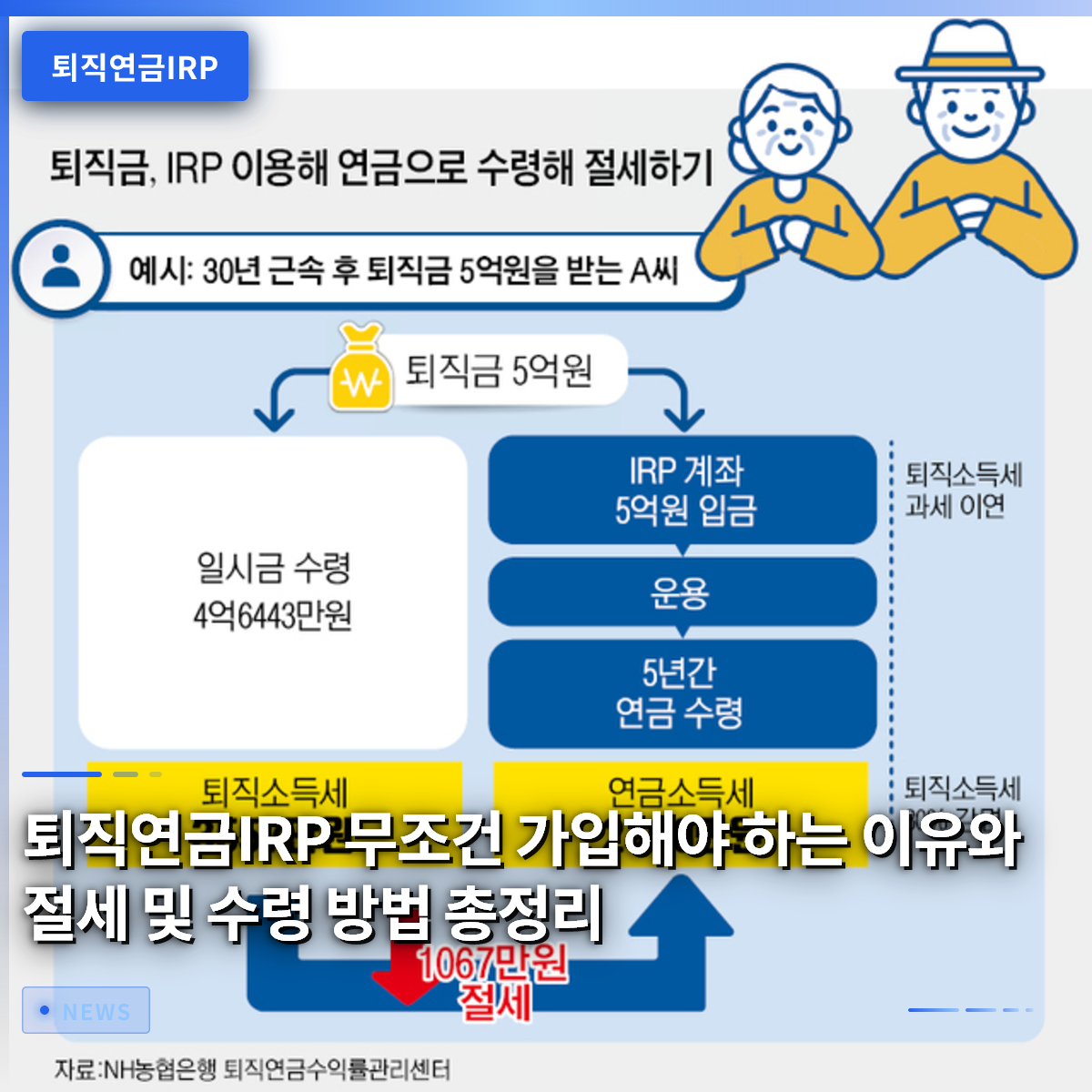
If you receive your severance pay directly into a regular bank account, you will face a significant tax burden. Therefore, it is always advantageous to receive it in an Individual Retirement Pension (IRP) account. Whether you are currently employed, changing jobs, or approaching retirement, you will acutely feel the necessity of an IRP account. Many people make the mistake of depositing their severance pay into a regular account and spending it, only to face a tax bomb or lose their retirement funds. In fact, while substantial amounts have been transferred to IRP accounts in recent years, high cancellation rates have left much to be desired. This article explores specific methods to wisely utilize IRP accounts to save on taxes and build a solid retirement asset base.
=
Why You Must Open an IRP Account: A Complete Guide to Tax Savings and Withdrawal Methods
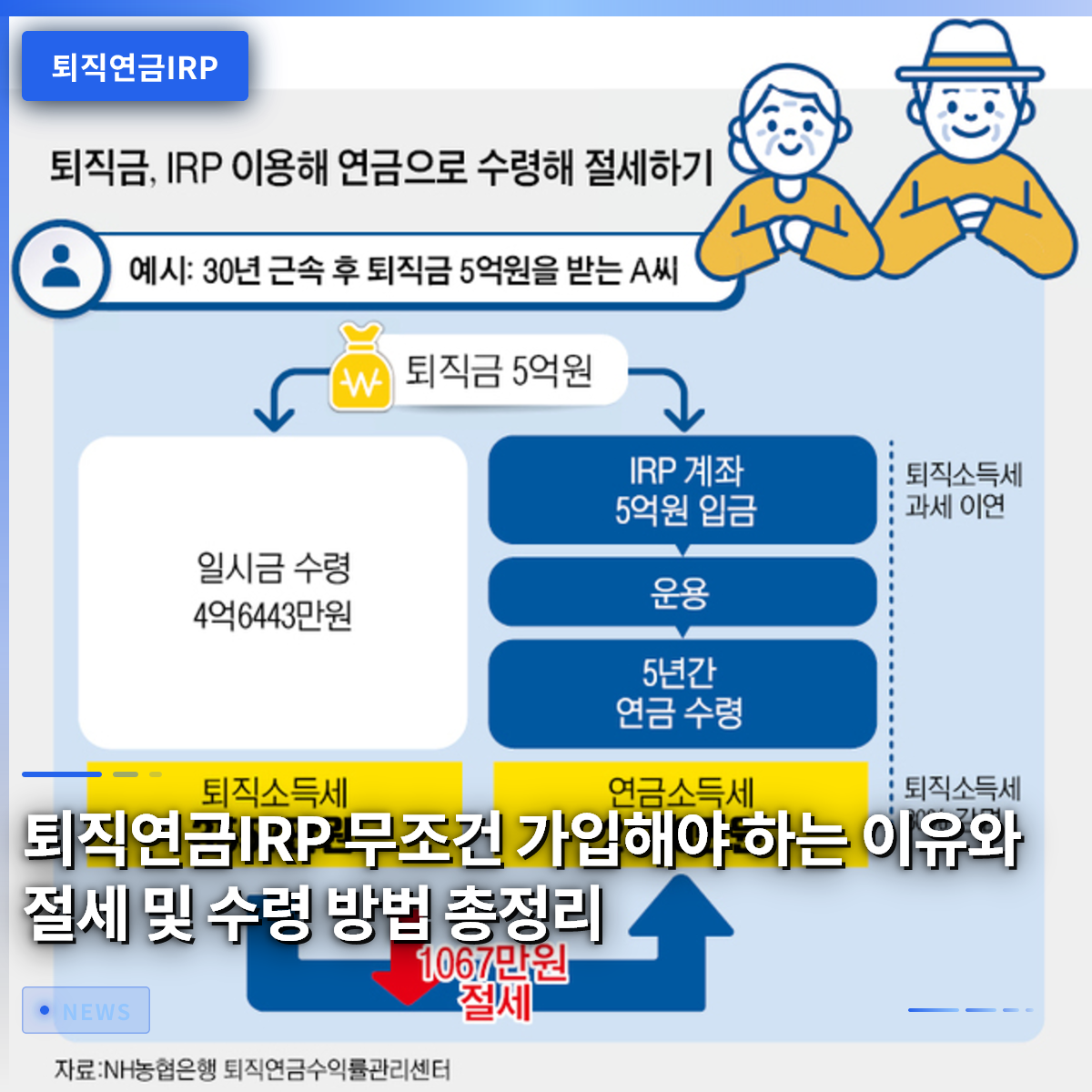
1. What is an IRP Account and Why is it Essential?

An Individual Retirement Pension (IRP) is an account where employees can consolidate and manage their severance pay received upon changing jobs or retiring, along with their personal contributions. In the past, severance pay was often transferred directly to a regular bank account, where it was either used for living expenses or lost to taxes. However, the system has changed so that, with certain exceptions, severance pay must be paid into an IRP account designated by the employee. By utilizing this account, you can safely grow your severance pay without immediately withdrawing it, while simultaneously enjoying tax deduction benefits. For employees, this is not just an option but an essential financial tool for retirement preparation.
Many employees immediately use their severance pay to buy a new car or pay off urgent debts. As a result, when retirement eventually arrives, they often find themselves with no money and feel overwhelmed. The IRP account acts as a sturdy shield that forcibly protects your valuable severance pay from such temptations. Since you can invest in various financial products within the account to grow your assets, it is far more advantageous than leaving the money idle. Therefore, it is a wise decision to open an IRP account first when leaving a company or changing jobs.
The IRP account is an essential financial product that safely protects your severance pay and reduces your tax burden.
2. The Significant Tax Savings of Receiving Severance Pay via IRP
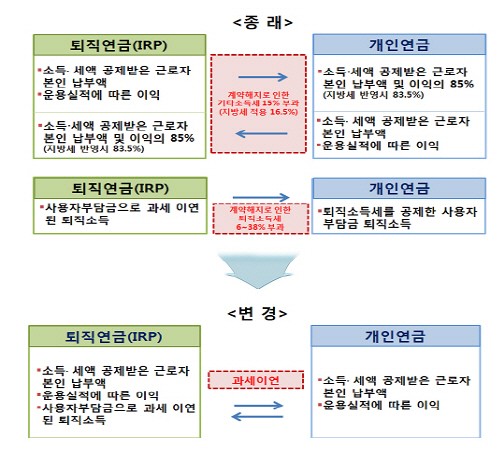
If you receive your severance pay in a regular account, a high severance income tax is immediately imposed, significantly reducing the amount you actually receive. However, if you transfer this money to an IRP account, you can benefit from tax deferral, which delays the payment of severance income tax until the time you actually withdraw and use the funds. Since you do not have to pay taxes immediately, you can leave that amount in the account to grow through compound interest, creating a massive difference over the long term. Later, if you receive the funds as a pension after retirement, you can receive additional tax reductions on a significant portion of the severance income tax you would have originally paid. Utilizing this account is the most reliable way to legally lower the huge wall of taxes.
Mr. Kim, who had worked diligently in Seoul, recently received his severance pay when he changed companies. Following advice from those around him, he transferred his entire severance pay to an IRP account instead of a regular account. Because he did not have to pay taxes immediately, the lump sum remained intact, and he could see it steadily growing within the account. A few years later, after retiring, he chose the pension withdrawal method, receiving monthly living expenses while significantly reducing his tax burden. Not missing out on these legal tax-saving benefits provided by tax law is an essential survival strategy for modern employees.
Tax deferral and pension withdrawals through an IRP account are the most powerful weapons for reducing severance income tax.
3. How to Utilize the Combined Tax Credit Limit for Pension Savings and IRP
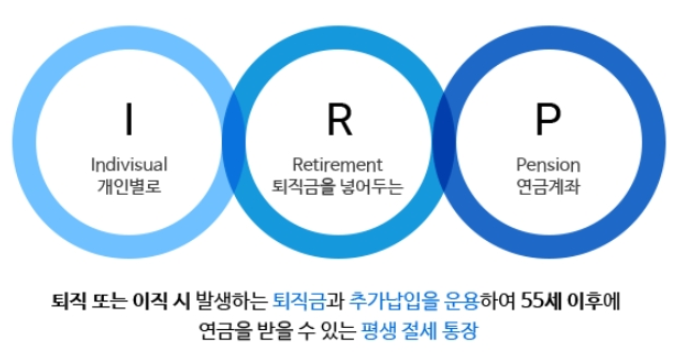
If you want to prepare for retirement assets and also receive year-end tax refunds every year, you should actively utilize the combination of pension savings and IRP. Although these two products have slightly different characteristics, they share the commonality that their tax credit limits can be combined. By utilizing both pension savings and IRP, the amount of tax refunded when contributing up to the maximum limit becomes quite substantial. For a long time, this method of accumulating small amounts monthly has become an essential item for employees’ year-end tax settlements. People who have consistently managed this account since their early careers enjoy the pleasure of receiving a generous refund every spring.
Mr. Lee, an employee who used to sigh every time he heard stories about others getting hit with a year-end tax bomb, changed his strategy last year. He started deducting a certain amount from his monthly salary and splitting it between his pension savings and IRP accounts. As a result, he received a tax refund of several hundred thousand won at the following year’s year-end settlement and was delighted. He is fully enjoying the double benefit of steadily building retirement assets while getting his taxes refunded every year. If you lack spare funds, it is advisable to develop the habit of making consistent monthly contributions, even if the amount is minimal.
By utilizing pension savings and IRP together, you can enjoy significant tax credit benefits during your annual year-end tax settlement.
4. Strategies for Utilizing Individual Investment Government Bonds and Various Investment Products
Due to recent system improvements, it is now possible to directly purchase Individual Investment Government Bonds in Defined Contribution (DC) pension and IRP accounts. This is very welcome news for conservative investors who have been hesitant about investing in risky assets. Since the minimum investment amount is low, you do not need to put in a lump sum; you can invest in small increments according to your financial situation. Additionally, hybrid products that meet the safe asset ratio regulations while allowing for the construction of a stable long-term portfolio are also gaining popularity. An investment environment has been created where you can expect returns higher than market interest rates while minimizing the risk of principal loss.
Mr. Park, who is a few years away from retirement, was too anxious to invest his severance pay in stocks or risky products. However, he was also worried that keeping it only in bank deposits would cause his assets to shrink when considering inflation. He recently learned that he could directly subscribe to 10-year and 20-year government bonds in his IRP account and immediately diversified his funds. With the stability guaranteed by the state combined with the merits of long-term investment, he felt so at ease that he could sleep well at night. As such, combining various financial products that suit your personality within the account is the key to successful asset management.
You can achieve safe and balanced investments by utilizing Individual Investment Government Bonds and various hybrid products within your IRP account.
5. Cautions Regarding IRP Cancellation and Early Withdrawal Conditions
Although you start an IRP for your retirement, you may consider early cancellation or withdrawal if you suddenly need a large sum of money. However, if you cancel this account on a whim, you will face the unfortunate consequence of having to return all the tax benefits you have received so far. In fact, statistics show that while large amounts have been deposited into accounts, a high percentage have been cancelled, which is regrettable. Early withdrawal is only permitted in special exceptional cases specified by law, such as home purchase or deposit for non-homeowners, bankruptcy, or natural disasters. Therefore, if you break the account due to immediate temptations, it will lead to enormous financial losses when you reach retirement.
Mr. Choi, an employee who had moved from a local area to Seoul and urgently needed a deposit to secure a home, seriously considered cancelling his IRP. After consulting with a bank teller, he learned that he met the conditions for home purchase and rental for non-homeowners, making early withdrawal possible. He wisely avoided the crisis of potentially facing a tax bomb by cancelling the entire account. By accurately understanding the nature of the account and carefully reviewing the relevant regulations, you can prevent unnecessary financial losses. You must not forget that retirement funds are not money locked away forever, but the last line of defense that protects you in moments of life crisis.
Since cancelling an IRP account without authorization can result in a tax bomb, you must carefully verify the legal withdrawal requirements.
6. Tips for Utilizing IRP for a Successful Retirement
To make your post-retirement life abundant and stable, you must check your IRP account and make long-term plans right now. The first step is to collect all severance pay generated when changing jobs or retiring into the account and secure tax deduction benefits. Additionally, you should manage your returns by appropriately allocating various assets such as stocks, bonds, and government bonds according to your investment style. If you continue to fill the additional contribution limit in line with the annual year-end tax settlement period, your retirement assets will snowball. Please keep in mind that small attention and action today will make a huge difference at your retirement point a few years from now.
Manager Kim, who is on the verge of retirement, is ready for a secure retirement thanks to the IRP account he has consistently managed since his younger days. This is the result of diligently securing tax credits every year and transferring his severance pay in full to maximize the compound interest effect. While his colleagues worry and sigh about their post-retirement lives, he smiles with ease and is designing his second life. I recommend that you, the readers, start with the small action of carefully checking your account status today without delay. Wise financial living is the most certain path to completing a comfortable and happy retirement.
You must turn your IRP account into a stepping stone for a successful retirement through consistent management and strategic asset allocation.
Frequently Asked Questions
=