Personal pension savings are the most reliable tax-saving tool that allows you to secure the maximum annual tax credit benefits while steadily preparing for income after retirement. Mr. Kim, an office worker, was pleasantly surprised to receive a much larger refund than expected during his year-end tax settlement thanks to the amount he deposited into his pension account last year. While many people recognize the importance of preparing for old age, they often hesitate because they are unsure which products to choose. In this article, we will carefully examine the basic concepts of pension savings, tax credit limits, and specific methods for successful asset management. Let us begin this discussion by keeping in mind that consistent saving habits create future financial freedom. If you read the content introduced below carefully, you will be able to draw your own customized blueprint for retirement planning.
=
Personal Pension Savings Tax Credit Limits and Recommended Management Strategies for 2026
1. The Concept and Importance of Personal Pension Savings
To build retirement assets stably, public pensions provided by the state are insufficient, and the proportion of private pensions must be increased. Personal pension savings, which we commonly join, are a representative financial product for voluntarily preparing for old age, offering various benefits since the money is locked in for a long period. By consistently depositing a fixed amount every month, you not only accumulate a substantial sum of money but also enjoy the dual benefit of reducing your tax burden. Looking around, it is easy to find cases like Mr. Eun-woo, who was caught off guard by the income gap after retirement. To prevent such risks in advance, wisdom is needed to open a pension account early in one’s career and gradually grow it. In addition to the National Pension and retirement pensions, personally prepared pensions have become an essential survival strategy rather than just an option. This is because if assets are not grown to match the rate of inflation, the likelihood of struggling after retirement becomes very high. Therefore, consistently joining pension savings and forming assets from a young age is the greatest gift to your future self. Utilizing the integrated inquiry services provided by financial institutions allows you to grasp all your pension assets at a glance, making management very convenient.
Personal pension savings are an essential asset management tool for creating a prosperous old age.
2. Tax Credit Limits and Tax-Saving Effects

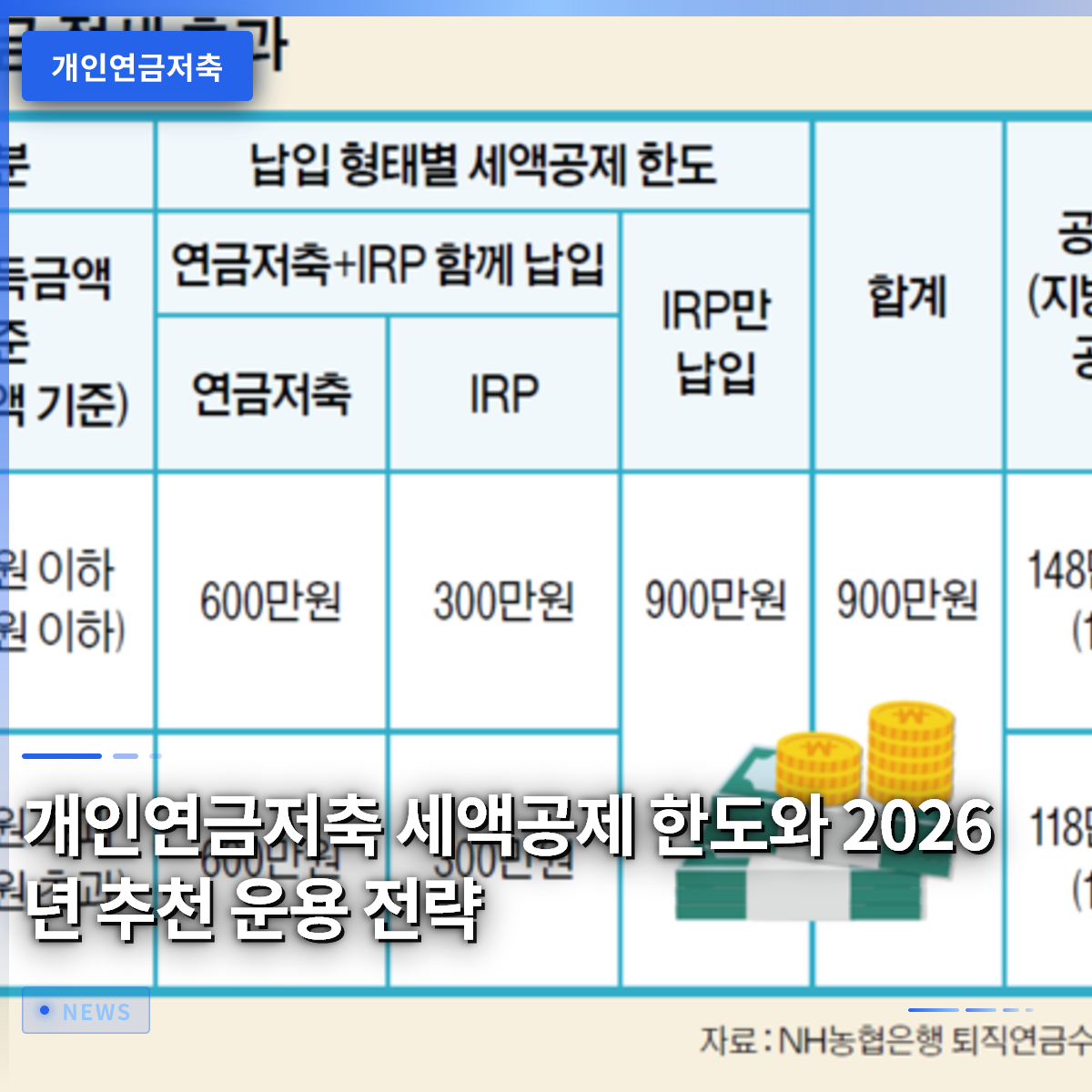
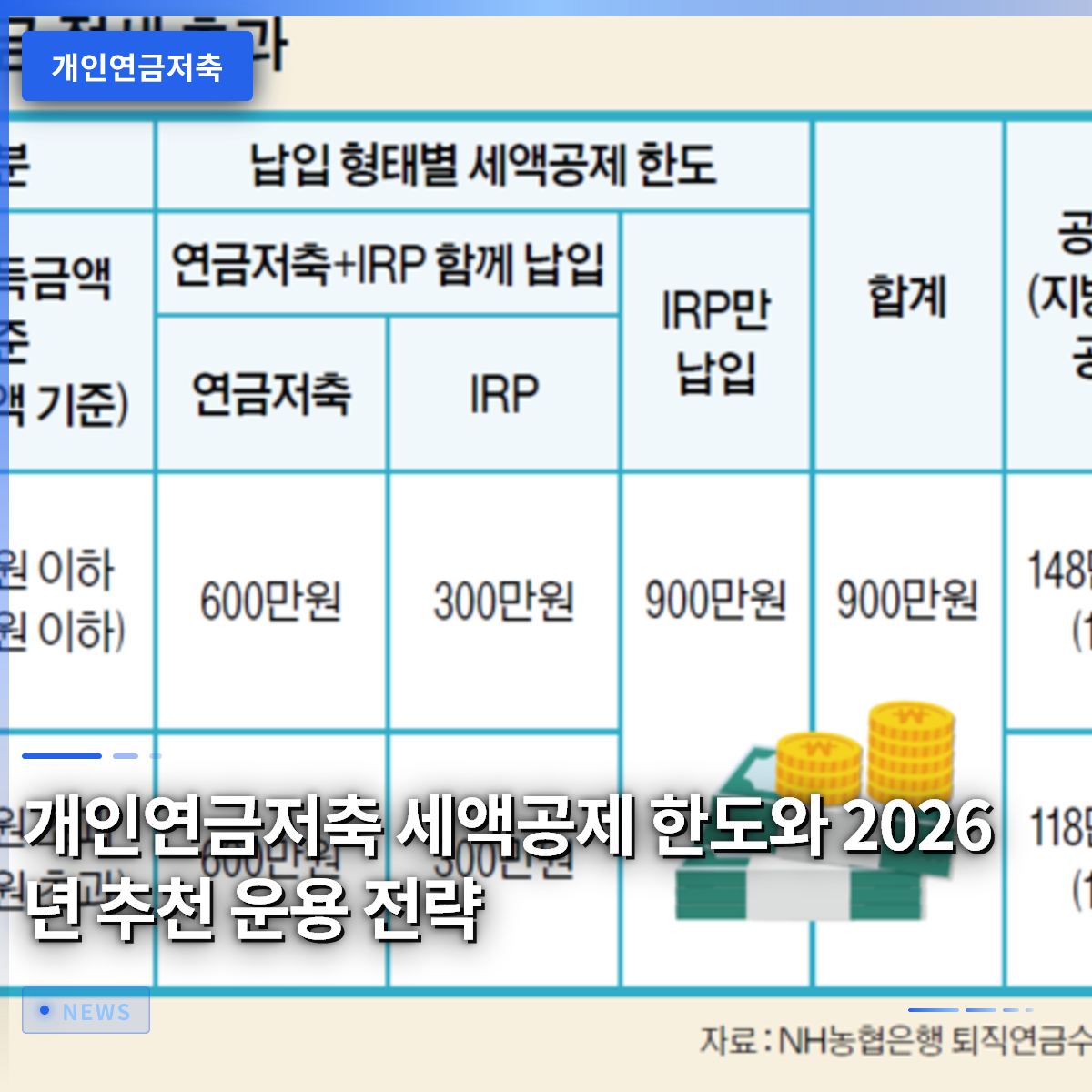
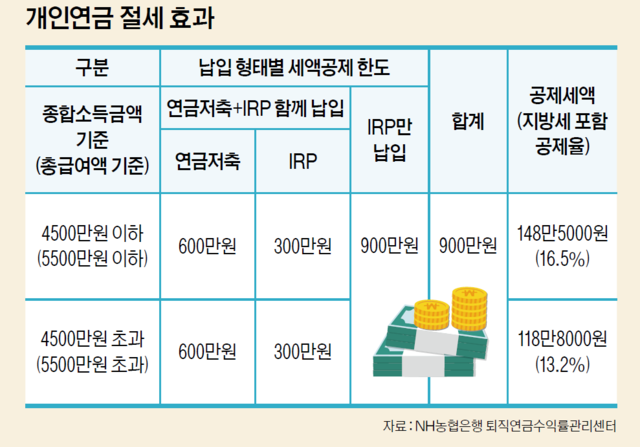
The biggest appeal of personal pension savings is undoubtedly the powerful tax credit benefit received during the year-end tax settlement. A pension savings account alone is eligible for a deduction of up to 6 million KRW annually, and the limit increases to a maximum of 9 million KRW when combined with an Individual Retirement Pension (IRP). Office workers with a total annual salary of 55 million KRW or less can receive a high deduction rate of 16.5%, allowing them to get back up to 1,485,000 KRW. This is equivalent to receiving an extraordinary return on investment that cannot be compared to bank deposit interest. Mr. Park uses this deduction benefit to receive a lump-sum refund every year-end tax settlement season, which he wisely uses for his next year’s vacation expenses. To maximize these tax credit benefits, it is essential to carefully consider your annual income level and depositing capacity. A wise method is to set up automatic monthly transfers to ensure you do not miss the opportunity by failing to reach the limit. Since it is a way to bring money that would have gone to taxes directly back into your account, it is worthy of being called the ultimate wealth management tool. Rather than paying attention only during the year-end tax settlement period, a planned approach of adjusting monthly deposit amounts regularly is necessary.
You can enjoy tax credit benefits of up to 9 million KRW by combining pension savings and retirement pensions.
3. Types of Pension Savings Products and Selection Criteria
Pension savings products can be broadly divided into pension savings insurance sold by insurance companies and pension savings funds offered by securities firms. People who prioritize stability tend to clearly prefer insurance products that guarantee a fixed interest rate. On the other hand, those who seek to defend against inflation and pursue higher returns through active investment choose fund accounts at securities firms. In reality, Mr. Lee, an office worker who wants to invest in various products according to stock market trends, is growing his assets through a securities firm account. You can only choose a product without regret if you accurately understand your investment style and the remaining time until retirement. It is absolutely necessary to take the time to seriously consider what kind of future you are envisioning before visiting a bank or insurance company counter. It is advantageous to choose a financial institution that can manage assets from a long-term perspective rather than reacting emotionally to short-term stock price fluctuations. Recently, non-face-to-face account opening procedures are so well-established that you can easily create an account with just a smartphone. You can lead a wiser financial life by carefully comparing fee conditions and event benefits.
You should choose the appropriate product between insurance company products and securities firm funds according to your investment style.
4. Effective Asset Management and Investment Strategies
If you have opened a securities firm pension savings account, you must carefully decide which stocks to put your precious funds into. Recently, many investors are investing in domestic and international equity products or assets that provide stable dividends to enjoy long-term compound interest effects. Utilizing a systematic investment plan (SIP) that mechanically buys quality assets on a fixed date each month can significantly reduce market risk. For example, Mr. Choi, an office worker, buys index-linked products for a fixed amount on his payday each month, achieving stable returns. The key to successful management is to stick to principles and consistently accumulate quantity without being swayed by short-term market conditions. As retirement approaches, an asset allocation strategy is needed to gradually reduce the proportion of risky assets and increase the ratio of safe assets. When replacing products within a pension account, taxes are not paid immediately but are deferred, allowing you to maximize the compound interest effect. By actively utilizing the advantages of this system, you can experience the amazing process of growing your assets without any tax gaps. While referring to market outlook reports from experts, you should establish your own firm criteria rather than blindly following them.
You should maximize long-term compound interest effects by utilizing systematic investment and the tax deferral system.
5. Precautions and Countermeasures for Early Termination
Personal pension savings offer tax benefits, but if you terminate the account early without meeting the legally prescribed requirements, you will face significant disadvantages. If you terminate the account because you suddenly need a large sum of money, you must return the tax credit benefits received so far and also bear additional income tax. Mr. Jeong, an office worker, deeply regretted being charged much more tax than expected because he broke his pension account to urgently secure a deposit for a rental housing lease. Therefore, you need a firm mindset that the money put into a pension account is funds that should absolutely not be used until at least the time of retirement. If you inevitably need funds, you can consider utilizing the exception clauses allowed by relevant laws instead of terminating the account. Withdrawals are possible at a lower tax rate in cases such as purchasing a house if you are a non-homeowner, natural disasters, or the occurrence of medical expenses requiring long-term treatment. If you are familiar with these institutional mechanisms in advance, you can respond wisely without panic when a crisis occurs. The habit of checking detailed requirements in advance through a financial institution’s customer center serves as a shield to protect your precious assets.
Since you must return the benefits received upon early termination, a long-term maintenance plan is essential.
6. Advice for Successful Retirement Preparation
Life after retirement is much longer than one might think, so only those who prepare steadily from now on can welcome a comfortable future. If you develop the habit of saving consistently, even if the amount is small each month, you will directly experience the magic of assets growing enormously over time. The wisest path is to actively utilize various tax benefits provided by the government while building an investment portfolio suitable for yourself. In the future, you must pay attention to various changes in the financial market and thoroughly check the safety guards of your assets. I encourage you to look at pension products from nearby financial institutions right now and start small practical steps from today. The process of preparing for retirement can be lonely and boring, but you can achieve your goals much more easily if you have a reliable companion. Try to create an atmosphere where you encourage each other by sharing success stories and useful financial information with people around you. A prosperous life in the future is not something that comes by chance; it is completed only through thorough planning and execution. I hope this article serves as an opportunity for you to re-examine your retirement asset management plan and take a new leap. Let us take a strong first step from today while imagining the image of yourself enjoying a wonderful retirement in the future.
Only thorough planning and consistent execution guarantee a successful old age and a prosperous future.
Frequently Asked Questions
=