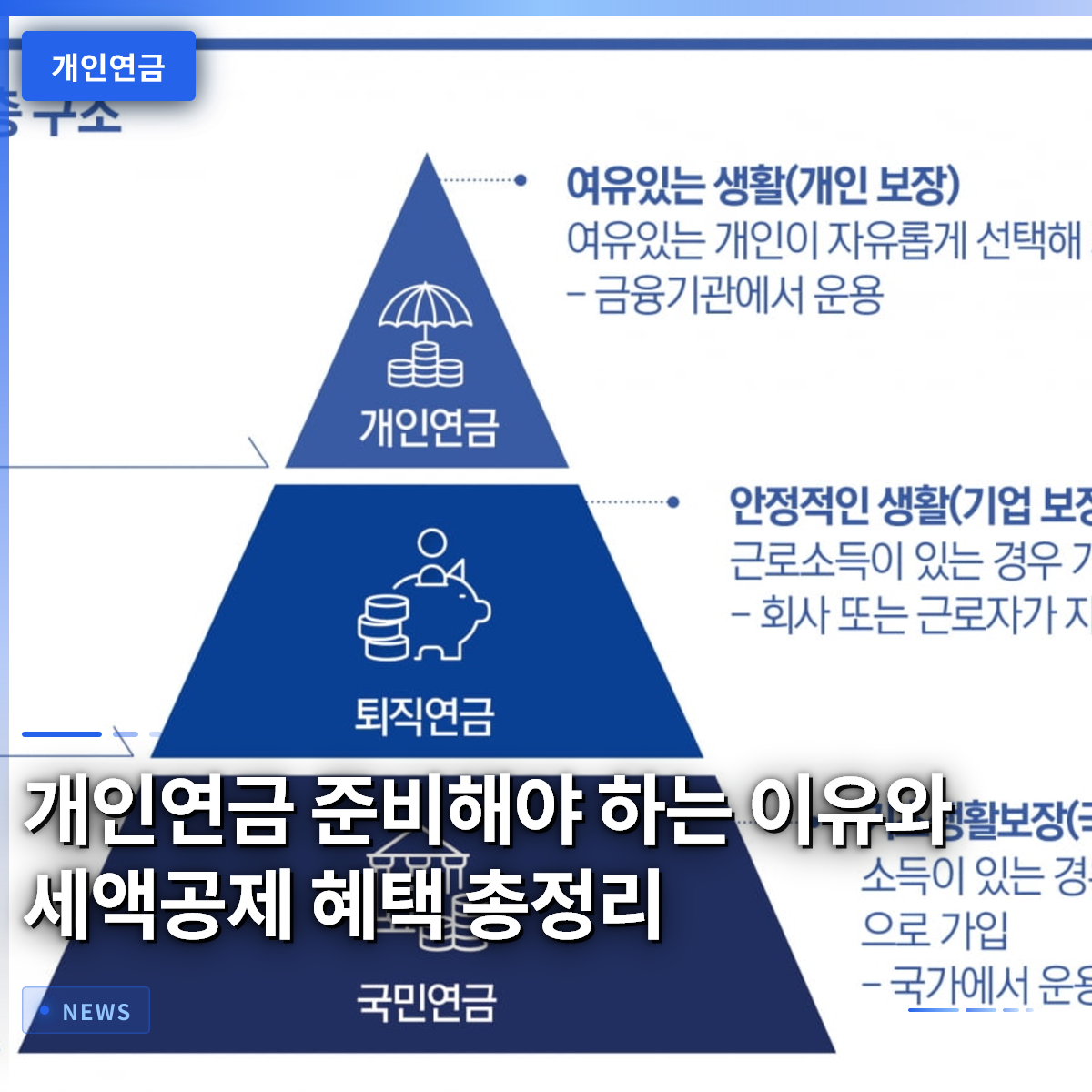
Relying solely on the National Pension for your retirement can lead to a severe shortage of living expenses after you retire, leaving you scrambling to make ends meet. For employees who live on their monthly salary after tax deductions, securing a cash flow for post-retirement life is of paramount importance. This is also why many people are currently using the systematic investment features provided by securities firms to save money in tax-advantaged accounts. In reality, as retirement approaches, many people realize with anxiety that the National Pension alone will not be enough to keep up with inflation. In this article, we will thoroughly examine the specific reasons why you should start preparing a personal pension immediately and the associated tax benefits. You must build a solid structure while you are still young to enjoy economic freedom in your old age.
=
Why You Need to Prepare a Personal Pension and a Complete Guide to Tax Deduction Benefits
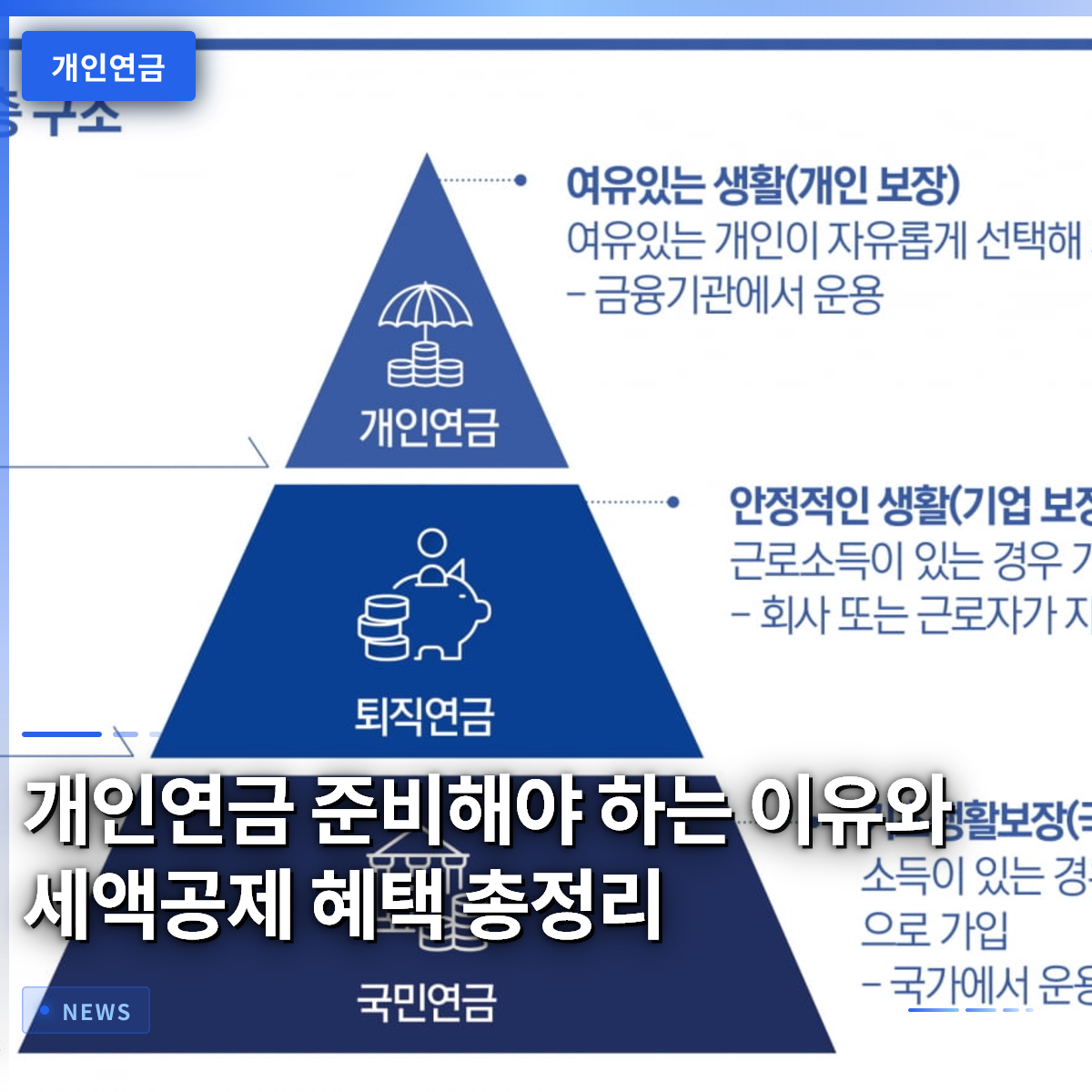
1. Why the National Pension Alone Is Insufficient
The first reality retired employees face is that their monthly pension payments are often far less than they expected. With prices rising sharply every year, the National Pension contributions alone are often insufficient to cover basic needs like food, clothing, and shelter. Assets accumulated through hard work in younger years can quickly deplete due to the sudden loss of income upon retirement. For example, Mr. Kim, who retired after working in Seoul, was shocked to find that his monthly National Pension payment was less than one-third of his previous salary. Consequently, many people find themselves in the tragic situation of having to seek employment in their old age to cover their living expenses.
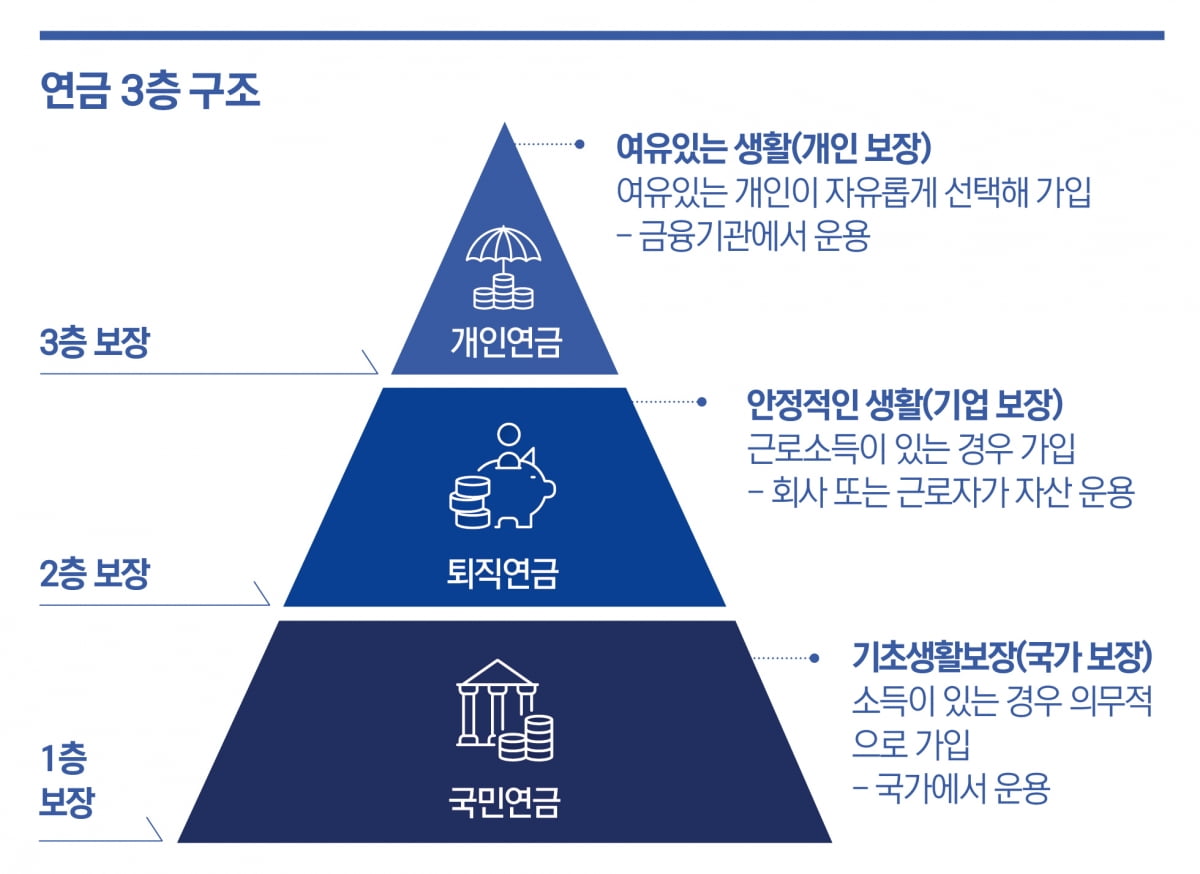
To fundamentally solve this problem, it is essential to have additional safety nets beyond the state-guaranteed first-tier pension. In the multi-layered pension system we often discuss, the missing puzzle piece is provided by products that individuals subscribe to directly. You must consistently contribute a fixed amount each month to create a stable cash flow similar to a salary by the time you retire. Instead of just envying colleagues who enjoy a comfortable post-retirement life, you should check your asset status right now. The core of retirement preparation, which can no longer be postponed, lies in building a multi-layered pension portfolio on your own.
Since the National Pension alone is difficult to keep up with inflation, securing additional retirement funds is essential.
2. Differences Between Pension Savings and Individual Retirement Pensions (IRP)
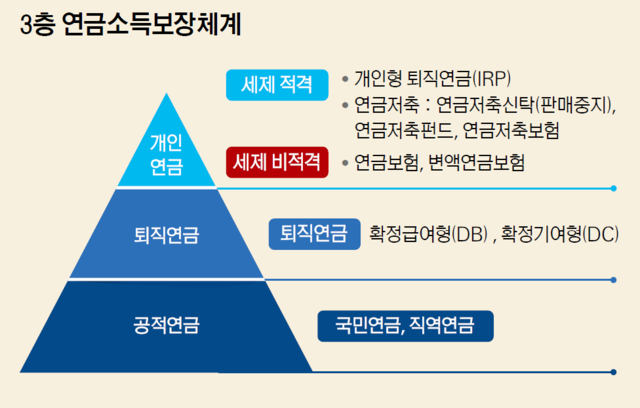
When visiting financial institutions to prepare for retirement, the two major pillars you encounter are Pension Savings (Yeoneun Jeochak) and Individual Retirement Pensions (IRP). Many people join these accounts based solely on recommendations without fully understanding the differences, only to be surprised when it comes time to withdraw their funds. Pension Savings can be opened by anyone through banks, insurance companies, or securities firms, and offers relatively high autonomy in fund management. On the other hand, IRPs are available to employees and self-employed individuals with income, and they offer the advantage of broader tax benefit limits.
Both accounts offer significant benefits, such as tax refunds during year-end tax settlement, but there are differences in the specific regulations. For example, using a Pension Savings fund allows you to directly invest in various financial assets like stocks and bonds to grow your wealth. In contrast, IRP accounts have limits on investments in risky assets, making them more suitable for conservative investors. Mr. Park, an employee, regretted joining both accounts without understanding their nature and only later learned about the penalties for early termination. Therefore, it is wise to allocate funds between the two accounts according to your investment style and income level.
Pension Savings and IRPs differ in management methods and eligibility, so you should choose the product that suits you best.
3. Maximizing Year-End Tax Deduction Benefits
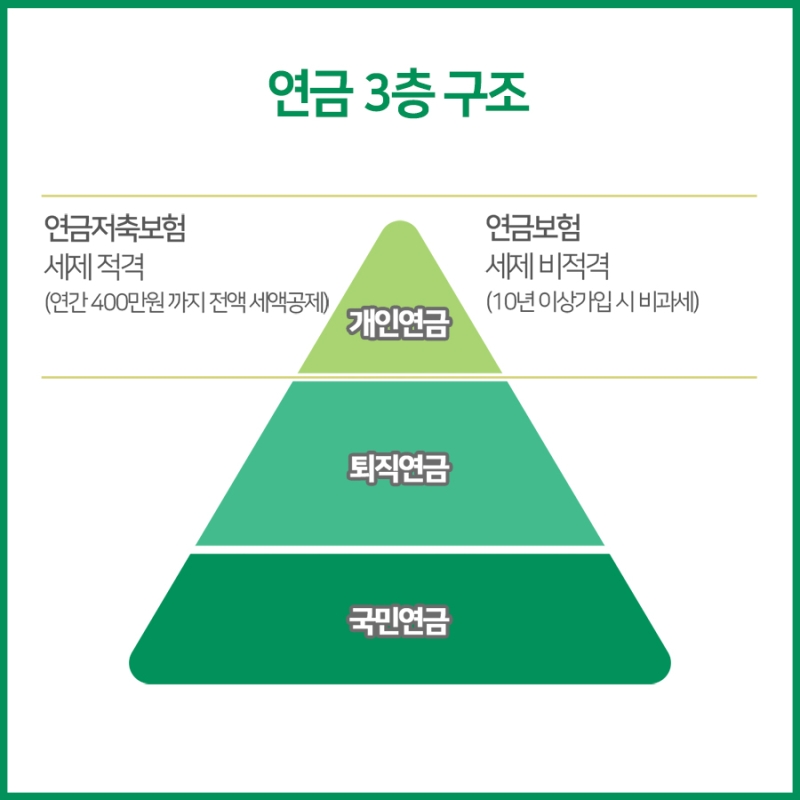
The biggest reason why employees’ fortunes differ during the year-end tax settlement period, often called the “13th-month salary,” is whether they utilize tax-advantaged accounts. By combining Pension Savings and IRPs, you can receive tax deductions on up to 9 million won annually, making it an essential wealth management tool for employees. If your total annual income is 55 million won or less, you can receive a refund of 16.5% of your contributions; if it exceeds that amount, the refund rate is 13.2%. Most employees who receive a substantial lump sum refund during year-end settlement have typically maxed out this contribution limit.
Including local income tax, you can receive a refund of up to 1.485 million won, making it arguably the best wealth management strategy available. In a situation where bank deposit interest rates are at rock bottom, it is not easy to find a financial product that guarantees such tax savings. In fact, employees who have utilized this system since the early stages of their careers have already accumulated assets equivalent to several years’ worth of salary. However, be aware that if you terminate the account early, you must return the benefits received and will be subject to miscellaneous income tax. It is wise to set a contribution amount that you can maintain until retirement rather than joining just for the tax benefits.
By combining Pension Savings and IRPs to receive tax deductions on up to 9 million won, you can get a significant tax refund every year.
4. How to Utilize Securities Firms’ Automatic Systematic Investment
Many investors today prefer automatic systematic investment, where a fixed amount is purchased automatically each month, over the burdensome method of investing a lump sum all at once. By using the “stock accumulation” feature in securities firm apps, you can automatically purchase high-quality assets on a daily, weekly, or monthly basis. This systematic service naturally allows you to benefit from buying less when stock prices are high and buying more when they are low. Since you don’t need to stress over checking charts every time the market fluctuates, it is an ideal method for employees.
In fact, domestic and international securities firms frequently launch automatic investment events using tax-advantaged accounts during holiday seasons or asset management periods. Major financial institutions like Korea Investment & Securities and Samsung Securities run events where they offer gift certificates if you deposit a certain amount into a personal pension account. Mr. Choi, an employee, experienced the benefit of his assets growing automatically without him having to worry because he set up automatic transfers to coincide with his monthly salary date. With the addition of services where AI-based asset management algorithms adjust portfolios automatically, investment convenience has increased further. If you want to accumulate assets consistently without being swayed by emotions, actively adopt the automatic systematic investment features offered by securities firms.
Using securities firms’ automatic systematic investment features allows you to conveniently grow your pension assets without being shaken by market volatility.
5. Synergy with Brokerage Accounts
One of the products that has received the hottest response in the asset management market in recent years is the brokerage asset management account. This account allows investors to directly trade domestic listed stocks, bonds, and various financial products in one place, making it an essential item for investors. In particular, those who manage their personal pension accounts and brokerage accounts together enjoy various events offered by financial institutions. It is a two-for-one deal where you can receive mobile gift certificates or cash-like rewards just by opening an account and depositing a certain amount.
According to acquaintances, as competition among securities firms to attract customers intensifies, the scope of benefits is expanding. Investors who feel it is a waste to leave a lump sum in a deposit account carefully compare events and move their assets to the most advantageous securities firm. You can create a virtuous cycle of assets by reinvesting dividends or investment profits generated in the brokerage account back into the pension account. However, if you frequently move accounts solely to participate in events, you may actually incur losses due to fees and management costs. It is advantageous to choose a financial institution that you are most familiar with and that offers consistent benefits as your primary channel for long-term partnership.
Using brokerage accounts and personal pensions together allows you to enjoy additional benefits through various financial institution events, in addition to investment returns.
6. Ultimate Goals and Practical Directions for Retirement Preparation
As we have seen, a personal pension is not just a savings product but the most reliable shield supporting life after retirement. For some, the process of reducing immediate expenses and tying up money each month may feel burdensome and tedious. However, the stable cash flow deposited into your account every month upon reaching retirement in 10 or 20 years will be more valuable than any other asset. This is why you must not stop your steps toward retirement, no matter how difficult and uncertain the economic situation is in 2026.
Open your smartphone’s financial app today and check your estimated pension amount to objectively assess your current status. If you see gaps, you can gradually increase your monthly contributions or adjust your strategy to match the tax deduction limit. Rather than being swayed by flashy short-term investment information around you, the person who consistently practices with a long-term perspective will ultimately be the winner. Life after retirement changes completely depending on how wisely we structure and execute our asset planning in our younger days. Believe that the small habit you start today will gift you a prosperous and comfortable old age.
Only thorough prior planning and consistent practice can lead to successful economic freedom in life after retirement.
Frequently Asked Questions
=