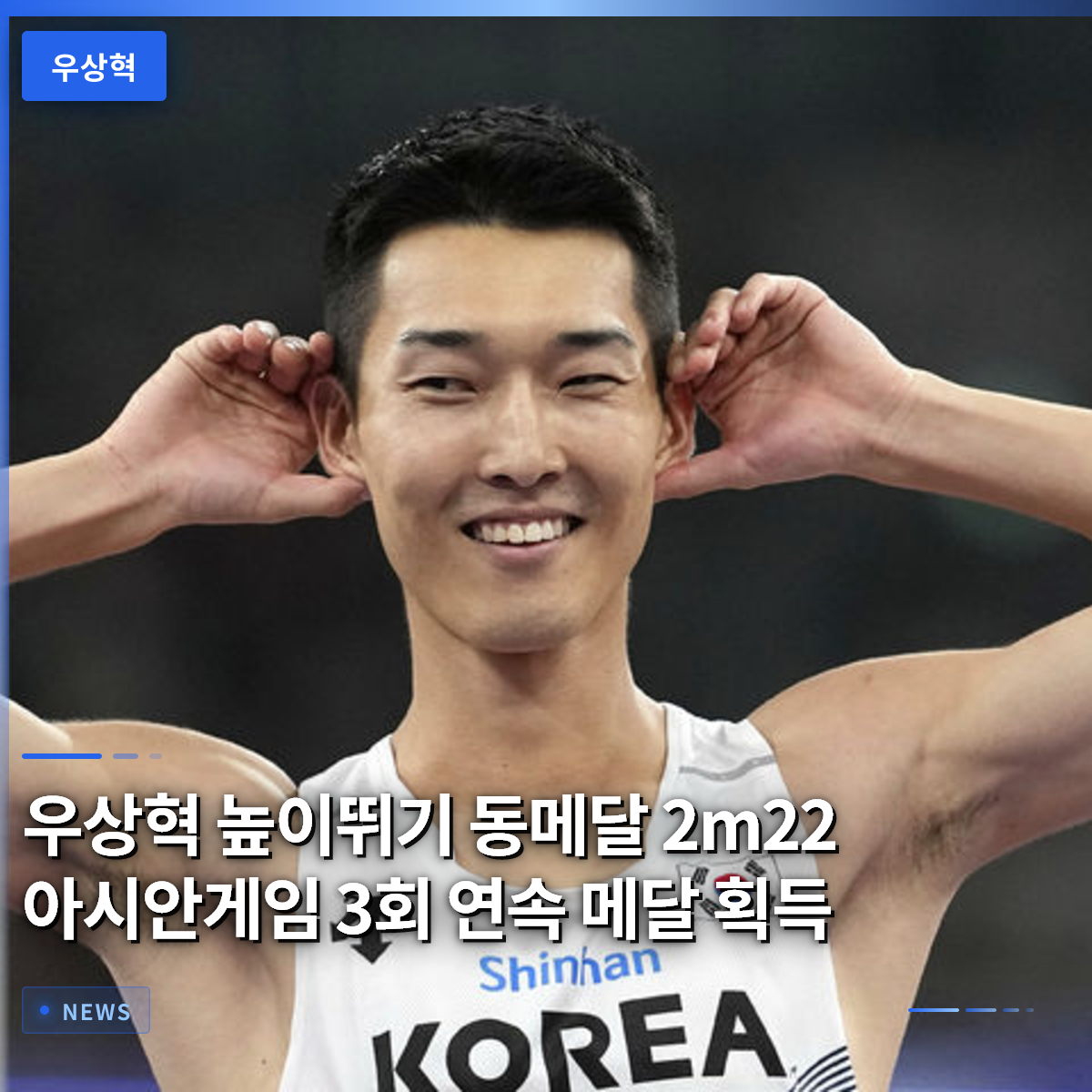
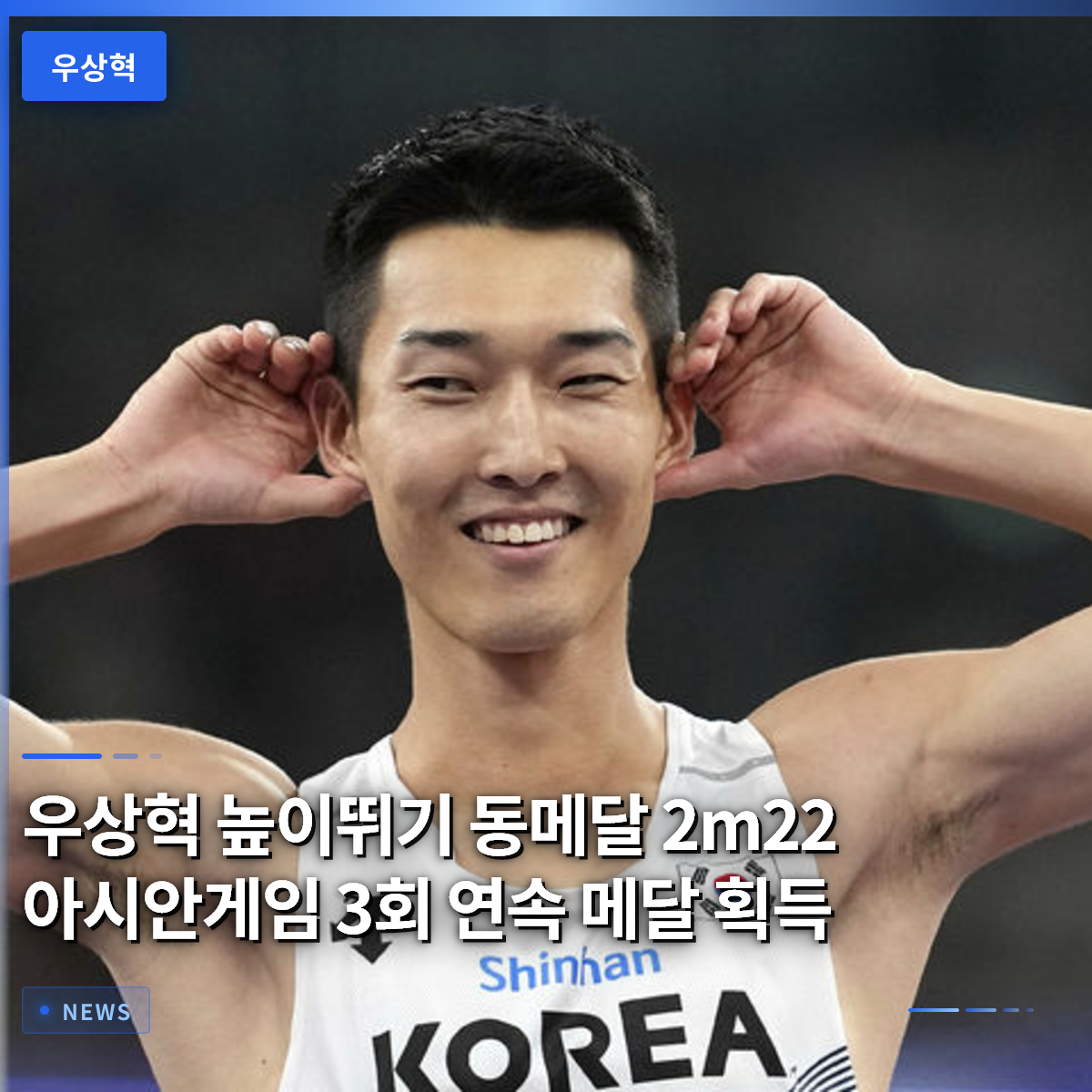
Woo Sang-hyuk won the bronze medal in the men’s high jump final at the Aichi-Nagoya Asian Games, clearing a height of 2.22m on September 27, 2026, at the Mizho Park Athletics Stadium in Nagoya, Japan. This achievement marks a remarkable feat, as he has now stood on the Asian Games podium for three consecutive Games, following his silver medals at the 2018 Jakarta-Palembang and 2023 Hangzhou editions. The competition took place in rainy, unfavorable weather conditions that were physically demanding for the athletes. Despite these challenges, his characteristic bright smile and composed approach to the competition resonated deeply with many spectators and viewers. Having demonstrated excellent form by clearing 2.27m at the domestic selection trials this spring, this medal feels particularly special. In this article, we will take a closer look at the emotional journey of Woo Sang-hyuk’s performance and the significance of his record of winning medals at three consecutive Asian Games.
=
Woo Sang-hyuk Wins Bronze in High Jump with 2.22m, Securing Medal at Three Consecutive Asian Games
1. Performance Record at the Nagoya Asian Games Final
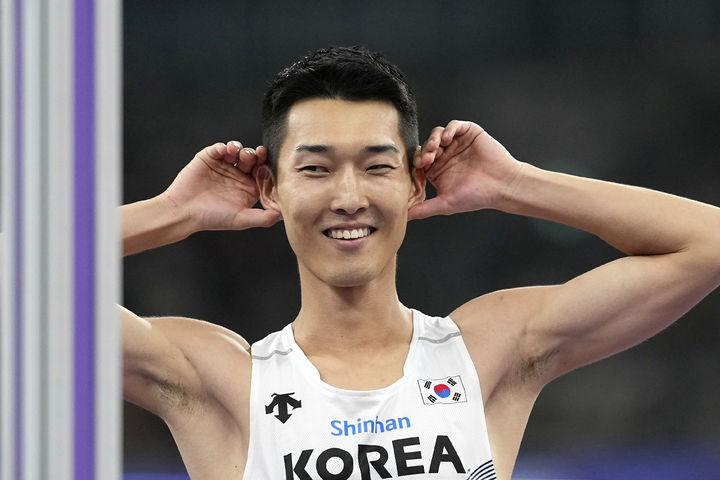
On this day, Woo Sang-hyuk gave his all on the stage of the men’s high jump final at the Mizho Park Athletics Stadium in Nagoya, Japan. From the early stages of the competition, he steadily increased the height, demonstrating the resilience to clear the bar with ease. In particular, he successfully cleared early heights such as 2.10m with confidence, drawing the atmosphere of the venue to his side. The wet stadium environment due to the rain posed a significant risk of slipping for jumpers, making the conditions extremely difficult. Despite the challenges in his run-up, his characteristic focus allowed him to clear the bar calmly, proving once again that he is a world-class athlete.
Cheering voices for the Korean team did not cease from the stands, and Woo Sang-hyuk responded to the audience’s cheers with applause, as he always does. His bright smile and raised arms after clearing the bar instantly melted the tension in the venue. Although he fell slightly short of his goal of a gold medal, his jumps, given his best effort until the end, were beautiful. Even when his final jump unfortunately failed, he left a deep impression on the audience by offering an awkward smile rather than showing disappointment. This attitude of not losing his smile even in the face of adversity was enough to provide the greatest emotion that sports can offer.
Woo Sang-hyuk calmly navigated the bad weather to secure a valuable bronze medal with a record of 2.22m.
2. Three Consecutive Medals Achieved Overcoming Injury
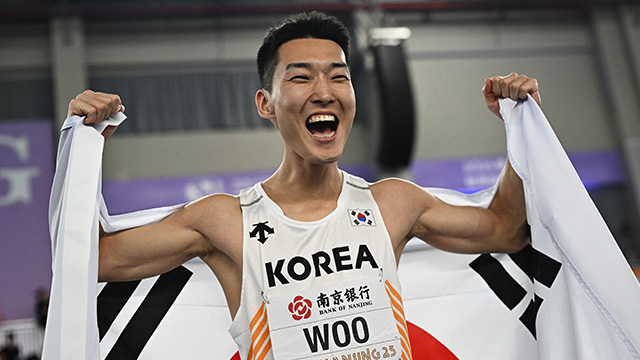
The reason this bronze medal holds exceptional value in the history of Korean sports is the indomitable will to rise above injury. For athletes, injury is the most terrifying enemy, bringing not only physical pain but also psychological anxiety. The frustration experienced when a body prepared meticulously over a long period fails to respond as intended is beyond imagination. Woo Sang-hyuk faced several hurdles in the past but overcame all adversity with his characteristic positive mindset. His winning record of 2.27m at the domestic selection trials this spring was evidence of how intensely he dedicated himself to rehabilitation and training.
Winning medals at three consecutive Asian Games on such a grand stage can be called the embodiment of consistency. It signifies that he is not an athlete who shines briefly and disappears, but one who maintains top-level performance over many years. He has laid the foundation to stand at the top of the podium again, overcoming both physical burdens and psychological pressure. The smile he showed while receiving his medal on the podium represented the weight of the sweat he had shed. Many fans applauded the drama of human triumph he displayed and are even more eager to support his future endeavors.
Rising above the pain of injury, Woo Sang-hyuk achieved medals at three consecutive Asian Games, establishing himself as a synonym for consistency.
3. The Power of Positivity: The Trademark of the Smile Jumper

The image that comes to mind first when thinking of Woo Sang-hyuk is undoubtedly his cheerful smile and overflowing energy. High jump is a brutally sensitive and lonely event where victory is decided by a difference of just one centimeter. When a jump fails, most athletes cover their faces or suffer from extreme stress. However, Woo Sang-hyuk often laughs loudly or induces applause from the audience, reversing the atmosphere himself. This positive attitude is not merely for show; it is his powerful weapon for freeing himself from pressure.
His playful interactions with fellow athletes and his efforts to encourage cheering naturally make spectators smile. At this Nagoya final, Woo Sang-hyuk was clearly the one leading the atmosphere when all athletes were exhausted due to the bad weather. His attitude of not fearing failure but enjoying the next challenge gave a fresh shock to track and field fans worldwide. He is personally proving that sports are a festival for sharing human tenacity and emotion, going beyond just competing for records. His bright smile is even more valuable because it hides countless unknown tears and bone-grinding efforts.
Woo Sang-hyuk’s unique positive energy, which does not lose its smile even in the face of failure, changed the atmosphere of the stadium and delivered great emotion.
4. Valuable Achievements and Significance for the Domestic Track and Field Community
Woo Sang-hyuk’s bronze medal is a great joy for the Korean track and field community, overcoming the struggles of an unpopular sport. Korean track and field has long been perceived as struggling against the high wall of the world stage, remaining on the periphery. However, since Woo Sang-hyuk’s emergence, Korean high jump has been writing a new history, including winning the World Championships and advancing to the top ranks. By breaking records once thought impossible, he has instilled confidence in junior athletes that they can achieve it as well. The medal won at this Asian Games has become a valuable milestone proving that the potential of Korean track and field is not a one-time phenomenon.
Local governments and sports officials have consistently provided support to help the athlete maintain peak condition. Every step he takes, competing for the Yongsin City Hall team and participating in domestic and international competitions, is becoming the history of Korean track and field. Young aspiring athletes watch Woo Sang-hyuk’s jump videos on repeat, nurturing their dreams of becoming world champions. His competitiveness, proven once again at this tournament, has lit a green light for the upcoming Olympics and World Championships. We hope that an environment will be created where more “second Woo Sang-hyuk”s can be born under increased support and attention.
Woo Sang-hyuk’s consecutive medal wins have expanded the horizons of Korean track and field and brought great hope to future generations.
5. Thorough Preparation to Overcome Bad Weather and Variables
The environment at the Mizho Park Athletics Stadium in Nagoya, where this tournament was held, was not easy for the athletes. Sudden rain made the runway slippery, making it difficult to time the takeoff. Since high jump requires a strong push-off from the toes, slip prevention can determine victory or defeat. Woo Sang-hyuk carefully checked the track condition with his coaching staff right before the competition and adjusted his steps. His ability to remain calm and respond appropriately despite unexpected weather deterioration was due to thorough preparation.
As the rain intensified during the competition, spectators holding umbrellas could not hide their tension, pacing back and forth. The athlete himself fought hard to perform under harsh conditions where his body temperature dropped and muscles stiffened. Nevertheless, he demonstrated mental strength by utilizing his characteristic elasticity and explosive speed, refusing to give up until the end. Regardless of the color of the medal, he deserves great applause simply for completing the competition without injury in such a fierce environment. This match vividly showed how important crisis management ability is, beyond physical ability.
Despite the harsh conditions of sudden rain and a slippery track, Woo Sang-hyuk performed the competition perfectly thanks to thorough preparation.
6. Future Challenges and Our Support
Having concluded the Nagoya Asian Games with a bronze medal, Woo Sang-hyuk is now preparing for a new leap toward a bigger stage. Based on the experience gained and areas that need improvement from this tournament, he will solidify his foundation for the next season. He plans to strengthen nutritional management and customized training programs to overcome the physical limitations that come with age. Rival athletes worldwide now list Woo Sang-hyuk as a strong contender to be wary of. Any Korean citizen would want to see him stand at the highest point of the podium and hear the national anthem again.
We sincerely hope that he can continue to perform his unique jumps to the fullest without injury in upcoming international competitions. We want to see the true form of the “Smile Jumper,” who enjoys the game itself rather than being burdened by excessive pressure regarding results. We must all support Woo Sang-hyuk’s great challenge to the end with warm eyes and generous applause. Although he settled for bronze this time, his challenge is still ongoing, and he will fly higher tomorrow. We cheer for the pride of Korean track and field, anticipating his dazzling flight ahead.
After the Asian Games, Woo Sang-hyuk is preparing to run again toward higher goals and needs continuous support.
Frequently Asked Questions
=