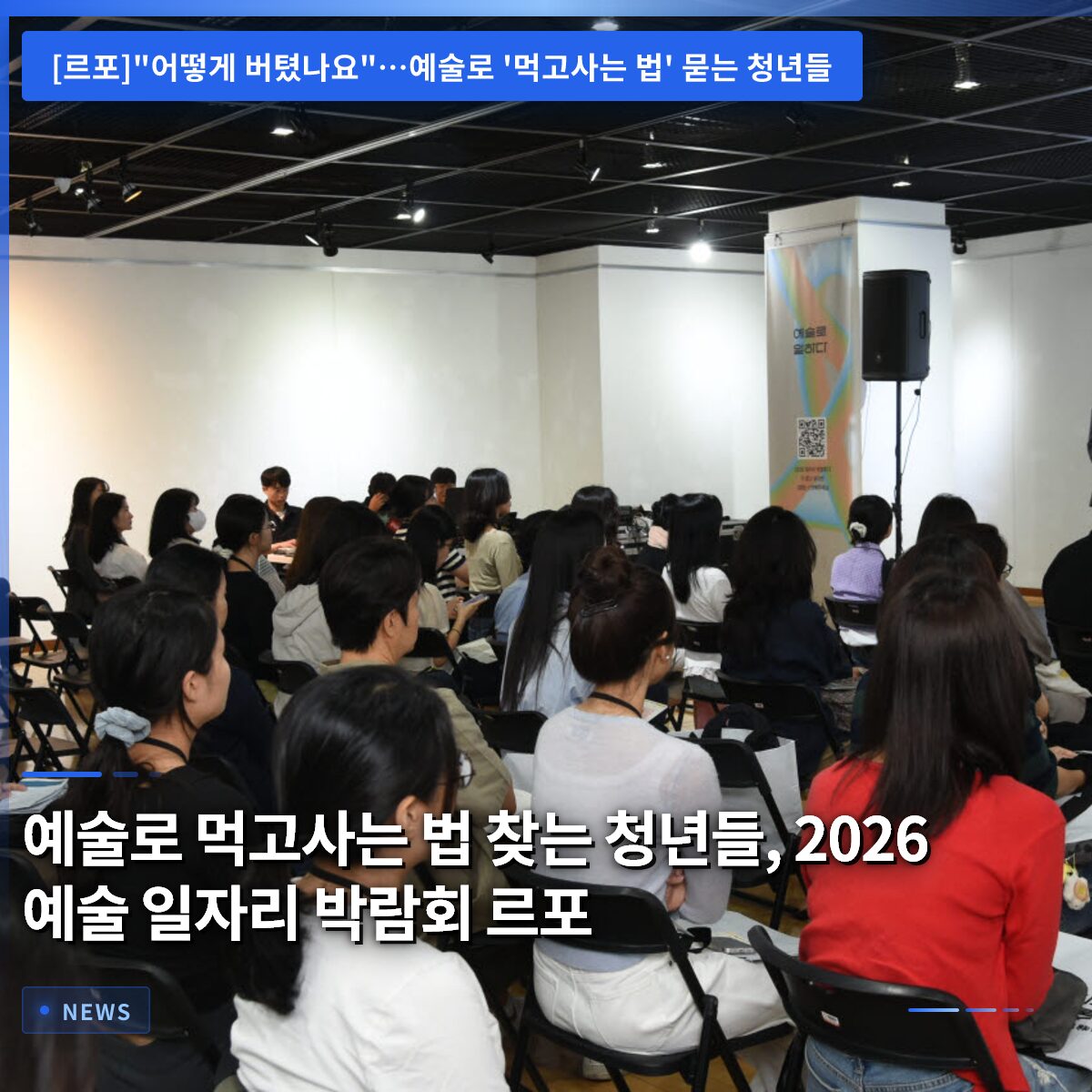
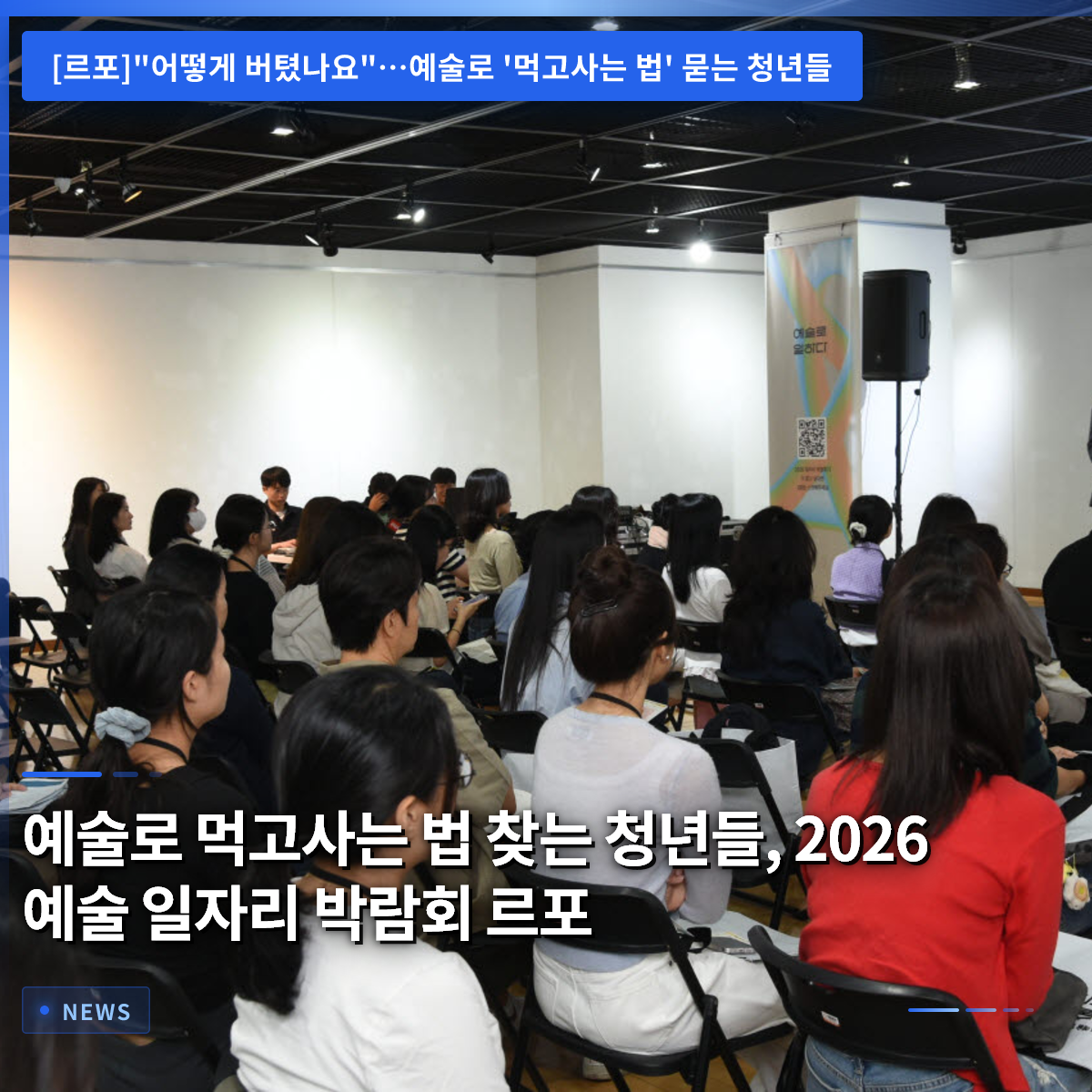
Making a living through art and sustaining creative work over the long term is a far more arduous and intense journey than one might imagine. On the 10th, the Hongik University Daehak-ro Art Center in Jongno-gu, Seoul, was packed with young people who had gathered with these very concerns in mind, leaving barely any room to move. While many start out with grand dreams of becoming artists, the question they ask most consistently when facing the harsh realities of life remains the same. They ask if it’s okay to start a business alone, or how many people they need to form a company, but the conversation often ends with tearful questions about how they have managed to survive so far. Let’s take a closer look at what young people are preparing to survive in the world as artists and what advice experts on the ground are offering.
=
Young Artists Seeking a Way to Make a Living: On the Ground at the 2026 Arts Job Fair
1. The Changing Landscape of the Arts Job Fair
This event, which has been held for several years, has seen a noticeable increase in the number of participating companies and organizations, reflecting its elevated status. It has served not just as a venue for hiring and job seeking, but as a comprehensive counseling hub where artists can find ways to sustain their activities. Job seekers at the venue, each holding their resumes and portfolios, moved from booth to booth with serious expressions, carefully examining hiring information. In the past, companies sought only those who purely created works, but now they are looking for talent from a much wider range of fields. The conversations heard throughout the venue clearly reflected the intense struggles of young people trying to bridge the gap between art and realistic livelihoods. It was a valuable opportunity for participants to reflect on what they need to have to make art their lifelong profession, while also grappling with how to maintain their identity as artists and receive fair compensation and treatment in society.
The Arts Job Fair has evolved into a space for communication where young people discuss survival strategies together, going beyond a simple hiring venue.
2. A Market Seeking PR Experts Over Artists
Among the diverse programs, the counseling sessions where attendees could speak directly with experts on the ground drew attention with unexpected, realistic advice. One company representative candidly admitted that the talent their company needs most right now is not a pure artist or exhibition planner, but a PR expert who can widely publicize products and works. They explained that while there are already plenty of people handling artists, planning, and production, there is a severe shortage of people who can connect these to commercial success. It was noted that experience working on a broader, global scale is highly valued, as it is difficult for creators to earn a living and sustain their activities by looking only at the domestic market. When hiring new employees, they emphasized that they look first at practical experience—what you have actually planned and created—rather than what major you studied in university. Applicants who had experience directly producing small goods from their own works and selling them to consumers clearly had a different perspective on the market.
In the art industry, there is now a preference for talent with PR and marketing skills who can commercially develop works and introduce them to the public.
3. New Jobs Where Space and Art Meet
As the realm of art extends beyond flat paintings on canvas to combine with everyday spaces, new roles that are difficult to describe with traditional job titles are emerging. A unique business model has appeared that combines an artist’s works with hotel rooms, allowing guests to naturally encounter art and even purchase the works hanging in the room. This model helps creators maintain a minimum standard of living by providing production costs in advance and sharing a portion of the accommodation revenue with the collaborating artists. In such spaces, a sense of spatial staging is essential, as the colors and textures used in painting create a completely different atmosphere when blended with wallpaper, lighting, and furniture. It requires more than just decorating interiors; it involves integrating the visual language of the artwork into the entire space while delicately considering the tastes of customers who pay to stay there. In the field where art and space converge, hybrid talents who bridge the gap between interior experts and staging directors to create new value are in high demand.
As art businesses that combine with spaces beyond the canvas expand, new types of jobs requiring both interior design and staging skills are being born.
4. Concrete Practical Experience Matters More Than Specs
In front of the job counseling booths, scenes of young people having serious consultations with hiring managers over a single resume were constant. Hiring managers did not demand flashy specs or grandiose backgrounds; instead, they carefully asked applicants what they had felt and learned from actual experiences related to the job. When asked which is more important, specialized knowledge or actual project experience, experts on the ground unanimously placed weight on experience. The overall skill and experience level of job seekers has become so high that it is now rare to find applicants who enter the job market with no relevant experience at all. Experience gained by actively seeking out opportunities and facing challenges, rather than just learning theory in school, is the most reliable weapon to survive in fierce competition. Only applicants who could explain what they realized about their shortcomings and what efforts they made to fill those gaps could win over the interviewers.
In the art industry hiring market, the weight of practical experience—what you have actually created and what problems you have solved—far outweighs academic background or major.
5. How to Increase Your Value with Artificial Intelligence
In an education hall near the fair, the energy was intense as young people stared intently at their laptop screens, reviewing their past careers step by step. Young people participating in booths to find jobs in crafts and visual arts were pondering how to connect their previous office or self-employment experience with the art field. A bootcamp program that used AI technology to establish one’s unique identity and rewrite their resume demonstrated the earnestness of young people trying to keep up with the changing times. It was a process of learning how to actively utilize new technologies and tools, rather than sticking to past methods, to widely publicize their strengths. Young people were skillfully using AI not as something to fear, but as a useful tool to help their creative activities and grow their brand. The eyes of young people researching how to effectively implement their artistic world in the digital realm and communicate with the public were filled with strong determination.
Young people are actively utilizing new technologies like AI to build their own brands and enhance their survivability as artists.
6. A Sustainable Outlook for Surviving on Art
Making a living through art is not something that can be easily resolved in the short term; it is a long race that requires a long-term perspective and consistent effort to pioneer one’s own path. The government and related agencies are moving in the direction of providing practical education and helping open up sales channels so that young artists can become self-sufficient, rather than just offering one-time subsidies. The passion and concerns shown by the young people participating in this fair provided a clear direction for how the Korean art industry needs to improve its structure. We must move beyond an era where the pain of creation is sublimated only as artistic inspiration, and create a foundation where artists can work as dignified members of society and receive fair compensation. We hope that various job models where art, industry, and technology harmonize will be developed in the future, allowing more young people to endure for a long time without giving up on their dreams. We also ask our readers to show warm interest and generous encouragement for the diverse attempts and challenges being made by young artists around them.
The path to making a living through art is arduous, but with strengthened practical capabilities and social support, young people can continue sustainable activities for a long time.
Frequently Asked Questions
=