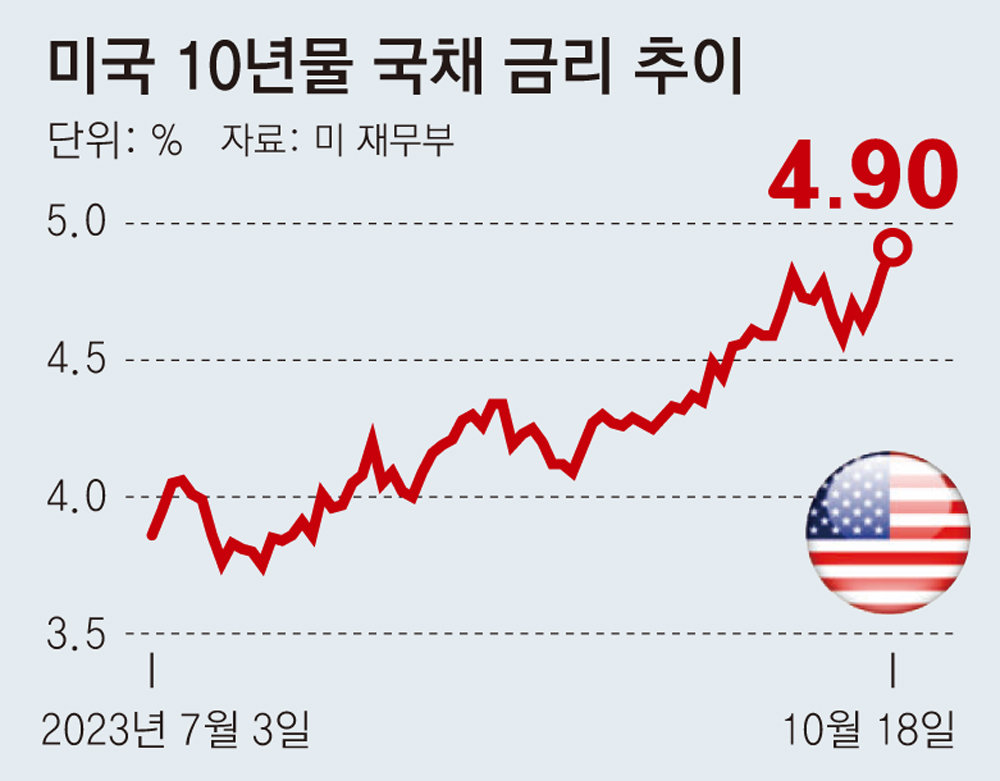
With the 10-year US Treasury yield surpassing 5% to hit its highest level in nearly two decades, our asset management is being completely upended. While it might seem like just a story about interest rates paid by a foreign government, this rising number sequentially delivers a heavy blow to the won-dollar exchange rate and domestic loan interest rates. Since the interest on my mortgage for the apartment I bought with all my savings last year is set to rise immediately next month, the sighs of office workers are growing deeper. The stock market is also experiencing shock, with foreign capital outflows causing a universal decline in the stock market. In this article, we will easily dissect the reasons behind the soaring Treasury yields and the pathways through which they reach our wallets and investment assets. Let’s carefully examine the causes of why this is happening.
=
Shock as US Treasury Yields Breach 5%: What It Means for My Loans and the Stock Market
1. The Shocking Background of US Treasury Yields Breaching 5%
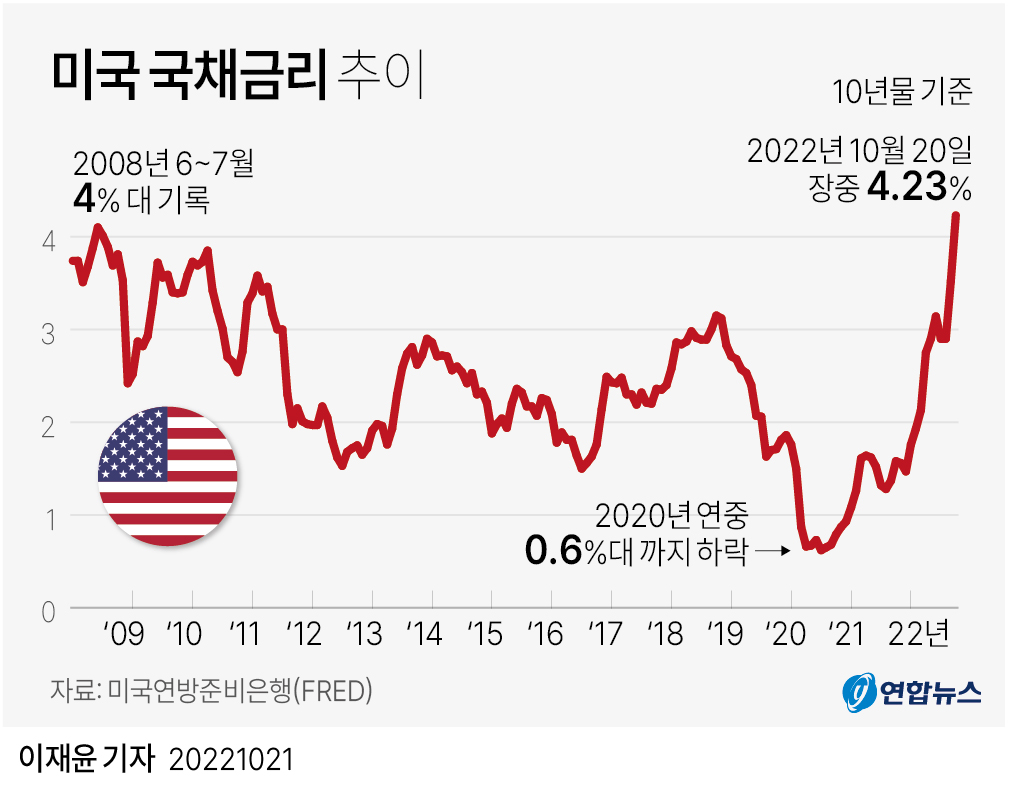
The 10-year US Treasury yield surpassed 5.1% intraday, completely turning the financial markets upside down. This is a staggering figure seen for the first time in about 20 years since 2007, sending global investors into a state of panic. As the possibility of further interest rate hikes by the Federal Reserve grows, the bond market has become a total mess. On top of this, instability in the Middle East has compounded the crisis, causing international oil prices to soar and triggering a complex economic crisis all at once. Growing anxiety that inflation will rise again has fueled the yield surge as investors rush to sell safe-haven assets like government bonds.
Amidst this, economic indicators have come in much stronger than expected, completely washing out expectations for central bank rate cuts. Experts are unanimously warning that interest rates will remain at high levels for some time. This is exactly why the economic news we see in the daily news is directly linked to our bank account balances. With market volatility reaching historic highs, now is the time to focus on protecting assets rather than making new investments. We must watch closely, with tension at every moment, how exchange rates and prices will move from here on.
The 10-year US Treasury yield breached 5% for the first time since 2007, delivering a massive shock to global financial markets.
2. Why My Loan Interest Rates Are Rising at a Frightening Pace
When US Treasury yields rise, even the mortgage interest rates for ordinary office workers in South Korea go up in a chain reaction. This is because banks calculate loan interest rates based on benchmark interest rates. As the yield on bonds issued by the US government rises, domestic commercial banks face increased funding costs and are forced to raise loan interest rates. Mr. Kim, an office worker who bought an apartment with a variable-rate mortgage last year, is already losing sleep as his monthly principal and interest payments increase. Self-employed individuals who have been using overdraft accounts for living expenses are also sighing under the snowballing interest burden.
The impact of rising interest rates does not stop at loans; it freezes consumer sentiment overall. As fixed monthly interest payments increase, people first cut back on everyday expenses like dining out and shopping. This eventually leads to a hit to self-employed businesses’ sales, posing a significant risk of the entire economy falling into a prolonged recession. It is a terrifying chain reaction that directly impacts the household budgets of not just asset holders with loans, but ordinary citizens as well. Therefore, it is wise to open your banking app and check if you can switch to a fixed-rate loan right now.
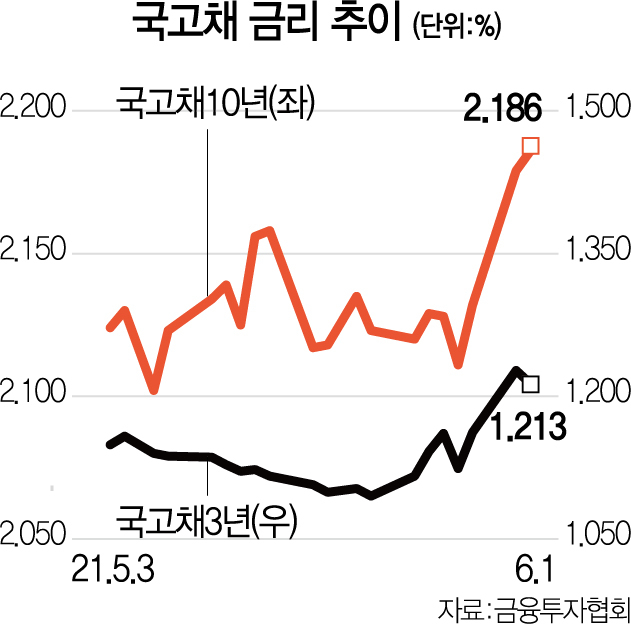
Rising US Treasury yields increase the funding costs of domestic commercial banks, leading to a chain surge in mortgage and credit loan interest rates.
3. The Pathway: Soaring Exchange Rates and Shaking Prices
When US Treasury yields spike, money from around the world floods into the US, causing the won-dollar exchange rate to soar uncontrollably. Since the value of the Korean won drops accordingly, import prices rise, triggering an emergency alert for grocery prices. Not only apples and bread bought at local supermarkets, but even the prices of raw materials used in automobile manufacturing are going up across the board. As gasoline prices start to fluctuate again, the fuel cost burden for office workers commuting by car has visibly increased. A rising exchange rate also has the side effect of foreign investors pulling their funds out of the Korean stock market to send them back home.
While this may be a temporary boon for export companies, the overall rise in import costs has a larger negative effect of eroding corporate profits. Since the prices of natural gas and oil imported from overseas are rising, pressure to increase public utility rates is also unavoidable. Although the government is struggling to keep prices in check, it is struggling to completely block the global exchange rate wave. To survive a period where everything except salaries is rising, it is essential to thoroughly review household budgets. It is advisable to keep a close eye on exchange rate trends and refrain from unnecessary overseas direct purchases until the exchange rate stabilizes.
The strong dollar phenomenon caused by the surge in Treasury yields pushes up the won-dollar exchange rate, driving up import prices and public utility rates overall.
4. Why My Stock Account Is Turning Blue
When US Treasury yields exceed 5%, the appeal of bonds, which offer a safe, fixed interest, becomes far greater than that of stocks. Massive amounts of capital invested in the stock market quickly move away from risky assets to safe assets like US Treasuries. In this process, even high-quality stocks listed on the KOSPI and KOSDAQ markets are hit with a bomb of foreign selling, causing their stock prices to collapse helplessly. Retail investors who bought Samsung Electronics stocks are sighing at the news of the overnight crash in the New York stock market. There are also significant concerns that companies will find it harder to borrow money to build factories or make investments, leading to deteriorating performance.
Young investors who focused on growth or tech stocks are receiving a major shock seeing the negative returns in their accounts. This is because companies with high P/E ratios and future growth potential tend to see their valuations drop when interest rates are high. Stories of making money from stocks have disappeared from the neighborhood, replaced by a fear-dominated atmosphere where everyone is worried about losses. In times like these, rather than being swept away by emotions and panic selling, one should calmly check the fundamentals of the stocks they hold. Investors who used debt to invest in stocks, so-called “debt investors,” may be pushed to the brink of forced liquidation, so special caution is needed.
Rising Treasury yields reduce the relative appeal of stocks, causing capital outflows and leading to a decline in the domestic stock market.
5. The Cold Snap Hitting the Real Estate Market
Home prices in major areas, including Seoul, have held up so far, but if high interest rates persist for a long time, they will inevitably turn downward. Even apartment complexes in the Gangnam area are shrinking as buyer inquiries dry up amid concerns that high interest rates will remain for a long time. Buyers are hesitating before signing contracts due to the increased burden of loan interest. Homeowners are gradually lowering their asking prices, but this is not leading to transactions, and the atmosphere remains cold. The real estate market is heavily influenced by sentiment, and the fact that interest rates are high alone acts as a strong downward pressure.
The sighs of “all-in” buyers who took on excessive debt in the past low-interest era, believing in rising home prices, are getting deeper. A massive shift is occurring in the jeonse (deposit lease) market as more landlords are unable to return jeonse deposits. As interest costs swell to the level of monthly rent, there is a growing trend of tenants choosing monthly rent (wolse) instead. Experts predict that a cold wind will blow through the real estate market for the time being, continuing a phase of price adjustment. If it is not for actual residence, it is wise to postpone home purchase plans and wait and see for the time being.
The prolonged maintenance of high Treasury yields increases the burden of mortgage loans, applying downward pressure on the entire real estate market.
6. Investment Strategies to Wisely Navigate This Period
To overcome the massive wave of the “5% US Treasury Yield Era,” a conservative strategy of increasing cash holdings is necessary above all else. Investing with borrowed money is the most dangerous gamble in a volatile market like this and should be liquidated immediately. Assets should be protected by diversifying the portfolio into safe assets such as high-quality bonds or physical assets like gold. If you have loans, you should actively consider switching to fixed-rate products to reduce the interest burden, even slightly. You must carefully monitor the performance of companies related to imported raw materials that are sensitive to exchange rate fluctuations, as well as export companies.
Rather than unconditionally selling stocks out of fear of the market, one should hold on to high-quality stocks that pay consistent dividends. We must maintain a strictly defensive stance until economic indicators stabilize and the Federal Reserve’s policy direction changes. It is also forbidden to recklessly buy at low prices while others are selling in panic; one must confirm the market bottom. It is a good idea to use this crisis as an opportunity to review one’s financial situation once more and secure emergency funds. Wise asset management begins with building a sturdy defensive shield that does not waver even in a crisis.
During periods of surging Treasury yields, the top priority is to reduce debt, secure cash, and build a defensive portfolio.
Frequently Asked Questions
=