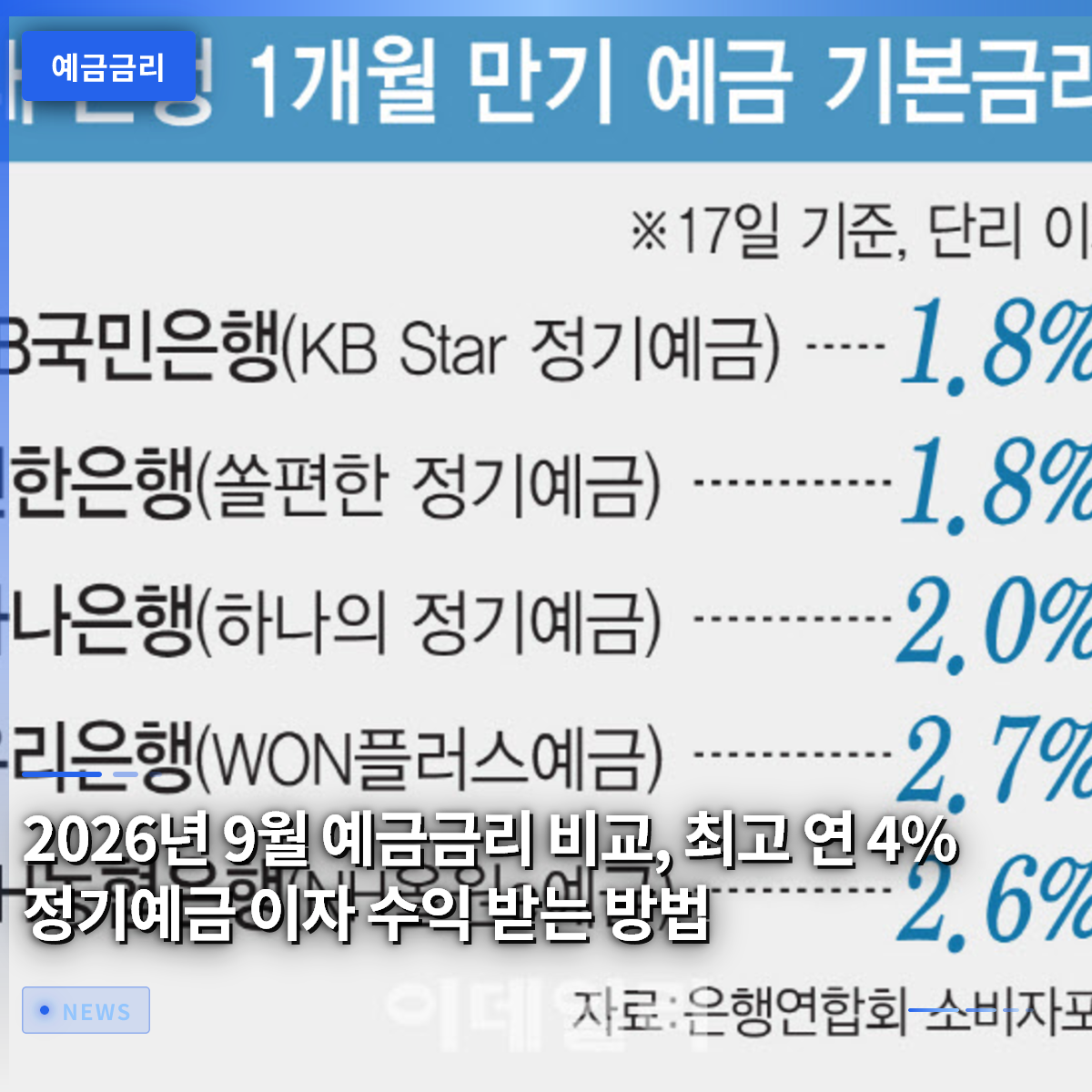
As major commercial banks have recently raised deposit interest rates in succession, a time has arrived when you can expect interest income approaching 4% annually by opening fixed-term deposits. With uncertainty growing in the stock and real estate markets, the “reverse money move” phenomenon is becoming increasingly evident, as more people flock to bank counters to secure their principal safely while collecting interest. Mr. Kim, an office worker who turned to stocks and cryptocurrencies last year, says he recently found peace of mind by moving his maturing funds back into safe fixed-term deposits. In this article, we will detail the most advantageous methods for comparing interest rates and specific utilization strategies to manage your funds effectively in the rapidly changing financial market of September 2026. To protect and grow your valuable assets in this ever-changing financial environment, you must carefully examine the conditions offered by each bank. By reading this article to the end, you will develop the discernment to independently interpret complex bank product disclosures and select the product that offers the highest interest rate.
=
September 2026 Deposit Interest Rate Comparison: How to Earn Up to 4% Annual Interest on Fixed-Term Deposits
1. Background of Deposit Interest Rate Hikes in the Banking Sector

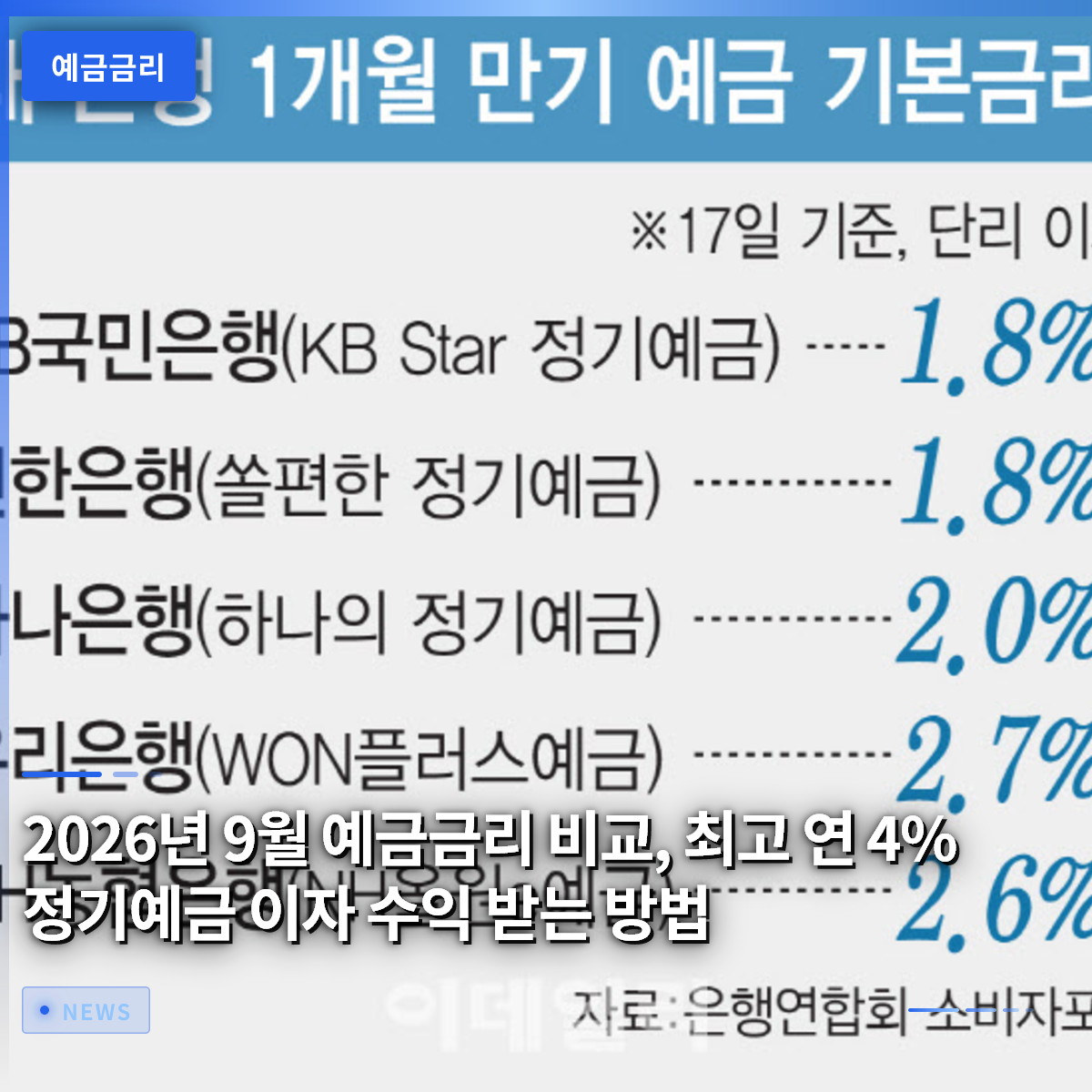
Recently, major commercial banks have simultaneously raised interest rates on both lump-sum and regular savings deposits, accelerating the pace of savers. Major financial institutions, including Nonghyup Bank, have adjusted deposit rates upward by more than 0.20 percentage points, entering a competition to absorb liquidity in the market. This movement can be seen as a natural result of the Bank of Korea’s shift in monetary policy stance and the trend of market interest rates. As liquidity dries up in the market, banks are raising deposit interest rates to attract customers and ensure stable funding. Consumers, who have clearly felt the higher interest rates compared to the past, are no longer just watching the stock market but are turning their attention to safe deposit products. The reason banks are raising rates despite the increased interest cost is ultimately to retain maturing deposit funds and attract new capital. During periods of rate hikes, both loan and deposit interest rates rise; while households with high loan balances feel a significant burden, asset holders can utilize this as an opportunity to increase their interest income. Indeed, there are many office workers around us who are struggling with how to reallocate their funds between loan interest and deposit interest. Rather than blindly locking up funds, you must wisely weigh loan repayment against deposit investment according to the nature of your assets to avoid losses. As the financial environment changes rapidly, it is crucial to develop the habit of directly checking each bank’s official product guides and interest rate disclosures rather than relying on rumors in the news.
As the competition for deposit rates in the banking sector intensifies, an environment has been created where you can earn practical interest income through deposit investments.
2. How to Utilize the Maximum 4% Fixed-Term Deposit Rate
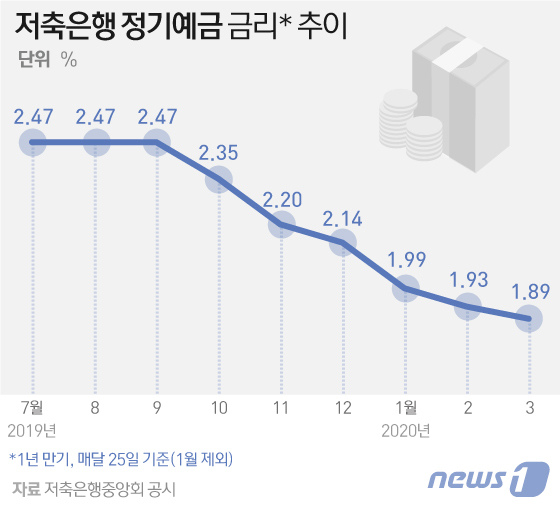
With the emergence of fixed-term deposit products offering rates approaching 4% annually, the options for those looking to manage lump sums have expanded significantly. However, these maximum rates are not automatically granted; they often require meeting stringent preferential conditions, such as salary transfers or automatic payments. Mr. Park, an office worker in Seoul, once tried to open a deposit based solely on the advertisement of a “maximum 4% annual rate” but backed out when he found the preferential conditions to be more difficult than expected. You must be careful because if you do not meticulously examine the preferential conditions, the actual interest you receive may be much lower than the advertised figures. Therefore, it is wise to thoroughly compare the conditions for basic and preferential interest rates via the bank’s application before opening an account. Additionally, you must pay attention when setting up the auto-renewal function, as the comparative interest rates listed on the Bankers Association’s consumer portal do not always match the auto-redeposit rates of existing accounts. The rate applied when a deposit is automatically renewed at maturity varies depending on market conditions at that time, so it is essential to verify this directly through the app. Even if it is a hassle, directly accessing the bank’s app to confirm the exact current interest rate is the most reliable way to prevent fees or interest losses. If you are planning to open a fixed-term deposit with your Chuseok bonus or surplus funds, you should carefully examine how interest rates differ by term. By utilizing techniques such as splitting deposits or setting staggered maturities, you can reduce the risk of early withdrawal while still securing high interest income efficiently.
When opening a maximum-rate product, you must verify the stringent preferential conditions and carefully check the actual interest rate applied upon auto-renewal.
3. Reverse Money Move and Fund Migration Trends
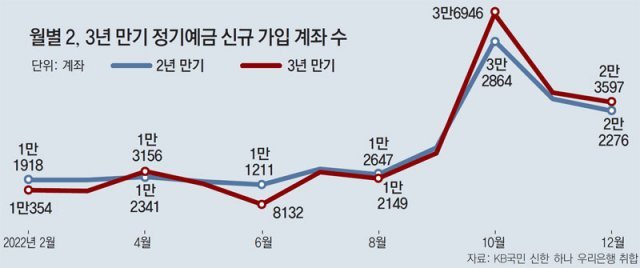
As interest rates show an upward trend again, funds that had remained in the stock or cryptocurrency markets are rapidly moving into safe bank deposit products. During the stock investment boom, people took risks through “all-in” investments and borrowing to invest, but recently, more people are fleeing to deposits that offer fixed interest rates. This shift in fund flow clearly indicates a stronger tendency for households to reduce investment risks and manage their assets conservatively. In fact, a large amount of idle funds in securities accounts has moved to bank fixed-term deposit accounts, causing a noticeable increase in bank deposit balances. This phenomenon holds significant meaning not only in terms of individual investment preferences but also in the broader economic ecosystem and household debt management. It suggests that many people judge it more advantageous to safely collect interest and observe market volatility rather than forcing stock investments during high-interest-rate periods. From the perspective of small and medium-sized enterprises or self-employed individuals, banks are raising lending thresholds or increasing rates to attract deposits, which puts significant pressure on their funding. As such, changes in macroeconomic indicators manifest as concrete fund movements in our daily lives, directly affecting household financial status. Every time the landscape of asset management changes, you should act wisely according to your own liquidity plan rather than blindly following the crowd.
The “reverse money move” phenomenon, where funds flow from risky assets to safe bank deposits due to rising interest rates, is accelerating.
4. The Correlation Between Jeonse/Monthly Rent and Deposit Interest
Understanding the difference between the jeonse-to-monthly-rent conversion rate applied when converting part of a jeonse deposit into monthly rent and the fixed-term deposit interest rate allows you to manage housing expenses wisely. For example, if you convert a 100 million won deposit into monthly rent, comparing the conversion rate with a 3.5% fixed-term deposit rate will show you exactly how much your actual housing burden increases. When signing a contract that lowers the deposit and raises the monthly rent, you must carefully compare the interest income you would earn by depositing the money in a bank against the amount paid as monthly rent. Many people inadvertently reduce their deposit and end up bearing additional housing costs ranging from hundreds of thousands to millions of won annually. In fact, Ms. Lee, a housewife who was considering adjusting her jeonse deposit, decided to maintain the jeonse format after calculating the deposit interest versus monthly rent expenses based on advice from those around her. If the amount flowing out as monthly rent is greater than the interest earned from a bank deposit, it is obviously more beneficial for the household economy to lock the lump sum in a deposit. Conversely, there are cases where reducing the deposit and paying monthly rent is more advantageous than taking out a loan to maintain a jeonse, so you must also consider your personal loan interest rate. Financial knowledge is closely tied to our immediate lives, and small calculation differences can lead to significant monetary differences. If you accurately grasp the correlation between housing costs and deposit interest rates, you can make the most rational choice every time you move or renew a contract.
When converting a jeonse deposit to monthly rent, you must always calculate the change in actual housing costs by comparing it with the interest income obtainable from a bank deposit.
5. Differences in Interest Structures Between Savings Plans and Deposits
When managing a lump sum, you choose a deposit; when saving a fixed amount monthly, you choose a savings plan. However, the interest calculation methods for these two products are vastly different. Even if the annual interest rate is assumed to be the same at 10%, the actual interest received from a savings plan is much lower than that of a deposit because the duration for which each monthly contribution remains in the account differs. The 1 million won deposited in the first month earns interest for the full 12 months, but the 1 million won deposited in the last month earns interest for only one month. Many people are disappointed by the lower-than-expected interest at maturity because they signed up based solely on advertisements claiming high savings plan rates without properly understanding this principle. Mr. Kim, a young professional, once complained to a bank employee about his savings plan maturity interest being too low, but only realized the reason after being explained how the interest is calculated. If you already have a lump sum, locking it in a single high-interest fixed-term deposit is overwhelmingly more advantageous in terms of interest income than opening multiple savings plans. On the other hand, if you have a regular monthly income and need to force yourself to save, a savings plan remains an excellent tool for building good saving habits. You should choose the appropriate product only after accurately understanding the product’s characteristics and determining whether your assets are a lump sum or small, scattered amounts, to avoid wasting time and effort. Before opening a bank product, you should develop the habit of calculating the actual interest that will be credited to your account, rather than being dazzled by simple interest rate figures.
Even if the nominal interest rates are the same, savings plans and deposits have completely different actual interest calculation methods based on the duration of the deposit, so you should choose according to your purpose.
6. Deposit Interest Rate Utilization Strategies and Future Outlook
Since future financial markets are likely to see fluctuating deposit interest rates due to base rate volatility and economic conditions, a diversified deposit strategy is paramount. Rather than locking all your funds into a single fixed-term deposit, a ladder-type deposit strategy, where you split maturities into 3 months, 6 months, and 1 year, is the most prudent approach. This allows you to respond flexibly if interest rates rise further and avoids early withdrawal penalties when you suddenly need funds. You need to make an effort to regularly check financial comparison platforms to quickly grasp information on various special products offered by banks in their deposit competition. Deposits, which act as guardians of your assets, remain the best asset management tool because they guarantee the principal perfectly, even if the investment return appears slightly low. Those who do not waver under the influence of rumors and steadily execute their savings plans according to their financial goals and fund needs are the ones who ultimately grow their wealth. Even now, the small action of turning on your bank app to check the interest rate and maturity date of your products and inspect your assets is a shortcut to becoming wealthy. Although the interest rate environment will continue to change, if you adhere to the principles of thorough information analysis and planned fund management, you can safely protect your assets even in economic crises. I recommend that you start today by checking the interest rates of your dormant accounts and reallocating your funds to the deposit products with the most favorable conditions.
You should utilize a ladder-type deposit strategy with diversified maturities and frequently check interest rate information to respond flexibly to the rapidly changing financial environment.
Frequently Asked Questions
=