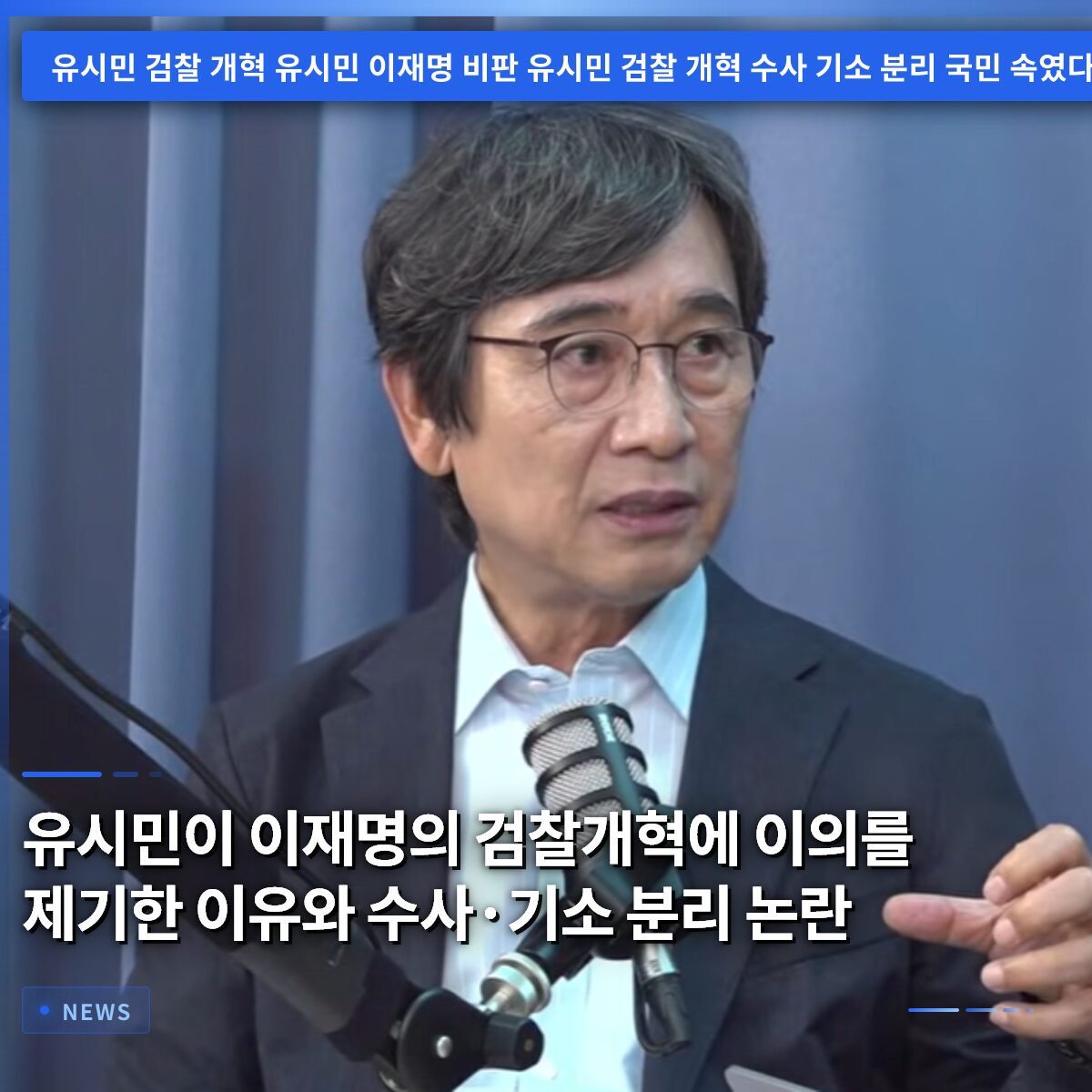
Writer Yoo Se-min has publicly criticized President Lee Jae-myung’s prosecution reform plans, reigniting a heated debate. Yoo argues that the direction of prosecution reform described by the president differs fundamentally from what he had previously understood, pointing out that the public is not being provided with accurate information. In particular, he emphasized that the core issue is the president’s statement in a September 18 press conference that the maximum extent of the reform involves separating prosecutors who handle investigations from those who handle prosecutions, and establishing an investigative agency and a prosecution agency under the Ministry of Justice. Yoo stated that this proposal differs significantly from the reform content he was aware of and noted that the government’s previous legislative proposals also did not match reality. This controversy is expanding beyond a simple renaming of organizations into a debate over how to distribute investigation and prosecution powers and how to establish checks and balances. This article will examine in detail the key points of Yoo’s criticism, the meaning of separating investigation and prosecution, the design of the new agencies, future prospects, and why his claims are drawing attention.
=
Why Yoo Se-min Objected to Lee Jae-myung’s Prosecution Reform and the Controversy Over Separating Investigation and Prosecution
1. Summary of Yoo Se-min’s Core Criticisms
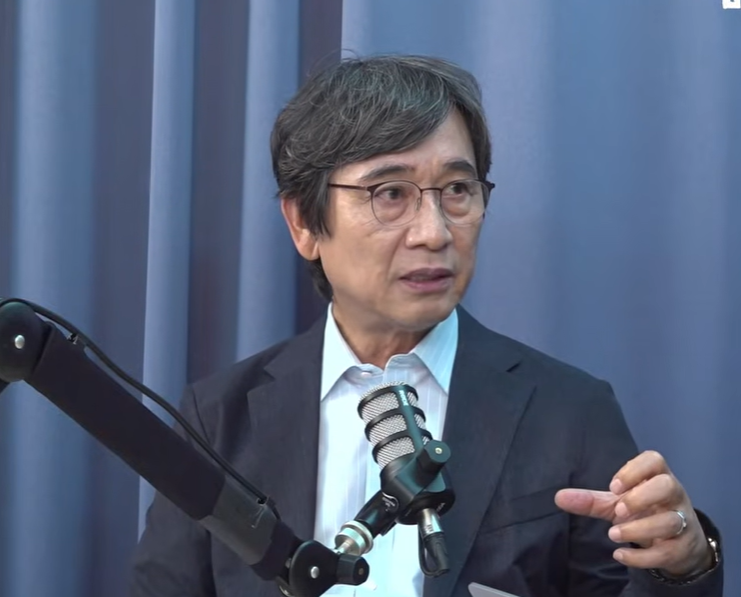
Writer Yoo Se-min stated that he found the most significant flaw in the prosecution reform plan unveiled by President Lee Jae-myung. He pointed out that the plan to separate prosecutors handling investigations from those handling prosecutions, as claimed by the president, is fundamentally different from the direction of reform he had previously understood. Yoo emphasized that he had never heard of such a reform approach before and that it differs from the promises made to the public. Furthermore, he argued that although the legislative proposal released after the passage of the Government Organization Act in September last year used the phrase “investigation, prosecution, and prosecution reform,” the actual content differed from his expectations. He stressed that the direction of reform presented to the public should mean a substantive separation of powers, not merely a superficial division of organizations. Through this controversy, Yoo concluded that the core issue is not about renaming the prosecution organization, but about where to allocate investigation and prosecution powers and how to establish checks and balances between them. This criticism carries significant weight given that Yoo has consistently expressed his views on prosecution reform in the past. In July 2026, Yoo also made remarks questioning the president’s intentions regarding the delay in reform, to which the Blue House responded that the core value of separating investigation and prosecution has not been shaken. This controversy has once again highlighted these positions and is drawing attention in the public sphere. Therefore, readers need to pay attention to why Yoo’s remarks are resonating strongly now and how they may influence the future direction of the reform.
**
** Yoo Se-min criticized the reform plan presented to the president as differing from the spirit of prosecution reform he was aware of, emphasizing the need for a substantive separation of investigation and prosecution powers rather than simply renaming organizations.
2. What is the Separation of Investigation and Prosecution and Why is it Important?
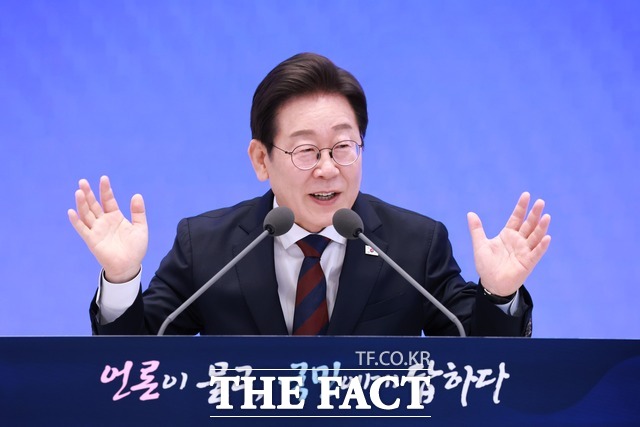
Investigation refers to the process of collecting evidence and clarifying facts to verify criminal suspicions. Prosecution is the procedure of deciding whether to refer collected investigation results to trial. In the past, the Korean prosecution service held both powers, meaning it could investigate while simultaneously holding the authority to prosecute. This structure has been criticized for leading to the concentration of power, which could work in favor of those in power. In discussions on prosecution reform, there has been a continuous argument to decentralize power by assigning investigation and prosecution to different agencies or organizations to resolve this issue. Writer Yoo Se-min has consistently argued that the key to prosecution reform is not simply splitting the existing prosecution service into two agencies, but substantively separating investigation and prosecution powers. He personally views the core of this controversy as being about where to allocate investigation and prosecution powers and how to establish checks and balances, rather than just renaming the prosecution organization. Through this controversy, the public has come to realize that separating investigation and prosecution carries significance beyond a simple organizational restructuring. In fact, the reform plan proposed by the president involves establishing an investigative agency and a prosecution agency under the Ministry of Justice, which is linked to the system of the Public Prosecution Service and the Major Crime Investigation Agency that will replace the existing prosecution service. The Public Prosecution Service will handle the filing and maintenance of public prosecutions, while the Major Crime Investigation Agency will handle investigations into major crimes such as corruption, economic crimes, defense industry crimes, drug trafficking, insurrection, foreign exchange crimes, and cybercrimes. (Source: Yonhap News, 2026) Therefore, to judge the actual results of prosecution reform in the future, it is important to look at what powers are granted to each agency rather than their names. Yoo Se-min’s remarks have provided an opportunity to reflect on the sincerity of the reform from this perspective.
**
** The separation of investigation and prosecution is an essential reform to prevent the concentration of power and strengthen democratic control; the key is substantive separation of powers, not just organizational restructuring.
3. Design of the New Agencies: The Public Prosecution Service and the Major Crime Investigation Agency

The Public Prosecution Service is a newly established agency that will be responsible for filing and maintaining public prosecutions. This agency is designed to separate the investigative functions of the existing prosecution service and focus solely on prosecution work. The relevant bill has passed the National Assembly, and the government has been proceeding with the procedure to launch the Public Prosecution Service and the Major Crime Investigation Agency to replace the existing prosecution service starting October 2, 2026. The Public Prosecution Service will have the authority to maintain prosecutions in court and re-prosecute if necessary. On the other hand, investigative functions are separately divided and assigned to the Major Crime Investigation Agency. The Major Crime Investigation Agency will be established under the Minister of the Ministry of the Interior and Safety, and the law explicitly states that it will handle major crimes such as corruption, economic crimes, defense industry crimes, drug trafficking, insurrection, foreign exchange crimes, and cybercrimes. For example, if there is a suspicion of large-scale money laundering by a major corporation, the Major Crime Investigation Agency will conduct the investigation, and the Public Prosecution Service will file the charges. While this design aims to decentralize the dual powers of the prosecution service, Writer Yoo Se-min points out that this design does not achieve a substantive separation of powers. He emphasizes that simply renaming organizations is not enough to change the power structure. He also mentions as an issue that the reform plan presented to the president differs from the prosecution reform promises previously communicated to the public. Yoo argued that the direction of reform presented to the public differs significantly from the content of the prosecution reform he was aware of. Since this reflects Yoo’s political evaluation and claims, it is necessary to examine it separately from the content of the bills actually disclosed by the government. How will the Public Prosecution Service and the Major Crime Investigation Agency change? To understand this prosecution reform debate, it is necessary to look at the roles of the Public Prosecution Service and the Major Crime Investigation Agency together. Category | Main Role | Public Prosecution Service: Filing and maintaining public prosecutions | Major Crime Investigation Agency: Investigating major crimes | Police: Investigating general crimes | Special Investigative Prosecutor’s Office: Investigating and prosecuting specific crimes related to high-ranking public officials. The Public Prosecution Service is designed to separate the investigative functions of the existing prosecution service and focus on filing and maintaining public prosecutions. The Major Crime Investigation Agency is established under the Minister of the Ministry of the Interior and Safety, and the law stipulates that it will handle major crimes such as corruption, economic crimes, defense industry crimes, drug trafficking, insurrection/foreign exchange crimes, and cybercrimes. (Source: Yonhap News, 2026) Therefore, to judge the actual results of prosecution reform in the future, it is important to look at what powers are granted to each agency rather than their names. Yoo Se-min’s remarks have provided an opportunity to reflect on the sincerity of the reform from this perspective.
**
** The Public Prosecution Service is designed to handle only prosecution work, while the Major Crime Investigation Agency handles only major crime investigations. This aims to decentralize the dual powers of the prosecution service, but there is criticism that it does not achieve a substantive separation of powers.
4. Direction of the Debate and Future Schedule

The current debate can be summarized into two main issues. First, to what extent should investigation and prosecution be separated? Second, what checks and balances should be established between the investigative agency and the prosecution agency? Separating the prosecution service’s investigative power does not end all debates. This is because issues remain regarding how to control the powers of the investigative agency, how much the prosecution agency can intervene in the investigation process, and how to define supplementary investigation powers. In fact, the legislative proposal disclosed by the government in January 2026 included provisions requiring the Major Crime Investigation Agency to notify prosecutors of the Public Prosecution Service when it begins an investigation, and allowing prosecutors of the Public Prosecution Service to request the replacement of investigators in certain cases, leading to continued debate over specific powers. (Source: Kyunghyang Shinmun, 2026) Therefore, the success of future reforms depends on how these details are coordinated. The public must closely monitor the upcoming legislative process and government organizational restructuring and needs to supervise to ensure that the reform leads to genuine decentralization of power. Additionally, civil society and the media should maintain continuous interest in this reform process and participate in shaping public opinion when necessary. This controversy is also an opportunity to test whether genuine judicial reform for the people can be achieved, rather than just a political struggle between the government and the opposition. The remaining tasks will be discussed further, and continued public interest is needed.
**
** The remaining debates concern the scope of separating investigation and prosecution and the checks and balances between agencies, which are key elements determining the sincerity of the reform.
5. Why Yoo Se-min’s Continuous Reform Claims Are Drawing Attention

Writer Yoo Se-min is a figure who has consistently expressed his opinions on the issue of prosecution reform in the past. In July 2026, Yoo also made remarks questioning President Lee Jae-myung’s intentions regarding the reasons for the delay in prosecution reform. At the time, the Blue House stated that the core value of prosecution reform, the separation of investigation and prosecution, has not been shaken, but Yoo questioned the president’s sincerity. This time, the maximum extent of the prosecution reform directly explained by President Lee is… The following content continues… (Concluding with a summary of key points and a call to action)
**
** Yoo Se-min’s criticism raises questions about the sincerity of prosecution reform and emphasizes the need for the public to closely monitor the reform process.
6. Action Guidelines for Readers and Closing Thoughts
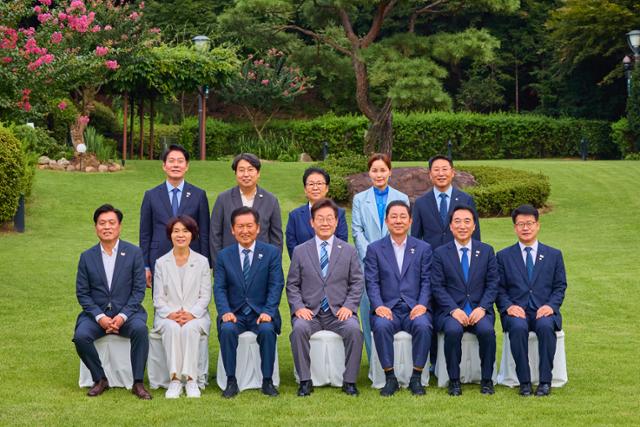
Looking at this prosecution reform controversy, readers can refer to several practical tips. First, it is advisable to check the latest bill contents regarding the establishment and powers of the new agencies by visiting the websites of relevant agencies or subscribing to newsletters from reliable civic groups. Second, sharing related information and participating in discussions through social media to ensure that this reform leads to a substantive decentralization of power is also helpful. Third, by participating in the activities of civic watchdog groups that can monitor the progress of the reform, readers can help ensure the reform moves in the right direction and gain a deeper understanding of this controversy. These actions are not only about separating investigation and prosecution but are also essential for the healthy development of democracy. Finally, it is important to remember that prosecution reform is not just an institutional change, but a process in which the people, as sovereigns, gain a voice in the judicial system. We must continue to pay attention to this issue and raise our voices together for the right reform in the future.
**
** Readers should consistently check related information, participate in civic activities, and maintain continuous interest to ensure the reform leads to genuine decentralization of power.
Frequently Asked Questions
=