The Industry-Academia Cooperation Division and the Anchor Project Team of Seoul National University of Science and Technology (SNUST) have officially launched a joint development project for advanced defense component technologies in partnership with Korea Aerospace Industries (KAI), a leading aerospace company representing South Korea. This collaboration marks a significant turning point, going beyond simple research support to directly apply the university’s superior engineering research capabilities to the real-world defense industry. In particular, the project aims to completely revolutionize the manufacturing of aircraft parts, where high-mix, low-volume production is essential, by combining artificial intelligence (AI) with manufacturing processes. If we previously stuck to rigid, mold-based methods for mass production in factories, we are now entering an era where robots and AI make independent judgments to flexibly machine parts. In this article, we will examine in detail the significance of this joint research and its potential impact on our industry. We invite you to watch with interest as the convergence of advanced science and defense reshapes our daily lives and future.
=
SNUST and KAI Launch Joint Technology Development Project
1. The Partnership Between SNUST and KAI
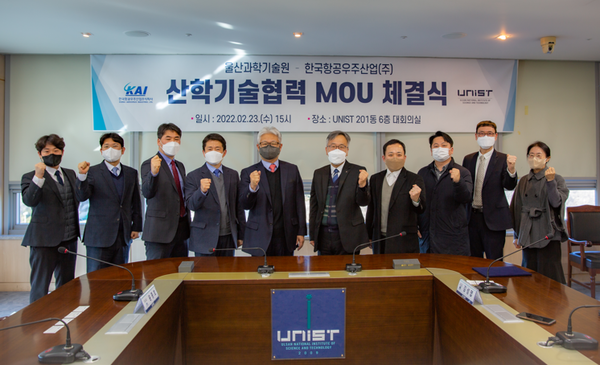
SNUST’s Industry-Academia Cooperation Division and the Regional Growth Talent Development System Anchor Project Team have signed a joint technology development agreement with Korea Aerospace Industries (KAI), the only company in South Korea that produces complete aircraft. This agreement serves as a bridge, ensuring that the university’s outstanding research outcomes do not remain confined to laboratories but are directly applied to the nation’s core defense industry. While universities and companies have often operated in silos in the past, this project defines its research topics by accurately reflecting actual demands in the defense and aerospace sectors. Through this collaboration, SNUST has firmly demonstrated its leading research capabilities in advanced fields, including AI and mechanical engineering, to the outside world. With researchers from a major corporation at the heart of South Korea’s defense industry and university researchers joining forces, significant synergistic effects are expected. This is highly significant as it goes beyond typical levels of industry-academia cooperation to jointly advance aviation technologies directly linked to national security. The process of initiating joint research between a university and a company is far from simple, requiring extensive coordination and negotiation. Professor Lee Chang-hwan from the Department of Mechanical Engineering at SNUST will take overall responsibility for the project, guiding the entire research process. With veteran professors who understand field realities and researchers from a major corporation responsible for national security coming together, expectations for the results are naturally high. Going forward, the two institutions will gradually build a model of cooperation where theory and practice are perfectly harmonized, moving between laboratories and factories.
SNUST and KAI have joined forces to fully embark on joint research for advanced defense technologies.
2. Incremental Forming Process Meets Artificial Intelligence
The core theme of this joint technology development project is the development of AI-fused incremental forming process technology for manufacturing aviation and defense components. Sheet metal incremental forming is a technique that locally and continuously forms sheet metal, such as steel plates, using the tool paths of numerical control (NC) equipment or robots, without the need for dedicated molds. Much like rolling a kimbap neatly by hand, this method involves robot arms tracing precise trajectories to flexibly shape rigid metal sheets into desired forms. This technology is receiving significant attention as the next-generation process best suited for the aviation and defense component manufacturing sectors, where high-mix, low-volume production is essential. Until now, significant time and costs were consumed as humans relied on experience to design processes and correct errors. Now, the goal is to completely transform this into an intelligent process by connecting design drawing data, computer-aided engineering (CAE) materials, and vast amounts of data from actual manufacturing sites with AI. The AI will independently analyze the properties of the metal and the processing state in real time to reduce errors and produce parts in their most perfect form. It is akin to an AI program instantly learning the intuition accumulated by a master craftsman over decades to perform flawless work. If this technology is actually implemented, expensive and complex aircraft parts can be manufactured much faster and more accurately, maximizing production efficiency.
The integration of AI technology into the incremental forming process transforms aircraft part manufacturing into an intelligent system.
3. The Virtuous Cycle Envisioned by the Anchor Project Team
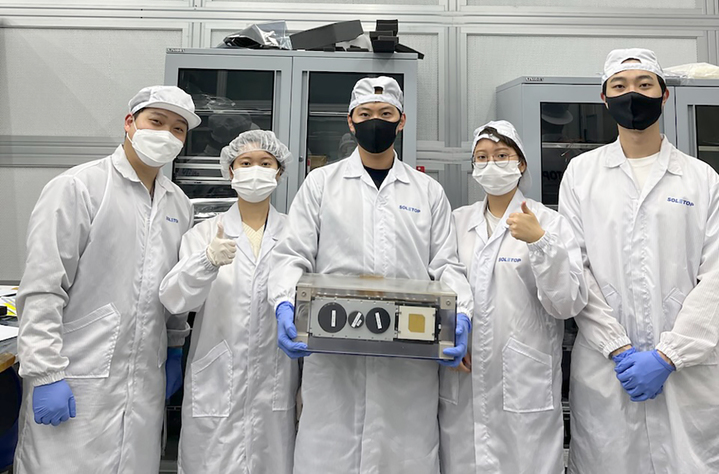
Through this joint research project, the Anchor Project Team is steadily building a virtuous cycle that firmly connects the university’s expertise with defense technology demands. The true goal of the Anchor Project Team is to ensure that university research outcomes do not end with paper publications but are expanded into technologies used in actual industrial settings. Various technical achievements naturally derived from the research process are directly linked to talent development programs where students can observe and learn. This moves education away from purely theoretical desk work to cultivating practical talents who solve problems by handling advanced equipment in real-world environments. Kim Dong-ho, head of the Anchor Project Team, emphasized that this project is the result of the university’s AI-fused industry-academia cooperation direction aligning with advanced strategic industries. Going forward, the team plans to maintain close communication and coordination with the Industry-Academia Cooperation Division to ensure that the university’s valuable research capabilities consistently lead to tangible results in the industrial field. Just as the high quality of products we purchase daily is due to rigorous verification processes, the university’s education system is also developing through field-centered validation. Once this virtuous cycle is established, students will become prepared talents capable of stepping directly into the workforce and performing their roles effectively after graduation.
The Anchor Project Team is solidifying a practical industry-academia cooperation virtuous cycle where research and education are interlinked.
4. Leap Toward a Defense Industry-Academia Cooperation Hub
With this agreement with KAI, SNUST is fully prepared to firmly establish itself as a de facto hub for industry-academia cooperation in the defense and aerospace fields. Vice Director Ok Jong-geul of the Industry-Academia Cooperation Division explained that this agreement is the most important starting point for directly connecting the university’s AI and engineering research capabilities with actual technical demands in the defense sector. He expressed the determination to continuously cultivate specialized AI-fused talents essential for the defense and aerospace fields based on the successful outcomes of the joint research. This allows the university to serve not only as an educational institution for knowledge transfer but also as a reliable technical research institute supporting national security and advanced industries. Much like a local bicycle repair shop evolving into a high-tech electric bicycle maintenance center, the university’s research system is undergoing a major transformation to keep pace with the times. Since security and precision are the lifeblood of defense technology, access is not easily granted to just anyone; however, SNUST has confidently overcome this barrier based on the engineering trust it has built over the years. It is easy to imagine a future where countless young talents from across the country flock to SNUST to study both AI and defense technologies simultaneously. This project will serve as a catalyst that not only elevates the university’s status but also raises the competitiveness of South Korea’s entire defense industry to the next level.
Using this cooperation as a stepping stone, SNUST is transforming into a central hub for defense and aerospace industry-academia cooperation.
5. The Future of Intelligent Manufacturing Processes
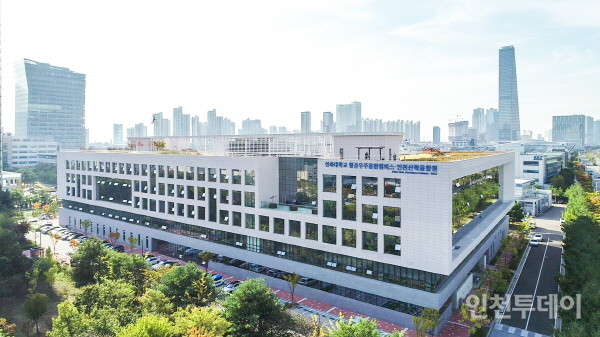
It is expected that the full introduction of intelligent manufacturing process technology to aircraft part production will completely change the landscape of South Korea’s defense industry. While building a single aircraft previously required enormous time and cost, AI-based forming technology dramatically reduces defect rates. Since robots in the factory independently calculate sheet thickness and strength and catch even minute errors, defects that humans might miss can be perfectly blocked in advance. Much like a navigation system that finds the fastest route by avoiding real-time traffic jams, AI will intelligently guide the optimal manufacturing path. This technological advancement serves as a sturdy shield that strengthens our military’s equipment readiness, going beyond simply saving time and cost. Even for equipment with frequent malfunctions or difficult parts supply, replacement parts can be produced quickly and accurately using domestic technology, eliminating any concern about security gaps. Workers in manufacturing sites can also focus on high-value-added tasks by managing AI equipment in a safe environment, rather than performing dangerous and laborious manual work. In this way, technology becomes the best partner, helping people focus on safer and more creative work rather than taking away their jobs.
The introduction of intelligent manufacturing processes enhances production efficiency and lays a solid foundation for the defense industry.
6. A Path of Mutual Prosperity Connecting Region and Nation
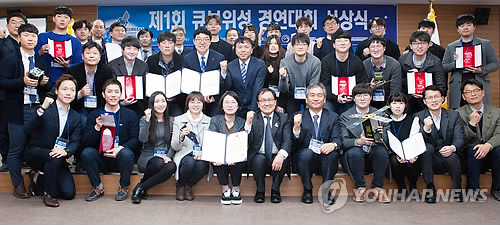
The trinity of universities, large corporations, and local communities working together to develop advanced technologies and cultivate talent represents the most ideal path of mutual prosperity for our country. This joint research between SNUST and KAI provides a model answer for creating a healthy industrial ecosystem for the entire nation, transcending the boundaries between the metropolitan area and regions. The technologies developed in the future will be valuable assets that firmly protect our country’s aerospace sovereignty, rather than serving merely for the profit of a single company. We hope you will cheer with a warm eye for the future advanced defense industry that our young researchers and corporate technicians will build with their sweat. No matter how fast the world changes or whether an era arrives where AI does everything, the fact that humans are the main agents creating and developing technology remains unchanged. We envision the wonderful scene where AI-fused talents nurtured at SNUST will directly design and complete advanced aircraft soaring in the skies of South Korea. We sincerely hope that this joint technology development project, which takes its first step today, will be recorded as a great scientific achievement recognized not only in South Korea but around the world. We conclude this story by cheering for our academic and industrial sectors to continue joining hands to achieve amazing innovations.
Mutual cooperation between universities and companies is the driving force opening a bright future for South Korea’s aerospace industry.
Frequently Asked Questions
=