Korean Air’s stock price has soared nearly 9% in a single day, capturing intense market attention, driven by news of falling international oil prices. For airlines, fuel expenditure is a critical factor that determines operating profit, and recent declines in raw material prices have significantly reduced cost burdens. Indeed, on this day, the stock closed at 31,400 won, up 8.84% from the previous trading day, reflecting investor expectations. Beyond simple oil price fluctuations, robust demand in both the passenger and cargo sectors has continued, signaling a green light for earnings. In this article, we will take a detailed look at the background of Korean Air’s stock surge and upcoming quarterly earnings forecasts. Readers will also gain new perspectives on investing in airline stocks.
=
Korean Air Shares Surge 8.8% on Falling Oil Prices and Expectations for Improved Q3 Earnings
1. Background of Falling International Oil Prices and Korean Air’s Stock Surge
International oil prices have dropped significantly as expectations spread that peace negotiations between the United States and Iran are gaining momentum. Forecasts that U.S. President Donald Trump and Iranian President Masoud Pezeshkian will meet at the UN General Assembly have had a direct impact on the raw materials market. As concerns over oil supply shortages eased somewhat, prices per barrel found stability, which directly translated into expectations for cost reductions among airlines. Jet fuel accounts for the largest portion of the cost of operating an aircraft, and the formula that falling oil prices lead directly to improved operating profit margins has been proven once again. Market participants quickly picked up on these macroeconomic indicator changes and began aggressively buying Korean Air shares. Recording a nearly 9% increase in a single day is a prime example of this rapid market reaction. For airline stock investors, oil price fluctuations have always been one of the major variables that cause anxiety. Shareholders who had been closely monitoring fuel price trends seized this downturn as an opportunity to join the buying rush. The fact that a single external factor can dramatically change a company’s cost structure is an intriguing aspect of the stock market.
International oil prices fell due to expectations of peace negotiations between the U.S. and Iran, reducing Korean Air’s cost burden and causing its stock price to surge 8.8%.
2. The Power of Robust Passenger and Cargo Conditions
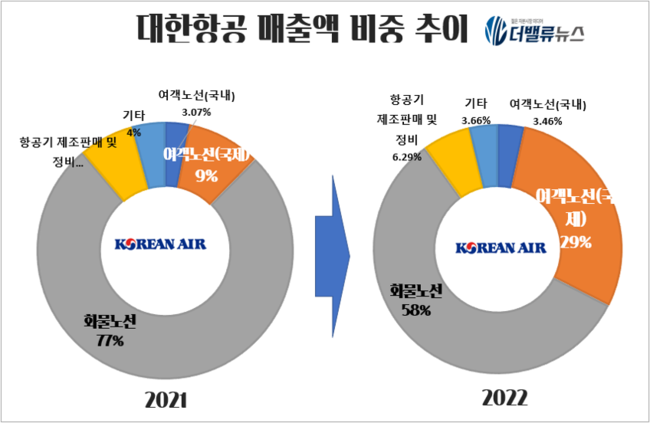
In addition to the external tailwind of falling oil prices, the fact that Korean Air’s core business fundamentals are very solid supports the stock price rise. With global travel demand continuing steadily, passenger transport performance is showing a much better trend than expected. Since the end of the pandemic, traveler foot traffic has not stopped, and load factors, particularly on long-haul routes, are maintained at very high levels. The cargo sector is also playing a key role by securing stable cargo volumes despite maritime supply chain instability and other trade variables. Steady demand for high-value-added cargo such as semiconductors and auto parts has limited the decline in cargo freight rates. The fact that the core airline transport business is performing well in both passenger and cargo sectors has instilled strong confidence in investors. If you notice more acquaintances traveling abroad, you can easily feel how robust airline demand is. In a situation where it is difficult to secure airplane seats, it is impossible for airlines’ earnings to be poor.
Robust demand in both passenger and cargo sectors has driven Korean Air’s core business competitiveness, leading to the stock price increase.
3. Q3 Earnings Outlook from the Securities Industry
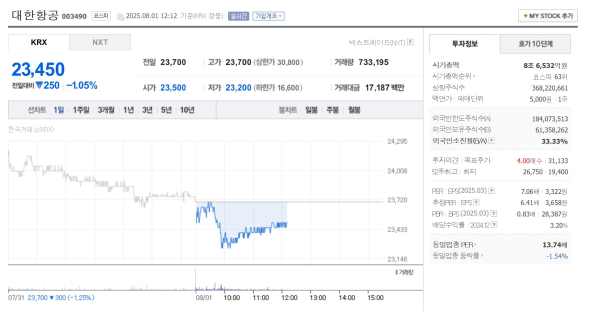
Major domestic securities firms predict that Korean Air will record an earnings surprise in the third quarter of this year, exceeding existing market expectations. This is because the period fully reflects the summer peak season effect, compounded by cost savings from falling oil prices. During the peak season, airfare prices are relatively high, creating a structure where revenue increases and operating profit margins improve simultaneously. Experts agree that if this trend continues, the overall earnings forecast for the second half of the year is likely to be revised upward. Since the stock market always reflects future profits in advance, this expectation of improved earnings can provide additional upward momentum to the stock price. As the earnings release season approaches, it is expected to have a positive impact on supply and demand from institutional and foreign investors. Talking to investment experts around you, you can feel that expectations for the Q3 earnings season are much higher than one might think. Earnings proven by numbers are the most powerful weapon to push up stock prices with certainty.
The securities industry expects Korean Air’s Q3 earnings to exceed expectations due to the combination of summer peak season effects and cost savings.
4. Expectations for Synergies from the Asiana Airlines Merger

Another huge topic surrounding Korean Air is that the integration process with Asiana Airlines has entered its final stage. When these two giant airlines merge, route duplication will be resolved, economies of scale achieved, and long-term cost reductions become possible. They will secure a unique position in the global aviation market, and efficiency in fleet operations and maintenance costs will significantly increase. As the approval procedures from competition authorities in various countries, which were a concern during the merger process, proceed smoothly, uncertainty risks have greatly decreased. This structural change is a key material that can lead to a long-term revaluation of corporate value, going beyond short-term earnings improvements. Shareholders are joining the buying queue with high expectations for the synergy effects that the massive national carrier will create after integration. In fact, the benefits of the two companies merging, such as route coordination and mileage integration, can be easily felt in our daily lives. The combination of major airlines will serve as an opportunity to elevate the competitiveness of the entire domestic aviation industry.
Expectations for economies of scale and long-term synergy effects are growing as the merger with Asiana Airlines approaches its final stage.
5. Variables to Watch When Investing in Airline Stocks
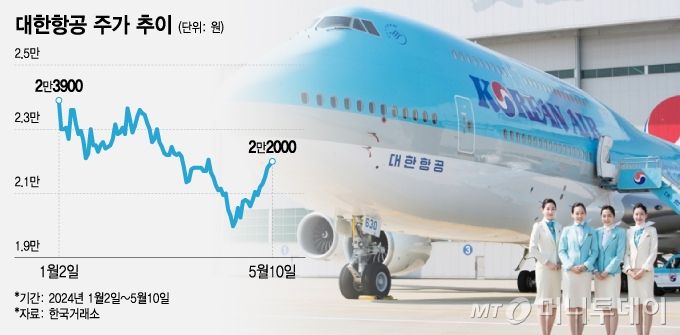
Rather than blindly buying just because the stock price has surged more than 8% in a short period, it is essential to check several risk factors. International oil prices are a commodity that can repeatedly experience sharp rises and falls at any time due to political instability in the Middle East or policy changes by oil-producing countries. Additionally, exchange rate volatility significantly affects airlines’ financial soundness and foreign currency debt, so the won-dollar exchange rate trend must be closely monitored. If the global economy slows down, even if travel demand is robust, it could damage passenger demand in the long run. Therefore, a balanced perspective is needed to view both the short-term positive factor of strong quarterly earnings and the flow of macroeconomic indicators. The secret to surviving in the stock market is the wisdom to diversify risk through a split-buy strategy rather than reckless chasing of rising stocks. Looking at stock investment communities, you can often find stories of investors who got in trouble after jumping on a surging stock. One must always keep in mind the uncontrollable variables of exchange rates and oil prices when managing funds.
A cautious approach and split-buy strategy are necessary due to the volatility of oil prices and exchange rates, as well as macroeconomic uncertainty.
6. Future Outlook and Responses of Wise Investors
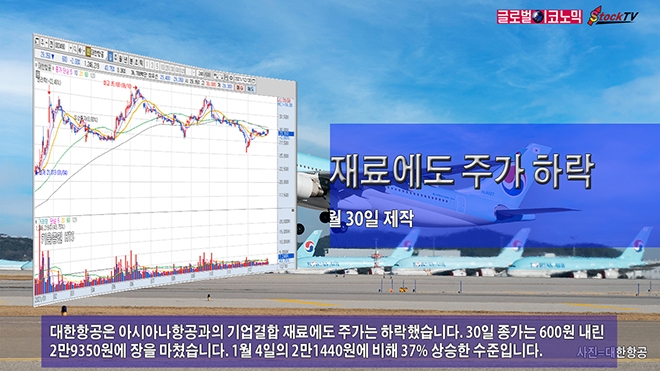
Ultimately, Korean Air is in a state where it possesses all three key elements: the external tailwind of falling oil prices, solid core business performance, and merger expectations. If the company actually delivers results that meet market expectations in the upcoming Q3 earnings release, the stock price is highly likely to level up once more. From an investor’s perspective, it is wise to focus on the company’s fundamental transformation process rather than being elated or depressed by short-term stock price fluctuations. One must periodically check upcoming economic indicators and airline cargo and passenger metrics to adjust investment weights. By adhering to one’s own investment principles based on thorough information analysis and cool-headed judgment, good results can be achieved. Let this stock price rise be an opportunity to re-examine Korean Air’s long-term growth potential. Those who succeed in the stock market are not those who only look at the surface of the news, but those who read the structural changes hidden behind it. Let us use this trend in Korean Air to cultivate our eyes for analyzing corporate fundamentals.
An investment strategy reflecting macroeconomic indicators from a long-term perspective should be established while monitoring Q3 earnings and merger synergies.
Frequently Asked Questions
=