Whether you receive your retirement pension as a lump sum or as monthly installments can significantly impact your net take-home amount, with differences often exceeding several million won. For working professionals approaching retirement, choosing the right method of receiving your retirement pension is a critical crossroads that goes beyond a simple payment procedure; it determines the success or failure of your life in retirement. If you blindly follow a colleague who bought a car with a lump sum, you might end up paying millions of won in extra taxes and regretting your decision. In this article, we will clearly explain everything from checking your retirement pension type to favorable receiving conditions and tax-saving tips. Please read to the end.
=
Complete Guide to Receiving Your Retirement Pension: Comparing IRP Accounts, Lump Sums, and Taxes
1. First, Check Your Type of Retirement Pension
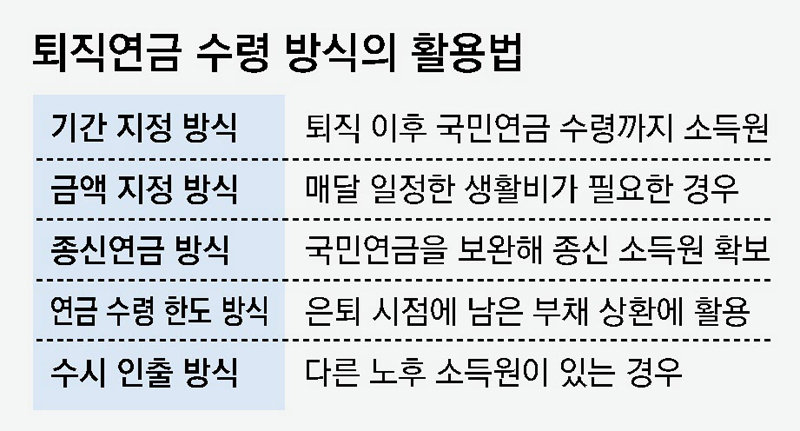
To properly understand how to receive your retirement pension, you must first accurately determine whether your company’s retirement pension plan is a Defined Benefit (DB) or a Defined Contribution (DC) plan. A DB plan is a system where the company directly manages the assets and pays a predetermined amount upon retirement. A DC plan is a system where the employee directly invests and manages the contributions made by the company each year. If losses occur in a DC plan, which is managed directly by the employee, the final retirement payout will decrease, potentially dealing a significant blow to your retirement plans. Therefore, it is crucial to regularly check the status of your current accumulated funds and the performance of your investment products.
Many people rush to withdraw their retirement funds after hearing stories from acquaintances about using a lump sum to pay the down payment on an apartment. However, both DB and DC plans share the commonality that the funds are ultimately transferred to an Individual Retirement Pension (IRP) account, where the receiving procedure takes place. Legally, when a company pays out retirement benefits, the funds must pass through an IRP account, so it is advantageous to open an account in your own name in advance. You can easily open an account by visiting a financial institution’s branch or through a mobile app, so it is best to prepare in advance.
The first step in receiving your retirement pension is to check the type of your accumulated funds and prepare an IRP account in advance.
2. Differences Between Lump Sum and Pension Installments
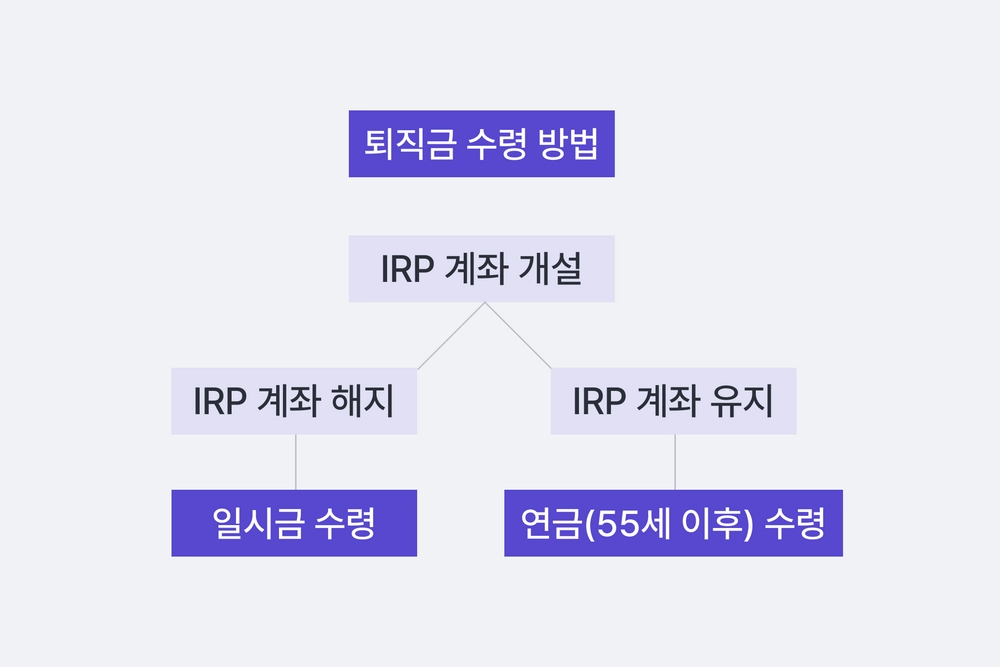
Whether to receive your retirement pension as a lump sum or as pension installments starting from age 55 is a core choice in managing your retirement assets. A lump sum has the advantage of providing a large amount of cash at once, which can be useful for major expenses such as buying a house or funding a child’s wedding. On the other hand, receiving pension installments creates a stable monthly cash flow over a period of at least 10 years, making it excellent for covering living expenses after retirement. It is wise to plan your receiving strategy according to your spending habits while considering your retirement period and expected lifespan.
Mr. Kim, who lives in Seoul, received his retirement benefits as a lump sum but fell for a friend’s persuasion and invested in the wrong place, nearly losing a significant portion of his retirement funds. As such, receiving a large sum of money at once greatly increases the likelihood of impulsive spending or risky investments. Conversely, receiving a fixed amount monthly as a pension makes it easier to control living expenses and maintain a stable psychological state. Therefore, unless you have a specific need for a large sum of money, it is best to receive it in the form of a pension to secure both tax benefits and retirement stability.
While a lump sum is good for using a large amount of cash, receiving pension installments is far more advantageous for tax savings and securing stable living expenses.
3. Maximizing Tax Benefits When Receiving Pension Installments

The most attractive part of receiving a retirement pension is the substantial reduction in retirement income tax that applies when received as a pension. If you receive your retirement benefits as a lump sum, you must bear the full retirement income tax. However, if you receive it as a pension, you can be exempted from up to 70% of the tax. Specifically, if you receive the pension in installments over a period of 10 years or less, 30% of the original tax is reduced, meaning you only pay 70%. If the pension receiving period exceeds 10 years, the reduction rate increases further, allowing you to pay only 40% of the original tax and save 60%.
To maximize tax savings, you must carefully design your pension receiving limits and duration in consultation with a financial institution. If you withdraw money exceeding the annual pension receiving limit, the excess amount may be subject to miscellaneous income tax or excessive taxes rather than pension income tax. In reality, many retirees frequently regret hitting a “tax bomb” because they were unaware of these regulations. Therefore, it is safe to seek advice from an expert or use the pension calculators provided by financial institutions to simulate taxes before applying to start your pension.
Receiving your retirement pension in installments over a long period of 10 years or more can reduce retirement income tax by up to 70%.
4. Opening an IRP Account and Application Procedures
To receive your retirement pension according to your chosen method, you must have an IRP account in your own name, and the procedure for opening one is simpler than you might think. By accessing the mobile app of a frequently used bank or securities firm and opening the account non-face-to-face, you can avoid the hassle of visiting a branch. Once the account is opened, you must submit a request to your company’s responsible department to deposit the retirement benefits into that account. Once the company completes the transfer of the retirement funds to the account, you can officially proceed with the lump sum claim or pension start application.
Since the actual payment schedule may vary depending on the type of investment product, it is essential to confirm this with the financial institution in advance. Deposit products or bond-type products can be cashed out relatively quickly, but some special funds or equity-type assets may take more time for selling and settlement. During periods overlapping with holiday breaks such as Chuseok or Lunar New Year, special fund payment schedules may differ by financial institution, so you should apply with some buffer time. If you need the money immediately after your scheduled retirement date, it is advisable to prepare documents several months in advance and coordinate the schedule with the responsible person.
Opening an IRP account non-face-to-face in advance and submitting it to your company ensures a smooth receiving process.
5. Designing Retirement Income by Combining with Other Pensions
When considering how to receive your retirement pension, you must look at the big picture by considering other fixed incomes you are eligible for, such as the National Pension or personal pensions. Whether voluntary or forced, retirement cuts off a certain income, leaving very limited means of support, so creating a multi-layered pension structure is important. You should secure the maximum enrollment period to increase your National Pension benefit amount while appropriately adjusting the timing of your retirement pension receipts. For example, if there is a gap before you start receiving the National Pension, you can receive your retirement pension intensively first to perfectly fill the living expense gap.
The most ideal approach is to carefully calculate your monthly living expenses after retirement, cover them with the National Pension and personal pensions, and supplement the remaining shortfall with your retirement pension. Recently, more people are utilizing premium pension asset management services provided by securities firms to receive close support throughout the entire process, from design to management and receipt. With expert help, you can build a customized receiving portfolio that fits your asset situation perfectly, significantly reducing the risk of retirement bankruptcy. Retirement is not the end but a new beginning, so you should welcome a comfortable and stable retirement through a thorough fund receiving strategy.
You must establish a customized receiving strategy that fills income gaps by considering the National Pension and personal pensions together.
6. Outlook for Utilizing Retirement Pensions for a Successful Retirement
Interest in how to receive retirement pensions is hotter than ever as the aging era fully unfolds, and it will become an even more important financial tool in the future. In the past, retirement benefits were often simply viewed as a retirement bonus and spent as a lump sum, but now we need the wisdom to break them down and use them like a lifelong salary. The government and financial sector are continuously introducing various tax benefits and convenient management systems to encourage pension receipt. Those who quickly grasp and actively utilize changing regulations and tax laws can enjoy a prosperous retirement.
Start by taking the small step of opening your retirement pension account right now to check how much has accumulated. As your retirement date approaches, it is good to calculate your expected receipt amount and taxes in advance and have a serious conversation with your family about how you will receive the funds. Instead of vague fear, if you make a concrete receiving plan, your life after retirement will be filled with excitement rather than worry. A stable retirement life begins with thorough preparation, so we recommend making a wise pension receiving plan based on what you have learned today.
A thorough pension receiving plan and consistent management are the shortcut to a prosperous and stable retirement life.
Frequently Asked Questions
=