The Individual Retirement Pension (IRP) account is an essential financial product for employees, offering substantial tax deduction benefits during the annual year-end tax settlement. Instead of the usual introductory clichés, let’s get straight to the point: how you utilize your IRP account significantly impacts the amount of tax refund you receive each year. While some colleagues may groan under the weight of a year-end tax bill, others enjoy a nice bonus—the secret lies in this account. With recent government reforms to various pension systems, the importance of tax efficiency is growing. In a changing financial market, let’s specifically look at what you need to check right now to protect and grow your assets. We will break down complex tax laws and regulations using everyday examples to make them easy to understand.
=
IRP Tax Deduction Limits and 2026 Tax-Saving Strategies: A Complete Guide
1. Basic Concepts and Enrollment Conditions for IRP Accounts

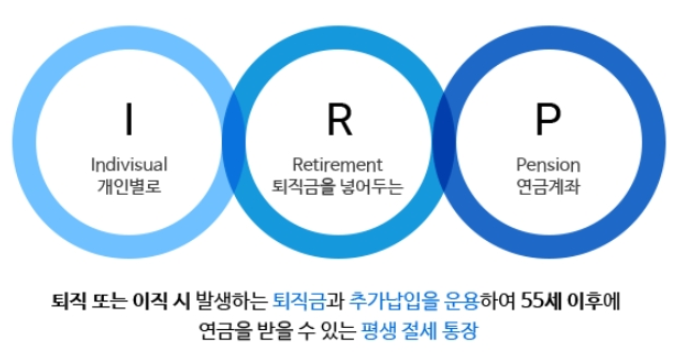
The IRP, or Individual Retirement Pension, is a representative account for retirement planning that both employees and self-employed individuals can join. While it was primarily used for receiving severance pay from companies in the past, it has recently gained popularity as a tool for tax savings through voluntary additional contributions. Any subscriber whose employer operates a Defined Contribution (DC) or Defined Benefit (DB) pension plan can open an additional account in their personal name. The barrier to entry is not high, as it also includes job seekers and freelancers who have income. The biggest appeal is the ability to consistently save a fixed amount each month while simultaneously enjoying tax benefits. It is advantageous to start preparing from the moment you receive your first paycheck after starting a job. Many people mistakenly assume it is similar to a regular savings account, but it is a pension-specific portfolio asset managed within strict legal frameworks. For example, if you change jobs, your accumulated severance pay is transferred directly to this account and stored safely. During this process, the tax deferral benefit applies, allowing you to postpone taxes until retirement and maximize compound interest. If you do not need the funds immediately, keeping them in the account until retirement is far more beneficial in the long run. You need to be wise to carefully compare various fees when selecting a financial institution, as even small differences in fees can significantly change the size of your retirement fund decades later.
The IRP is a tax-saving account available to both employees and self-employed individuals, allowing you to enjoy both tax deferral and compound interest effects.
2. Year-End Tax Settlement Deduction Limits and Maximization Strategies
When preparing for the year-end tax settlement, often called the “13th-month salary,” the first item to check is the tax deduction for pension accounts. The total deductible contribution limit for Pension Savings and IRP combined is up to 9 million KRW, and you can maximize your benefits by filling up to this limit with IRP contributions alone. If your total annual income is 55 million KRW or less, a high deduction rate of 16.5% applies, allowing you to receive a tax refund of up to 1.485 million KRW. Conversely, even if your total annual income exceeds 55 million KRW, you can secure a refund of up to 1.188 million KRW with a 13.2% deduction rate. For employees who have taxes deducted from their monthly salaries, it is hard to find a more reliable wealth management tool. A real-life example of “Manager Kim,” a young professional, makes this easier to understand. Manager Kim contributed 300,000 KRW monthly to his Pension Savings account and made additional contributions to his IRP as the year-end approached to reach the total limit of 9 million KRW. As a result, after submitting his year-end tax settlement documents in December, he received an unexpected refund of several hundred thousand KRW, which he used to enjoy a nice dinner with his family. This approach is popular among employees because you can receive the same benefits by making lump-sum contributions at year-end, even if you don’t pay attention to it during the year. However, you need to be careful to accurately determine your total annual income and adjust your contributions so as not to exceed the deduction limit. If you contribute more than the limit, the excess amount can be carried over to the next year for deduction, so there is no need to worry excessively.
By contributing up to the maximum limit of 9 million KRW to Pension Savings and IRP combined, you can receive a year-end tax refund of over 1.4 million KRW.
3. Linking ISA Maturity Funds and Utilizing Additional Tax Deductions
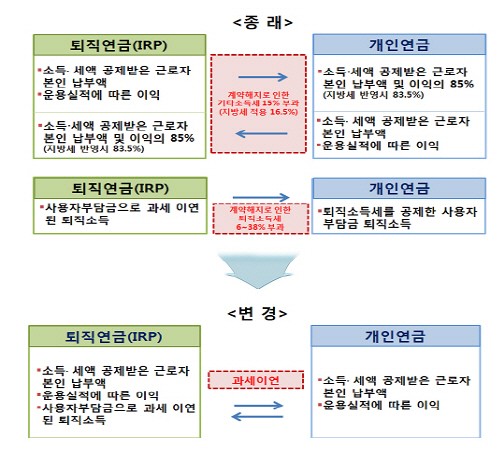
Many people are unsure how to handle their funds when their Individual Savings Account (ISA), which offers various tax-exempt benefits, reaches maturity. A very useful system allows you to transfer all or part of these funds to a pension account upon the expiration of the ISA contract. If you transfer your matured funds to an IRP, an amount equal to 10% of the transferred sum is added to your tax deduction limit. For example, if you transfer 30 million KRW of matured funds to a pension account, your additional deduction limit increases by up to 3 million KRW. Since you can receive this additional deduction on top of the existing annual contribution limit of 9 million KRW, the tax-saving effect snowballs. “Director Park” did not leave his matured funds, which he had diligently accumulated over several years, idle. Instead, he immediately transferred them to his IRP account. As a result, he received additional tax deduction benefits on an amount far exceeding the standard limit, saving hundreds of thousands of KRW in taxes. By combining government-recommended systems effectively, you can grow your assets frugally while paying significantly less tax than others. However, you must follow the proper linking procedures through a bank or securities firm; you should not simply withdraw the funds in cash and deposit them again. The most reliable method is to proceed with the inter-account transfer under the guidance of a staff member. Employees in their 50s who are approaching retirement must remember this method.
Transferring ISA maturity funds to a pension account secures an additional tax deduction limit, maximizing tax-saving effects.
4. Default Option System and Efficient Asset Management Methods
With the establishment of the Default Option system, where financial institutions manage the accumulated funds of pension subscribers who leave their accounts untouched, managing returns has become much easier. In the past, if subscribers did not directly designate products, their funds were often tied up in low-interest cash assets that could not even keep up with inflation. Now, even if no specific management instructions are given during the designated period, investments are automatically executed according to a pre-designated portfolio. You can choose various fund or product combinations in advance based on whether your investment style is stable or aggressive. It is crucial to select appropriate products considering the remaining time until retirement and your individual profile. “Manager Lee,” an employee, was so busy with work that he had no idea where his pension funds were invested and did not pay attention to them for a long time. One day, he logged into the Integrated Pension Portal to check his account and was surprised to find that, thanks to the Default Option, his account was recording returns much higher than a savings deposit. This system is a godsend for employees who do not have time to monitor the stock market daily. However, you must keep in mind that if the proportion of non-principal-guaranteed products is high, you may incur temporary losses depending on market conditions. It is necessary to periodically check the status of your portfolio and change to a different type if needed.
Utilizing the Default Option system allows even neglected accumulated funds to be managed automatically according to an efficient portfolio, increasing returns.
5. The Secret to Tax Deferral and Early Termination When Receiving Severance Pay
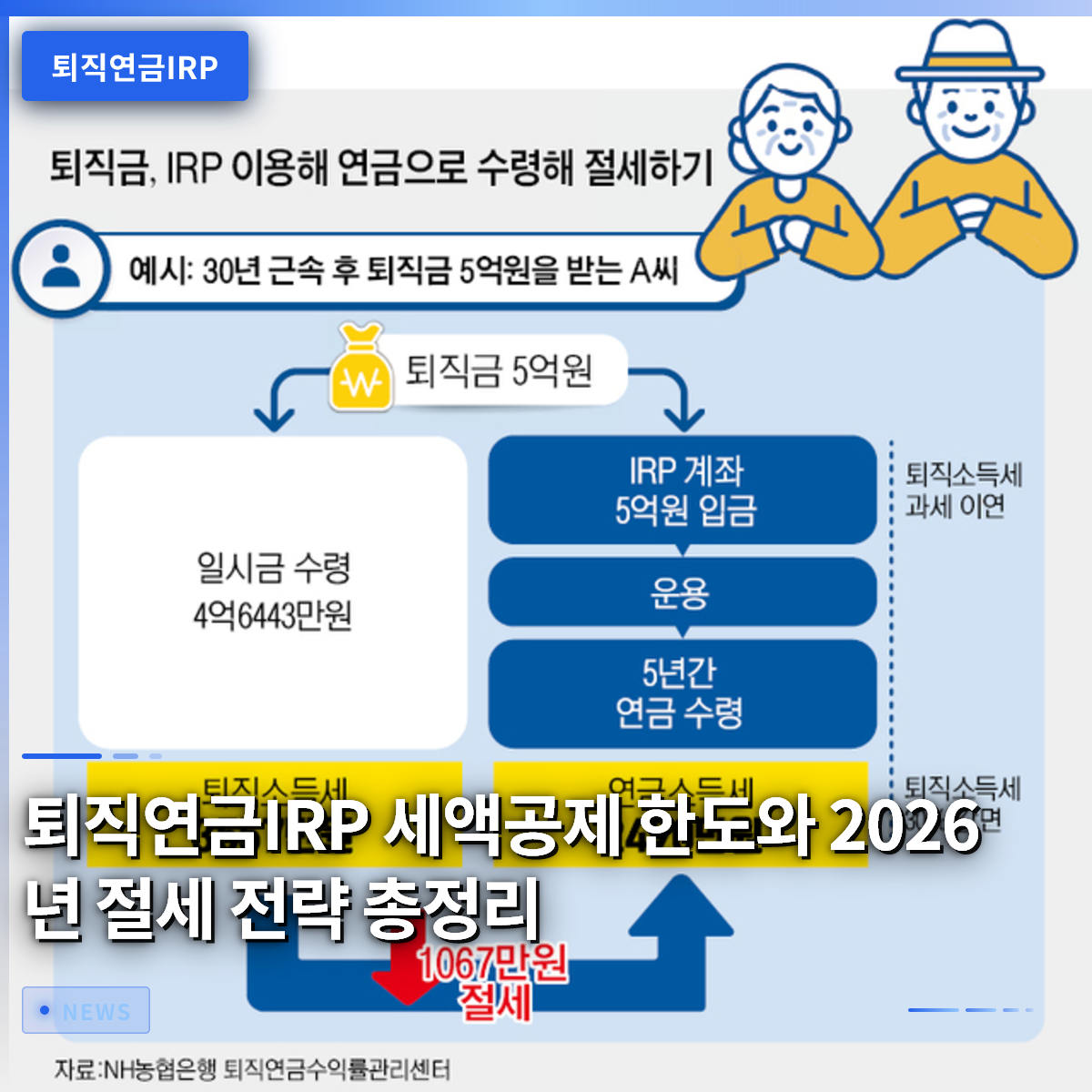
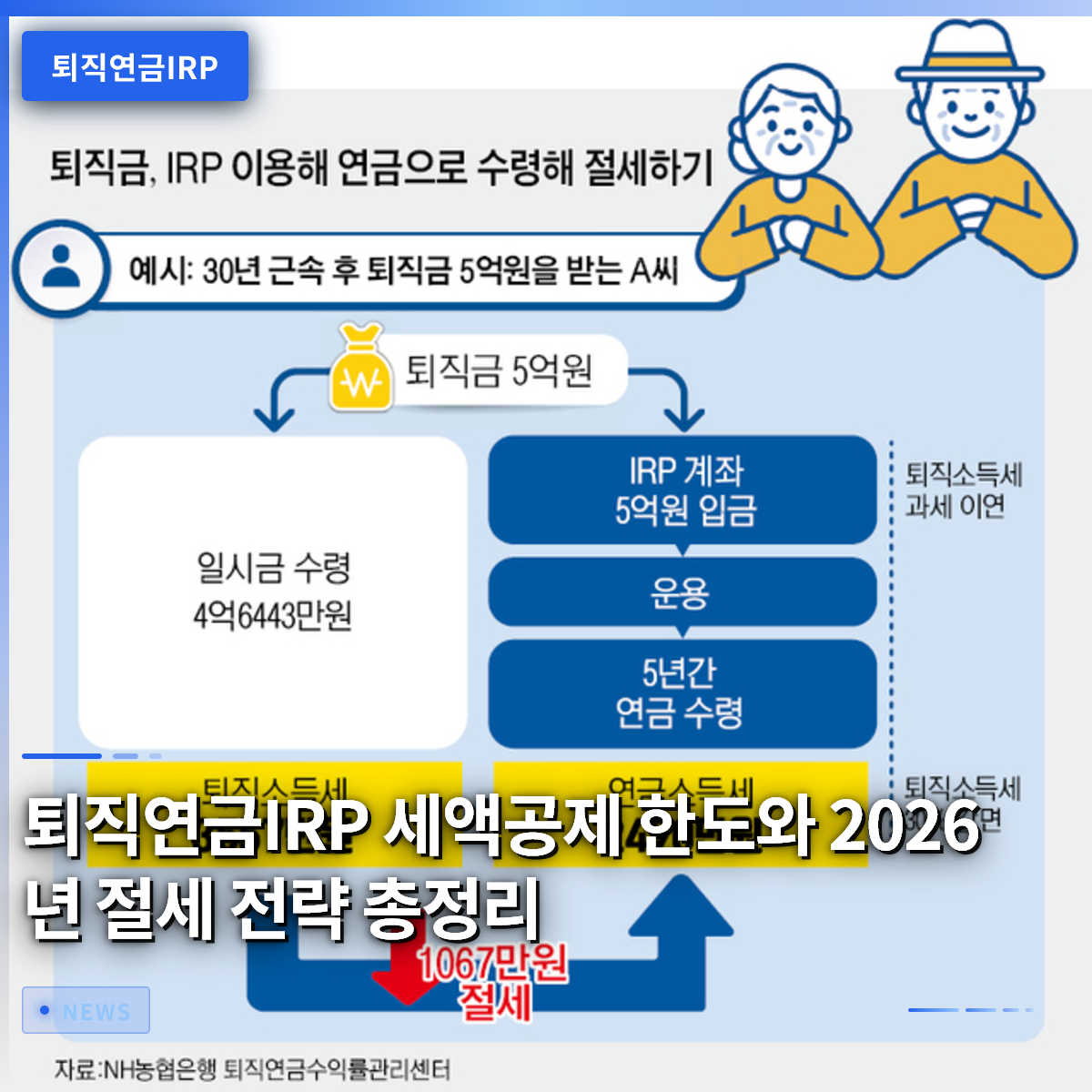
Withdrawing your severance pay in cash immediately upon quitting a job or retiring is a shortcut to a tax bomb. Transferring your severance pay to an IRP account applies the tax deferral benefit, allowing you to continue growing your money without paying taxes immediately. When you eventually receive it as a pension, a much lower tax rate is applied compared to the general severance income tax, significantly reducing your tax burden. If you skip this process and terminate the account early, you may have to pay heavy miscellaneous income tax or surcharges instead of severance income tax. If you do not want to lose a significant portion of your hard-earned severance pay to taxes, transferring is the principle rather than terminating. “Mr. Choi,” who recently left a job where he had worked for over ten years, casually tried to cash out his entire severance pay into a regular account, thinking he had a lump sum of money. Fortunately, after being persuaded by those around him and consulting with a bank officer, he opened an IRP account and transferred his severance pay in full. He is very satisfied as he can now receive it as a monthly pension after retirement, saving on taxes while securing a stable living expense. Unless there are exceptional legal reasons such as purchasing a home or bankruptcy, you should avoid early termination as much as possible. The core of retirement preparation is not using a lump sum all at once, but spreading it out over a long period to minimize taxes.
Transferring severance pay to an IRP to receive tax deferral benefits allows you to save significantly on taxes when receiving it as a pension later.
6. Practical Recommendations for Future Retirement Preparation
To enjoy a comfortable retirement in a rapidly changing economic environment, you must cultivate the habit of managing your IRP account steadily from now on. A wise employee’s attitude is to carefully fill the year-end tax settlement limits each year, keeping pace with government tax law revisions and financial market changes. You need the wisdom to periodically check returns and fees through the Integrated Pension Portal, rather than just depositing money. You should actively adjust your portfolio to match your retirement timing and target funds, rather than being swayed by rumors. Based on what you have learned today, please check the status of your account immediately and fill any remaining tax deduction limits. These small practices will serve as a sturdy support, making your post-retirement life abundant and leisurely.
Regular account checks and active utilization of tax deduction limits are the keys to successful retirement preparation.
Frequently Asked Questions
=