
To increase your National Pension benefits, it is crucial to maximize your enrollment period and develop a premium payment strategy tailored to your income level. Whether you are an office worker or a self-employed individual approaching retirement, everyone desires a stable monthly cash flow in their later years. However, the system can be confusing when examined closely. Recently, various premium support programs for vulnerable groups and long-term investment lineups tailored to different life stages have gained attention, making it essential to stay well-informed. This article thoroughly covers the current status of National Pension premium support systems, methods for extending your enrollment period, and tips for receiving both National and Personal Pensions simultaneously. Based on common real-world examples, we will explain the key aspects of retirement fund preparation that you might easily overlook. Understanding and preparing for the system ahead of others is the key to a comfortable and regret-free retirement.
=
A Comprehensive Guide to National Pension Premium Support and Benefit Amounts for Retirement Planning

1. The Reality of National Pension Premium Support by Occupation

The government is actively implementing programs to subsidize National Pension premiums to strengthen the retirement safety net for vulnerable groups. However, unfortunately, there is a significant gap in the duration and amount of support available depending on the subscriber’s occupation. For example, farmers and fishers can receive support without specific time limits, whereas artists are limited to a support period of just one year, leaving much to be desired. Workers in special employment forms, such as dispatch workers, often fall into the blind spots of National Pension premium support programs, even if they receive some benefits from employment insurance. This inconsistent support system by occupation creates a paradox where those who truly need help often fail to receive adequate benefits. The government and relevant agencies must focus on expanding the scope of eligible recipients and reducing blind spots to address these equity issues. Statistics showing that the disparity in support can reach up to 3.4 times clearly demonstrate that our social welfare safety net is not yet perfect. In reality, Mr. Kim, who runs a small farm near Seoul, has reduced his burden with state support, while Mr. Lee, a freelancer, is bent over the strain of paying all premiums out of pocket. This disparity in outcomes based on industry has led to ongoing debates about fairness, with calls for system improvements growing daily. As employment forms become more diverse, there is an urgent need for an integrated support system that allows all working citizens to enjoy benefits without discrimination. We must not forget that a true national-level retirement safety net can only be completed when policy benefits are distributed evenly.
It is urgent to implement supplementary measures to reduce the disparities in the National Pension premium support system across different occupations and eliminate blind spots.
2. The Era of Workers in Their 70s: Working in Old Age and Gaps in the National Pension
According to statistics, the number of employed individuals aged 70 and over has surpassed 2 million, indicating that South Korea’s elderly participation rate in economic activities is among the highest in the world. The sight of seniors who cannot rest, enduring long drives from dawn or high-intensity physical labor, reflects the heavy reality of our society. Despite working hard their entire lives, hundreds of thousands of elderly people remain in the blind spots where they receive not a single won of National Pension. This is a tragic situation where their retirement income is completely cut off because they could not secure stable employment in their youth or failed to meet the minimum enrollment period. Although basic pensions and other welfare systems exist, seniors who lack the solid foundation of the National Pension are forced to work desperately to make a living. Most seniors continuing high-intensity labor past the age of 70 align with the economically vulnerable groups of the past who had no time to prepare for life after retirement. For example, Mr. Park, who spent his life as a day laborer supporting his family, is still wandering around construction sites looking for work in his late seventies. Had he enrolled in the National Pension in his youth and contributed consistently, he would be receiving a warm pension check every month now, but reality keeps him in a state of earning just enough to survive the day. This surge in working seniors is an important indicator that reveals the flaws in the social safety net, going beyond the simple issue of aging. The government and local authorities must urgently propose multi-faceted measures to reduce their intense labor and ensure substantial income security.
With the population of working seniors aged 70 and over exceeding 2 million, there is a need for measures to ensure substantial income security for those in the blind spots of the National Pension.
3. The Art of Voluntary Continued Enrollment and Extending Your Enrollment Period
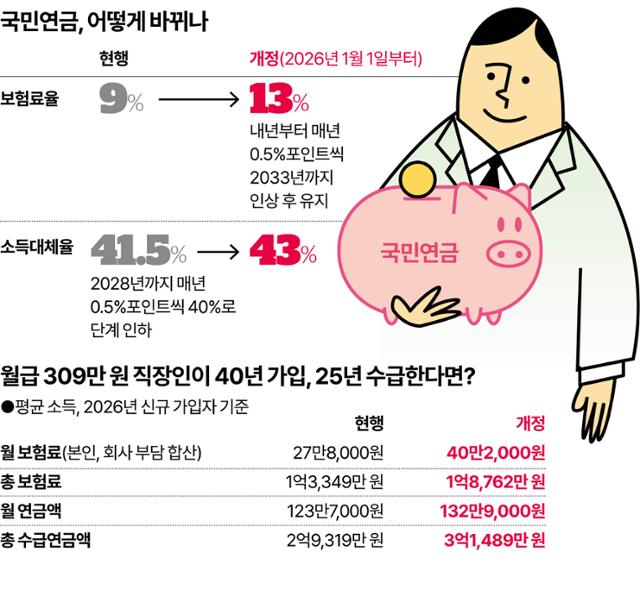
For those who have passed the mandatory enrollment age of 60 but lack sufficient enrollment periods to receive proper benefits, the voluntary continued enrollment system is like a ray of hope. By effectively utilizing this system, which can be applied for until the day before your 65th birthday, you can fill in the missing enrollment periods and significantly increase your future benefit amounts. For instance, Mr. Choi, an office worker on the verge of retirement, was just about to meet the minimum 10-year enrollment requirement but managed to significantly boost his pension amount by adding five more years through voluntary continued enrollment. The monthly premium is 9% of the standard monthly income you choose, so it requires wisdom to carefully consider your financial situation before making a decision. It is easy to assume that contributing for a longer period is always advantageous, but you must consider your current asset situation and expected lifespan to avoid regret. Many people mistakenly believe they must completely part ways with the National Pension at age 60, but using the legally available extension channels broadens your options considerably. For example, Ms. Jeong, who lived as a housewife before starting voluntary enrollment late in life, diligently paid premiums until just before her 65th birthday, finally qualifying for a lifetime pension. The quality of life after retirement can differ vastly between those who accurately understand the system’s detailed regulations and those who do not. Considering that the National Pension reflects inflation rates rather than just bank interest rates, it is wise to maximize your enrollment period if you have surplus assets. Before finalizing your retirement preparation, you should accurately check your enrollment months to date and seek ways to fill any gaps.
By utilizing the voluntary continued enrollment system, which can be applied for until the day before your 65th birthday, you can extend your enrollment period and maximize your pension benefit amount.
4. Why Benefit Amounts Are Similar Despite Different Salaries: The Secret of the Cap
It is puzzling that the National Pension benefit amounts for an office worker earning 80 million won annually and one earning 100 million won are not significantly different. This is because of the standard monthly income cap system applied when calculating National Pension premiums; you do not receive benefits proportionally just because you pay more indefinitely. If you hit the current cap, your actual income is not considered above that level, which can feel like poor value for high-income earners. On the other hand, for middle-income groups or ordinary office workers, there is a structural advantage of receiving solid retirement security with relatively lower premiums. The reason why the difference in pension amounts received after 30 years of consistent contributions is not as large as expected between an office worker earning 75 million won and one earning 100 million won lies in this cap structure. Due to this cap, the income distribution function is naturally embedded within the National Pension, providing relatively more favorable benefits to low-income subscribers. For example, Manager Park, who works at a mid-sized company with an annual salary of 80 million won, sighs at the considerable amount deducted for the National Pension each month, but finds comfort in the fact that a stable retirement is guaranteed in the long run. Conversely, Mr. Choi, who runs a venture company with a salary exceeding 100 million won, is blocked by the cap from contributing more, leading him to explore separate personal pensions. The National Pension is not simply a savings insurance that returns what you put in; it strongly carries the character of a public pension aimed at social solidarity and income redistribution. You must calculate your exact expected benefit amount and understand the structure of the caps and floors to perfectly complete your retirement asset portfolio.
The National Pension has a standard monthly income cap system, which regulates the gap in benefit amounts between high-income earners and general office workers to a certain level.
5. A Harmonious Strategy for Receiving Both National and Personal Pensions
When starting to receive the National Pension, many worry about tax issues or benefit reductions if they also receive personal or retirement pensions that have been sitting in a drawer. Fortunately, under the current system, receiving the National Pension does not cause any reduction or disadvantage to your personal pension. Instead, private pensions prepared by individuals are layered on top of the basic pension guaranteed by the state, doubling the abundance of your retirement. Recently, a complete long-term investment lineup covering all life stages has been established, starting from the “My Child Independence Fund,” followed by Individual Savings Accounts (ISA), retirement pensions, and finally the National Pension. This virtuous cycle of asset formation not only stabilizes individual retirement life but also serves as a solid pillar for the national capital market. In reality, the retired couple, Mr. and Mrs. Kang, use their monthly National Pension to cover basic living expenses and enjoy leisurely hobbies with the personal pension they have consistently contributed to since their younger days. If they had relied solely on the National Pension, it would have been difficult to keep up with inflation, but thanks to the harmony of various pension assets, they are enjoying a secure retirement. Retirement planning requires a wise strategy that organically links public and private pensions, rather than putting all eggs in one basket. Financial authorities are also continuously reviewing supplementary tasks to improve governance and enhance the stability of long-term investment assets to help citizens build wealth. You should also review your pension enrollment records immediately and create a smart asset management plan to fill in any gaps in your private pension.
You can receive both the National Pension and personal pensions simultaneously, and you can prepare for a solid retirement through a long-term investment lineup tailored to your life cycle.
6. First Pension Support for Youth and Prospects for Successful Retirement Preparation
The government is fully introducing a new support system to allow young people to enroll in the National Pension early, laying the foundation for a stable retirement from the moment they step into society. The “Youth First Pension Premium Support” program, scheduled to take effect on January 1, 2027, is expected to be a great help for young people whose entry into the workforce has been delayed due to studies or military service. This unprecedented measure, where the state directly pays the first pension premium, will serve as an opportunity for the youth to naturally realize the importance of retirement preparation at a young age. For example, Ms. Jeong, who started her career as a non-regular worker immediately after graduating from university, was able to join the National Pension roster without burden thanks to state support. By lowering the initial entry barrier, the state helps extend the enrollment period in the long run, resulting in a snowball effect on the pension amount received later. Future retirement preparation is evolving from a concern for the elderly to life-cycle-based asset management designed systematically from youth. It is an era that requires the wisdom to accurately understand and respond to subtle increases in the four major insurances and age-specific exception clauses, whether you are a business owner or an employee. You should immediately check your enrollment records through official inquiry services and fill in any missing periods through voluntary continued enrollment or personal pensions. The small habit of diligently paying premiums every month to keep up with changing systems is the most powerful weapon in determining your retirement happiness decades from now. We strongly recommend that you start today by reviewing your pension account, consulting with experts, and completing a flawless retirement roadmap.
Starting with the Youth First Pension Premium Support to be implemented in 2027, the paradigm for long-term retirement preparation is shifting to focus on the younger generation.
Frequently Asked Questions
=