On October 1, 2026, the Dow Jones Industrial Average closed at 50,906.05, down 443.87 points from the previous trading day, indicating a weak market session. On the same day, the Nasdaq Composite, centered on technology stocks, actually rose by 0.24% to 26,861.06, presenting a clear contrast. This divergence is interpreted as the result of strong earnings reports from the semiconductor sector stimulating growth-focused stocks more significantly than large-cap stocks burdened by high valuations. In particular, Micron’s record-breaking earnings, released earlier this week, served as a decisive variable influencing market sentiment by confirming the explosive demand for High Bandwidth Memory (HBM) for artificial intelligence. Conversely, while the slowing pace of the U.S. Personal Consumption Expenditures (PCE) price index raised expectations for Federal Reserve monetary policy adjustments, pressure on long-term interest rates remains a point of contention. In this article, we will examine the true meaning behind this mixed market performance and specifically analyze how Asian markets may move after the upcoming National Day holiday period.
=
October 2026 Dow Jones Closing Analysis: Predicting Market Direction Through the Micron Effect and Inflation Indicators
1. Dow Jones Closes at 50,906: Why Did It Fall?
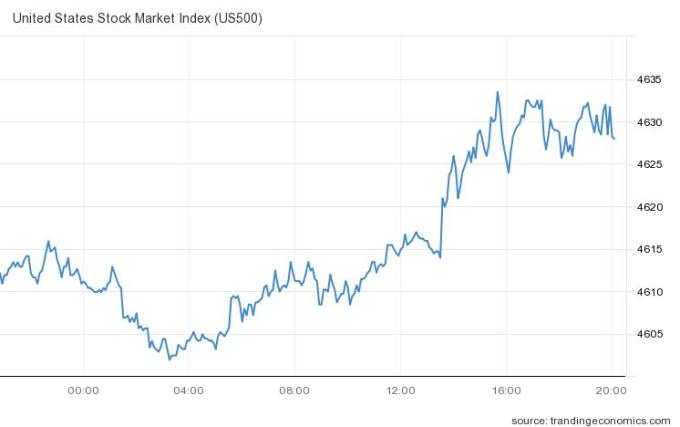
As the market closed on September 30, the Dow Jones dropped by over 443 points, heightening investor nerves. Initially, in the early trading session, relief spread as the U.S. Personal Consumption Expenditures (PCE) inflation indicator came in lower than expected, reducing concerns about interest rate hikes. However, a surge in selling volume near the market close prevented a quick rebound, shifting the trend to a sluggish performance. The prevailing analysis suggests that large-scale profit-taking demands from institutions capable of trading outside regular hours overwhelmed the existing upward momentum. Position adjustments for profit-taking were concentrated among traditional manufacturing and financial stocks included in the Dow Jones. Investors appeared confused, caught between expectations of price stability and the still-high level of the 10-year Treasury yield.
This decline indicates more than just a numerical fluctuation; it shows that the market is struggling to find new momentum to justify current stock price levels. As the Dow Jones trades near historic highs, it has developed a habit of reacting sensitively to even slight negative news factors. In particular, with foreign investors’ selling pressure overlapping, a strong wait-and-see mood has settled over the KOSPI as it attempts to hold the 6,800 level. Even if New York’s downward trend does not directly translate to the Korean market, the structure that acts as a psychological burden remains unchanged. Therefore, when observing short-term fluctuations in the Dow Jones, it is essential to compare the relative strength of the index’s constituent stocks rather than just looking at absolute numbers. The moment the value investing approach of picking undervalued stocks fades, such volatility is bound to intensify.
The Dow Jones settled around the 50,900 level as profit-taking selling emerged due to valuation burdens relative to earnings.
2. How Micron’s Earnings Bomb Changed the Semiconductor Landscape
Micron’s reported quarterly operating profit far exceeded many experts’ expectations, shaking the market landscape. The core driver was the significant improvement in margins due to the surge in demand for High Bandwidth Memory (HBM) driven by the expansion of AI data centers. Upon this news, a clear mixed performance was observed among semiconductor-related stocks in the New York Stock Exchange. Some hardware companies included in the Dow Jones failed to meet target prices, largely due to excessively high expectations for their earnings reports. In contrast, within the Nasdaq, semiconductor chip alternatives and foundry companies were valued more highly, benefiting from the boom.
The impact was also very clear in the domestic market. The movements of specific material and component companies in direct competition or cooperation with Micron were faster than the stock prices of companies with core technology, such as Samsung Electronics. Contrary to popular perception, the recovery of the memory chip market is progressing as a trend covering the entire supply chain, not just a feast for a few large-cap stocks. However, it is important to note that chasing stocks that have already surged can be risky. Micron’s strong performance does not guarantee profits for the entire economy. One must also consider the possibility of a butterfly effect where overheating in a specific technology sector triggers capital outflows from other sectors. Given the cyclical nature of semiconductors, signals of a peak in the memory cycle may be quietly approaching.
Micron’s strong earnings confirmed AI memory demand, but this can also be read as a signal of overheating in a specific sector, requiring caution.
3. Conflicting Signals from Inflation Indicators and the 10-Year Yield
The Personal Consumption Expenditures (PCE) price index, which the U.S. Federal Reserve considers most important, came in below expectations, sending a message that inflation is calming down. However, it is contradictory that the 10-year U.S. Treasury yield remains at a high level. The fact that the price of money feels expensive in a situation where rates should be falling means the market is still worried about the possibility of future economic growth slowing. As long as the gap between these two indicators does not narrow, it is very difficult to find a confident direction in the stock market. This is particularly true for value stocks with high dividend dependence, like those in the Dow Jones, where interest rates act as a competing variable that must provide a comparable yield.
It is necessary to consider why this noise is important from an investor’s perspective. Even if interest rates do not rise further, if there is strong downward rigidity, the momentum driving stock price increases will inevitably be limited. Past examples show that when inflation slows but long-term rates remain sticky, defensive sectors like financials and utilities tend to show short-term strength. The Dow Jones reacts particularly sensitively to the interest rate environment due to these characteristics. At the current level above 50,000 points, a difference of 30 basis points in interest rates makes a difference of trillions of won in corporate valuation calculations. Therefore, rather than simply looking at how much stock prices have risen, one should cultivate the habit of first checking how the yield curve is tilting. Familiarizing oneself visually with the correlation graph between interest rates and stock prices is far more practical than memorizing numbers in their entirety.
Despite slowing inflation, high Treasury yields remain the biggest obstacle restricting the sustained rise of the Dow Jones.
4. China’s National Day Holiday: A Gap in Asian Markets
As Chinese financial markets will be closed for the National Day holiday until the 7th, liquidity flows in the Asian region will temporarily freeze. During this period, a time lag occurs where news from New York and European markets is not directly and immediately reflected in Asia. The Korean KOSPI and other Asian emerging market stocks will experience a psychological gap while remaining exposed to U.S.-originated volatility. Looking back at experiences from recent years, it is worth noting that the longer the holiday period, the greater the volatility tends to be in the early stages of reopening. In particular, whether or not China releases economic policy announcements is likely to act as the market’s major concurrent point.
Domestic investors should quickly monitor market volatility in the U.S. and China-related news during this period. For example, unusual economic indicators or unexpected earnings reports from major companies released in New York on the first day of the holiday could cause a significant shock when markets reopen after the break. Additionally, currency value fluctuations are particularly sensitive during this time, so it is wise to check foreign exchange positions. Holiday-specific demand or changes in futures market trends are also variables that cannot be ignored. Ultimately, market news does not stop during a holiday; rather, the energy accumulated during the break can explode. Preparing a response strategy for such special market conditions is a qualification for a wise investor.
The Chinese holiday period creates a stagnation in Asian market capital flows, concentrating volatility risk at the time of reopening.
5. KOSPI at 6,800: Analysis Linked to Foreign Selling Pressure
While the KOSPI index is taking a breather at the 6,800 level, foreign investors are continuing a steady selling trend. This is interpreted as the relative appeal of Korean assets having decreased slightly in relation to U.S. interest rate levels. Capital outflows from the Korean stock market coinciding with the Dow Jones decline is a typical pattern of global portfolio rebalancing. It may be viewed as a process where institutional investors are reducing their exposure to emerging market stocks to lower portfolio risk. However, retail investor enthusiasm is rising in the opposite direction, contributing to defending the index.
When observing such capital flows, the speed and scale are more important than the direction. Market sentiment is completely different between a sudden dump of massive selling volume and gradual, small-scale selling. Currently, a gentle flow of capital in and out, closer to the latter, is in progress, so it is interpreted as a battle of endurance rather than a concern for panic selling. Despite positive news in the semiconductor sector acting as a pillar supporting the domestic stock market, the sluggishness of other sectors, such as financials, is dragging down the overall index. In particular, considering the impact of exchange rate fluctuations on converted profits, the vulnerability of the export-dependent Korean economy has been laid bare. It is highly likely that this volatile market condition will continue until earnings reports from export and import companies are released.