
To prepare for a stable life in retirement, you must develop a thorough financial plan from a young age and enroll in pension insurance as soon as possible. While many people worry about the daunting cost of living after retirement, few actually start concrete savings and preparation efforts. Mr. Kim, a typical office worker often seen around us, often regrets delaying his future savings due to monthly living expenses and loan interest payments. This article clearly outlines why we must start preparing for retirement immediately. It also provides a detailed explanation of the types of financial products that should be prepared in addition to the National Pension and specific criteria for selecting them. Let us review practical principles you can implement starting today to face the approaching retirement period without fear. Remember that a small habit can completely change the quality of our lives decades later.
=
Essential Strategies and Criteria for Retirement Planning You Must Know Before Enrolling in Pension Insurance

1. Why the National Pension Alone Is Insufficient

It is difficult to fully guarantee a prosperous life after retirement relying solely on the National Pension, which we diligently pay into every month. Even when reviewing statistical data, the actual pension amount received is often lower than expected compared to income just before retirement. Considering the continuous rise in prices, there is a very high probability that even basic living expenses will be severely insufficient. Mr. Lee, who runs a self-employed business, has been enrolled in the National Pension for decades but was shocked when he checked his expected benefit amount. He had felt reassured in his younger years that this would be enough, but he realized that considering hospital bills and leisure costs in old age, it would be like pouring water into a bottomless jar. This is precisely why personal additional savings products are essential beyond the basic safety net provided by the state. If the National Pension serves as a sturdy framework, the private pension we enroll in directly is like the flesh added on top. It is a wise approach to carefully consider tax benefits and consistently pay an amount you can afford each month.
Since the National Pension alone is difficult to sustain against inflation and rising living costs, additional private pension preparation is essential.
2. Differences Between Whole Life Insurance and Pension Insurance

When looking into insurance products for retirement preparation, it is very common to confuse the nature of whole life insurance and pension insurance. The primary purpose of whole life insurance is to provide coverage for the insured’s death, and the coverage period lasts a lifetime. On the other hand, pension insurance is a financial product whose main purpose is to receive a stable monthly living expense when entering old age. Mrs. Park, a housewife, almost suffered a significant loss when she tried to cancel a product she had enrolled in for her husband’s death coverage, mistakenly believing it was her retirement fund. Since the surrender value of whole life insurance is very low if canceled midway, choosing a product that does not match your original purpose results in substantial financial loss. In contrast, pension insurance is designed to allow you to receive retirement funds periodically from a designated time, making it much more advantageous for securing living expenses. Just because product names are similar does not mean their coverage contents or purposes are the same, so you must carefully review the terms before enrolling. You need the wisdom to coldly evaluate which product is more suitable for your current financial status and future life plans.
There is a significant difference in enrollment purpose and benefits between whole life insurance, which centers on death coverage, and pension insurance, which aims to provide retirement living expenses.
3. The Relationship Between Four Major Insurance Enrollment Records and Pensions
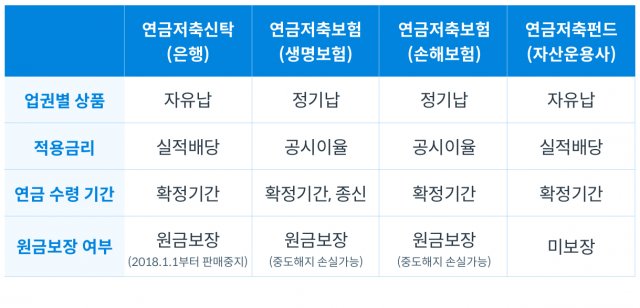
The records of the Four Major Insurances, which are paid diligently every month during working life, become a very important indicator in determining future pension benefits. Social insurance systems, including the National Pension, are calculated precisely based on the duration of our diligent work and income. Those who work part-time or move between casual jobs may fail to meet enrollment conditions and face disadvantages later on. Mr. Choi, who works as a freelancer, delayed enrollment to save on taxes and insurance premiums, only to later discover that his National Pension enrollment period was insufficient. When applying for a pension in old age, a short enrollment period leads to a ridiculously reduced monthly amount, increasing the risk of retirement bankruptcy. Therefore, you should regularly check your enrollment records through online issuance services to ensure there are no missing periods. Workers who work a certain number of hours or more under the Labor Standards Act have the right to be enrolled, and this helps protect future pension assets. Rather than delaying enrollment out of fear of company pressure, you should confidently assert your rights and develop the habit of managing your records transparently.
Four Major Insurance enrollment records determine future pension benefits, so they should be checked regularly to prevent omissions.
4. Checking Retirement Living Expenses and Realistic Criteria
You must ask yourself if you have ever calculated the specific amount of monthly living expenses actually needed after retirement. It is easy to vaguely think that spending will decrease after retirement, but unexpected expenses such as medical bills and allowances for grandchildren increase. Rather than relying solely on average figures released by the Statistics Korea, you must establish enrollment criteria tailored to your housing type and eating habits. Mr. and Mrs. Jeong, who are close to retirement, recently organized their expenses from the past year meticulously in an Excel file to check their living costs. They included major expense items such as 70th birthday celebrations and children’s weddings in their calculations, in addition to fixed monthly management fees and food costs. As a result, they concluded that their currently prepared funds were severely insufficient and decided to reduce expenses and increase savings starting now. Objectively assessing your standard of living and designing additional pension products accordingly is the most reliable way to prevent retirement bankruptcy. Rather than blindly following products recommended by others, you should judge based on the actual amount deposited into your account.
You must set and implement retirement living expense criteria that suit you based on an objective analysis of your expenses.
5. Tax Benefits and How to Utilize Pension Savings
One of the most attractive aspects for office workers enrolling in pension insurance is the tax deduction benefit received during the year-end tax settlement. The government grants exceptional tax benefits for products that meet specific conditions to encourage citizens’ voluntary retirement preparation. By utilizing this well, you can receive valuable tax refunds every year while steadily accumulating a solid seed capital for the future. Mr. Han, a company employee, was worried about the taxes he had to pay every year during the year-end tax settlement season, but he enrolled in a pension product on the advice of those around him. Thanks to consistent monthly payments, he was able to receive a substantial refund during the following year’s year-end tax settlement and enjoy great joy. By reinvesting this refunded amount into savings or necessary areas, he was able to grow his asset size much faster. However, if you enroll recklessly just for the tax benefits and cancel midway, you may have to return the benefits received, leading to an undesirable situation. It is wise to carefully consider your income level and future cash flow and maintain an appropriate limit that you can pay without burden each month.
Smartly utilizing the tax benefits of pension products allows you to achieve both goals of year-end tax settlement refunds and retirement preparation.
6. Practical Strategies for a Successful Retirement
Based on the various criteria and information reviewed so far, it is time to start concrete actions rather than just talking. The sooner you start preparing for retirement, the more you can benefit from compound interest, resulting in enormous rewards in the future. I recommend that you do not put it off until tomorrow but start by gradually checking your current asset status and Four Major Insurance enrollment records through online issuance services. Retirement experts emphasize that the attitude of consistently continuing small, minor practices is far more important than making a perfect plan. A small change, such as saving the cost of coffee each month and automatically transferring even a small amount to a pension account, completely changes the second half of your life. Those who remain unmoved by temptations from their surroundings or temporary economic crises and silently adhere to their own principles become the true winners. Imagine yourself 10 or 20 years from now and make your financial decisions today with caution and confidence. A peaceful and joyful retirement is not something that happens by chance; it is created by the small drops of sweat from our preparations today.
The key to a successful retirement is the attitude of consistently saving and practicing, even with small amounts, rather than having a perfect plan.
Frequently Asked Questions
=