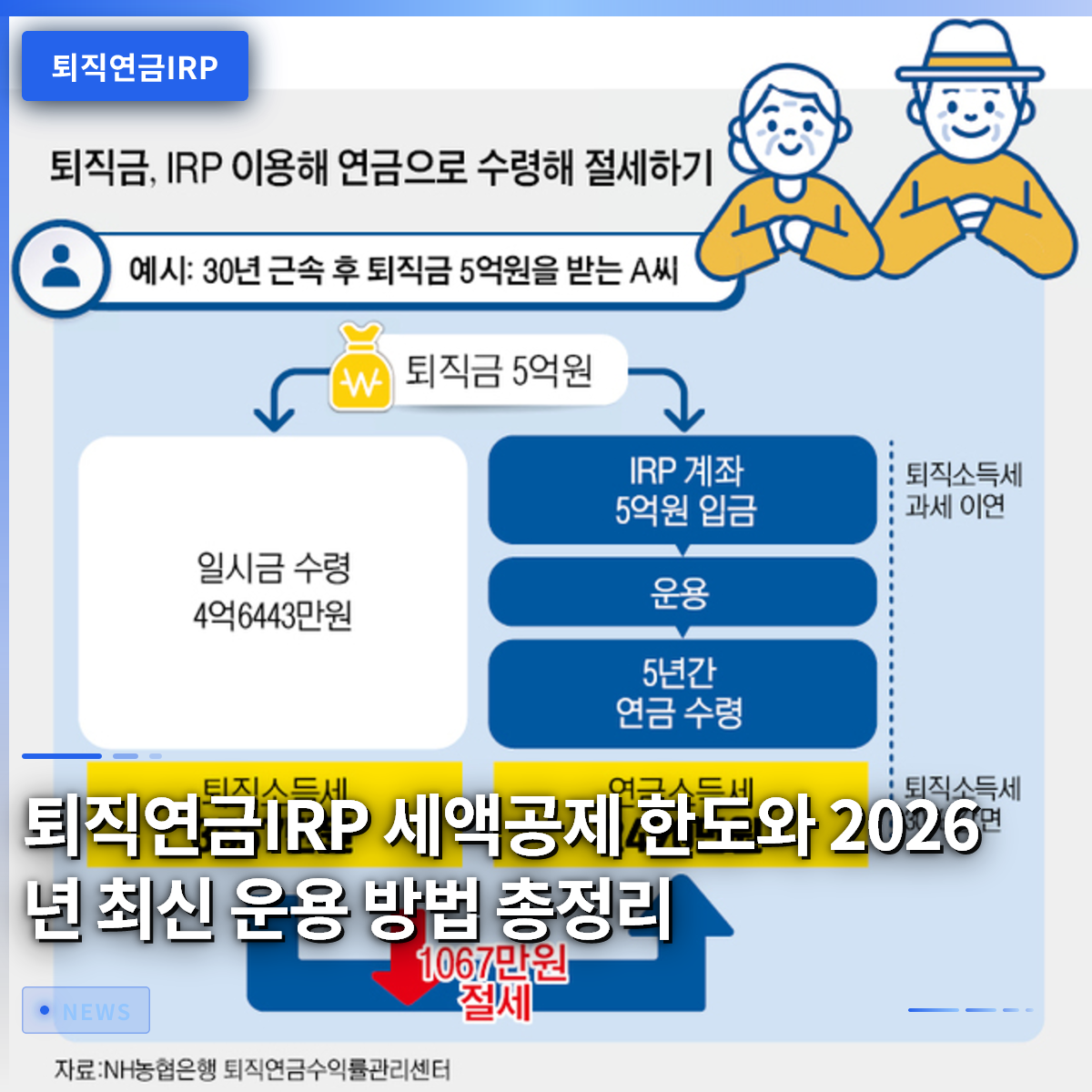
The Individual Retirement Pension (IRP) account is an essential asset management tool that allows you to maximize tax deductions during annual tax settlement while simultaneously building a robust retirement fund. Mr. Kim, an office worker, was thrilled to receive a tax refund of several hundred thousand won during last year’s annual tax settlement, a direct result of having made contributions to his IRP in advance. While many people view it merely as a passbook for receiving their severance pay, it is actually a versatile account that allows for additional voluntary contributions and investment in various financial products even while employed. Recently, it has become increasingly popular to balance profitability and stability by conveniently purchasing Exchange-Traded Funds (ETFs) and individual investment government bonds through various financial institutions. In this article, we will examine in detail the precise definition of the IRP, strategies to maximize tax deduction benefits, and wise allocation methods for safe and risky assets.
=
A Complete Guide to IRP Tax Deduction Limits and Latest Management Strategies for 2026
1. What is an IRP?

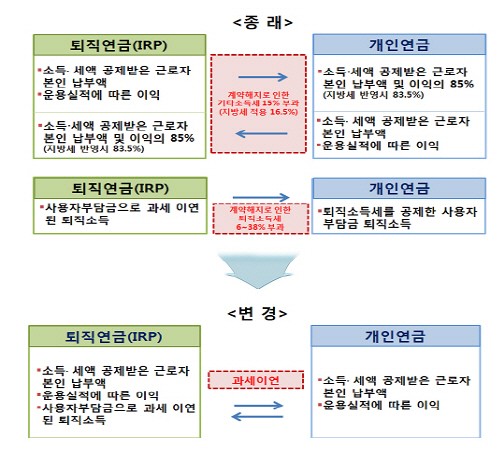
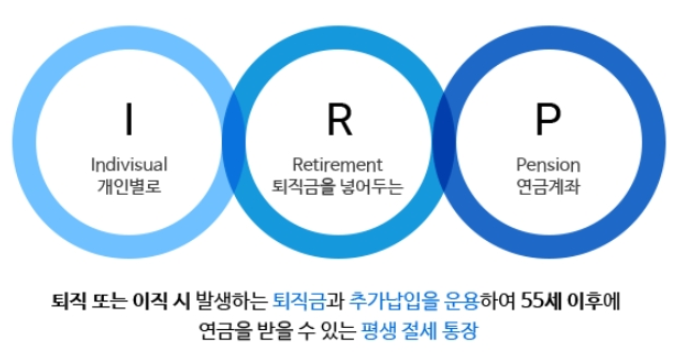
An Individual Retirement Pension (IRP) is a personal retirement pension account where individuals directly contribute and manage funds to receive them as a pension after the age of 55. In addition to Defined Contribution (DC) or Defined Benefit (DB) pensions accumulated monthly by employers, this account has the unique feature of allowing employees to make additional contributions at any time. While it was previously used primarily for receiving severance pay upon leaving a job, there has been an explosive increase in people voluntarily joining to receive tax benefits while still employed. Since it is available not only to salaried workers but also to self-employed individuals, it is highly regarded as an excellent retirement preparation tool for freelancers and sole proprietors.
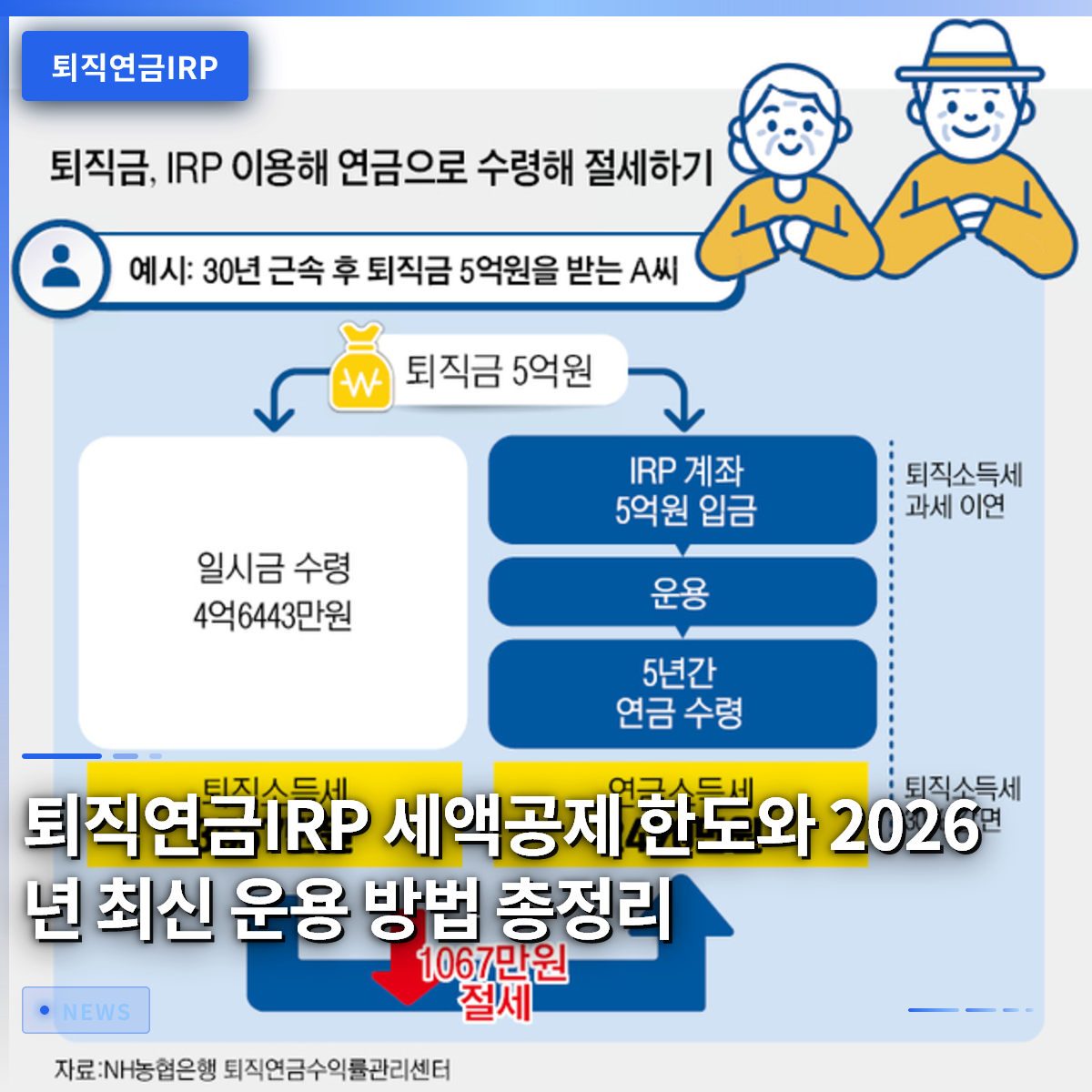
One of the biggest appeals of this account is that severance pay received upon changing jobs or retiring can be transferred without immediate tax deduction, allowing for tax deferral until the time of retirement. Since you do not have to pay taxes immediately and can invest the full amount, it is advantageous for maximizing the effect of compound interest. For example, if you receive your severance pay in a regular bank account, retirement income tax is deducted immediately. However, if you transfer it to this account, tax payment is deferred until you receive the pension. Because the deferred tax amount allows the principal to continue generating interest, it provides significant financial benefits for long-term investments. This is why people around you often advise transferring funds to an IRP when changing jobs, due to this powerful tax deferral feature.
The IRP is an essential account for growing retirement funds through additional contributions and severance pay transfers while enjoying tax deferral benefits.
2. Tax Deduction Benefits and Increasing Limits
The primary reason for utilizing an IRP is undoubtedly to enjoy the substantial annual tax settlement deduction. You can claim tax deductions on contributions up to an annual limit of 9 million won, calculated by combining your pension savings account and IRP contributions. If your total annual income is 55 million won or less, you can receive a high deduction rate of up to 16.5%, resulting in a maximum refund of 1.485 million won. Even if your total annual income exceeds 55 million won, you can apply a 13.2% deduction rate, saving up to 1.188 million won in taxes. By setting up automatic monthly transfers from the beginning of the year, you can naturally secure significant tax savings without the burden of finding a large sum of money at year-end.
In practice, Mr. Park, an office worker, consistently contributes 750,000 won monthly to reach the annual 9 million won limit, receiving a tax refund that colleagues envy every year. If you are already contributing to a pension savings account, you can devise a smart financial plan by filling the remaining limit with your IRP. However, note that the total annual contribution limit is 18 million won, so you should ensure you do not exceed this range. Simply filling the tax deduction limit is equivalent to earning a real return far higher than bank deposit interest.
You can contribute up to 9 million won annually to receive tax deduction benefits ranging from 13.2% to 16.5% depending on your income bracket.
3. Wise Allocation of Safe and Risky Assets
According to current retirement pension supervision regulations, Defined Contribution (DC) or IRP portfolios must allocate at least 30% of total assets to safe assets. This system is established as a minimum safeguard to reduce the risk of principal loss, given that these funds are intended for retirement. Therefore, you can invest up to 70% in risky assets such as equity ETFs, while the remaining 30% must be composed of safe assets like government bonds or deposits. By adhering to this ratio and utilizing mixed products that appropriately combine stocks and bonds, you can achieve efficient asset growth while complying with regulations.
For example, including a US index-tracking mixed product that holds stocks and bonds in equal proportions in the safe asset category allows you to maintain stability while enjoying the fruits of stock market growth. Recently, securities firms are competitively launching various products with diverse asset allocation strategies to increase returns within these regulations. While the mandatory 30% safe asset allocation may feel restrictive to investors, it actually serves as a sturdy breakwater that protects the entire account when market volatility increases. Thanks to this unique asset allocation structure that balances stability and profitability, office workers can continue long-term investments with peace of mind.
IRPs must be managed in a balanced manner, adhering to the ratio of 30% safe assets and 70% risky assets.
4. Utilizing Diverse Investment Products and Services
Within an IRP account, you can invest in numerous financial products, not just regular deposits, but also domestic and international equity ETFs, bonds, and REITs. Recently, there has been a surge in investors using the regular purchase services provided by securities firms to automatically buy ETFs on a specific date each month. This method automatically accumulates shares without the need for busy office workers to constantly monitor stock prices and press the buy button. It allows for the natural practice of dollar-cost averaging, reducing the risk of buying all at once at market highs and lowering the average purchase price.
Additionally, the range of choices has expanded further with the recent opening of services allowing direct purchase of individual investment government bonds through IRP accounts. By investing in long-term government bonds such as 10-year or 20-year issues, you can obtain stable interest income while maximizing the safety of your retirement funds. Major securities firms like Samsung Securities and KB Securities operate dedicated screens and various transfer events to help customers check and manage their pension assets conveniently. Utilizing cashback events that consolidate pension assets scattered across different financial institutions into one place can provide additional financial benefits.
You can conveniently and systematically grow your pension by utilizing various financial products such as automatic purchase services and government bond investments.
5. Cautions for Early Termination and Withdrawal Methods
Since the IRP is a system designed for retirement funds, it is advantageous to avoid early termination as much as possible before the age of 55. If you are forced to terminate early, you must return all tax deduction benefits received to date, and additional income tax will be imposed, potentially resulting in a loss. Partial withdrawals or termination are only permitted without tax disadvantages in exceptional circumstances specified by law, such as purchasing a home, bankruptcy, natural disasters, or deposit refunds for non-homeowners. Therefore, rather than impulsively breaking this account when in need of urgent cash, it is wise to first look into other loan products or emergency funds.
When receiving funds in pension form after the retirement age of 55, it is much more tax-efficient to set the receipt period to 10 years or longer. The pension income tax rate decreases with age: 5.5% from ages 55 to 70, 4.4% from ages 70 to 80, and 3.3% after age 80. If you receive a lump sum, you must bear high retirement income tax or additional income tax rates, but receiving it as a pension allows for significant tax savings. The government has significantly reduced the tax burden on pension receipts to encourage stable retirement living for citizens, so you should fully enjoy this benefit.
Be cautious of significant tax disadvantages for early termination before age 55, and note that pension receipts are subject to lower pension income tax rates.
6. Final Recommendations for a Successful Retirement
The IRP is not just a savings passbook but the most powerful tax-saving and retirement preparation platform that every office worker in South Korea should utilize. By consistently securing tax deductions every year and growing assets through compound interest, you will transform into a robust asset holder at retirement beyond your imagination. Although financial market volatility is expected to increase in the future, you can achieve your goals without wavering if you adhere to thorough asset allocation and automatic purchase principles. It is recommended that you immediately open the app of your financial institution to carefully check your current contribution limits and the composition of your invested products. Small attention and actions determine the quality of life after retirement, so start checking your IRP now.
You should make the IRP a cornerstone for successful retirement fund preparation through consistent contributions and thorough asset allocation.
Frequently Asked Questions
=