
Did you know that there are over 1,200 genes associated with autism spectrum disorder (ASD)? Given the sheer variety of causes, it was previously thought that finding a common treatment would be nearly impossible. However, a recent breakthrough by a domestic research team has revealed a surprising twist: despite the multitude of genetic variations, they ultimately converge into just two opposing molecular patterns within the brain. It is akin to countless branching streams eventually flowing into two large rivers. A joint research team from the Institute for Basic Science (IBS) and the Korea Science and Technology Information Service (KISTI) analyzed large-scale mouse models to reveal this fact to the world. This discovery is evaluated as opening new horizons for treatment by overcoming the limitations of focusing solely on individual genes. Let’s take a closer look at the innovations this will bring to autism research and the development of personalized treatments.
=
Over 1,200 Autism Genes, Yet Brain Changes Converge into Two Distinct Paths

1. Finding Common Ground Among Numerous Autism Genes

Autism spectrum disorder has long been one of the most challenging puzzles in the medical field. With over 1,200 related genes identified, the genetic background of each patient was found to be vastly different. Some patients had issues with specific genes, while others showed variations in entirely different genes. Due to this diversity in causes, elucidating a common mechanism of onset was a massive barrier for researchers. It was like trying to find a common lock when thousands of keys each had a different shape.
However, domestic researchers began to unravel this complex maze by shifting their perspective. Instead of focusing solely on the differences between individual genes, they tracked the overall patterns of change occurring within the brain. As a result, they surprisingly captured the fact that different risk gene variants ultimately converge into two major molecular flows. This attracted significant attention in the academic community for uncovering a common principle hidden behind complex biological phenomena. Conducted with support from the Ministry of Science and ICT, this research was published in the international academic journal *Science*, receiving global recognition.
It has been revealed that over 1,200 diverse autism gene variants converge into two common molecular patterns within the brain.
2. Analysis of 17 Mouse Models and Vast Brain Data

To verify this massive hypothesis, the research team constructed a large number of mouse models, each carrying mutations in one of 17 autism risk genes. They meticulously obtained gene activity information for as many as 1,008 genes from the prefrontal cortex of each mouse model. This information served as a precise indicator of how actively specific genes were functioning within the mouse’s brain. Processing this large-scale data required extensive computation and analysis, driven by the research team’s persistent efforts.
The final analysis results showed a clarity that even the researchers themselves marveled at. When the mice were classified based on gene activity states, they divided into exactly two opposing groups. Despite the different types of genes involved, the final changes occurring in the brain were neatly organized into two distinct branches. The precise gene activity analysis techniques utilized in this process were an excellent example showcasing the pinnacle of modern science. It was the thorough verification through mouse models that enabled the deeper analysis in the next stage.
Analysis of mouse models with 17 autism gene variants and vast brain data from 1,008 genes confirmed two distinct groups.
3. The Identity of the Two Divergent Molecular Patterns in the Brain
The two discovered groups were characterized by completely opposite phenomena occurring within the brain. In the first group, the expression of crucial synapse-related genes, which transmit signals between nerve cells, dropped sharply. Conversely, the expression of processing-related genes, which regulate gene expression and refine related substances, increased noticeably.
In the second group, the exact opposite phenomenon was observed, surprising the researchers. Synapse genes increased while regulatory genes decreased. Even more interestingly, this group assignment is not an immutable law. Even among mice with the same gene variant, the group they belong to can vary depending on sex or developmental stage. This suggests that autism characteristics are not a static state but a dynamic molecular state that shifts according to circumstances. A precise investigation that examined hundreds of thousands of cell nuclei individually confirmed this stark difference between the two groups without exception.
Two opposing molecular patterns were confirmed where signaling genes and regulatory genes change in opposite directions.
4. Commonalities Discovered in Actual Human Brains
Whether results obtained from animal experiments apply to actual humans is always the most critical hurdle in scientific research. The researchers did not stop there and attempted a comparative analysis with brain data from actual individuals with autism symptoms. Surprisingly, the two molecular patterns observed in the mouse models were also observed as-is in the brains of actual patients.
In particular, 14 core synapse genes that change in the same direction in both mouse and human brains were newly identified. This proves that experimental results using mice are not merely an animal-specific phenomenon but serve as an excellent key to understanding human autism spectrum disorder. It means that although the genetic cause for each patient may vary widely, the final pathway through which the brain responds operates commonly in both humans and animals. This discovery will be a tremendous stepping stone for understanding the essence of human autism and designing treatments in the future. It is a remarkable achievement that has sparked a new flame of hope for countless patients and families worldwide.
Molecular patterns consistent with the mouse models were found in the brains of actual autism patients, and 14 core synapse genes were confirmed.
5. Differences in Drug Response and the Possibility of Personalized Treatment

The discovery of the two molecular patterns opens up possibilities for actual treatment, going beyond a mere academic achievement. The research team administered antidepressants and mood stabilizers to the mouse models of the two groups, respectively, to observe their reactions. As a result, mice belonging to the first group showed a tendency for various gene expression patterns to recover to levels similar to the normal control group after drug administration.
However, mice in the second group showed entirely different reactions to the drugs, making it difficult to predict outcomes based on gene type. This experiment clearly demonstrated that the same drug can have completely different effects depending on the molecular state within the brain. Of course, this research is at the stage of confirming gene expression changes in mouse models, and actual behavioral improvement or clinical therapeutic effects have not been fully proven. Nevertheless, it is undoubtedly an encouraging signal indicating that the era of personalized drug treatment tailored to a patient’s molecular characteristics is rapidly approaching. It means that the foundation for precision medicine, which can accurately diagnose patient conditions and prescribe appropriate treatments, has been laid.
Drug responses differed depending on the molecular state in the brain, opening the possibility of personalized treatment for future autism patients.
6. The Future of Overcoming Autism Opened by a New Research Framework
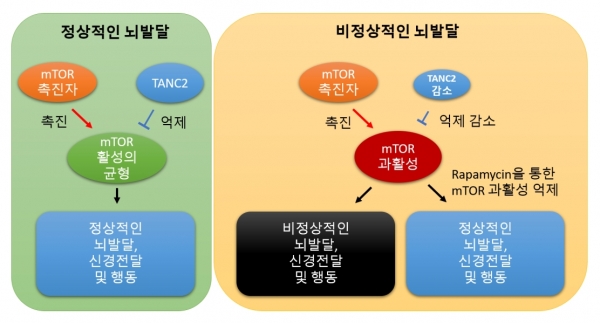
This research has established a historic turning point that completely reverses the paradigm of autism spectrum disorder research. Moving away from the past where researchers lost their way by analyzing over 1,200 genes one by one, they have now grasped a large map of two molecular patterns. It was a moment where the persistent collaboration of the joint research team, including IBS Director Eun-Joon Kim and KISTI Principal Researcher Hyo-Jin Kang, shone brightly. It is the result of experts in the bio field and information technology field pooling their brains to precisely process vast amounts of information.
Going forward, the researchers plan to dig deeper into the exact causes that induce the two molecular states. They also intend to refine treatment strategies that can be applied to patients in actual clinical settings. The belief is growing that autism spectrum disorder, among numerous intractable diseases, can be overcome through precise scientific analysis. We hope that from this crossroads of two paths revealed by science, warm news that provides practical help to patients and families will be delivered soon. We also ask our readers to send warm support for these brilliant scientific achievements achieved by our society.
This research, which goes beyond the limitations of individual gene studies, will serve as a solid cornerstone for precision treatment of autism spectrum disorder.
Frequently Asked Questions
=