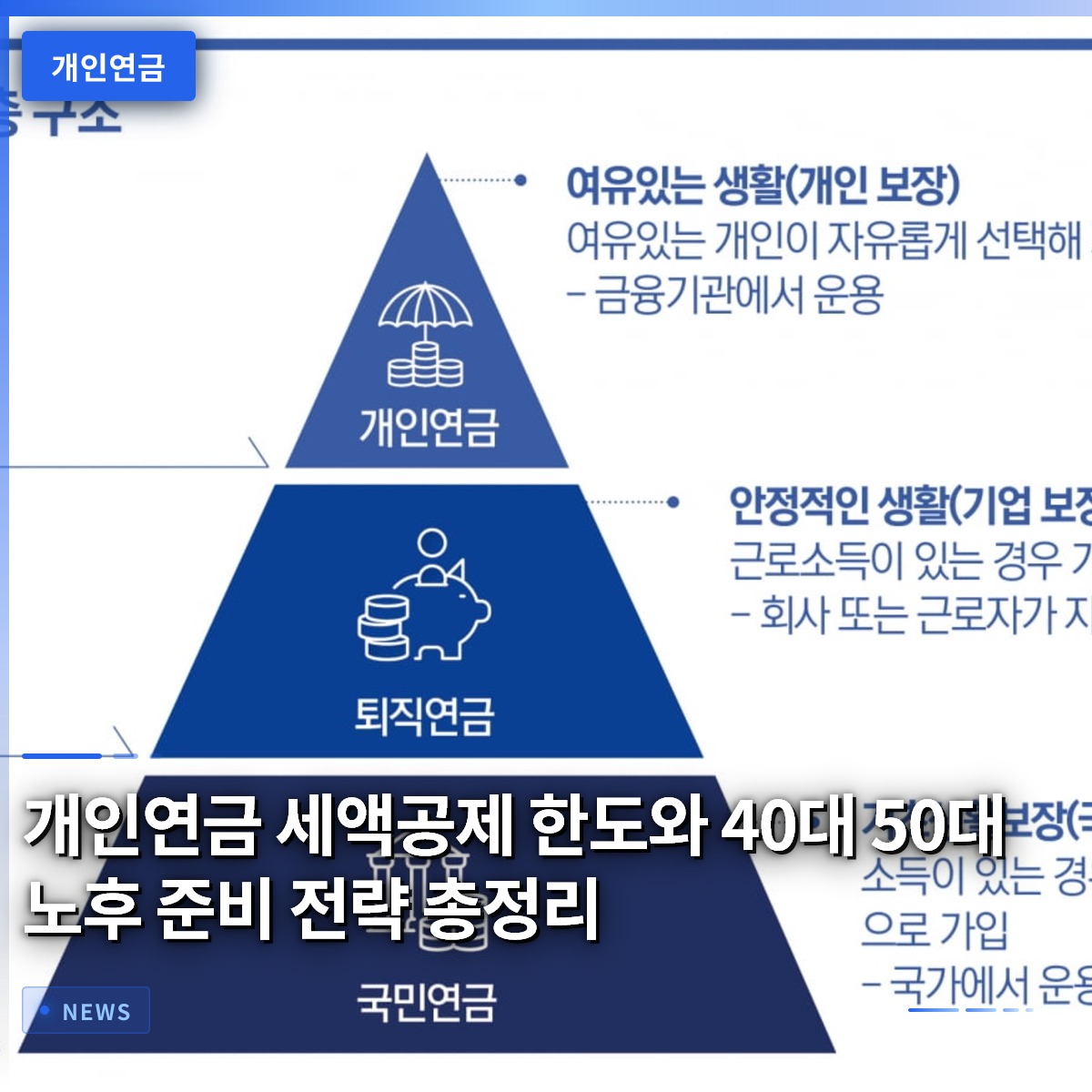
The key to successful retirement preparation lies not in relying solely on the National Pension, but in how thoroughly you prepare your private pension. To guarantee a monthly income of 3 million won for the rest of your life after retirement, you must immediately establish an asset management strategy that combines personal pension savings and corporate pensions. Many office workers rush to look for products every year when the year-end tax settlement season arrives, trying not to miss out on tax deduction benefits. However, it is far more important to accurately predict the cash flow needed at retirement and grow your assets, rather than simply aiming to save on taxes. Recently, various financial companies have opened communication spaces such as pension lounges and asset management websites to help customers directly check their investment performance. Around us, the number of people who have started making regular pension contributions to alleviate retirement anxiety has increased sharply as they enter their mid-40s. In this article, we will go through all the benefits of personal pensions and specific tips for enrollment that office workers must know.
=
A Complete Guide to Personal Pension Tax Deduction Limits and Retirement Planning Strategies for People in Their 40s and 50s
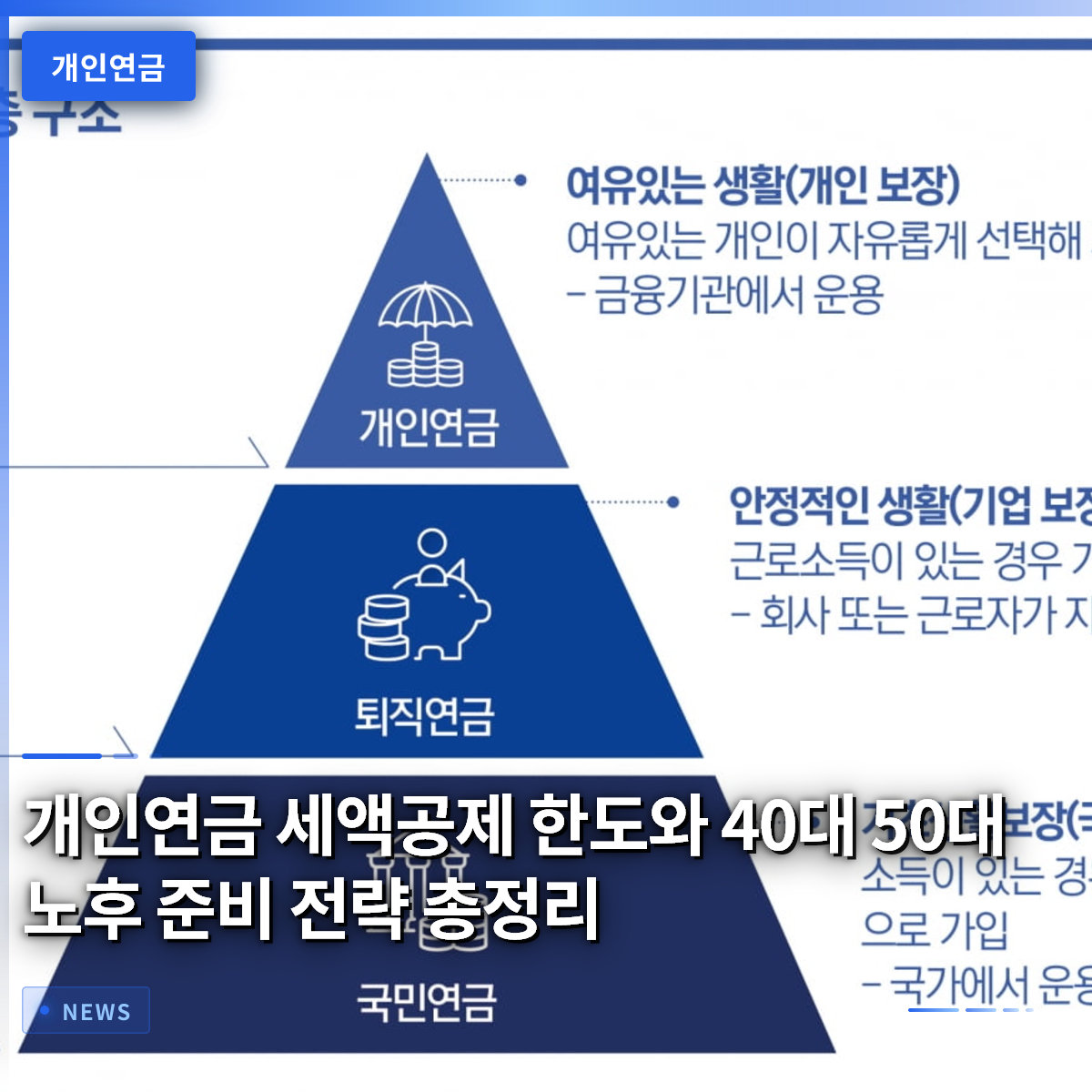
1. Why the National Pension Alone Is Not Enough
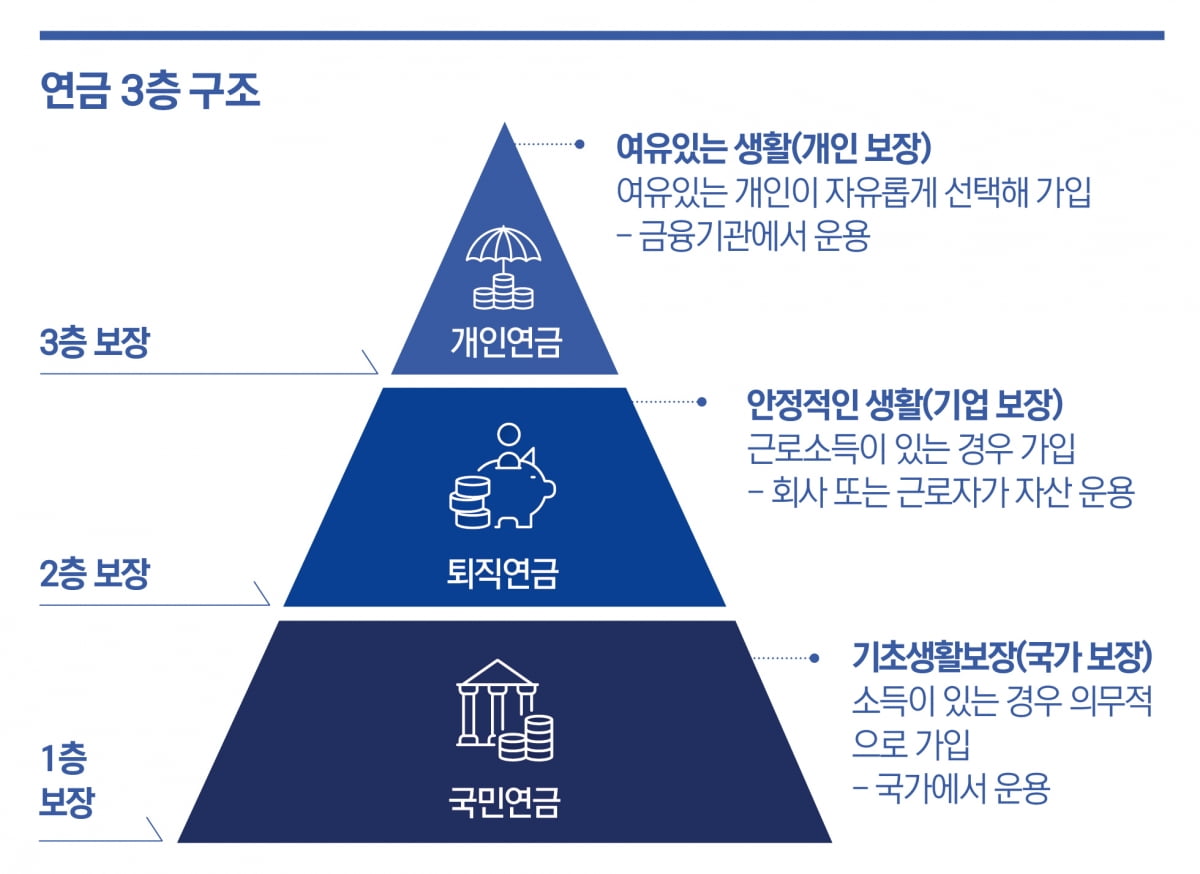
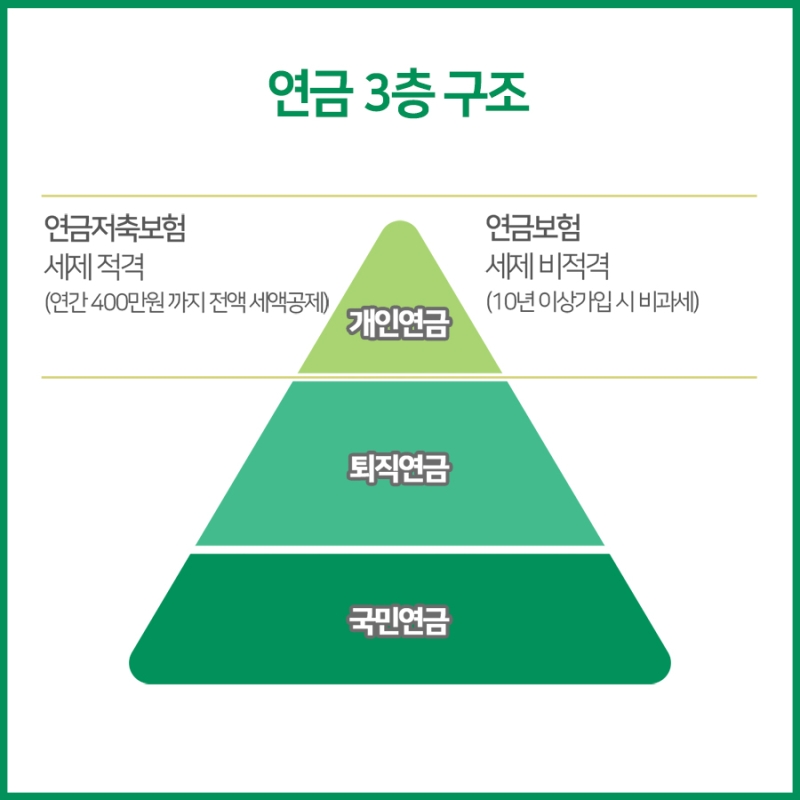
The expected amount of the National Pension we will receive after retirement may be insufficient because it often fails to keep up with the inflation rate. To cover fixed monthly living expenses, it is essential to secure additional income pipelines beyond the National Pension. For example, Mr. Kim, a worker in his 40s living in Seoul, set a goal of 3 million won per month for living expenses after retirement but realized that the National Pension alone would not even cover half of that amount. Eventually, to fill the gap, he enrolled in a personal pension, a private pension that he prepares himself, and started making regular monthly contributions. If you simply rely on state-guaranteed systems and do nothing, you run a high risk of hitting the massive wall of old-age poverty. In fact, retirement experts unanimously state that a stable retirement is only possible if you build a solid three-tier structure consisting of the National Pension, corporate pension, and personal pension. As retirement approaches, it is essential to review your expected benefits and current savings at a glance and make efforts to fill any shortfalls.
It is difficult to cover living expenses after retirement with the National Pension alone, so additional preparation through a personal pension is essential.
2. Tax Deduction Limits for Pension Savings and IRP
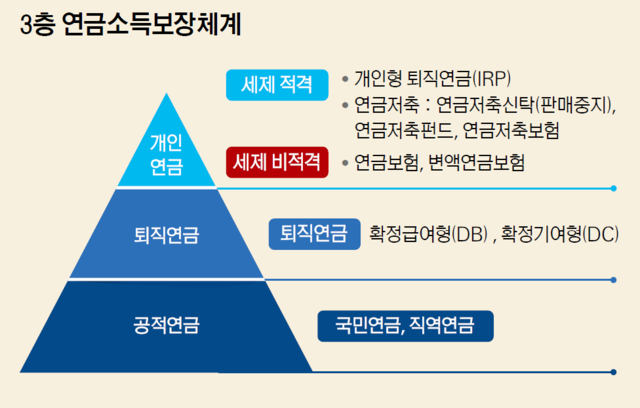
The government provides strong tax incentives to help workers prepare for their own retirement, with the tax deduction system being a prime example. Contributions to pension savings accounts are deductible up to 6 million won annually, and this benefit expands to a combined maximum of 9 million won when including the Individual Retirement Pension (IRP). Mr. Park, a worker in his 40s, consistently contributes to his pension account every year during the year-end tax settlement season, enjoying the fun of getting his taxes back. If you max out the contribution limit and deposit 9 million won annually, you can receive a substantial refund depending on your income bracket, making it a golden time to achieve both asset growth and tax savings. Occasionally, people just meet the tax deduction limit and leave the account alone, but the final size of your retirement fund can vary drastically depending on which products you choose to invest in within the account. Therefore, you must carefully select financial products that suit your investment style and regularly check your returns.
You can enjoy tax deduction benefits of up to 9 million won annually by combining pension savings and the Individual Retirement Pension (IRP).
3. Golden Time Asset Management for Workers in Their 40s
The 40s are considered the golden time that determines the success or failure of retirement preparation, as it is a period when social status and income stabilize. During this time, expenses are high due to children’s education costs and housing down payments, but you must still prioritize pension account contributions. For example, if you start putting a fixed amount into pension savings from your early 40s, you can maximize the effect of compound interest, growing it into a substantial sum by the time of retirement. Many people rush to secure immediate lump sums and postpone retirement funds, but as time passes, the monthly contribution amount required only increases. Recently, various financial platforms have created an environment where you can intuitively understand your investment style and trading patterns and exchange information with other investors. Workers in their 40s are required to have the wisdom to actively utilize these tools to appropriately adjust the ratio between equity assets and stable assets.
The 40s are the golden time for retirement preparation where you can maximize the effect of compound interest, so you should start your pension now.
4. Tailored Pension Combinations for Seniors in Their 50s
As you enter your 50s, retirement is just around the corner, so you must coldly evaluate the savings you have accumulated so far and re-plan your pension receipt strategy. It is best to carefully list the expected National Pension benefits, corporate pension savings, and total personal pension savings in a single table. For example, Mr. Lee, in his mid-50s, ran a simulation to see when and how much pension he would receive, and then made additional contributions to fill the gap. At this stage, a strategy focused on reallocating assets to create a stable cash flow after retirement is safer than engaging in reckless high-risk investments. Additionally, to prevent old-age bankruptcy, you must design your overall asset portfolio with a prior consideration of combinations with housing pensions and basic pensions. Since life after retirement has become longer, meticulous management, such as diversifying the start date of pension receipts, is necessary to ensure your assets do not run out.
In your 50s, you should grasp the receipt timing and amounts of all your pensions at a glance and redesign your cash flow.
5. Proper Utilization of Housing Pensions and Basic Pensions
Retirees who find that the National Pension and personal pensions are insufficient for living expenses can actively consider housing pensions, which utilize their owned homes, as an alternative. Housing pensions, where you pledge your house as collateral to receive money in pension form monthly for life or a certain period, serve as a sturdy prop for the elderly. Basic pension recipients should also carefully check eligibility requirements to ensure they are not left out of the system and should actively claim any benefits they might miss. For example, welfare benefits such as government support or communication fee reductions are often linked to basic pension recipient status, so active application is advantageous. However, since the pros and cons of housing pensions and basic pensions vary depending on individual income and property status, it is wise to consult with an expert before actually applying. The wisdom to organically combine various pension systems to complement shortcomings determines the quality of life in old age.
Insufficient retirement funds should be seamlessly supplemented by utilizing institutional mechanisms such as housing pensions or basic pensions.
6. Prospects for Utilizing Digital Asset Management Platforms
Recently, thanks to rapid technological advancements, the financial market has evolved into an environment where individuals can intuitively analyze their investment performance, much like baseball statistics. Through dedicated community spaces or pension lounges introduced by various securities firms, investors share their asset growth know-how and give each other feedback. In line with this trend, personal pension subscribers are no longer passively depositing money; instead, they actively adjust their portfolios by looking at various metrics provided by the platforms. In the future, as artificial intelligence technology becomes more advanced, personalized pension management solutions will become widespread, allowing anyone to easily achieve optimal returns. Therefore, those who pay attention to the changing financial environment and actively learn new tools will become winners in the retirement market. We hope you will open your pension account right now and take a proactive stance to prepare for the future one step ahead of others.
Actively utilizing evolving digital asset management platforms allows you to grow your personal pension more efficiently.
Frequently Asked Questions
=