The amount of money you ultimately receive can vary by several million to tens of millions of won depending on how you choose to receive your retirement pension. Mr. Kim, a corporate employee nearing retirement, was shocked to hear a story about a colleague who almost got hit with a massive tax bill by trying to buy a new car with a lump-sum payout. In reality, if you carelessly choose a lump-sum payment, the full retirement income tax is applied, potentially resulting in significant financial loss. If you do not immediately need a large sum of cash, choosing the annuity option is far more advantageous as it significantly reduces your tax burden. In this article, we will examine in detail the specific procedures for wisely dividing your retirement funds to save on taxes. We will carefully go through the essential information you need to know to protect your secure retirement funds.
=
Why Receiving Your Retirement Pension as an Annuity Saves More Tax Than a Lump Sum
1. The Decisive Difference Between Lump-Sum and Annuity Payouts
The first thing to compare when choosing how to receive your retirement pension is the magnitude of the tax benefits. If you receive your retirement funds as a lump sum, the accumulated retirement income tax is applied all at once, significantly reducing your valuable assets. On the other hand, if you transfer your retirement funds to an Individual Retirement Pension (IRP) account and receive them in the form of an annuity, you can receive a 30% reduction in retirement income tax. It doesn’t end there; once you have been receiving the annuity for more than 10 years, the reduction rate increases to 40%, dramatically lowering your tax burden. Since the money saved on taxes continues to grow within the account, you can fully enjoy the benefits of compound interest over time.
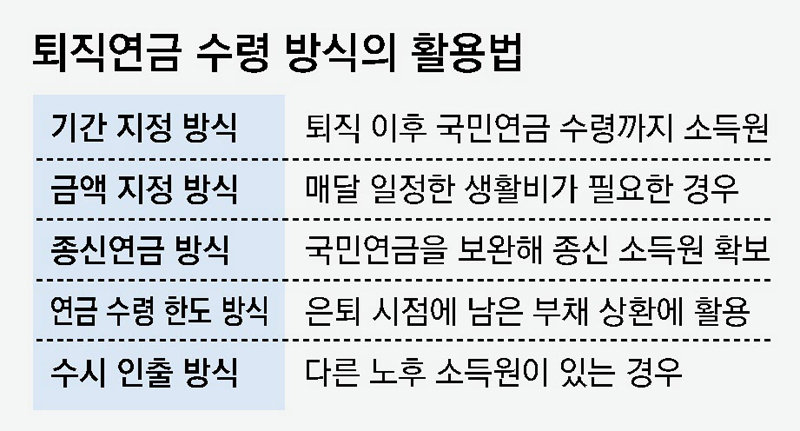
Many retirees want to hold a large sum of cash in their hands at once, but when you consider the tax deductions, receiving an annuity is overwhelmingly more beneficial. In fact, looking at the experiences of acquaintances, those who receive monthly living expenses as an annuity have been much more successful in long-term asset management. Money received as a lump sum is easily spent, but since an annuity arrives on a fixed date every month, it enables planned consumption. Ultimately, to reduce taxes while securing stable living expenses for retirement, you should keep the annuity option in mind from the start.
Receiving your retirement funds as an annuity can save you up to 40% more in taxes compared to a lump sum.
2. The Importance and Utilization of IRP Accounts
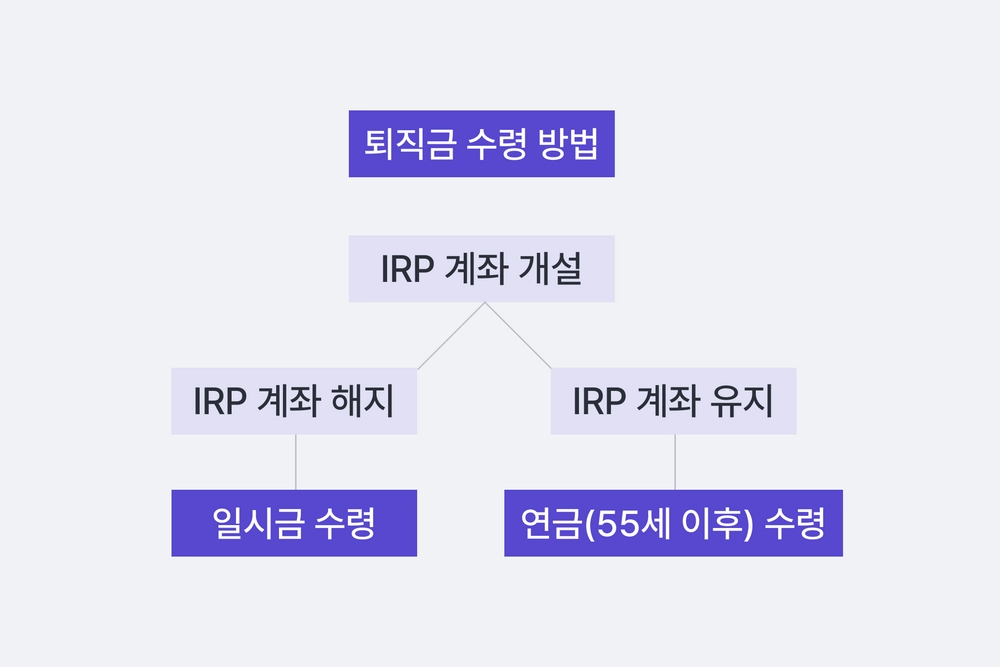
The core tool for receiving your retirement pension is the Individual Retirement Pension (IRP) account. To qualify for annuity payments, your valuable retirement benefits received upon leaving a company or changing jobs must be transferred to this IRP account. Recently, there has been a noticeable trend of financial consumers moving their funds from banks or insurance companies to securities firms. This is because securities firm accounts allow direct investment in various equity products or exchange-traded funds (ETFs), enabling the pursuit of higher returns.
When opening an account directly, it is essential to carefully consider the fee conditions and choose a financial institution that matches your investment style. After opening the account, you should not just leave the money sitting there; you must manage your assets according to your age and investment profile. As retirement approaches, a strategy of increasing the proportion of safe assets to reduce volatility is the shortcut to protecting your retirement funds. You should develop the habit of frequently checking your account balance and returns using financial platforms.
To receive your retirement pension properly, you must open an IRP account and transfer your assets to it.
3. Strategies Based on Payout Period and Age
When designing your retirement pension payout method, you need the wisdom to coordinate the timing of when you start receiving the money. For retirement pensions and personal pensions, delaying the start of payments can be advantageous as it secures additional time for accumulation and investment. If you retired young, you should set a longer payout period; if you retired later, you should adjust the period to increase the monthly amount received.
For example, you can plan to make consistent contributions and manage your assets until just before retirement to receive a fixed amount every month starting at age 65. It is advisable to set the retirement pension payout period to 10 years or more to fill the gap in income that aligns with the start of your National Pension. Stability in life after retirement is only found when the annuity amount deposited into your account each month is sufficient for living expenses. Simply receiving money as early as possible is not the only solution; you must comprehensively consider your expected lifespan and funding needs.
Delaying the start of annuity payments and setting a longer period extends your asset management timeframe, leading to a more stable retirement.
4. Choosing a Financial Institution and Money Move Trends
Deciding which financial institution to work with is very important when learning about how to receive your retirement pension. Recently, a clear trend has been observed among investors moving funds from traditional banks or insurance companies to securities firms. This is because securities firms allow direct investment in various ETFs and bond products, allowing for relatively higher expected returns.
If it is difficult to visit your main bank or securities firm, you can easily open an account non-face-to-face through a smartphone app. In the non-face-to-face account opening process, it is a wise consumer attitude to carefully compare fee waiver benefits and event offers. Since the quality of asset management solutions and consulting services varies by financial institution, it is also helpful to look up reviews in advance. Since this is an important account handling your retirement funds, you should choose a place with high security and a convenient interface.
You should choose the account of the most advantageous financial institution by considering your investment style and fee conditions.
5. A Complete Guide to Document Preparation and Application Procedures
To actually execute the method of receiving your retirement pension, you must gather all necessary documents between your company and the financial institution. When an employee retires, the company must deposit the retirement funds accumulated in Defined Benefit (DB) or Defined Contribution (DC) plans into the IRP account without any leakage. The employee needs to prepare a certificate of retirement, identification, and a copy of an account in their own name, and submit these to the financial institution.
It is surprisingly common for people to delay their application because they cannot find the time to visit a branch directly or do not know where to check. Using public systems like the Integrated Pension Portal allows you to view and manage all your pension information at a glance. After submitting the documents, the account transfer is usually completed within a few business days, after which you can proceed with the annuity commencement application. Even if the procedures seem complex, if you follow them step by step, anyone can handle them easily on their own.