
With the upcoming Chuseok holiday approaching, forecasts suggest that the domestic stock market is likely to enter a phase of increased short-term volatility, requiring caution from investors. The market is under downward pressure due to the combined effects of the US Federal Reserve’s continued monetary tightening stance and concerns over the outcomes of the upcoming US-China summit. Much like consumers worrying about grocery prices just before a major holiday, investors are clearly tightening their belts and focusing on risk management. However, experts advise using this period of index correction as a good opportunity to buy quality stocks at discounted prices. This is because earnings forecasts for listed companies remain robust, and price-to-earnings (P/E) ratios are hovering near historic lows. In this article, we will examine the key factors shaking the market this week in detail, along with investment strategies for the period before and after the holiday.
=
Weekly Outlook: Rising Volatility Ahead of the Holiday; A Chance to Increase Equity Exposure During Downturns

1. The Fed’s Hawkish Stance and the Impact of Interest Rate Hikes
Tensions are running high across financial markets after the US Federal Reserve raised its benchmark interest rate at its recent Federal Open Market Committee (FOMC) meeting. In the press conference following the meeting, the Chair emphasized price stability as the top priority and did not rule out the possibility of further tightening. These hawkish remarks from the monetary authority are acting as a significant psychological burden for investors, serving as a primary driver of risk-averse sentiment. Just as a ship navigating the sea faces rough waves, the stock market is bracing for the impact of interest rate hikes by central banks worldwide. The Bank of Japan has also recently raised its benchmark rate, reaching its highest level in decades. The synchronized tightening moves by major global economies are approaching the domestic stock market as a harsh cold wave, freezing the supply and demand environment. Investors, startled by the rate hike news, are withdrawing funds, temporarily weakening the market’s resilience.
Continuous interest rate hikes and tightening remarks from global central banks are exerting short-term downward pressure on the stock market.
2. US-China Summit and Regulatory Uncertainty in the Semiconductor Industry

All eyes are on the summit between US President Donald Trump and Chinese President Xi Jinping, scheduled to take place in Washington later this week. If the US lowers regulatory barriers regarding China’s memory semiconductor industry during this meeting, it could be a significant negative factor for domestic semiconductor leaders. Institutional and foreign investors are closely watching because the competitive landscape for core domestic companies like Samsung Electronics and SK Hynix could shift. Much like athletes waiting for a strong rival to change strategy, domestic market participants are holding their breath for the summit’s outcome. In addition to macroeconomic indicators, the divergent impacts of such diplomatic events on specific industries are becoming a fuse that further amplifies market volatility. Therefore, given the characteristics of the domestic KOSPI market, which has a high semiconductor weighting, it is wise to monitor the progress of the summit daily. If unexpected policy changes or regulatory relaxations are announced, significant stock price fluctuations in related stocks will be inevitable.
Issues regarding semiconductor regulations to be discussed at the US-China summit are a key variable that will determine the stock price trends of major domestic companies.
3. Supply-Demand Gaps and Defensive Selling Ahead of the Holiday
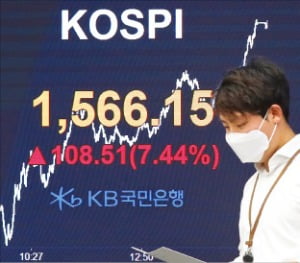
With the Chuseok holiday, the nation’s biggest traditional festival, just around the corner, the domestic stock market is experiencing a typical wait-and-see stance and a conservative shift in supply and demand. Investors are rushing to sell stocks defensively to avoid potential negative news from overseas markets during the long holiday period. Although the market managed to rebound last week due to inflows of foreign buying, the unique situation of the holiday closure makes it difficult for upward momentum to sustain. Much like carefully checking a car before a long trip, investors are restructuring their portfolios and increasing their cash positions. Trading volumes are decreasing, and the order books for buying and selling are thinning out, leading to a fragile market where small orders can cause significant price swings. During such periods, a calm observation of market trends is far more advantageous than aggressive new purchases. The seasonal factor of the holiday is freezing investor sentiment, leading to reduced trading volumes and stock price fluctuations.
The conservative shift in supply and demand and defensive selling ahead of the Chuseok holiday are direct causes of increased short-term volatility.
4. Strategy to Increase Equity Exposure Utilizing the Correction Phase
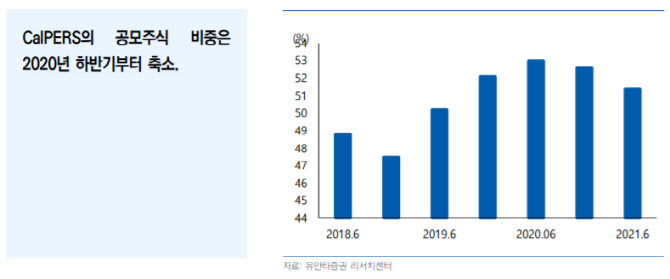
Experts unanimously agree that even if the stock market corrects this week due to holiday-related caution, investors should view it as an opportunity rather than a source of fear. Historically, stock prices have shown weak trends ahead of the Chuseok holiday, but there has been a clear tendency for a rebound after the holiday ends as waiting funds flow in. Indeed, statistics from the past decade show a pattern where pre-holiday weakness and post-holiday strength intersect in terms of stock price returns. Just as warm spring follows winter, temporary stock price declines are actually a prime chance to pick up good stocks at cheap prices. It is wise to approach the market with a split-buying strategy whenever the index falls within the KOSPI forecast range presented by securities firms. Investors who accumulate solid stocks while others panic and sell are the ones who will truly win in the market. A contrarian investment strategy is needed—one that remains unmoved by short-term price drops and prepares for the post-holiday rebound.
Pre-holiday stock price corrections represent an opportunity to increase equity exposure, aiming for a post-holiday rebound based on historical statistics.
5. Record-Low Valuation and Robust Earnings

One of the biggest attractions of the current domestic stock market is that stock prices are historically cheap relative to earnings. Aggregating estimates from securities firms, the combined net income of listed companies for this year and next continues to show an upward trend. Although the pace of earnings growth may be slightly slower than in previous years, the absolute amount of money companies are earning is growing robustly. The KOSPI’s forward P/E ratio is currently at its lowest level, meaning there is little burden from a fundamental perspective. It is similar to a luxury brand holding a large-scale sale, allowing customers to buy items at much lower prices than usual. Since corporate fundamentals are strong but stock prices are suppressed by external factors, this is an ideal time for long-term investment. One must believe that while stock prices may fluctuate temporarily, robust corporate earnings will eventually find their true value.
With the upward trend in listed companies’ net income estimates continuing and P/E ratios at record lows, the price appeal is very high.
6. Successful Portfolio Management Around the Holiday

To navigate this week’s extreme volatility wisely, careful stock selection and fund management are paramount. Theme stocks or those with short-term sharp spikes that lack earnings support are highly vulnerable to shocks around the holiday, so it is best to cut them decisively. Instead, portfolios should be concentrated on large-cap blue-chip stocks with high earnings visibility and excessive declines to prepare for the post-holiday market. Just as a sturdy house remains unshaken by a fierce typhoon, investing in companies with strong fundamentals allows for a peaceful holiday. It is necessary to practice adhering to the principle of split buying as prices fall and restraining emotional trading. If the increased volatility this week is viewed not as a crisis but as a springboard for a new leap, upcoming investment results will be much more abundant. Investors who observe the market calmly and execute a split-buying strategy will ultimately be the ones to smile.
Volatility should be overcome through concentrated trading in high-earnings stocks and a split-buying strategy.
Frequently Asked Questions
=