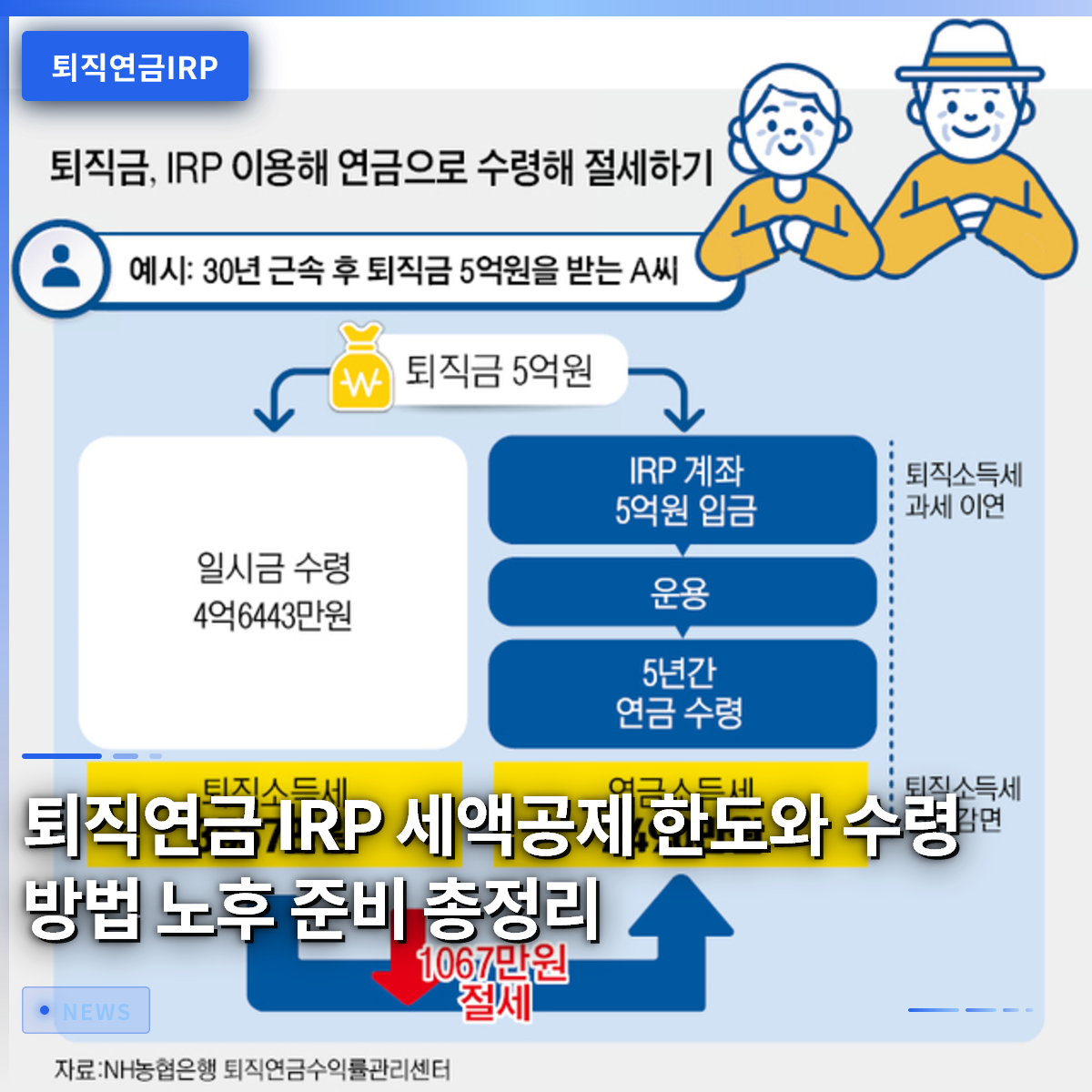
If you properly utilize your Individual Retirement Pension (IRP) account, you can receive tax refunds ranging from several hundred thousand to several million won during your annual tax settlement. In the past, many people received their severance pay as a lump sum and spent it immediately. However, transferring funds to an IRP to grow them over a long period has become an essential strategy for securing retirement income. You might have decided to join after seeing colleagues receive substantial year-end tax refunds, but many people hesitate due to complex terminology and regulations. For instance, Mr. Kim, an office worker, had been missing out on tax deduction benefits every year until he recently opened an account and made regular monthly contributions, resulting in a significant refund last year. This article will explain everything you need to know about IRPs for busy professionals and self-employed individuals in a simple and easy-to-understand manner. Let’s take a step-by-step look at tax benefits and safe asset management methods.
=
A Complete Guide to IRP Tax Deduction Limits and Payout Methods for Retirement Planning
1. What is an IRP and Why Should You Join?

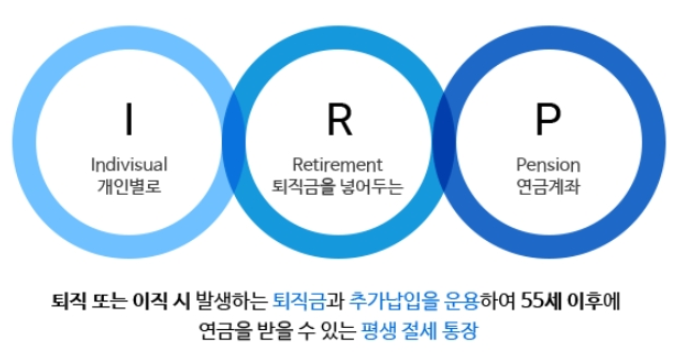
The Individual Retirement Pension (IRP) is a system that allows employees to accumulate their severance pay in an account under their own name and continue investing it until retirement. In addition to Defined Benefit (DB) or Defined Contribution (DC) pension plans commonly offered by companies, a major advantage is that you can make additional contributions with your own funds to enjoy tax benefits. In the past, people often left their money with the financial institution designated by their company without much thought. However, it is now an era where you must proactively select and manage financial products yourself. You can invest in various funds and Exchange-Traded Funds (ETFs) offered by banks and securities firms, allowing you to defend against inflation and actively grow your assets.
Looking around, you can see a stark difference in the quality of life after retirement between those who started preparing early and those who did not. It is an excellent tax-saving tool that anyone with income can utilize, including freelancers and self-employed individuals who do not have a separate severance fund. According to statistics from the Financial Supervisory Service, not only middle-aged and senior citizens approaching retirement but also young professionals are rushing to join IRPs for tax planning purposes. It serves as a very useful savings method even for those who struggle with controlling their spending, as it forces regular monthly savings. If you do not prepare in advance while working, you may suffer a significant financial blow upon retirement, so it is essential to start paying attention now.
IRPs are essential accounts for both office workers and self-employed individuals, allowing you to grow your retirement funds independently while saving on taxes.
2. Secrets to Maximizing the 9 Million Won Tax Deduction Limit
Do you know that you can receive tax deductions of up to 9 million won annually when combining a Pension Savings Account and an IRP? While a Pension Savings Account alone offers a maximum deduction of 6 million won, contributing an additional 3 million won to an IRP allows you to reach the total limit of 9 million won. If your total annual income is 55 million won or less, a high deduction rate of 16.5% applies, allowing you to receive a substantial refund of up to 1,485,000 won. Even if your income exceeds this amount, you can still benefit from a 13.2% deduction rate, saving up to 1,188,000 won in taxes, making it an excellent financial product for office workers.
Many people rush to deposit funds near the end of the year to meet the limit, but making consistent monthly contributions is far more advantageous. For example, paying 750,000 won monthly reduces financial burden while automatically reaching the maximum limit by year-end, which is very reasonable. Mr. Park, an office worker, used to struggle to find a large sum of money in December every year, but after setting up automatic monthly transfers, he can prepare for his annual tax settlement comfortably without pressure on his living expenses. Reinvesting the saved taxes or using them as an emergency fund creates a virtuous cycle that accelerates asset growth. Since tax laws are revised slightly each year, it is also a good idea to refer to information from tax-saving strategy seminars hosted by investment firms or financial institutions.
By contributing up to 9 million won annually when combined with a Pension Savings Account, you can enjoy a high tax deduction rate of up to 16.5%.
3. The Golden Ratio: 70% Risk Assets and 30% Safe Assets
There are specific investment limit regulations that must be followed when investing in equity funds or ETFs through an IRP account. The proportion of risky assets, such as stocks, which carry the risk of principal loss, can be up to 70% of the total accumulated funds, while the remaining 30% must be allocated to safe assets. This regulation sometimes disappoints young investors who want to manage their funds aggressively, but it is a necessary mechanism for stability. Safe assets include government bonds, treasury bills, principal-guaranteed deposits, high-quality corporate bonds, and certain ETFs classified as safe assets.
You can easily find testimonials from investors who minimized the overall impact on their assets during stock market crashes thanks to their 30% allocation to safe assets. A common strategy is to actively utilize ETFs holding high-quality domestic and international stocks for the 70% risky asset portion to aim for capital gains. Recently, brokerage systems have improved significantly, allowing you to check your asset allocation in real-time and easily rebalance using just a smartphone app. For busy office workers, it is wise to utilize the Default Option (Pre-designated Investment Method), which automatically manages your funds according to a set ratio without requiring your constant attention. If you adhere to strict asset allocation principles and continue long-term investing, you will be able to retire without the fear of principal loss.
Risky assets like stocks are limited to 70%, and the remaining 30% must be in safe assets, so you should use the Default Option for efficient management.
4. Everything About Transferring Severance Pay and Early Withdrawals When Changing Jobs
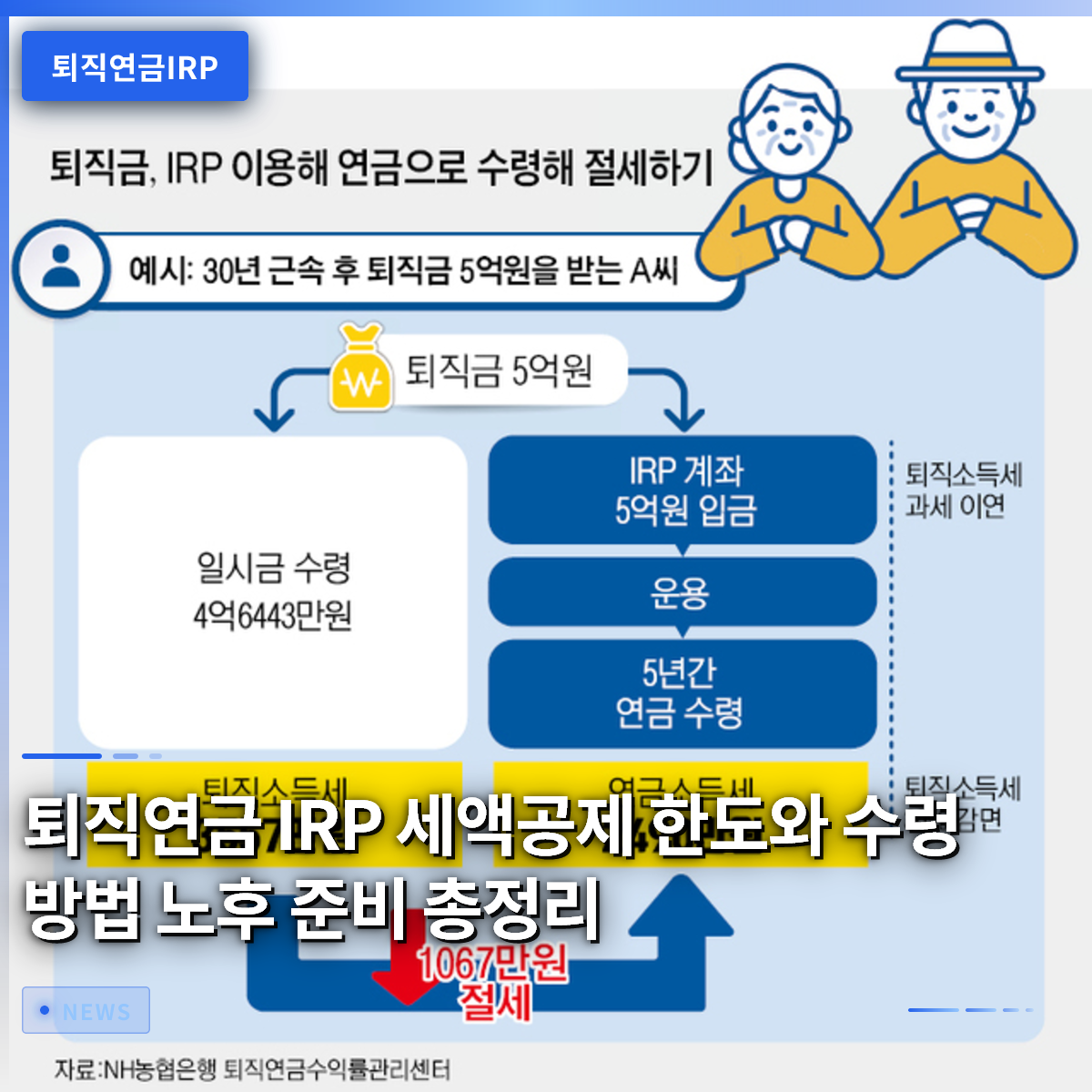
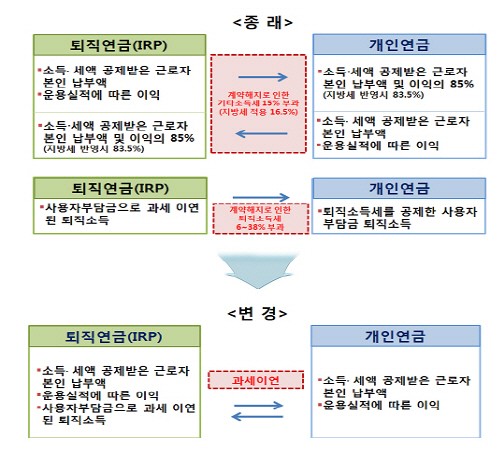
When you change jobs, your accumulated severance pay must be transferred to an IRP account under your own name, rather than being paid out as a lump sum. In the past, many people did not understand this process and simply received the money in their bank accounts to use for living expenses, ultimately losing their entire retirement fund. Now, it is legally mandatory, so even if you quit your job, your severance pay is safely transferred to the account, ensuring your retirement funds are consolidated rather than scattered. While the principle is to lock the money until retirement, early withdrawal is possible under extreme circumstances such as purchasing a home as a non-homeowner, securing a deposit for a rental, or bankruptcy of yourself or a family member.
Of course, early withdrawal can result in the loss of previously received tax benefits and the imposition of heavy taxes such as miscellaneous income tax, so you must decide very carefully. Mr. Lee, an office worker, once withdrew money from his pension account a few years ago due to a lack of rental deposit funds, only to face a massive tax bill during his annual settlement later, regretting his decision greatly. Therefore, rather than rashly closing or withdrawing from your account just because you need cash, it is much wiser to first explore mortgage loans or other financial products. Even in unexpected situations of job changes or resignation, you must transfer your severance pay intact to your next employer or personal account to fully enjoy the benefits of compound interest.
Severance pay is automatically transferred to the account upon job change, and early withdrawal can lead to a tax bomb, so it should be avoided unless absolutely necessary.
5. Saving Taxes by Setting Pension Payout Age and Duration
You must remember that the amount of tax you pay when actually receiving your hard-earned retirement funds varies greatly depending on how you receive them. Once you are 55 years old or older, you become eligible to receive pension payments, and it is far more advantageous to receive them in installments over a period of 10 years or more rather than as a lump sum. Receiving funds as a pension allows for a reduction in severance income tax of up to 30% compared to a lump sum, significantly reducing your tax burden. If you adjust the period so that your annual pension receipt does not exceed 15 million won, you only need to pay the lower pension income tax, maximizing tax savings.
Since you need to create a stable cash flow after retirement to escape the pressure of living expenses, we strongly recommend the method of receiving a fixed amount monthly. It is important to communicate closely with financial advisors to calculate your asset size and expected lifespan, thereby designing the payout period meticulously. In fact, reviews from retiree communities show that those who received their pensions in installments over a long period, rather than as a lump sum, enjoy a much more comfortable and stable retirement. Even after reaching the payout age, if you do not immediately need the money, you can continue investing and extend the accumulation period, so there is no need to rush.
After age 55, you should receive your severance pay as a pension over 10 years or more, rather than as a lump sum, to save significantly on taxes and secure stable living expenses.
6. Practical Strategies and Outlook for a Successful Retirement
The IRP is not just a temporary measure to save on taxes, but a precious asset that will serve as a reliable shield for your family in our increasingly long lives. Those who accurately understand the changing tax laws and financial systems and move one step ahead of others will ultimately be the winners after retirement. Financial market volatility is expected to increase in the future, and active investment is essential to protect the value of your assets amidst inflationary pressures. Instead of neglecting it out of laziness, you need the diligence to periodically check your account, review returns, and switch products when necessary.
Right now, open your bank or brokerage app to check the status of your pension account and calculate how much of this year’s tax deduction limit you have filled. If there is a shortfall, it is best to gradually increase your monthly contributions over the remaining period to complete a wise tax-saving plan. The government and financial institutions are continuously introducing various management services and convenient platforms to secure retirement income for citizens, so you should actively utilize them. Based on the information learned today, if you make a thorough plan, anyone can welcome a prosperous and dignified retirement without envy.
Consistent interest and active asset management determine a successful retirement, so you should check your pension account and start taking action now.
Frequently Asked Questions
=