Many office workers still use the term “income deduction pension savings” when preparing for year-end tax settlement, but the current official name for the tax benefit associated with this financial product is “tax credit.” Due to past tax law amendments, the system has completely shifted from an income deduction method, which reduced the taxable base, to a tax credit method, which directly subtracts a certain percentage of the contribution amount from the calculated tax liability. You might have heard a colleague say they received a tax refund of nearly 900,000 won last year from a pension product and hurriedly searched for how to join. However, many people end up facing unexpected tax burdens or panic when they cannot withdraw their funds at the desired time because they joined without understanding the exact name and system of the product. In this article, we will look in detail at the actual tax credit limits, specific refund calculation methods, and how to safely build retirement funds for those confused by the outdated terminology.
=
Common Misconceptions About Income Deduction Pension Savings: A Complete Guide to Tax Credit Limits and Refunds
1. Differences Between Income Deduction Pension Savings and Tax Credits

The original legal name of the financial product commonly referred to as “income deduction pension savings” is the Pension Savings Account, which currently offers tax credit benefits. In the past, under older tax laws, a portion of the contribution amount was directly deducted from income, and many people still use the old term out of habit. However, with tax law revisions, the system transitioned to a tax credit that directly reduces the tax amount. This means the structural impact of the discount differs significantly, whether for high-income earners or general office workers. For example, if an office worker with a total salary of 500,000 won contributes to a pension savings account, it no longer lowers the entire income bracket as it did in the past; instead, the tax is directly reduced by the amount calculated by multiplying the contribution by the specified deduction rate. If you do not accurately understand this change and expect a full refund of your taxes, you are likely to be greatly disappointed when you see your year-end tax settlement results. Therefore, to formulate a proper tax-saving strategy, we must now approach this product from the perspective of a definitive tax credit rather than an income deduction. One of the most confusing points for financial consumers is the misconception that this product is a savings account that can be terminated and used at any time, like a short-term deposit. Mr. Kim, an office worker, put a lump sum into his pension savings last year to get a tax refund but faced significant penalties when he tried to terminate the account due to an urgent need for cash. If you withdraw the principal that received tax credits and the accumulated investment returns in a manner other than receiving a pension, you must return all the benefits you received. Furthermore, a heavy tax is imposed under the name of “other income tax,” teaching the lesson that you should never put in money you intend to use in the short term. If you do not properly understand the essence of the system, you may not only fail to save on taxes but also suffer losses on your hard-earned assets. Therefore, before joining, remember that this product is strictly a long-term savings vehicle for retirement and carefully check your cash flow.
The actual system for income deduction pension savings is a tax credit, which has changed from the past method to one that directly reduces the tax amount.
2. Annual Contribution Limits and Tax Credit Refund Calculations

Currently, you can contribute up to a maximum of 18 million won annually when combining Pension Savings Accounts and Individual Retirement Pensions (IRP), of which the limit eligible for tax credits is up to 9 million won annually. Many people mistakenly believe that the entire 18 million won limit is eligible for tax credits and forcibly put in large amounts. However, in reality, the limit for which the government refunds taxes is up to 6 million won if using only the Pension Savings Account, and it can be filled up to 9 million won only by utilizing an Individual Retirement Pension as well. If you are an employee with a total salary of 50 million won or less, a deduction rate of 16.5% is applied, allowing you to receive a refund of over 1.9 million won for the maximum contribution of 9 million won. On the other hand, if you are an office worker with a higher total salary, a deduction rate of 13.2% is applied, so you must accurately grasp your income bracket and formulate a contribution strategy. To see how useful the system is, let’s calculate the year-end tax settlement refund for Mr. Park, an office worker. Assume Mr. Park, with a total salary of 40 million won, consistently contributes 500,000 won monthly, totaling 6 million won annually to his pension savings. In this case, since Mr. Park falls into the bracket of 50 million won or less in total salary, he fully applies the 16.5% deduction rate and receives a substantial refund of 990,000 won at year-end tax settlement. It is as if the government is returning a lump sum equivalent to vacation expenses to your account every year just for saving like a monthly deposit; it is hard to find a better financial tool. If he goes further and contributes an additional 3 million won to an Individual Retirement Pension, he can maximize the refund by filling the 9 million won deduction limit. Thus, optimizing the contribution amount according to your salary level and available funds is the core of tax-saving techniques for office workers.
The tax credit limit for pension savings is up to 6 million won, and you receive a refund of 13.2% to 16.5% depending on your total salary level.
3. How to Join and Tips for Choosing a Securities Firm or Bank
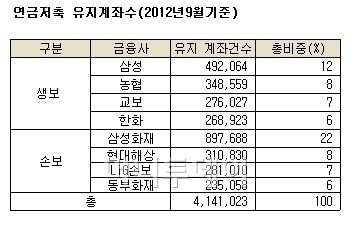
To join an income deduction pension savings account, you can visit a commercial bank, securities firm, or insurance company, or open an account non-face-to-face through a mobile app. In the past, the proportion of people joining through stable bank deposit products or insurance company pension insurance was overwhelmingly high, but the trend has completely changed recently. Many young office workers and savvy investors prefer securities firm pension savings accounts, which allow them to grow their assets by directly investing in stocks or Exchange-Traded Funds (ETFs). While bank products offer the psychological comfort of principal protection, they are often criticized for being insufficient for long-term retirement funds due to low interest rates that struggle to keep up with inflation. On the other hand, using a securities firm account allows you to diversify investments in safe ETFs that track global stock indices, aiming for both inflation defense and high returns. In fact, Mr. Lee, an office worker who had maintained a pension savings insurance at a bank for several years, made the decision to transfer his contract to a securities firm after realizing the returns were too low. By utilizing account transfer, a system that allows you to legally and safely switch financial institutions without terminating the existing product, he moved to a securities firm without any loss. By appropriately combining ETFs investing in large-cap US blue-chip stocks and domestic bond products through the securities firm app, he achieved results incomparable to bank interest rates. Since the size of the retirement funds you will hold in the future can differ vastly depending on the financial institution you choose, careful selection is necessary. When joining for the first time, you must carefully consider the complex fee structure and your ability to manage assets directly to choose the most advantageous option.
Pension savings accounts can be opened at banks, insurance companies, and securities firms, but investing through securities firm accounts has become the mainstream for asset growth recently.
4. The Secrets of Pension Receiving Age and Taxes
The money accumulated in your Pension Savings Account can only be received in the form of a pension after the age of 55, at which point you receive significant tax-saving benefits. Instead of withdrawing a lump sum, if you receive it as a pension within a specified annual limit, the government imposes a very low pension income tax to encourage this. The applicable tax rate decreases as you get older, dropping to 5.5% for those aged 55 to under 70, and further down to 3.3% for those aged 80 and above. Considering that the general financial product interest or dividend income tax is 19.8%, the pension income tax rate plays a crucial role in defending your retirement living expenses. Additionally, if you receive your severance pay in the form of a pension, the retirement income tax itself is significantly reduced by 30% to 50%, dramatically lowering the tax burden. Mr. Choi, an office worker approaching retirement, almost had to pay a large tax by receiving his severance pay as a lump sum, but he overcame the crisis by transferring it to a pension account on the advice of those around him. If you transfer your severance pay to a pension account within 61 days of receiving it, you can defer taxation to a later date without paying a large amount of tax immediately. Later, when you receive it as a pension after age 55, you pay tax at a much lower rate than the general pension income tax, minimizing actual income loss. If you skip this process and arbitrarily terminate the account midway or withdraw money in a non-pension manner, all the benefits you received will be lost, so be careful. Since the quality of life after retirement depends entirely on how you design the pension receiving age and withdrawal method, you must prepare meticulously starting now.
Pension savings can be received as a pension from age 55, and a low tax rate of 3.3% to 5.5% is applied, which is much lower than the general interest income tax.
5. Precautions You Must Know Before Joining
The point you must always remember before joining an income deduction pension savings account is that this product is not a short-term emergency fund but money locked away exclusively for retirement. If you have to break the account because you suddenly need a large amount of money, you must return all the money you received back through tax credits and face a “other income tax” bomb. Mr. Jeong, an office worker, terminated his pension savings, which he had diligently contributed to for several years, citing a lack of wedding funds, and was shocked to receive a tax surcharge. To prepare for unexpected expenses, you must strictly separate your daily living expense account from your pension account and manage the pension funds as money that should never be touched. Also, there is no penalty if you do not fill the annual contribution limit, so you need the wisdom to contribute flexibly according to your income level. Another important precaution is that if the total pension received exceeds 12 million won annually, it may be taxed in combination with other comprehensive income. If the pension received is 12 million won or less annually, it ends cleanly with low-rate separate taxation. However, the moment this amount is exceeded, it is included in the comprehensive income tax filing, which can negatively affect your status as a dependent for health insurance. If you have many overseas stock investments or other financial incomes, you should appropriately spread out your pension receiving periods to ensure the annual received amount does not exceed 12 million won. Knowing these subtle differences in tax law in advance and responding to them, versus blindly joining, creates a huge gap in asset size after a few years. Therefore, it is essential to refer to expert advice or periodically check relevant tax law amendments yourself.
You may face large tax surcharges if you terminate the account midway, and if the annual pension received exceeds 12 million won, it can become subject to comprehensive income taxation.
6. Strategies for Successful Retirement Preparation
As of 2026, with the acceleration of an aging society, it has become an era where it is difficult to expect a comfortable retirement relying solely on the public pension guaranteed by the state. Since prices continue to rise sharply while the pension benefit increase rate fails to keep up, individuals must prepare thorough supplementary measures. At this point, actively utilizing income deduction pension savings and Individual Retirement Pension accounts is the most certain and proven survival strategy and financial solution. If you collect a decent tax refund at year-end tax settlement each year while growing your assets through compound interest, you will have a sturdy support pillar after retirement. Open your main securities firm app today, check the status of your pension account, and calculate how much of the remaining contribution limit you can fill. One small action can completely change your retirement account in a few years and gift you a prosperous retirement. The future asset management market will determine the size of wealth not just by how much money you save, but by how wisely you save on taxes. Pension accounts are the front line of legal tax savings permitted by the state and one of the most powerful weapons available to any office worker. You need a proactive attitude of directly constructing your portfolio and designing your future, rather than reluctantly joining just because everyone else is doing it. The regular monthly contributions you start now will feel like a reliable salary coming in steadily every month when you turn 55. We hope you will fully understand the tax laws and financial systems, which may seem complex and difficult, starting from this moment, and complete your own robust retirement asset management system.
To overcome the limitations of public pensions, you should actively utilize pension accounts and start your own tax-saving and retirement asset growth plan immediately.
Frequently Asked Questions
=