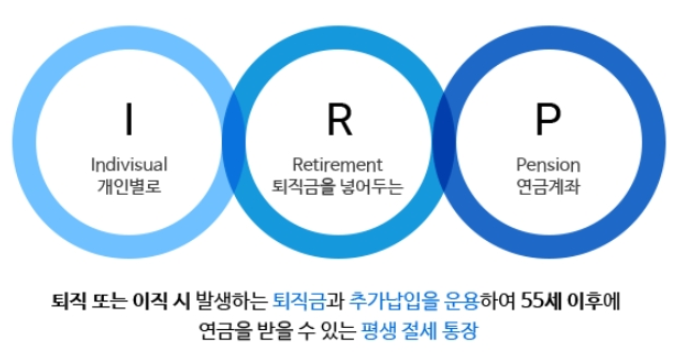
Actively utilizing your IRP (Individual Retirement Pension) account allows you to maximize year-end tax deduction benefits while steadily growing your retirement assets. Many employees regret receiving their severance pay as a lump sum, resulting in high taxes, or simply neglecting their accounts. However, by strategically combining U.S. stock index-tracking products with individual investment government bonds, you can manage your assets much more effectively. In this article, we will explore specific methods to reduce tax burdens and boost actual returns. Mr. Kim, a working professional, consistently invests his surplus funds each month, building a solid foundation for his retirement. Let’s examine the hidden tax benefits and account management tips that we often overlook. Small choices made today can lead to differences of tens of millions of won in just a few years.
=
Comprehensive Guide to Practical Investment Strategies for Maximizing Tax Savings and Returns in IRP Retirement Accounts
1. Maximizing Tax Deductions in IRP Retirement Accounts
The maximum annual contribution limit across all pension accounts is set at 9 million won. While a common strategy is to allocate 6 million won to pension savings and fill the remainder with IRP, you are not required to follow this exact ratio. You can freely distribute contributions based on your income level and financial capacity to maximize the tax deduction effect. For many employees, this tax refund is one of the first items they check during their year-end tax settlement. By reinvesting the refunded taxes, you can create a positive cycle that accelerates asset growth. This is considered the most reliable starting point for preparing for retirement while enjoying tax benefits.
When aiming to reach the tax deduction limit, it is more advantageous to make monthly installment payments rather than forcing a large lump-sum contribution at once. Setting up automatic transfers helps prevent the mistake of missing contribution deadlines. Many colleagues rush to deposit funds only when the year is ending, which puts a strain on their household budgets. By planning a fixed monthly contribution, you can control your expenses while fully enjoying the tax benefits. It is also important to develop the habit of frequently checking your estimated refund amount through the National Tax Service’s HomeTax portal.
You should adjust your pension account contribution limits and tax deduction ratios according to your income to maximize your refund.
2. Harmonizing U.S. Stock Indices and Safe Assets

Including overseas equity assets in your pension account allows you to defer taxes on capital gains until later. Products tracking major U.S. indices are popular because they tend to show a consistent upward trend from a long-term investment perspective. However, there is a legal requirement to allocate a certain portion of your total assets to safe assets. Even if you increase the proportion of equity products, utilizing bond-mixed products can naturally satisfy the mandatory safe asset ratio. This approach reduces the overall portfolio risk while maintaining an appropriate expected return.
Mr. Lee, an employee, grew his assets by splitting a portion of his monthly salary between representative U.S. index products and domestic bonds. The key to his success was continuing automatic purchases on set dates without being swayed by market volatility. Unlike investments in regular accounts, taxes are applied later, allowing you to fully benefit from compound interest. Due to these advantages, this method is highly regarded among employees as a long-term retirement preparation tool. Watching the amount accumulate little by little each month allows you to calmly envision your life after retirement.
By utilizing tax deferral benefits and bond-mixed products, you can diversify risk while enjoying compound interest.
3. How to Utilize Individual Investment Government Bonds
Recent regulatory changes have opened the door to directly purchasing stable government bonds through retirement pension accounts. You can include long-term government bonds, such as 10-year or 20-year issues, through major banks and securities firms. This is ideal for investors who want to protect their assets in volatile stock markets and expect stable interest income. The structure, where principal and interest grow over a long period, is highly beneficial for designing long-term retirement funds. It is crucial to maintain the account until the end, as closing it midway may eliminate the compound interest benefits.
Government bond investments carry very low principal loss risk, serving as a sturdy shield for your portfolio. Even those with an aggressive, stock-centric investment style can find peace of mind by mixing in a certain percentage of government bonds. The standard strategy is to gradually increase the proportion of safe assets as retirement approaches. This offers a double benefit: the stability guaranteed by the state combined with tax advantages. It is expected that more employees will utilize this system to firmly protect their assets in the future.
Including long-term government bonds in your retirement pension account can reduce volatility and secure stable interest income.
4. Understanding Early Withdrawal and Transfer Systems
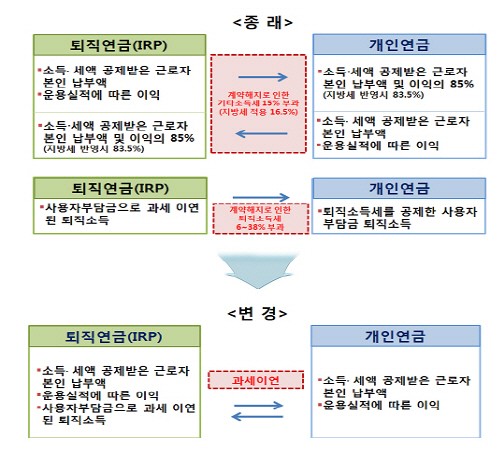
Withdrawing money from your retirement pension account when you urgently need a large sum can result in significant tax losses. To minimize disadvantages, the withdrawal must fall under legally permitted exceptions, such as home purchase by a non-homeowner or long-term care for yourself or family members. Withdrawing funds for general reasons requires you to return the tax benefits received thus far and incurs other income tax. Therefore, the basic principle of financial management is to avoid breaking the account and keep it until the end. If you inevitably want to switch financial institutions, you can use the in-kind transfer system without closing the account.
Since the introduction of the in-kind transfer system, you can change financial institutions while keeping your existing products intact. The worry of facing a tax bomb when switching to a place with lower fees or easier return management has been eliminated. In the past, closing the account and cashing out often resulted in losses or interrupted compound interest. Now, you can easily transfer your existing portfolio to another institution with just one document, greatly improving consumer convenience. When choosing a financial institution, it is advisable to carefully compare fees and the convenience of their mobile apps.
Avoid early withdrawals unless for statutory reasons, and use the in-kind transfer system when changing financial institutions.
5. Pension Receiving Strategies After Age 55
When you reach retirement age, receiving your funds as a lump sum carries a high risk of facing a “tax bomb” on retirement income. Receiving the funds in installments as a pension after age 55 significantly lowers taxes, allowing you to fully enjoy the tax-saving benefits. The structure is designed so that the longer the receiving period, the lower the annual tax burden. Since pension income tax rates decrease with age, this is very advantageous for securing living expenses after retirement. Mr. Park, an employee, receives a fixed amount monthly as a pension, creating a stable cash flow.
More people are choosing to leave their retirement funds in the pension account to continue growing them rather than withdrawing them all at once. The money remaining in the account continues to be invested, which helps defend against inflation. If you withdraw more than the allowed limit, the tax criteria may change, so you must check the limit annually. Retirement planning experts advise familiarizing yourself with tax calculation methods in advance and adjusting the pension start date accordingly. As this is the final gate determining the quality of life in old age, you must formulate a meticulous receiving strategy.
Receiving funds as a pension in installments rather than a lump sum reduces taxes and preserves cash flow in old age.
6. Practical Steps for a Successful Retirement
Synthesizing the various systems discussed so far, consistency and tax savings are ultimately the core of asset formation. You must develop the habit of making automatic monthly contributions and appropriately allocating between U.S. stocks and government bonds. You must walk steadily toward the future, looking 10 or 20 years ahead, without being swayed by short-term stock price fluctuations. Instead of constantly changing accounts due to rumors, you need the attitude to adhere to your own clear investment principles. I hope this serves as an opportunity to immediately check your pension account contribution limits and held products starting today.
The financial environment will change even faster in the future, and the importance of retirement preparation cannot be overstated. Only employees who regularly check for government system changes and tax-saving tips can enjoy financial freedom after retirement. Do not forget that small practices accumulate to create an asset gap of tens of millions of won later on. Based on what you have learned today, open your retirement pension account over the weekend and reorganize your portfolio. A secure retirement is not far away; it begins with your small choices right now.
You must consistently manage your assets based on clear investment principles to achieve financial freedom after retirement.
Frequently Asked Questions
=