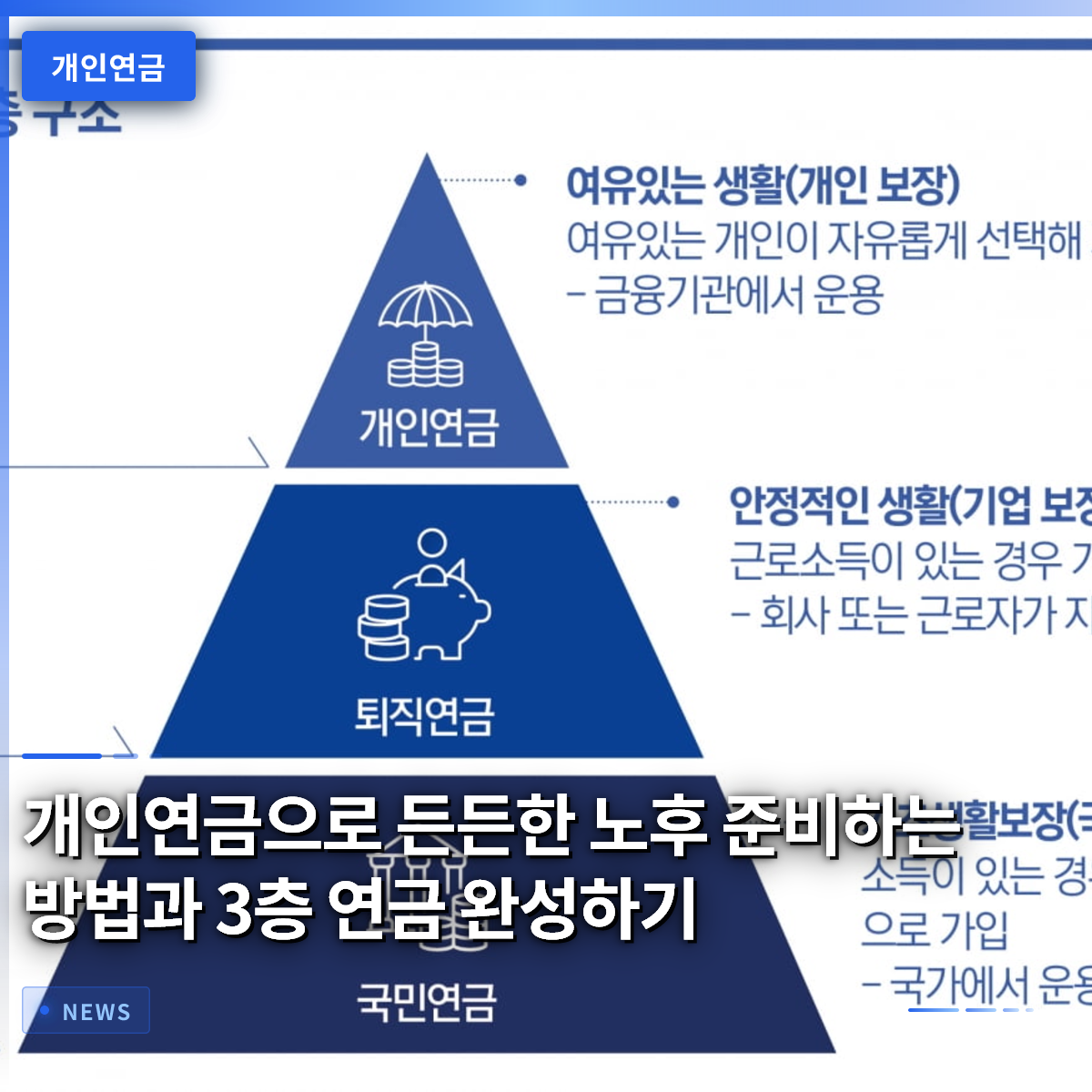
To enjoy a stable retirement, it is essential to rely on a multi-layered preparation strategy that combines the National Pension with corporate and personal pensions, rather than depending solely on the National Pension. As the number of middle-aged and older adults worrying about retirement living expenses in a super-aged society, or pondering how much pocket money to give their parents during holidays, continues to grow, the movement toward taking charge of one’s own retirement is accelerating. Since the National Pension, which guarantees a minimum standard of living, is difficult to keep up with inflation, the portion that individuals prepare for themselves is extremely important. Many people lament that they are too late to prepare for retirement only when they reach their 40s or 50s, but it is still possible to prepare adequately by accurately calculating expected amounts and filling the gaps starting now. In this article, we will take a detailed look at how to harmoniously weave together the National Pension, corporate pensions, and personal assets to create a monthly living income. This will be a beneficial time to turn the daunting prospect of life after retirement into concrete numbers.
=
How to Secure a Stable Retirement with Personal Pensions and Complete the 3-Tier Pension System
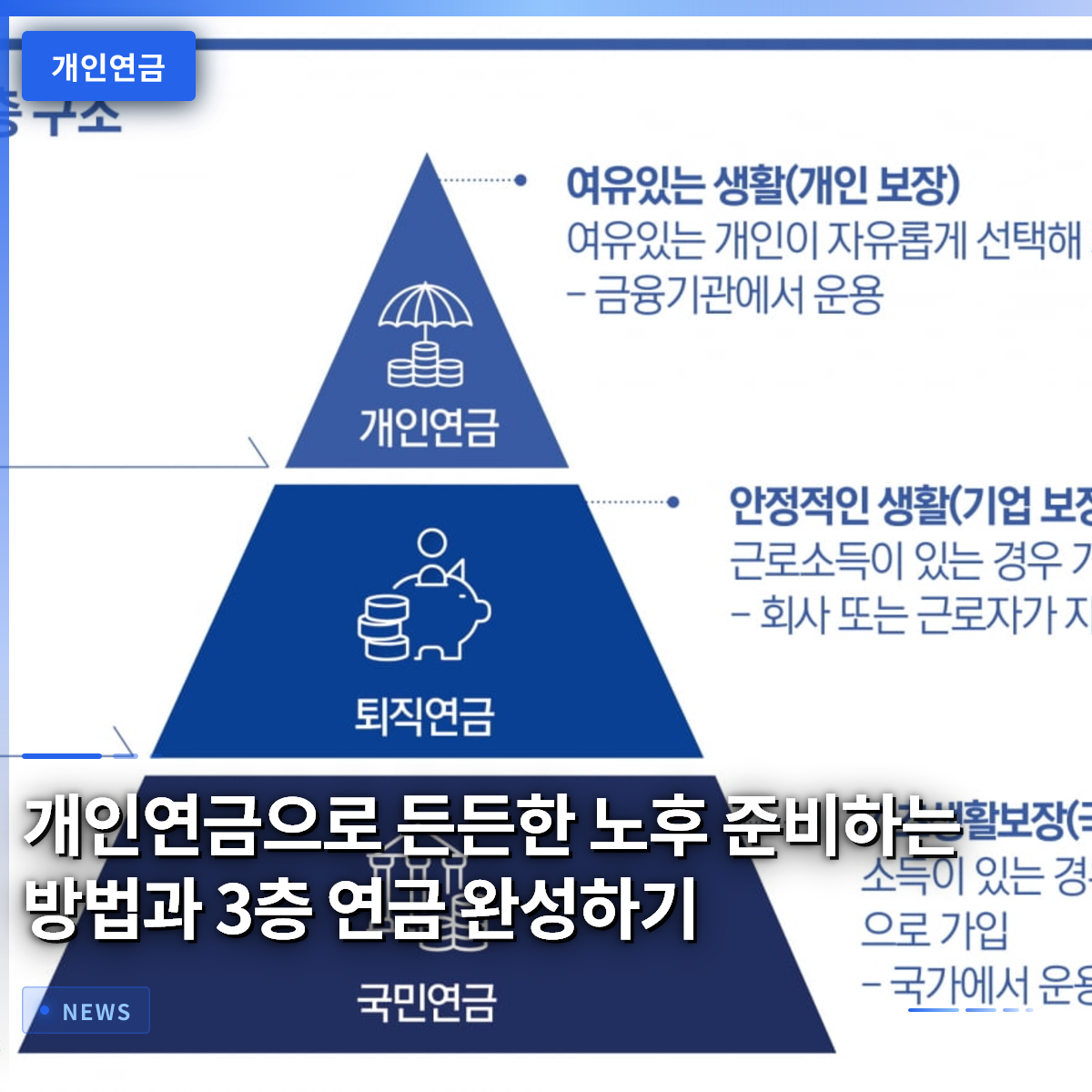
1. The Reality of Not Relying Solely on the National Pension and the Structure of the 3-Tier Pension
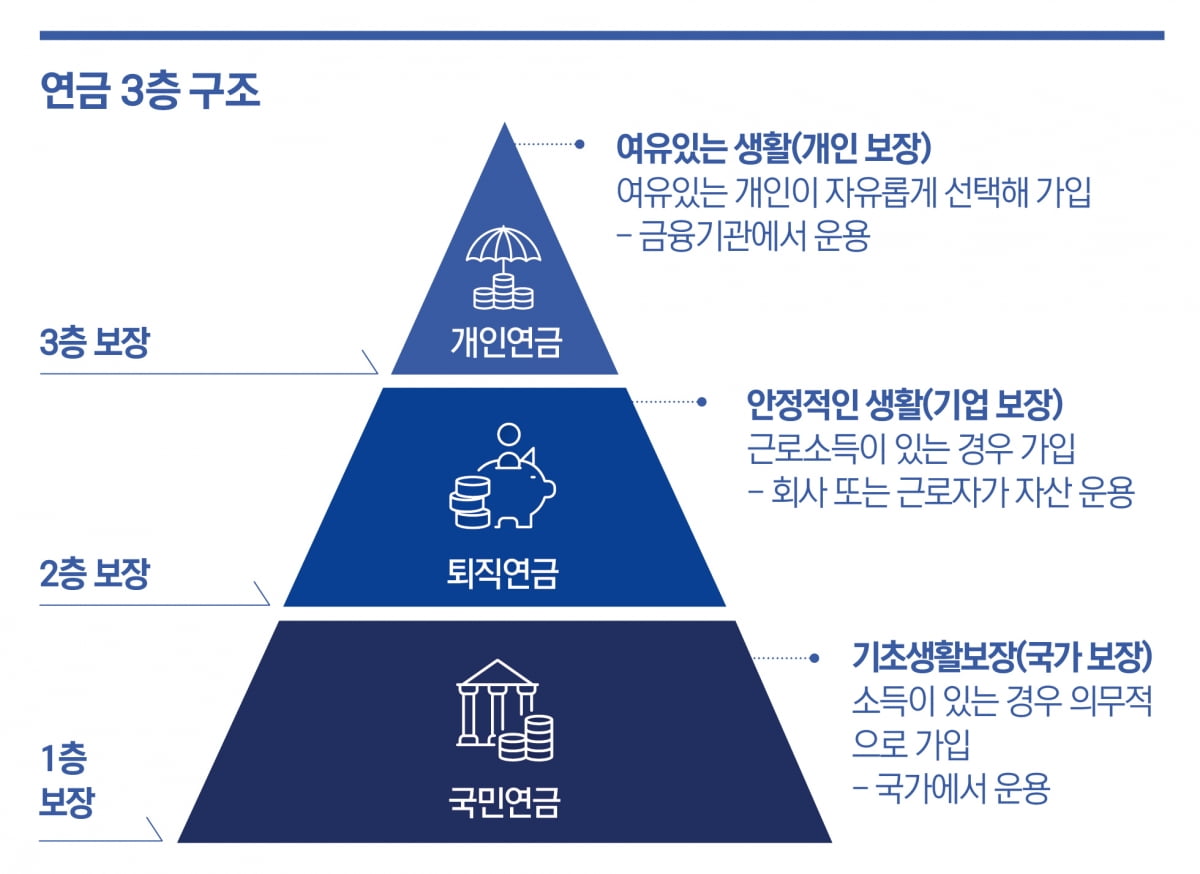
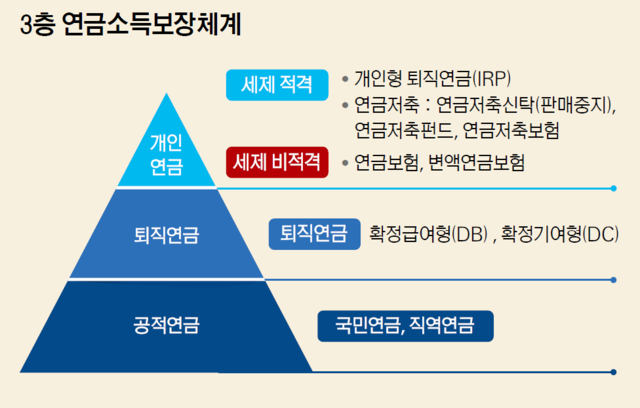
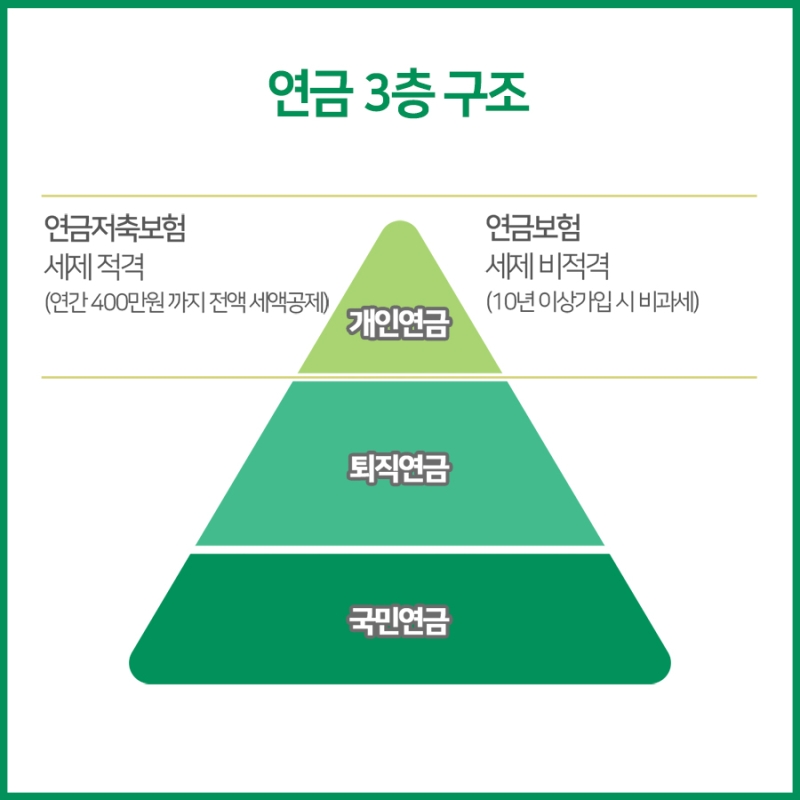
While the National Pension is the most basic state-guaranteed means of securing retirement income, our post-retirement life is too long to rely on it alone. Looking at the average old-age pension benefit amounts announced by the public sector, anyone can easily feel that the amount is grossly insufficient for actual living expenses. With prices rising sharply every year, relying solely on the benefit amount could lead to a miserable situation where one faces financial hardship after retirement or has to ask their children for help. To address these issues, experts often emphasize the 3-tier pension structure, stating that the state, corporations, and individuals must join forces. The National Pension, as the first tier, sets the basic framework, while the second tier, consisting of corporate pensions and individual-type corporate pensions, should be built up thickly during one’s working life. Finally, the third tier, personal pensions, plays a decisive role in filling the gap in living expenses tailored to one’s income level and retirement timing.
Since no perfect single system exists in the world, the wisdom to appropriately combine pensions with different characteristics is necessary. Looking around, it is common to see neighbors who are taken aback by the sudden increase in free time and decrease in income as they approach retirement. In their younger years, retirement may feel like a story from a distant country, but as time passes, the lack of preparation becomes a painful regret. Therefore, one must develop the habit of allocating a fixed amount each month to invest evenly in the three tiers, whether working for a company or running a business. A peaceful retirement is only completed when the benefits provided by the state, the support provided by the company, and the assets managed by oneself form a triad. Since prices continue to rise even at this very moment, one must discard complacent thinking and actively review their asset portfolio.
It is essential to understand the 3-tier pension structure, where the state, corporations, and individuals each prepare to fill the living expenses that the National Pension alone cannot cover.
2. Pension Bridge Strategy to Wisely Cross the Income Gap
As the mandatory retirement age is getting earlier and the age at which one can receive the National Pension is being pushed back, a scary gap occurs where post-retirement income completely stops. If you retire in your early 50s but cannot receive the National Pension until you are over 60, the prospect of how to solve the problem of making a living in the meantime can be daunting. To safely cross this period, a pension bridge strategy utilizing personal and corporate pensions is absolutely necessary. By drawing funds from pension savings funds or individual-type corporate pension accounts during the period before the National Pension begins, the income gap can be perfectly filled. In reality, many retirees fail to cross this bridge, forcing them to recklessly use their accumulated lump sums or hastily seek employment, often resulting in selling assets at a loss.
When designing life after retirement, the ability to accurately adjust the gap between when money comes in and when it goes out is of utmost importance. For example, if you retire at 50 and the National Pension starts at 65, you must calculate in advance how much you will need to spend each month during those 15 years. During this period, you must make solid preparations to ensure cash flow does not break by organically linking assets in personal pension accounts with reverse mortgages, etc. By utilizing various inquiry programs provided by asset management institutions, you can check at a glance when and how much you will receive. Since the retirement clock does not wait for us, it is safe to open accounts and accumulate funds systematically before the income gap arrives. Only with a sturdy bridge built in advance can one enjoy the second half of life without anxiety, with pleasure and leisure.
The income gap that occurs after retirement until the National Pension begins should be wisely overcome by using personal pension accounts to build a bridge.
3. What and How to Buy in Pension Savings Funds
One of the most commonly used products when preparing for a personal pension is the tax-advantaged pension savings fund account. In the past, the main method was simply locking up cash in banks, but recently, the number of people directly investing in equity assets through securities accounts has surged. Within pension savings funds, one can freely shop for various financial products listed domestically, such as exchange-traded funds (ETFs), bonds, and real estate investment trusts (REITs). For example, strategies involving long-term systematic investment in products tracking representative US growth stock indices or stocks that consistently pay dividends are very popular. If you consistently invest in upward-trending index products from a young age, you can fully enjoy the effect of compound interest and significantly grow your assets.
However, a common mistake made by beginner investors is being swayed by short-term stock price fluctuations and trading frequently or chasing trending stocks. An account managing retirement funds is like a marathon that must be viewed over a long period of more than 20 years, so an unshakable principle is most important. Utilizing AI-based customized analysis services or asset management functions provided by securities firms can be greatly helpful in checking one’s investment style. It is safer to choose a diversified investment approach that reduces volatility while generating stable returns, rather than putting all assets into a single stock. The wisest investment method is to automatically transfer a fixed amount to buy excellent products every time payday arrives. Please actively utilize pension savings funds, which offer both the carrot of tax benefits and the weapon of long-term compound interest.
To succeed in a pension savings fund account, one must practice systematic investment centered on long-term upward-trending index products.
4. Checking My Pension Assets at a Glance with the Integrated Pension Portal
If you want to check your retirement preparation status, it is recommended to actively use the Integrated Pension Portal service operated by the Financial Services Commission. Any adult in South Korea can check the expected benefit amounts of their National Pension, corporate pension, and personal pension at a glance after identity verification. It is surprisingly common for people to be confused because they do not know how much of their corporate pension remains at which securities firm after changing jobs multiple times. By simply accessing the portal screen and clicking on pension inquiry, you can find hidden assets and set specific goals for how much more you need to save each month. Only by comprehensively viewing scattered assets on a single screen is the overall retirement design finally completed.
Accurately facing your expected benefit amount may feel somewhat shocking or overwhelming at first, but it is a gate that must be passed. If your target monthly living expense after retirement is 3 million won but the currently prepared amount is grossly insufficient, you must immediately increase your savings or reduce consumption. A feedback process of periodically checking your asset data, which is updated every year, to see if you are progressing according to plan is necessary. For middle-aged and older adults who worry about their parents’ retirement but neglect their own, we recommend accessing the portal today. Only by facing the cold reality revealed in numbers can you prevent future poverty and attend your retirement ceremony with dignity. There is no more certain first step in preparing for retirement than turning on and checking your asset status board with your own hands.
Using the Integrated Pension Portal allows you to gather all scattered pension assets in one place and accurately grasp the expected benefit amount.
5. Know-How to Maximize Tax Benefits and Tax-Saving Effects
When joining a personal pension, carefully considering the tax credit benefits can significantly reduce the tax bomb that comes back during the year-end tax settlement. Just as office workers eagerly await their refunds during the year-end tax settlement season, personal and corporate pension accounts are the best tax-saving tools. If you contribute up to the prescribed limit by combining pension savings and individual-type corporate pensions, a certain percentage of the contribution amount is directly refunded from your tax. While the joy of saving on this year’s taxes is great, you also benefit doubly because a lower tax rate is applied when you receive the pension after retirement. If you reinvest the saved taxes directly into the account to enjoy the magic of compound interest, the scale of assets accumulated at the time of retirement will be beyond imagination.
However, there is a risk of canceling the pension midway because you need money, having recklessly tried to fill the limit solely for the sake of tax benefits.