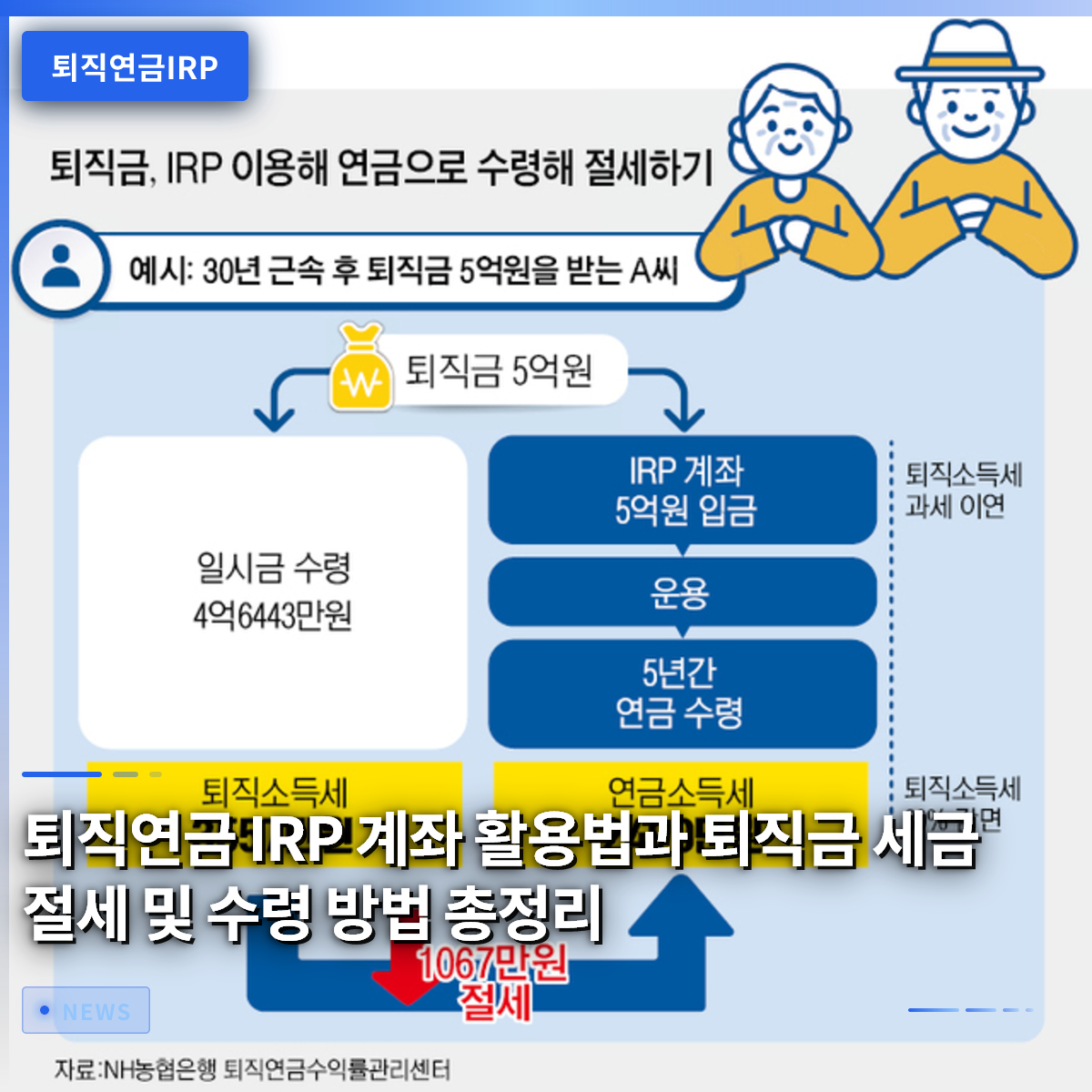
If you receive your severance pay directly into a regular bank account, you may face a heavy tax burden, so it is essential to receive it through an Individual Retirement Pension (IRP) account. Many employees, upon leaving their jobs or changing careers, inadvertently withdraw their severance pay in cash and end up paying substantial severance income tax amounts reaching several million won. The government strongly recommends receiving funds via an IRP account to ensure the safety of retirement funds and reduce tax burdens. In fact, while a significant number of people have transferred their funds to IRP accounts in recent years, management is often neglected, with more than half terminating their accounts midway. This article details the wisest ways to receive your retirement pension and specific strategies for saving on taxes.
=
Comprehensive Guide to Using IRP Accounts for Severance Pay: Tax Savings and Payout Methods
1. What is an IRP Account?

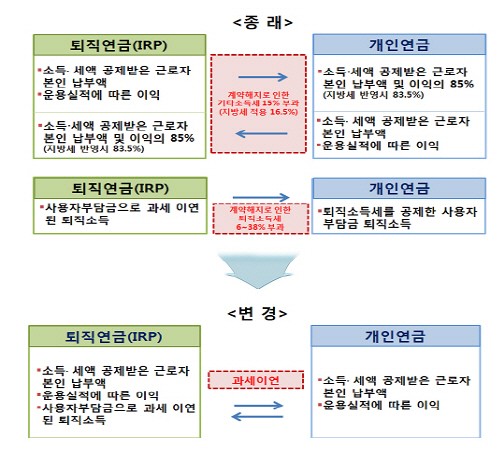
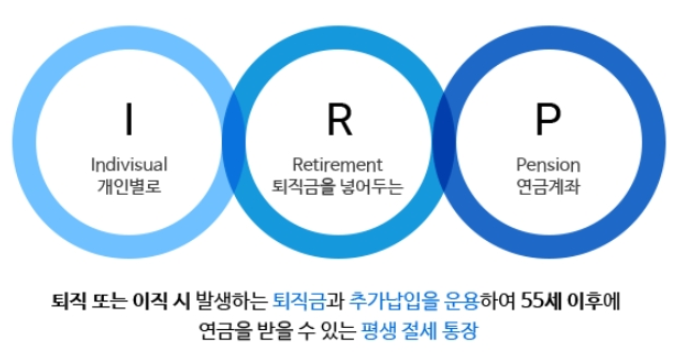
An IRP account is an asset management account where you can pool your severance pay and additional personal contributions to invest directly. Previously, companies managed these funds through Defined Benefit (DB) or Defined Contribution (DC) plans, but upon leaving the company, you must transfer these funds to an account in your own name. This account is not merely a place to store money; it is a space to grow retirement funds by investing in various financial products such as deposits, bonds, and funds. It is also closely linked to the smart strategy of converting from a DB to a DC plan in advance to prevent losses in severance pay when wages decrease. It has become an essential financial product that every employee should have. You are granted a tax deferral benefit, meaning you do not pay taxes on the returns generated during the investment process until you receive the pension later. This allows you to fully enjoy the effect of compound interest, with the scale of your retirement assets snowballing over time. It is beneficial not only for employees nearing retirement but also for those starting their careers, as it helps prepare for old age and save on taxes during year-end settlement. Recently, accessibility has improved significantly as these accounts can be easily opened non-face-to-face through various securities firms and banks.
An IRP account is an essential financial product for pooling severance pay and personal funds to prepare for retirement while enjoying tax deferral benefits.
2. Why You Should Always Receive Severance Pay via IRP
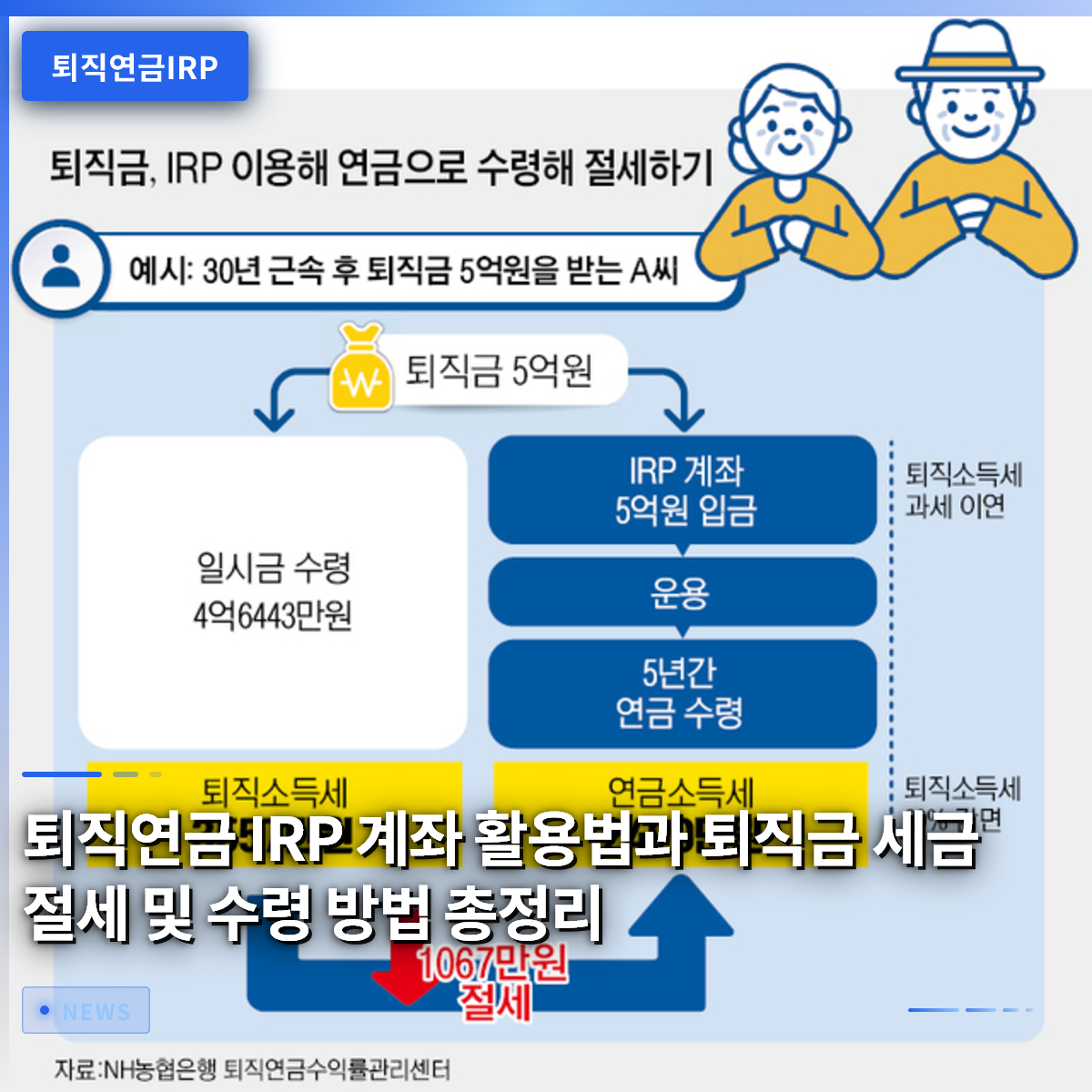
If you receive your severance pay directly into a regular demand deposit account, the amount deposited will be after the withholding of statutory severance income tax. While this may seem like you are holding a large sum of money immediately, it is actually a loss. However, if you transfer your severance pay to an IRP account, the full principal amount without any tax deduction is deposited, allowing you to invest the entire lump sum. If you choose to receive the funds as a pension later rather than paying taxes immediately, you can enjoy a substantial benefit of a 30% tax reduction on the tax you would have originally owed. For example, if you were required to pay 50 million won in severance income tax, receiving it as a pension could save you tens of millions of won in taxes. It is common to see acquaintances who have left their jobs withdraw their entire severance pay as a lump sum because they urgently need living expenses. Withdrawing and spending severance pay immediately not only means you miss out on tax reduction benefits but also paves the way to being broke in old age, making it a very risky choice. In reality, many retirees impulsively consume their severance pay or let funds slip away without a proper plan, leading to great regret later. Therefore, the key to securing both tax savings and retirement preparation is to definitely deposit your severance pay into an IRP account and receive it in installments as a pension over a long period.
Receiving severance pay in an IRP account rather than a regular account allows you to defer taxes and receive tax reduction benefits when receiving the pension later.
3. Strategy to Maximize Year-End Settlement Tax Deduction Limits
As the year-end settlement season approaches every year, the biggest concern for employees is how to get a tax refund, and the most powerful tool at this time is the IRP account. Previously, deductions were only allowed up to a certain amount when combining Pension Savings Funds and IRP accounts, but recently, you can deduct a much larger amount by combining these two accounts. You can include up to 9 million won of your additional personal contributions in the tax deduction target, significantly reducing the taxes you pay annually. Although the deduction rate varies depending on your annual salary bracket, diligent employees can receive refunds ranging from several hundred thousand to over one million won. Mr. Kim, an employee who sets aside a small amount of his monthly salary to save into this account, smiled broadly upon receiving a generous refund during last year’s year-end settlement. He had thought it was difficult to grow assets through savings alone, but by also taking advantage of the tax deduction benefits, he enjoyed a two-for-one effect. However, since contributions made to receive tax deductions must be maintained until retirement, you should adjust the amount to your income level rather than setting an unreasonably high monthly amount. If you have limited spare funds, it is much wiser from a long-term perspective to consistently contribute what you can afford each month rather than obsessing over the annual limit.
You can enjoy year-end settlement tax deduction benefits of up to 9 million won by making additional contributions to your IRP account.
4. Tips for Non-Face-to-Face Conversion and Saving on Fees
If you visit a financial institution in person to open an account offline, you may incur unnecessarily high fees, so it is advantageous to use a smartphone app to convert to a non-face-to-face account. In practice, compared to accounts opened with the guidance of counter staff, non-face-to-face accounts often have management fees that are more than half as low. For example, if your accumulated amount is less than 50 million won, the fee rate is significantly lower, effectively preventing unnecessary cost expenditures during long-term investments. Even if you already have an account opened offline, you can apply for a physical transfer through a simple non-face-to-face procedure to move your existing investment products and assets as they are. Mrs. Park, a housewife, initially opened an account by visiting a bank branch but later switched entirely to a non-face-to-face account via a mobile app because she was reluctant to pay the annual fees. While it may seem like a small difference, given the nature of retirement asset accounts that must be maintained for decades, saving on fees is as important as increasing the rate of return. Since fee structures vary slightly among financial companies, you should carefully compare the conditions of the institution you use and choose the most advantageous one. Do not procrastinate; we recommend turning on your smartphone today to check fee conditions and take advantage of non-face-to-face benefits.
Converting to a non-face-to-face account and utilizing physical transfers can significantly save on the fees deducted annually compared to offline accounts.
5. Safe Asset Ratios and Utilizing Government Bonds for Individual Investors
When managing assets within a retirement pension account, there is a regulation requiring that a certain percentage of total assets must be allocated to safe assets to prevent principal loss. Even if you want to invest your entire amount in equity products, you must meet the 30% safe asset ratio regulation, so you need to construct a portfolio by appropriately mixing bond-hybrid products or safe bond types. Recently, various Exchange-Traded Funds (ETFs) that meet these regulations while offering stable returns have been launched, greatly expanding investors’ choices. In particular, for investors who prioritize stability, utilizing Government Bonds for Individual Investors, which have recently been included, is an excellent alternative. Previously, purchasing Government Bonds for Individual Investors required the hassle of using a specific securities firm’s dedicated account, but now you can buy 10-year and 20-year government bonds through DC or IRP accounts. Mr. Lee, an employee, purchased government bonds within his retirement pension account according to the safe asset ratio to enhance the stability of his portfolio and complete a balanced asset allocation. Since protecting the principal is most important for retirement funds, these bonds serve as a sturdy pillar even in the volatile stock market. Refer to long-term portfolio compositions suggested by experts to find the golden ratio of safe and risky assets that suits your preferences.
Utilizing bond-hybrid products or Government Bonds for Individual Investors in accordance with the 30% safe asset regulation allows for balanced asset allocation.
6. Long-Term Asset Management Outlook for a Successful Retirement
In today’s era where the concept of a lifetime job is disappearing and job changes are frequent, how you manage your retirement pension is the most decisive factor determining the quality of life after retirement. The government and financial authorities are supplementing various systems to lower termination rates and ensure effective retirement income, and citizens are gradually beginning to view assets from a long-term perspective. If you terminate your valuable severance pay midway just because you are short on immediate cash, you will impose a huge economic burden on your future self. In the future, individual employees must build their own financial knowledge and cultivate the ability to choose the payout method most advantageous to them to truly enjoy a comfortable retirement. For those worried about the income gap between their retirement date and the start of their National Pension, an IRP account serves as an excellent buffer. Open your smartphone right now to check the status of your account, carefully reviewing fee conditions and whether you are meeting the tax deduction limits. Never forget that small attention and actions can create an asset difference of tens of millions of won by the time you retire a few years later. If you start today by preventing unnecessary terminations and consistently accumulating funds, a plentiful and leisurely retirement life will no longer be just a story for others.
The habit of managing retirement pensions long-term without early termination is the key to determining life after retirement.
Frequently Asked Questions
=