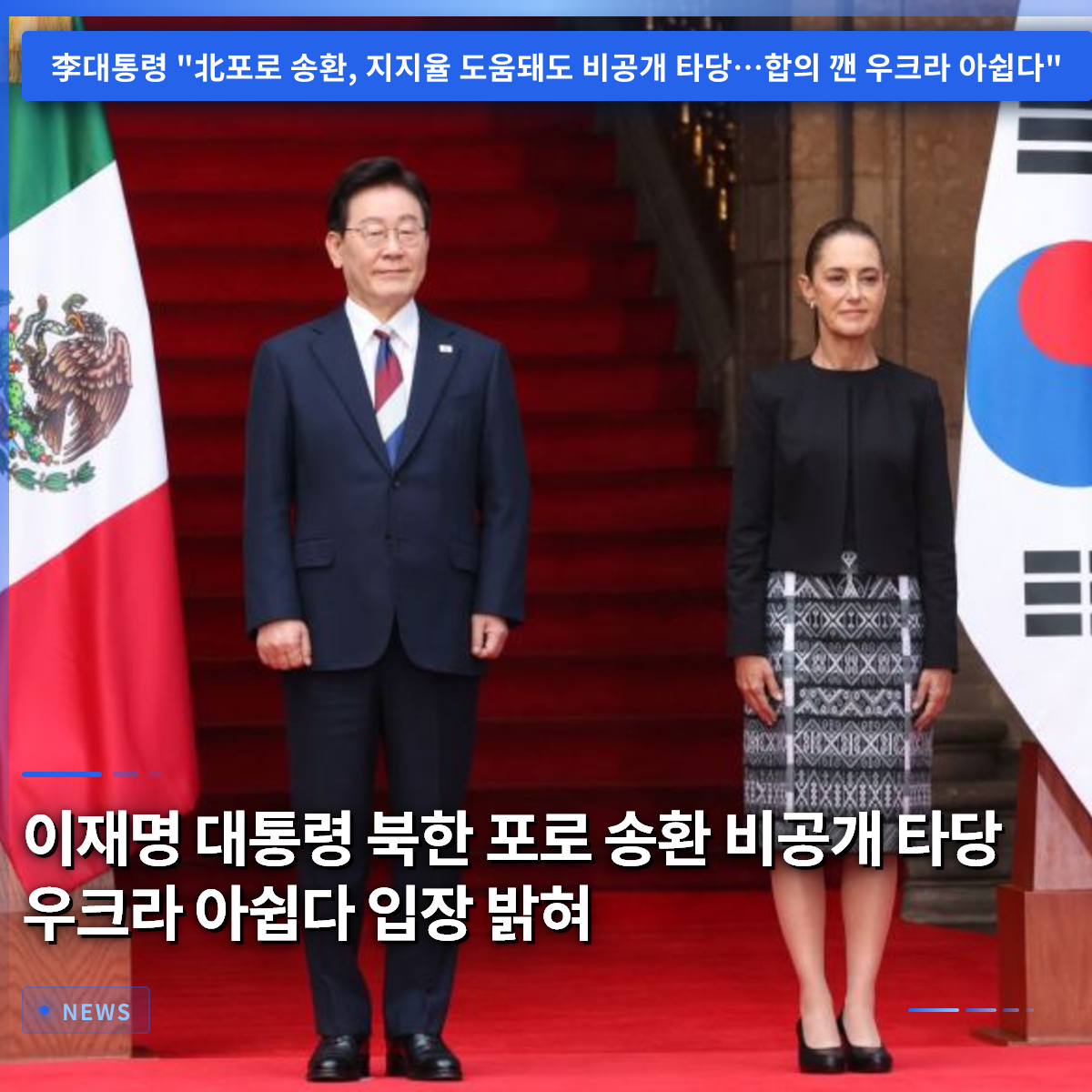
President Lee Jae-myung directly explained that the government’s decision to keep the repatriation of two North Korean prisoners of war (POWs) captured by Ukrainian forces non-public was a valid decision, considering national security and the safety of the individuals involved, even if it might help restore the administration’s approval rating. Currently on a state visit to Mexico, the President stated this via his social media channels, expressing regret that Ukrainian President Volodymyr Zelenskyy unilaterally disclosed the matter during his UN General Assembly speech. This incident has emerged as a representative case illustrating how grave the government’s decision-making process must be when handling diplomatic sensitivity and national security. In the political sphere, fierce debates continue over the appropriateness of information disclosure, triggering various discussions about the balance between the public’s right to know and national interests. Let us examine in detail whether the government’s non-disclosure measure was justified in this sensitive diplomatic issue and what repercussions Ukrainian President’s impromptu remarks may cause for the future situation on the Korean Peninsula. We hope that readers will also use this incident as an opportunity to reflect on the weight of national security and diplomatic confidentiality.
=
President Lee Jae-myung: Non-disclosure of North Korean POW Repatriation Was Justified, Regret Ukraine’s Disclosure
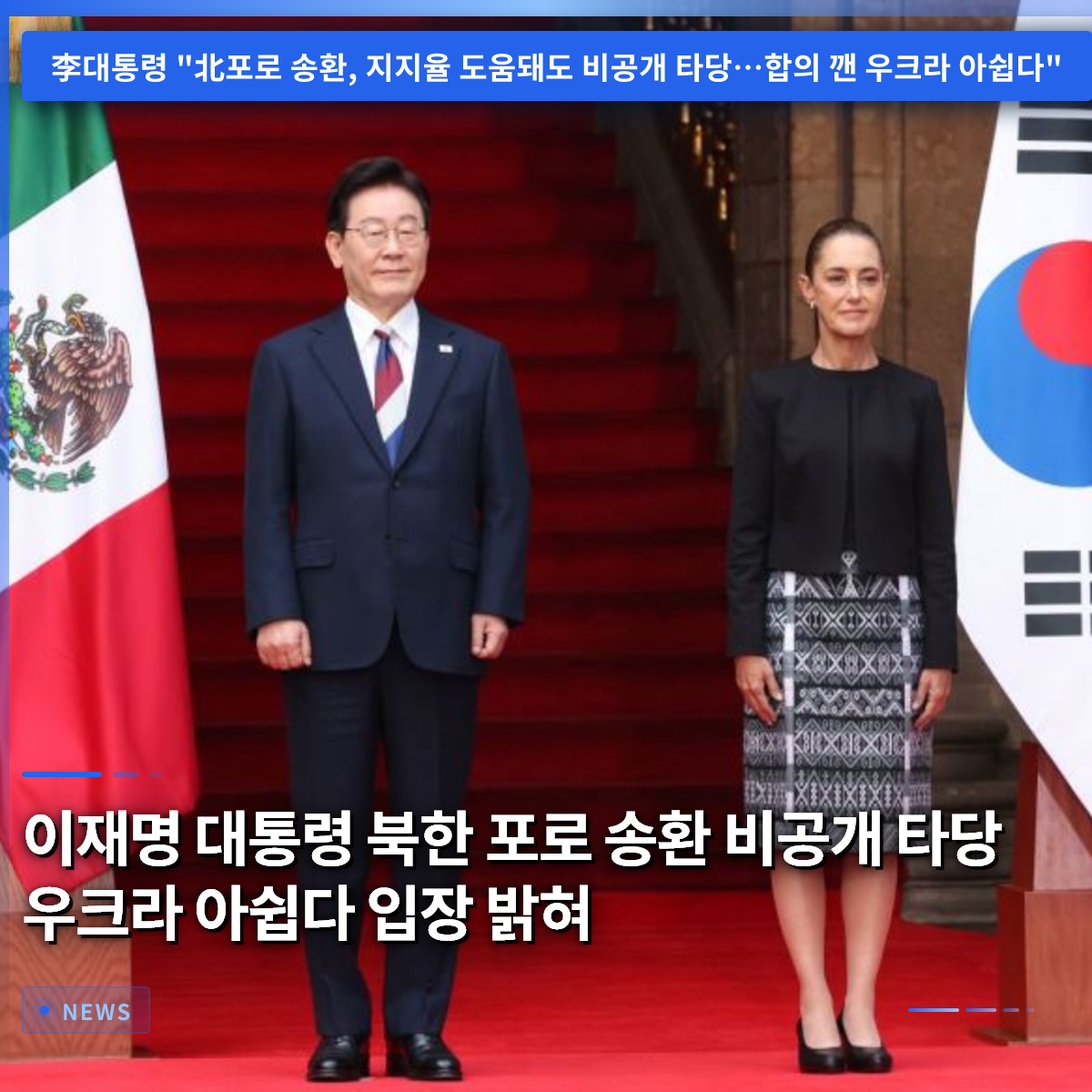
1. Background of the Non-disclosure Decision on the Repatriation of North Korean POWs
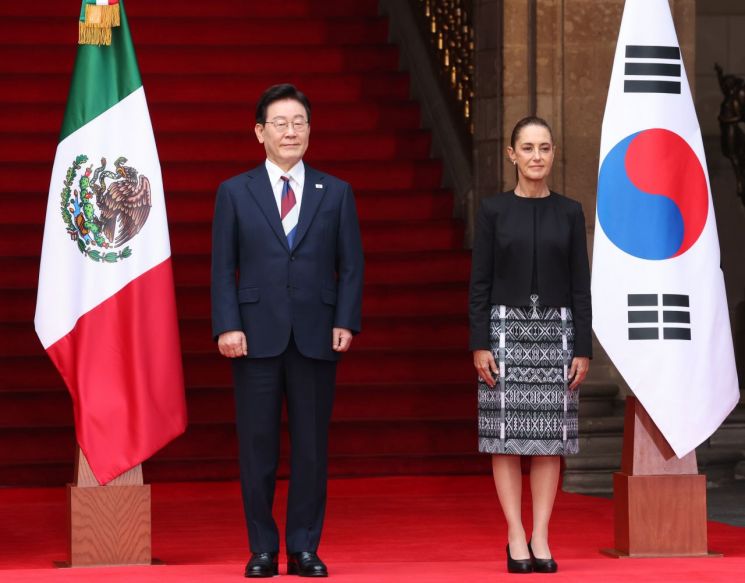
The reason President Lee Jae-myung did not pre-announce the domestic repatriation of North Korean POWs captured in Ukraine is clear. It was an extremely sensitive agenda that could have massive repercussions on diplomacy, security, and the overall situation on the Korean Peninsula. It is widely analyzed that if this fact had been disclosed first, it would have noticeably helped boost the administration’s approval rating. In fact, there were many arguments internally that the government should actively publicize this to seize the initiative in the political landscape. Nevertheless, the government reached a consensus to keep it strictly confidential, considering the personal safety of the individuals involved and the unique nature of inter-Korean relations.
The core of the President’s statement is that major state affairs should not be treated lightly for the benefit of the regime or the popularity of the ruler. If an issue is directly linked to someone’s precious life or the safety of the nation, it is proper to prioritize national interest over immediate political gain. If facts had been recklessly revealed to boost approval ratings, the resulting side effects would have fallen squarely on the people and the nation. From this perspective, the government’s non-disclosure measure was a cold and valid decision, and irresponsible criticism should be avoided. This is a point that reveals the depth of the administration’s struggle to uphold principles despite surrounding temptations and political pressure.
Keeping the repatriation non-public was a valid decision for security and personal safety, even if it helped boost approval ratings.
2. President Zelenskyy’s UN General Assembly Speech and Expression of Regret
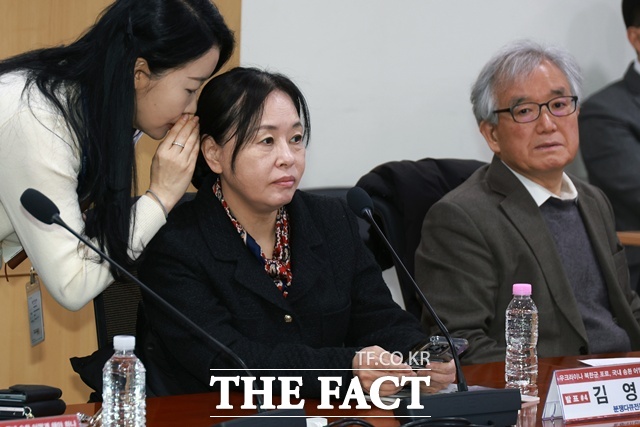
The government’s intense deliberation and agreement on non-disclosure were rendered futile by the impromptu remarks of Ukrainian President Volodymyr Zelenskyy. President Zelenskyy officially disclosed during his UN General Assembly speech that two North Korean POWs had been safely sent to the Republic of Korea. This amounted to unilaterally exposing an issue that the South Korean government and the Ukrainian side had promised to keep secret after close prior consultation. The domestic and international diplomatic community was thrown into an uproar upon hearing the news, and an atmosphere of astonishment formed around the South Korean government.
In response, President Lee Jae-myung stated that while it is unclear what complex internal circumstances led the Ukrainian side to choose disclosure, he found it very regrettable. The two heads of state had already agreed at their July meeting to respect the free will of the individuals involved and resolve the issue according to humanitarian principles. Nevertheless, points are being raised that unilaterally breaking a non-disclosure agreement based on mutual trust goes against diplomatic good faith. Ukraine’s action will serve as a catalyst for the South Korean government to adopt a more cautious attitude in future information sharing and cooperation processes. It is a typical scene showing how unilateral actions that do not consider the position of the counterpart can act as a significant diplomatic burden on the international stage.
The President expressed regret over the Ukrainian President breaking the non-disclosure agreement and revealing the POW repatriation.
3. Opposition Aggression and Government Defense Logic
When the fact of the domestic entry of North Korean POWs became known through the Ukrainian President’s speech, the domestic political scene immediately entered a fierce debate. Opposition lawmakers strongly criticized the fact that South Korean citizens had to hear news about their own country through a foreign head of state’s speech rather than from their own government. They raised suspicions that the government was ignoring the public’s right to know and trying to conceal important security issues, demanding a thorough investigation into the truth. In particular, lawmakers such as Ahn Cheol-soo and Yoo Yong-won of the People Power Party raised sharp voices pointing out the government’s lack of proactive response.
In response, the government and the ruling party countered that it was an unavoidable measure that prioritized national security and the safety of the POWs. They emphasized that if the identity of the POWs or the specific repatriation route were fully disclosed, the individuals and their families could be exposed to direct threats to their lives. They argued that the opposition’s aggression is merely irresponsible partisan criticism aimed at political gain and could lead to outcomes that harm national interests. Voices are also gaining momentum that, on matters of diplomacy and security, the ruling and opposition parties should cooperate with national interests at the center, setting aside party lines. While the public’s right to know is important, this is a time when deep social reflection is required on which choice is right when the absolute value of protecting national safety and individual lives conflicts with it.
The government directly refuted the opposition’s accusation of concealment, stating it was an unavoidable choice for security and personal protection.
4. Future Tasks According to International Law and Humanitarian Principles
The process of repatriating these North Korean POWs is an important indicator of how the South Korean government applies international law and humanitarian principles. The government has maintained a firm policy of avoiding forced repatriation to the North and prioritizing the free will of the individuals involved when facing issues with North Korean POWs. Humanitarily accepting soldiers who chose the Republic of Korea after surviving the extreme situation of war aligns with universal standards in the international community. However, it is pointed out that more refined and meticulous diplomatic safeguards are needed to ensure that this process is not easily shaken by external impromptu variables.
As the war in Ukraine continues to be prolonged, the possibility of similar situations arising remains open at any time. Therefore, the government must further strengthen communication channels with major partner countries, including Ukraine, and re-examine protocols to prevent information leaks. It is time to demonstrate meticulous management skills to ensure that minor diplomatic friction does not negatively impact the massive security landscape surrounding the Korean Peninsula. Finding the golden ratio between realizing humanitarian values and maintaining the practical benefits of national security has become a core mission of the Ministry of Foreign Affairs. Many citizens expect that, taking this incident as a lesson, South Korean diplomacy will acquire a more mature crisis management capability.
While continuing to accept POWs based on humanitarian principles, a refined system is needed to prevent future diplomatic friction.
5. Longing for the End of War and Social Repercussions
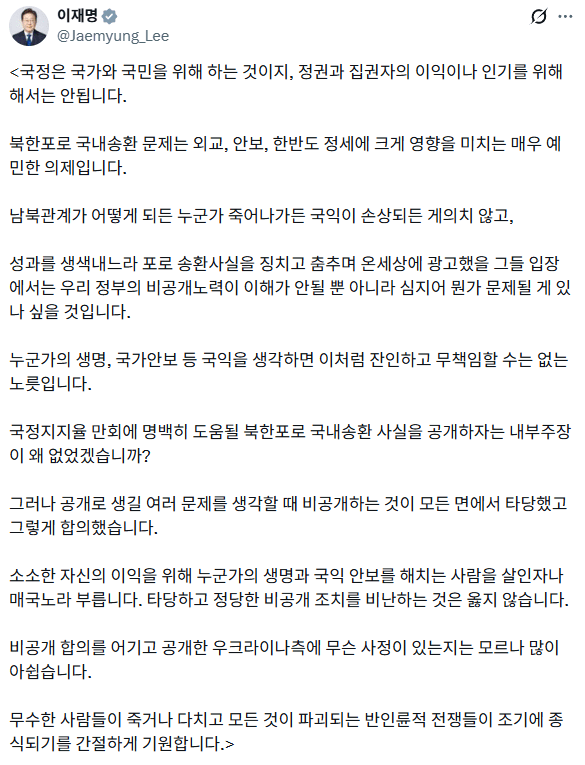
Concluding his stance on this controversy, President Lee Jae-myung earnestly prayed for the swift end of inhumane wars occurring around the world. It is an appeal that we must no longer stand by while countless people lose their lives or are injured without knowing why, and all social foundations are destroyed. The issue of repatriating North Korean POWs symbolically shows the tragedy of a massive war that shakes the world, going beyond the movement of just one or two individuals. The contemplation of human dignity and the right to life that blossoms amidst cold ideological conflicts is delivering a deep resonance to our entire society.
Citizens watching this incident are also feeling the importance of security and the preciousness of peace once again in a profound way. It has become an opportunity to seriously consider the meaning of humanitarian aid and inclusion for those suffering from war, moving beyond the exhausting debates in the political sphere. The government must continue to exercise wisdom to secure both transparency and security flexibility based on the trust of the people. When diplomatic efforts to save human lives and uphold principles continue even within the violence of war, the international standing of the Republic of Korea will become even higher. All citizens must watch with one heart so that the sincere longing for peace can lead to substantial diplomatic achievements.
Humanitarian values that respect life and end the horrors of war must stand at the center of diplomacy.
6. Outlook and Reader Action
In conclusion, the controversy over the non-public repatriation of North Korean POWs was a major incident that showed the subtle boundary between maintaining diplomatic secrets and domestic political debates. With the President’s direct explanation and the Ukrainian side’s impromptu action intertwining, the repercussions on future inter-Korean relations and the international diplomatic stage are not expected to subside easily. Readers are asked to view this incident calmly within the grand flow of national security and humanitarian principles, moving beyond a simple perspective of political strife. It is important to continuously pay attention to how the government overcomes such diplomatic difficulties and builds a safer Korean Peninsula. It is time for all citizens to cultivate wise discernment so that the Republic of Korea can stand tall as a nation leading peace and human rights in the international community.
We must continuously watch the government’s actions to maintain the balance between security and humanitarianism.
Frequently Asked Questions
=